Key Points
- Manchester ditches 154-year-old fire alarm telegraph system as the last Gamewell master box sent out its last message.
- This was done from Fire Box 4647 at 1pm, on May 1, 2026.
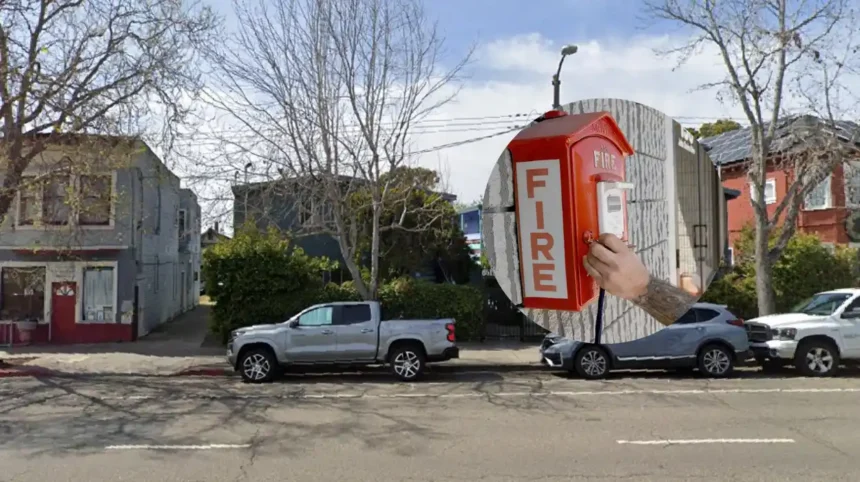
- The master box was situated outside Manchester Collision Center, along John E Devine Drive.
- Manchester established the Gamewell fire alarm telegraph system in 1872.
- The system consisted of alarm boxes, wires, mechanical apparatus and codes in communicating firefighters.
- Manchester started getting rid of its fire alarm boxes in the year 2004.
- The process got accelerated by officials in the six months leading up to the decommissioning.
- The city has replaced its wired network with a communication system run by radio frequencies.
- Officials feel that the last actual, non-hoax alarm call made from a street box was in the year 2000.
- Nashua is likely to keep their own Gamewell system and may get some apparatus from Manchester.
- Fire officials have termed the decommissioning as the end of a historic era for public safety in Manchester.
Manchester (Manchester Mirror) August 10, 2026 — The New Hampshire Union Leader reported on May 4, 2026, that the city had retired its 154-year-old fire alarm telegraph system after the final Gamewell master box transmitted its last coded signal.
- Key Points
- How was the final Gamewell signal sent?
- How did Manchester’s fire alarm telegraph work?
- When did Manchester introduce the Gamewell network?
- Why did the city begin removing the fire alarm boxes?
- How does the new radio system differ?
- Will any Gamewell equipment remain in use?
- What did Manchester fire officials say about the retirement?
- What is the background to Manchester’s fire alarm development?
- How could the retirement affect Manchester residents?
The closing transmission came from Fire Box 4647 at 1 p.m. on May 1, 2026. The box stood outside the main entrance of Manchester Collision Center at 150 John E Devine Drive.
The final signal brought an end to a system that had connected Manchester’s streets with its fire department since 1872. For more than a century, residents could report fires by opening a red street box and activating a mechanical alarm that sent a coded message through copper wires.
The city has now moved to a radio-based communications network. The newer system removes the need to maintain the extensive wired infrastructure that supported the historic alarm boxes.
According to FireRescue1, Manchester fire officials marked the retirement with a final transmission from the last active Gamewell master box. The event was not linked to an emergency and was intended to formally close the system after decades of declining use.
How was the final Gamewell signal sent?
Vinny Gillis, a communications technician with the Manchester Fire Department, contacted a fire alarm dispatcher before sending the last signal.
As reported by Paul Feely of The New Hampshire Union Leader, Gillis announced: “We’re going to send you box 4647, last master box in the city. Final rounds.”
The dispatcher replied: “Firebox 4647, final rounds. Manchester master box system, 1872 to 2026.”
Gillis then sent the final coded message. The transmission consisted of eight taps, bringing the system’s operational history to a quiet close.
The final exchange reflected the way the system had worked for generations. Instead of using a voice call or digital message, the equipment transmitted a series of mechanical signals that identified the box activated by the person reporting the fire.
Gillis described the moment as the end of an important period for Manchester. He said the system had “stood the test of time for 154 years”.
Although the final transmission was ceremonial, it demonstrated the mechanical process that had once served as one of the city’s main methods of reporting fires.
How did Manchester’s fire alarm telegraph work?
The Gamewell system used a network of street boxes connected to the central fire station by copper wires. When a person opened a box and pulled its handle, the mechanism sent a specific coded signal through the network.
Each box had its own number. The signal allowed dispatchers and firefighters to identify the location of the alarm and send crews to the relevant area.
The technology relied on gears, springs and other mechanical components. The interior of each box operated in a way that resembled a clock mechanism, with moving parts controlling the transmission of the signal.
The system also produced a physical record. A strip of paper recorded the coded message by means of punched holes, allowing officials to identify the box and review the alarm transmission.
Gillis explained to The New Hampshire Union Leader that the system tapped out a message in a method similar to Morse code. The signal then travelled along copper lines to the fire department.
The arrangement was important in the late 19th century because telephones were not widely available and modern emergency dispatch systems did not exist. A public fire box gave residents, police officers, night watchmen and selected business owners a direct way to alert the fire department.
When did Manchester introduce the Gamewell network?
Manchester introduced its Gamewell fire alarm telegraph system in 1872, following concerns about the city’s ability to respond quickly to major fires.
The Manchester Fire Department’s official history states that a serious fire broke out near The Merchants Exchange at approximately 2:30 a.m. on July 9, 1870. The fire spread across almost six acres, caused an estimated $250,000 in damage and left about 200 families homeless.
The city’s historical account identifies the lack of a fire alarm telegraph and an inadequate water supply as factors that contributed to the scale of the disaster.
After the fire, a City Council committee examined fire alarm systems in other American cities. The committee considered the Gamewell system and the Letoria system before Manchester selected Gamewell technology.
According to the Manchester Fire Department’s history, the original installation included 29 fire boxes and cost $12,042.24. Keys were distributed to police officers, night watchmen and people living or working near the boxes.
The New Hampshire Union Leader described the original network as including 22 signal boxes, three bell strikers, five engineers’ gongs and approximately 15 miles of wire.
The different historical descriptions may relate to different stages of the system’s installation or later records of its equipment. However, both accounts identify 1872 as the year the Gamewell network began operating in Manchester.
Why did the city begin removing the fire alarm boxes?
Manchester started removing its red fire alarm boxes around 2004. The process continued gradually, with some boxes remaining in place for more than two decades after the initial removal programme began.
The decline in the use of the street boxes was one reason behind the decision. Fire officials believe the last legitimate, non-false alarm made through a street box occurred in 2000.
The system also became more difficult to maintain. Its operation depended on ageing copper wires, mechanical equipment and specialist knowledge. As components became harder to obtain, preserving the network required increasing effort even though the boxes were rarely used.
Officials began focusing more closely on the remaining equipment during the six months before the final shutdown. At that time, approximately 35 boxes were still in the city. By the start of 2026, the number had fallen to about 12.
The remaining boxes were eventually removed, disconnected or taken out of active service. Fire Box 4647 was retained for the final transmission, formally ending the system’s operational role.
How does the new radio system differ?
The new system uses radio communications rather than relying entirely on a continuous wired connection between every street box and the central firehouse.
Gillis told The New Hampshire Union Leader that the old network depended on point-to-point connections. A break in a line could affect one alarm box or several boxes connected through the same section of the system.
The radio-based system is designed to operate independently of much of that older infrastructure. Gillis used the example of a building losing power, explaining that a problem at one location would be less likely to disrupt several other alarm points under the newer arrangement.
The move also reduces the department’s dependence on equipment that has become obsolete. Maintaining the new network should not require the same level of specialised mechanical support as the Gamewell system.
However, the reports do not provide detailed figures comparing response times, equipment failures or alarm reliability before and after the change. It is therefore not possible to assign a specific improvement to the new radio system.
The transition represents a change in communications technology rather than a change to the city’s responsibility to receive fire reports and dispatch emergency crews.
Will any Gamewell equipment remain in use?
Manchester’s decision does not mean that every Gamewell system in New Hampshire has been retired.
Gillis said Nashua plans to continue operating its own Gamewell system. Manchester may donate some of its equipment to Nashua, giving the older technology a possible second life in a nearby community.
The decision by Nashua to retain its system highlights the different approaches taken by municipalities. Some communities may continue using historic fire alarm networks where the equipment remains serviceable, while others may move fully to radio, telephone or digital systems.
Equipment that is no longer needed for active service could also be preserved for historical or educational purposes. Gamewell boxes provide a physical record of how emergency communication operated before the arrival of modern digital dispatch systems.
What did Manchester fire officials say about the retirement?
The Manchester Fire Department said the system had watched over the city’s mills, shops, schools and neighbourhoods for 154 years.
The department also thanked the firefighters, dispatchers, listed agents and members of its Fire Communications Division who maintained and operated the network across generations.
Officials described the retirement as the closing of an era rather than simply the removal of old equipment. The system had become part of Manchester’s public identity because its red boxes were visible across the city and had remained connected to emergency response for more than a century.
The department’s comments also recognised the work required to keep the network operational. The survival of the system for 154 years depended on continued maintenance, careful management and the technical knowledge of successive employees.
What is the background to Manchester’s fire alarm development?
Manchester’s fire alarm system developed from the city’s growing need for faster and more organised emergency communication.
Before the telegraph network was installed, the city relied partly on bells. The official Manchester Fire Department history says a bell was installed at the Vine Street Fire Station in 1864 after confusion arose because the City Hall bell was used for several purposes.
Manchester was divided into five fire districts, and the bell was used to indicate which district required assistance. The system provided a basic warning but could not offer the same location-specific information as a dedicated fire alarm telegraph.
The 1870 fire exposed those limitations. The installation of the Gamewell network two years later gave the city a more direct way to receive reports from different parts of Manchester.
The boxes were installed in a range of locations, including public buildings, hotels, shops, mills, a brewery and street corners. They connected the city’s commercial and industrial areas to the fire department.
For residents who lived before widespread telephone access, the boxes provided an important public service. Their retirement marks the end of a communications system that began during the industrial era and continued into the age of digital emergency dispatch.
How could the retirement affect Manchester residents?
For Manchester residents, the most noticeable change will be the retirement or removal of the remaining active red fire alarm boxes.
The boxes will no longer serve as the primary method for sending coded fire reports through the city’s historic copper-wire network. Residents and businesses will instead depend on current emergency-reporting methods and the fire department’s radio-based communications infrastructure.
The new system is intended to reduce the risks associated with damaged wires, ageing machinery and limited replacement parts. It may also allow the department to manage its communications network with equipment that is more compatible with modern emergency services.
At the same time, the end of the Gamewell system removes a visible part of Manchester’s history. The boxes connected present-day residents with a system introduced after the city faced one of its most destructive fires.
The retirement therefore has two consequences: it modernises Manchester’s emergency communications and closes a significant chapter in the city’s public-safety history.