Key Points
- Greater Manchester Police (GMP) donated 40 lost, stolen, and seized bicycles to the Nationwide Cycling Academy (NCA)
- The bicycles were donated as part of a Bury Neighbourhood Policing Team project
- NCA will use the bikes to teach young people bicycle repair skills and provide new opportunities
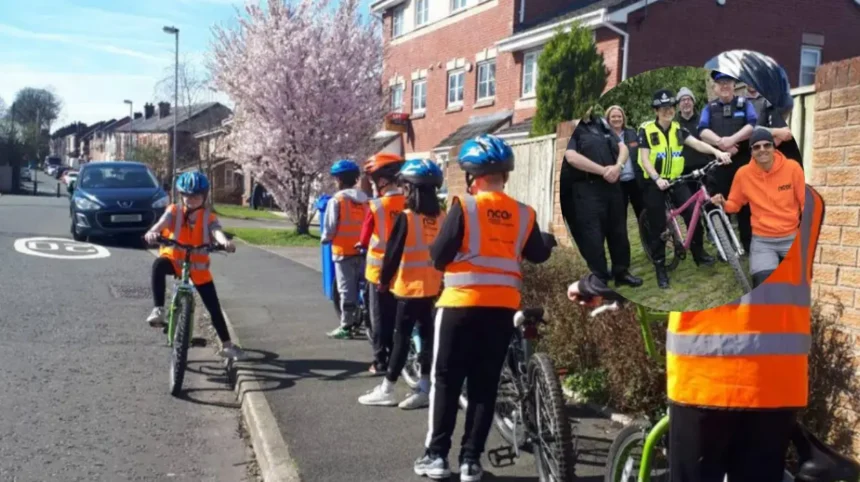
- The handover ceremony took place last month in Philips Park, Whitefield
- All bikes were properly audited and assessed by GMP’s Property Office before donation
- Hundreds of additional bikes remain in GMP’s possession, seized from criminals or recovered as lost/stolen and unclaimed
- The bikes will be used on mountain bike rails across the Bury area for healthy exercise
- The programme gives young people opportunities for fun, healthy physical activities
- Officers from Bury’s Neighbourhood Policing Team met with NCA members for the handover
- The donation represents a community-focused approach to dealing with unclaimed police bicycles
Bury (Manchester Mirror)June 10, 2026 – Forty lost, stolen, and seized bicycles in Greater uk/police/">Manchester Police’s possession have been donated to a Bury training project, marking a significant community initiative that will provide young people with new skills and opportunities. As reported by the Greater Manchester Police official news service, officers have donated 40 bikes to the Nationwide Cycling Academy (NCA), who will be utilising them to teach young people repair skills and provide them with new opportunities.
- Key Points
- How Did the Bicycles Reach the Nationwide Cycling Academy?
- Who Conducted the Bicycle Assessment and Processing?
- What Skills Will Young People Learn from the Donated Bicycles?
- How Will the Bicycles Be Used for Physical Exercise?
- Why Did Greater Manchester Police Choose This Community Donation Approach?
- What Happens to the Hundreds of Remaining Bicycles?
- Background: The Development of Police Bicycle Donation Programmes
- Prediction: How This Development Will affect Young People in Bury
- Technical Skill Development and Employment Opportunities
- Physical Health and Wellness Benefits
- Community Integration and Social Development
- Long-term Economic and Social Impact
- Accessibility and Equality Benefits
The donation represents a innovative approach to handling bicycles that have been recovered by police but remain unclaimed after appropriate periods. As stated in the official Greater Manchester Police announcement, “Hundreds of bikes remain in GMP’s possession, having been seized from criminals, or recovered as lost or stolen and have been unclaimed over a period of time across the force”. This programme demonstrates how police forces can repurpose recovered items for community benefit rather than simply storing or disposing of them.
How Did the Bicycles Reach the Nationwide Cycling Academy?
Subsequently, as part of a Bury Neighbourhood Policing Team project, officers have donated the 40 bicycles to the Nationwide Cycling Academy. As reported by the Greater Manchester Police news team, the handover took place last month in Philips Park, Whitefield, where members of Bury’s Neighbourhood Policing Team and members of the NCA met for the official ceremony. The location in Philips Park provided a suitable community setting for the transfer, symbolising the partnership between law enforcement and community organisations.
All bikes were properly audited to ensure they were appropriate for donation, with rigorous checks undertaken before the handover. As detailed in the Greater Manchester Police statement, “All bikes were properly audited to ensure they were appropriate for donation, with the hundreds in GMP’s possession thoroughly checked and appraised”. This audit process ensured that only suitable bicycles were donated, maintaining quality standards for the training programme.
Who Conducted the Bicycle Assessment and Processing?
This saw members of GMP’s Property Office undertake the necessary processing and assessing tasks, ensuring systematic handling of all donated items. As reported by the Greater Manchester Police official news service, the Property Office team completed the necessary administrative and technical work required to prepare the bicycles for donation. Their work ensured proper documentation and verification that the bicycles met safety and quality standards for the training programme.
The thorough assessment process demonstrates the professionalism and care Greater Manchester Police applies even to community donation projects. As stated in the official announcement, the hundreds of bikes in GMP’s possession were “thoroughly checked and appraised” before any donation took place. This systematic approach ensures accountability and maintains public trust in how police handle recovered property.
What Skills Will Young People Learn from the Donated Bicycles?
In addition to repair skills, the bikes will be used on mountain bike rails across the Bury area, giving young people the opportunity to take part in healthy and fun exercises. As reported by Greater Manchester Police, the Nationwide Cycling Academy will utilise the donated bicycles for multiple purposes beyond just repair training. This multi-faceted approach maximises the benefit of the donation for young participants.
The repair skills programme will teach young people practical technical abilities that could lead to future employment opportunities. As stated in the GMP announcement, the NCA will be
“utilising them to teach young people repair skills and provide them with new opportunities”.
These skills include understanding bicycle mechanics, diagnostic techniques, repair procedures, and maintenance best practices.
How Will the Bicycles Be Used for Physical Exercise?
The mountain bike rails across the Bury area will provide structured cycling opportunities for programme participants. As detailed by Greater Manchester Police, these facilities will give young people the opportunity to take part in healthy and fun exercises. This physical activity component addresses important health outcomes alongside technical skill development.
The combination of technical training and physical exercise creates a comprehensive programme addressing multiple development areas. As reported in the official GMP news release, the bikes serve dual purposes: teaching repair skills and enabling physical activity through cycling on designated rails. This integrated approach maximises the benefit of each donated bicycle.
Why Did Greater Manchester Police Choose This Community Donation Approach?
The donation represents a community-focused policing initiative that transforms recovered items into educational resources. As reported by the Greater Manchester Police news team, this project demonstrates how law enforcement can contribute positively to community development beyond traditional policing activities. The initiative aligns with modern policing principles emphasising community engagement and partnership.
The Bury Neighbourhood Policing Team specifically developed this project to address local community needs. As stated in the official announcement, the donation was
“part of a Bury Neighbourhood Politing Team project”.
This neighbourhood-level approach ensures the programme addresses specific local requirements rather than implementing generic solutions.
What Happens to the Hundreds of Remaining Bicycles?
Hundreds of bikes remain in GMP’s possession, having been seized from criminals, or recovered as lost or stolen and have been unclaimed over a period of time across the force. As reported by Greater Manchester Police, this represents a significant ongoing inventory that may warrant future community donation programmes. The existence of this inventory suggests potential for expanded donation initiatives.
The force continues to manage these bicycles appropriately while considering future disposal or donation options. As detailed in the GMP announcement, the hundreds of remaining bikes have been “seized from criminals, or recovered as lost or stolen and have been unclaimed”. This categorisation helps determine appropriate handling for each bicycle.
Background: The Development of Police Bicycle Donation Programmes
The donation of 40 bicycles by Greater Manchester Police to the Nationwide Cycling Academy represents an evolving approach to managing recovered property within UK law enforcement. This development emerged from broader discussions about how police forces should handle unclaimed stolen, lost, and seized items, particularly bicycles which represent a significant category of recovered property.
Historically, police forces across the UK have faced challenges managing large inventories of recovered bicycles. According to standard police property management procedures, bicycles seized from criminals or recovered as lost/stolen must be held for specific periods to allow owners to claim them. When owners fail to claim items within prescribed timeframes, forces must determine appropriate disposal methods.
The Bury Neighbourhood Policing Team project represents innovation in this area, choosing community donation over traditional disposal methods like auction or destruction. This approach aligns with modern policing principles emphasising community engagement, resource maximisation, and positive community impact. The programme demonstrates how police can transform potential waste into educational resources.
The audit and assessment process implemented by GMP’s Property Office follows established property management protocols while adapting them for donation purposes. This ensures accountability, maintains public trust, and guarantees that donated items meet safety standards. The thorough checking and appraisal process mentioned in the official announcement reflects responsible property management.
The partnership with the Nationwide Cycling Academy represents collaboration between law enforcement and community organisations, a key principle in contemporary neighbourhood policing. This partnership enables the police to contribute resources while the academy provides expertise in cycling education and youth development.
Prediction: How This Development Will affect Young People in Bury
This bicycle donation programme will significantly affect young people in Bury by providing accessible technical training and physical activity opportunities that might otherwise be unavailable. The impact extends across multiple dimensions of young people’s development and future prospects.
Technical Skill Development and Employment Opportunities
Young people participating in the programme will gain practical bicycle repair skills that could lead to future employment opportunities in the cycling industry, mechanics, or related technical fields. These hands-on skills provide alternative pathways for young people who may not thrive in traditional academic environments. The repair training teaches problem-solving, diagnostic thinking, and technical competence that transfer to other careers.
As the programme teaches
“repair skills and provide them with new opportunities”
according to the GMP announcement, participants develop employable skills that could lead to paid work, apprenticeships, or further education in technical fields. This particularly benefits young people from disadvantaged backgrounds who might lack access to quality vocational training.
Physical Health and Wellness Benefits
The mountain bike rails programme will improve physical health outcomes for participating young people by providing regular exercise opportunities. Cycling on designated rails encourages consistent physical activity, helping combat obesity, improve cardiovascular health, and develop fitness habits that persist into adulthood. The “healthy and fun exercises” mentioned in the GMP announcement address important public health concerns.
Regular physical activity through cycling also provides mental health benefits, including reduced stress, improved mood, and enhanced self-confidence. Young people who engage in regular exercise typically demonstrate better academic performance, improved social skills, and reduced behavioural problems.
Community Integration and Social Development
Participation in the programme will foster community integration by connecting young people with positive adult mentors from the Nationwide Cycling Academy and creating opportunities for peer interaction in structured, supportive environments. The programme brings young people together around shared activities, building social connections and reducing isolation.
The partnership between police and the cycling academy also helps build positive relationships between young people and law enforcement, potentially reducing antisocial behaviour and increasing trust in police. When young people see police contributing positively to their community through resource donation, it challenges negative perceptions and builds community cohesion.
Long-term Economic and Social Impact
Over time, this programme could contribute to reduced youth unemployment in Bury by equipping participants with marketable skills. Young people with technical competencies typically experience better employment outcomes and higher earning potential than those without vocational training. The programme’s impact extends beyond individual participants to benefit families and the wider community through improved economic outcomes.
The programme also potentially reduces bicycle theft by creating appreciation for bicycles among participants who learn repair and maintenance skills. Young people who understand bicycle value and mechanics may be less likely to participate in theft or more likely to report stolen bicycles.
Accessibility and Equality Benefits
By providing free access to quality bicycles and training, the programme removes financial barriers that might otherwise prevent young people from participating in cycling activities. This accessibility ensures that socioeconomic status doesn’t determine whether young people can develop technical skills or engage in physical exercise. The donation of police-seized bicycles represents efficient use of public resources to support disadvantaged young people.
The programme’s location across Bury area ensures geographic accessibility for young people throughout the community, not just those in specific neighbourhoods. This broad geographic reach maximises the programme’s impact and ensures equitable access to opportunities.
The自行车 donation programme represents a model that other police forces could replicate, potentially expanding benefits to young people across Greater Manchester and beyond. As more forces adopt similar approaches, the cumulative impact on youth development, employment, and community health could be substantial.