Key Points
- There will be a major road closure on Parkhills Road to allow important carriageway resurfacing works.
- The resurfacing forms an integral part of the overall £5.7 million Fishpool and Pimhole Active Travel Scheme in Greater Manchester’s Bee Network.
- This road closure affects the carriageway from Pilot Street to the roundabout at Market Street.
- The funding for this scheme has been supported by the UK government through CRSTS and Challenge Fund of the Mayor of Greater Manchester.
- Alternative diversions, altered refuse collection and residential access measures have been put in place by local highway authorities.
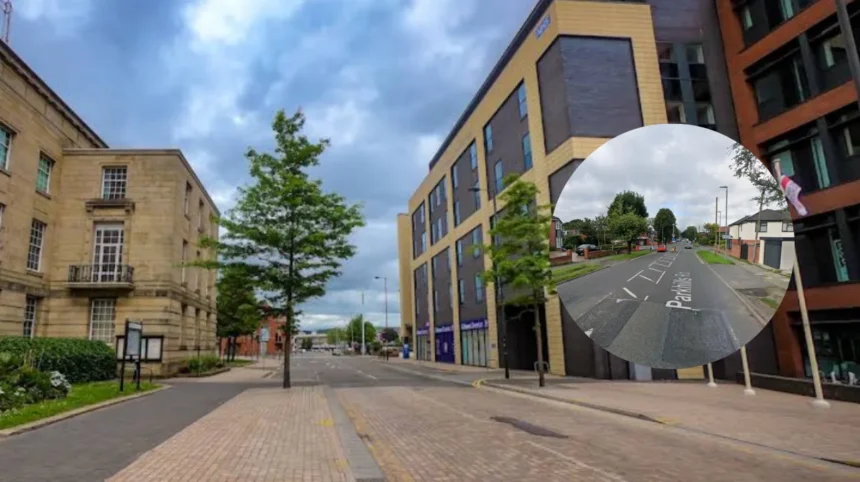
Bury (Manchester Mirror) August 29, 2026 — A critical section of the local highway network is set to shut as extensive resurfacing operations get underway on Parkhills Road. The infrastructure work forms part of the ongoing £5.7 million multi-modal development across the Fishpool and Pimhole neighbourhoods, delivered under Greater Manchester’s Bee Network active travel programme.
- Key Points
- Why Is the Bury Road Closure Taking Place on Parkhills Road?
- What Are the Key Diversion Routes and Access Arrangements?
- How Does the Work Connect to the £5.7m Fishpool and Pimhole Scheme?
- Background of the Active Travel Infrastructure Project
- Predicted Impact of the Scheme on Local Commuters and Residents
Why Is the Bury Road Closure Taking Place on Parkhills Road?
The temporary shutdown is required to allow civil engineering teams to strip, repair, and resurface deteriorating highway tarmac safely and efficiently. As reported by the Prestwich and Whitefield Guide and the Bury Times, the closure will directly affect the stretch running between Pilot Street and the Market Street roundabout.
To facilitate the heavy machinery required for resurfacing, general vehicular through-traffic is restricted. A spokesperson for Bury Council stated:
“Improvement works in Fishpool and Pimhole are continuing with resurfacing work starting Tuesday, September 1, on Parkhills Road. The road will be closed between Pilot Street and Market Street roundabout.”
What Are the Key Diversion Routes and Access Arrangements?
Highways authorities have installed signed diversionary routes directing non-local traffic via adjacent primary corridors, including Market Street and Manchester Road.
As reported by local media outlets covering Bury Council’s transport notices, council officers have issued direct guidance to local householders regarding waste management collections and property access. Residential access will be maintained wherever practical, though motorists have been urged to plan journeys in advance to avoid peak-hour delays.
How Does the Work Connect to the £5.7m Fishpool and Pimhole Scheme?
The resurfacing on Parkhills Road is a core component of a long-term capital transport programme designed to overhaul pedestrian, cycling, and public transport links south of Bury town centre.
As reported by Place North West, regional infrastructure contractor George Cox & Sons was appointed to deliver the £5.7 million project package. The scheme encompasses:
- New signal-controlled pedestrian crossings, including toucan crossings and tactile paving.
- Junction remodelling at high-volume intersections such as Manchester Road and Parkhills Road.
- Installation of solar-powered highway lighting, traffic calming measures, and junction plateaus.
- The integration of dedicated cycle-friendly corridors connecting into the wider regional network.
As reported by Roch Valley Radio, regional transport funding for the initiative is sourced directly from the UK Government’s City Region Sustainable Transport Settlement (CRSTS) and the Mayor of Greater Manchester’s Challenge Fund.
Background of the Active Travel Infrastructure Project
The Fishpool Phase 2 and Pimhole active travel initiative was conceived to address longstanding issues with traffic congestion, vehicle dominance, and poor walking infrastructure around southern Bury. Over several years, public consultations highlighted local demand for safer pedestrian links between residential quarters, local schools, and central public transport interchanges.
The project forms a critical link in the broader Greater Manchester Bee Network, an integrated public transport and active travel masterplan designed to encourage alternatives to private car use across the 10 Greater Manchester boroughs. Earlier milestones in the £5.7 million package included the structural remodelling and reopening of the Market Street corridor and CYCLOPS-style junction improvements. The current resurfacing along Parkhills Road transitions the multi-year programme into its final road quality and surface upgrade stages.
Predicted Impact of the Scheme on Local Commuters and Residents
The delivery of this active travel upgrade is expected to bring short-term disruption followed by long-term structural changes for local residents, business owners, and regional commuters.
In the immediate term, motorists using the southern approaches to Bury town centre will encounter delays, localised rat-running, and bus diversions while machinery occupies Parkhills Road and Manchester Road.
Once completed, however, the rebuilt junctions and newly resurfaced carriageways are projected to lower vehicular speeds, reduce pedestrian collision risks near residential streets, and provide protected routes for cyclists and school children. For transport planners across Greater Manchester, the completed scheme will serve as a continuous test case for whether dedicated active travel infrastructure can shift short suburban journeys away from motor vehicles in historic industrial towns.