Key Points
- Beefeater is set to shut down all remaining 106 steakhouse restaurants in the UK by 10 September 2026.
- Sister restaurant brand Brewers Fayre is set to shut down its total portfolio of 89 locations by 7 September 2026.
- The closure of the two brands comes as part of a wider estate restructure initiated by parent company Whitbread PLC, which will affect about 3,800 jobs in the UK and Ireland.
- In order to make room for new hotel rooms and other food outlets for its Premier Inn, the company intends to sell some of its excess venues.
- Beefeater Reward Club members have until 31 August 2026 to exchange their loyalty points for vouchers before the system closes down.
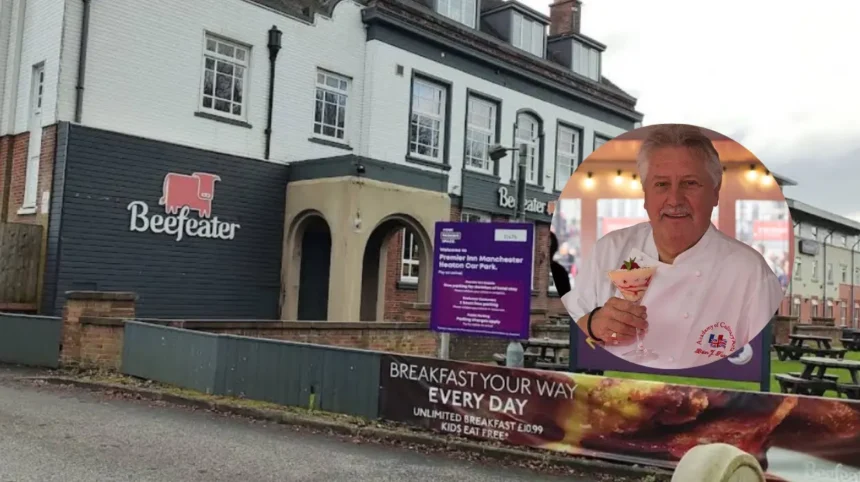
Manchester (Manchester Mirror) August 29, 2026 — Whitbread plc has confirmed the definitive timeline for the nationwide closure of its heritage steakhouse chain Beefeater, setting a final trading date of 10 September 2026 for all 106 remaining UK branches, including the prominent Heaton Park outlet. The phased wind-down also involves the withdrawal of the 89-site Brewers Fayre pub-restaurant portfolio on 7 September 2026, marking a complete exit from standalone branded pub-dining concepts to clear estate capacity for hotel expansions. The group restructuring programme places approximately 3,800 hospitality positions under redundancy consultation, representing about 12 per cent of Whitbread’s 30,000-strong operational workforce across the United Kingdom and Ireland.
- Key Points
- Why is Whitbread closing all 106 Beefeater restaurants?
- When will the Beefeater and Brewers Fayre shutdowns take place?
- How will Whitbread manage 3,800 workforce redundancies?
- What must loyalty cardholders do before August 31?
- Background of the particular development
- Prediction: How will this development affect UK consumers and local markets?
The hospitality conglomerate, which trades on the London Stock Exchange and manages the Premier Inn hotel chain, initiated this strategic redirection to streamline high-cost floor space and lower operating expenditure across suburban hospitality parks. Under the operational programme, several freehold and leasehold hospitality units will be redeveloped into additional Premier Inn bedrooms, while secondary sites are being transferred to third-party operators or converted into Whitbread’s internal dining format, Thyme, dedicated strictly to hotel guests.
Why is Whitbread closing all 106 Beefeater restaurants?
The decision to end trading across Beefeater and affiliated pub divisions stems from a strategic realignment aimed at reducing overhead expenses while unlocking commercial value from hotel real estate. As reported by financial news editor Joanna Bourke in The Guardian, Whitbread’s executive leadership cited escalating operational expenditure, utility cost pressures, and revised UK employment taxes as principal factors driving the need for a corporate operational reset.
Hospitality trading patterns across the United Kingdom have experienced sustained shifts over recent quarters, with family pub-restaurant footfall softening against changing consumer leisure budgets. Whitbread’s executive board concluded that converting lower-yielding food and beverage square footage directly into commercial accommodation offers higher returns per available room. Consequently, the company has earmarked surplus dining rooms adjacent to Premier Inn hotels to create upwards of 600 additional guest suites across its national footprint.
When will the Beefeater and Brewers Fayre shutdowns take place?
The operational wind-down will follow a sequential timetable across early September 2026:
- 3 September 2026: Operations cease across ancillary Whitbread casual dining concepts, including Bar + Block, Table Table, and Cookhouse + Pub locations.
- 7 September 2026: All 89 Brewers Fayre pub venues conclude trade following the completion of evening dinner service.
- 10 September 2026: All 106 operational Beefeater steakhouses close permanently across England, Scotland, and Wales.
As reported by consumer journalist Megan White in the Swindon Advertiser, direct communications distributed to Beefeater Reward Club cardholders verified the finality of the process. The formal customer notice stated:
“As you may have seen, we have recently announced changes to our business, which is resulting in the closure of our Branded Restaurants. This means that on Thursday 10 September 2026 your local Beefeater and all other UK Beefeaters will close.”
How will Whitbread manage 3,800 workforce redundancies?
The scale of the restructuring exposes approximately 3,800 restaurant, bar, and kitchen team members to structural employment changes. Whitbread management has initiated formal collective consultation processes with workforce representatives while committing to internal redeployment wherever commercial vacancies exist.
A corporate spokesperson for Whitbread confirmed the group’s retention objectives:
“We recognise the impact of this proposal on colleagues who work at the affected sites. As a business which recruits around 15,000 people every year, we expect to be able to retain a significant proportion of those affected and will be looking to redeploy as many of our impacted colleagues as possible.”
While central management intends to transfer displaced team members to neighbouring Premier Inn hotels or retained Thyme kitchens, regional union organisations have highlighted that geographic mismatches will inevitably lead to compulsory exits for staff unable to commute to alternative facilities.
What must loyalty cardholders do before August 31?
Customers holding points balances within the Beefeater Reward Club face an immediate administrative deadline. Under the scheme rules, diners collected five points for every £1 spent across qualifying food and beverage purchases, with 500 accumulated points providing either a £5 dining voucher, complimentary starters or desserts, or a promotional bottle of wine.
Whitbread has confirmed that the accrual of loyalty points ended in late August, with all card balances requiring conversion into official reward vouchers by 31 August 2026. Issued vouchers must then be presented at participating venues before restaurants cease food service on 10 September. Unused balances remaining after the respective venue closure dates will expire without financial compensation.
Background of the particular development
Beefeater was established in 1974 with its inaugural branch, The Halfway House in Enfield, designed to offer accessible charcoal-grilled steaks to the British suburban public. Over the subsequent two decades, the chain expanded rapidly, serving as a pillar of roadside family dining alongside modern hotel developments. By the late 1990s, the brand operated more than 250 establishments nationwide.
In 1999, Whitbread pursued an expansive consumer repositioning campaign by signing celebrity television chef Brian Turner, then widely recognised for his regular appearances on BBC Two’s Ready Steady Cook and later BBC One’s Saturday Kitchen. Turner produced 20 dedicated short television programmes highlighting British produce and culinary preparation on behalf of the chain.
As documented in contemporary trade reporting, Beefeater brand marketing controller Deborah Cutler told Marketing Week at the time:
“The appointment and forthcoming campaign give a new edge to our strategy. The sponsorship will focus on our Britishness and commitment to providing great British food.”
Despite subsequent refurbishment programmes and menu redesigns over the following twenty-five years, rising competition from urban fast-casual chains and dedicated suburban steakhouses gradually eroded Beefeater’s market dominance, prompting parent company Whitbread to gradually contract the network and ultimately phase out the brand.
Prediction: How will this development affect UK consumers and local markets?
The closure of Beefeater and Brewers Fayre estates removes an established fixture of affordable, family-oriented dining from outer-metropolitan and provincial trunk-road corridors across the UK. For suburban consumers—particularly families, retirees, and organised local social clubs—the loss of accessible dining venues with dedicated parking facilities will reduce affordable hospitality options in towns outside major city centres.
In local employment markets, the elimination of 3,800 specialised food-and-beverage posts may create localised labour surpluses in regions where hospitality vacancies have begun to slow. Furthermore, travelling business guests and domestic tourists using Premier Inn accommodation will see their dining choices change; hotel stays will increasingly rely on compact, streamlined Thyme breakfast and dinner buffets rather than full-service, third-party accessible pub restaurants. This estate conversion will accelerate the ongoing national consolidation of commercial dining, channelling roadside leisure traffic toward newer fast-casual operators and delivery-focused retail hubs.