The industrial and scientific foundations of modern society rely heavily on pioneering minds born or based within the metropolitan boundaries of Manchester. This geographic hub catalyzed the work of several transformative individuals during the Industrial Revolution and the modern scientific era. These figures developed theories and innovations that fundamentally altered global manufacturing, economic structures, and scientific understanding.
- How Did Musicians From Manchester Shape Global Pop Culture?
- Which Literary and Artistic Icons Call Manchester Their Home?
- How Have Sports Personalities From Greater Manchester Influenced World Athletics?
- What Impact Do Manchester Born Leaders Have on Modern Politics and Law?
- FAQs About Famous People from Manchester
John Dalton, born in 1766, established modern atomic theory through his research conducted at the Manchester Literary and Philosophical Society. He determined that all matter consists of small particles called atoms. His work provided the empirical foundation for modern chemistry, altering how scientists calculate atomic weights.
Sir Joseph Whitworth, born in 1803, revolutionized precision engineering by developing a standard system for screw threads. The Whitworth thread became the first national standard in the world, enabling mass production across global engineering sectors. His measurement systems achieved accuracies to the one-millionth of an inch.
Emmeline Pankhurst, born in Moss Side in 1858, led the British suffragette movement to secure voting rights for women. She founded the Women’s Social and Political Union in 1903, utilizing direct action to force legislative changes. Her efforts directly contributed to the Representation of the People Act 1918.
Alan Turing, though born in London, completed his groundbreaking work on computing and artificial intelligence at the University of Manchester. He designed the Manchester Mark 1, which represents one of the earliest stored-program computers in existence. His 1950 paper computing machinery and intelligence introduced the Turing Test.
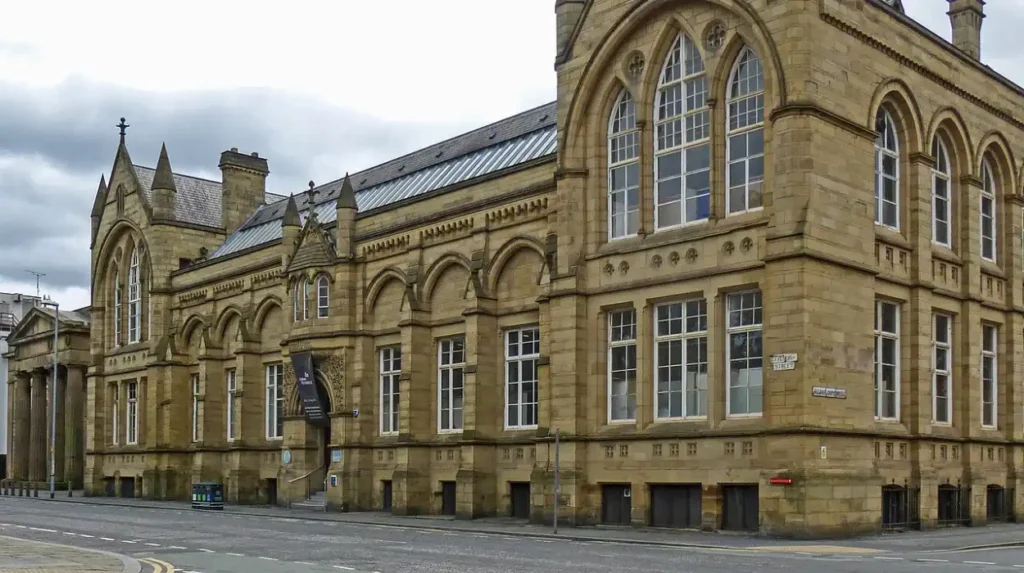
Tim Green
Sir Andre Geim and Sir Konstantin Novoselov isolated graphene at the University of Manchester in 2004. They utilized a mechanical exfoliation technique to extract a single atomic layer of carbon from graphite. This discovery earned them the Nobel Prize in Physics in 2010.
These historical figures established a legacy of technical innovation and social reform that persists in contemporary institutions. The scientific methodologies developed by Dalton and Turing remain embedded in the current curricula of global academic establishments. The social advancements initiated by Pankhurst continue to influence democratic processes across modern nations.
How Did Musicians From Manchester Shape Global Pop Culture?
The musical output of Manchester during the late twentieth century generated distinct genres that redefined the global music industry. Local artists established structural shifts in independent rock, post-punk, and electronic dance music, creating subcultures that influenced international fashion, art, and youth movements. These musical developments turned the city into a global focal point for cultural tourism and creative expression.
The Smiths, formed in 1982, introduced a distinctive guitar-driven alternative rock sound that countered the dominant synth-pop trends of the decade. Lyricist Morrissey and guitarist Johnny Marr collaborated to produce albums that addressed social isolation and political discontent. Their work established the stylistic blueprint for British indie music.
Joy Division, originating in Salford in 1976, pioneered the post-punk movement through minimalist instrumentation and melancholic lyrical themes. Following the death of frontman Ian Curtis in 1980, the surviving members formed New Order. This new entity fused post-punk elements with electronic dance music.
New Order released the single Blue Monday in 1983, which remains the best-selling twelve-inch vinyl single of all time. Their integration of synthesizers and drum machines heavily influenced the development of house and techno music. The band also funded the Haçienda nightclub, which became the epicenter of the Madchester cultural era.
Oasis, formed by brothers Noel and Liam Gallagher in Burnage in 1991, drove the Britpop movement to international commercial prominence. Their debut album Definitely Maybe became the fastest-selling debut album in British history upon its release in 1994. The band filled massive stadiums globally, demonstrating the commercial viability of working-class northern rock.
The Stone Roses blended indie rock with psychedelic dance rhythms to define the late 1980s musical landscape. Their self-titled 1989 debut album catalyzed the Madchester scene, bridging the gap between traditional rock audiences and rave culture. Their success opened opportunities for subsequent alternative bands.
The collective impact of these musicians established a robust infrastructure of independent record labels, recording studios, and live venues within the city. This heritage continues to attract aspiring artists to creative quarters like the Northern Quarter. The sonic archetypes created by these bands remain influential among contemporary musicians worldwide.
Which Literary and Artistic Icons Call Manchester Their Home?
The physical landscape and social dynamics of Manchester have long served as primary inspiration for prominent writers, painters, and dramatists. Creative figures from the region documented the realities of urban industrialization and working-class life with precise realism. Their artistic contributions expanded the scope of British literature and visual arts, introducing new perspectives into the national canon.
Elizabeth Gaskell, residing in Plymouth Grove during the mid-nineteenth century, authored industrial novels that detailed the socioeconomic divisions of Victorian England. Her works Mary Barton and North and South provided detailed accounts of the struggles faced by factory workers. Her writing humanized the human cost of rapid urban growth.
L.S. Lowry, born in 1887, developed a distinctive style of painting that captured the industrial landscapes of Salford and Manchester. He utilized a specific palette of five colors to depict factory chimneys, mills, and crowds of working-class citizens. His work offers a visual record of twentieth-century northern life.
Anthony Burgess, born in Harpurhey in 1917, wrote the dystopian satirical novel A Clockwork Orange, published in 1962. His linguistic innovation led to the creation of Nadsat, a fictional dialect used by the teenage characters in the book. His literary output spanned over fifty novels and numerous musical compositions.
Carol Ann Duffy, who spent significant portions of her academic career as a professor at Manchester Metropolitan University, became the first female Poet Laureate of the United Kingdom in 2009. Her poetry collections address themes of gender, consumerism, and social inequality. Her clear accessible language popularized poetry for modern readers.
Walter Greenwood published the novel Love on the Dole in 1933 to illustrate the harsh economic realities of unemployment in Salford during the Great Depression. The book was later adapted into a successful stage play and a motion picture. His work influenced public discussions regarding poverty and welfare reform.
The artistic works produced by these individuals remain central to the academic study of industrial sociology and British realism. Local institutions, including the Lowry Gallery and the Elizabeth Gaskell House, preserve these cultural assets for international researchers. The creative methodologies established by these icons continue to inform contemporary regional storytelling.
How Have Sports Personalities From Greater Manchester Influenced World Athletics?
The sporting infrastructure of Greater Manchester has produced elite athletes and managers who have achieved dominant positions in international sports. The region features world-class training facilities that support development in football, cycling, boxing, and athletics. These sports personalities have broken world records, secured international championships, and redefined athletic training methodologies on a global scale.
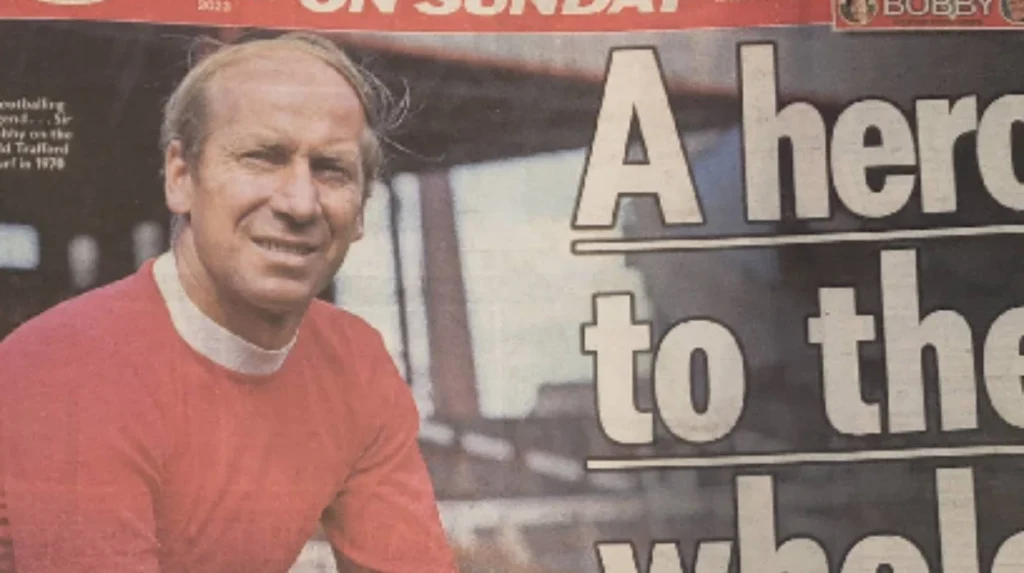
Sir Bobby Charlton, a survival survivor of the 1958 Munich air disaster, achieved international legendary status with Manchester United and the England national team. He scored 249 goals for his club and played a vital role in England winning the 1966 FIFA World Cup. His sportsmanship made him a global ambassador for football.
Marcus Rashford, born in Wythenshawe in 1997, achieved prominence both as a forward for Manchester United and as a prominent social activist. He successfully campaigned for the UK government to extend free school meals for vulnerable children during school holidays. His efforts resulted in policy changes that aided millions of families.
Dame Sarah Storey, residing and training within the region, stands as the most successful British Paralympian of all time. She won a total of twenty-eight Paralympic medals across swimming and cycling disciplines, spanning multiple international games. Her career demonstrates sustained athletic performance across three decades.
Tyson Fury, born in Wythenshawe in 1988, captured the unified world heavyweight boxing titles by defeating Wladimir Klitschko in 2015. He maintained an undefeated professional record across multiple title defenses in global arenas. His performances re-established British heavyweight boxing at the pinnacle of international sport.
Keely Hodgkinson, training out of Greater Manchester, won the gold medal in the 800-meter track event at the international games. She set multiple national records, establishing herself as a leading figure in modern middle-distance running. Her technical progression reflects the efficacy of regional athletic training programs.
The global influence of these athletes extends past their physical achievements into economic and social spheres. The presence of these sports personalities drives the commercial success of local institutions, attracting international investments to stadiums and sports complexes. Their achievements provide structural templates for youth athletic development systems worldwide.
What Impact Do Manchester Born Leaders Have on Modern Politics and Law?
The socio-political environment of Manchester has served as a primary incubator for political movements and legal doctrines that shape modern governance. Local leaders consistently challenged traditional legislative frameworks, advocating for labor rights, economic reforms, and democratic representation. Their actions established statutory precedents that continue to govern public administration and international legal systems.
Robert Blatchford, born in 1851, founded the socialist newspaper The Clarion in Manchester, which achieved a weekly circulation exceeding eighty thousand readers. His essays popularized socialist economic theories among the industrial working class of northern England. His journalistic work accelerated the formation of the modern Labour Party.
Ellen Wilkinson, elected as the Member of Parliament for Jarrow but deeply tied to Manchester’s activist networks, became one of the first female cabinet ministers in British history. She served as Minister of Education from 1945 until 1947, overseeing the implementation of the Education Act 1944. This legislation established free secondary education for all children.
Abel Heywood, serving as Mayor of Manchester during the nineteenth century, championed the unsanctioned publication of affordable newspapers by fighting the stamp duty tax. His legal battles directly expanded freedom of the press for working-class citizens. He also supervised the construction of the Manchester Town Hall.
Richard Cobden, an industrialist based in Manchester, co-founded the Anti-Corn Law League in 1838 to advocate for free trade policies. His successful campaign led to the repeal of the Corn Laws in 1846, shifting British economic policy toward international free commerce. His theories laid the groundwork for modern global trading systems.
Andy Burnham, elected as the first Metro Mayor of Greater Manchester in 2017, pioneered the devolution model of regional governance within the United Kingdom. He brought the regional bus network back into public control under the Bee Network initiative, establishing a template for other metropolitan areas. His administration altered how local authorities manage transport, housing, and healthcare budgets.
The statutory frameworks initiated by these political leaders remain central to contemporary administrative law and constitutional history. The policy mechanisms developed in Manchester continue to inform modern debates on economic devolution and social equity. These figures established a distinct tradition of regional leadership that influences national legislative agendas.
RELATED ARTICLE
Read about how the city’s industrial roots continue to evolve through modern urban development in our comprehensive guide to theManchester Water Street Regeneration project.
FAQs About Famous People from Manchester
What are people from Manchester called?
People from Manchester are universally known as Mancunians. This term derives from the ancient Roman name for the area, Mamucium, which eventually evolved into the modern city name. It denotes both individuals born within the city boundaries and those who reside permanently within Greater Manchester.
Who is the most famous musician born in Manchester?
Noel and Liam Gallagher of the rock band Oasis, alongside Morrissey and Johnny Marr of The Smiths, are among the most globally recognized musicians born in Manchester. Their work during the late twentieth century defined alternative rock and Britpop, achieving massive commercial success and critical acclaim worldwide.
Did Alan Turing live in Manchester?
Alan Turing moved to Manchester in 1948 to work at the University of Manchester, where he conducted seminal research on early computing systems and artificial intelligence. He spent the remainder of his professional career in the region, establishing foundations for modern computer science before his death in Wilmslow in 1954.
What major political movements started in Manchester?
The Suffragette movement, led by Emmeline Pankhurst, and the Anti-Corn Law League, which established international free trade principles, both originated in Manchester. The city also served as a focal point for early labor union organization, deeply influencing the formation of the British Labour Party.
Which famous scientists discovered graphene in Manchester?
Sir Andre Geim and Sir Konstantin Novoselov isolated the revolutionary material graphene at the University of Manchester in 2004. This breakthrough earned them the Nobel Prize in Physics in 2010, confirming Manchester’s status as a premier global hub for advanced materials research.