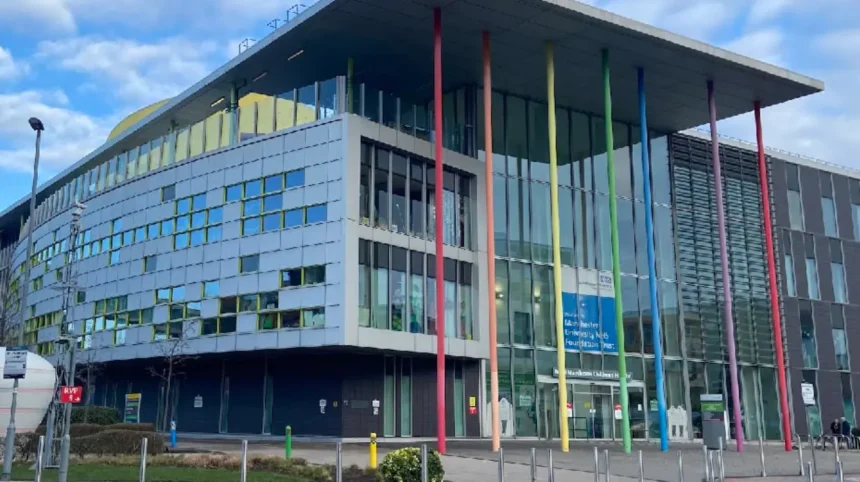
Manchester optometry education serves as a primary foundation for professional primary eye care delivery within the United Kingdom healthcare framework. The academic pathways supply fully qualified clinical practitioners to the National Health Service and commercial sectors to address rising global vision disorders. This regional training hub remains historically vital because it operates alongside the famous Manchester Royal Eye Hospital to combine direct structural pathology lessons with extensive regional population health metrics.
- What is the Structural Design of the Integrated Master of Science in Optometry?
- What are the Exact Entry Requirements for Manchester Optometry Degrees?
- What Specific Specialized Facilities and Research Groups Support this Discipline?
- What are the Financial Costs and Mandatory Equipment Expenses for Students?
- FAQs About Manchester Optometry
- What is the primary difference between a BSc and an MSci in Manchester optometry?
- Can international students practice in their home countries with a Manchester optometry degree?
- What secondary school subjects are most beneficial for optometry admission?
- How are clinical skills assessed throughout the integrated master program?
- Is specialized equipment provided by the university during clinical placements?
The discipline of optometry entails the scientific evaluation of the human visual system, optical mechanics, and ocular tissue anomalies to safeguard public sensory faculties. Students entering this regional environment explore visual physics alongside neurological processing pathways to construct a complete therapeutic understanding of common visual deficits. By anchoring foundational training within a dense urban infrastructure, the academic framework systematically prepares practitioners to handle complex clinical cases ranging from refractive errors to chronic degenerative conditions.
The regional influence of this ophthalmic hub extends beyond local practice into international vision sciences research networks that dictate modern clinical guidelines. It bridges the gap between historical optical principles established in the nineteenth century and twenty-first-century digital diagnostic modalities. Consequently, local qualification pathways maintain a reputation for producing highly adaptable health clinicians who integrate into multidisciplinary hospital units or independent high-street optical practices.
What is the Structural Design of the Integrated Master of Science in Optometry?

The integrated Master of Science in Optometry program spans four consecutive years of academic study to deliver advanced diagnostic competence and regulatory registration readiness. The curriculum structure transitions systematically from theoretical laboratory investigations to direct public patient management under the supervision of senior clinical optical evaluators. This master level configuration ensures that participants acquire both fundamental biological comprehension and complex clinical management strategies prior to independent professional practice.
Year one focuses entirely on the core principles of physical optics, human ocular anatomy, and the fundamental science of vision processing systems. Students participate in systematic laboratory hours to master basic instrumentation including slit lamp biomicroscopes and trial frame refraction techniques. The initial phase ensures that every student develops exact manual dexterity alongside mathematical precision before entering public-facing environments during subsequent terms.
Year two introduces human disease processes, systemic pharmacology, contact lens mechanics, and the intricate dynamics of binocular vision anomalies. Students begin treating real patients within regulated university teaching clinics to synthesize theoretical pathology with live diagnostic outcomes. The integration of team-based case evaluations helps students learn to recognize subtle variations in tissue presentation and formulate accurate management pathways.
Year three shifts priorities toward advanced evidence-based clinical practices and extensive external clinical placements across regional hospital facilities. Participants analyze the modern impact of emergent technologies including artificial intelligence platforms on diagnostic accuracy and screening efficiency. The academic weighting shifts heavily toward clinical decision independence to prepare individuals for final professional evaluations.
Year four delivers complete immersive clinical proficiency through long-term practical assignments within specialized eye clinics and dedicated multi-disciplinary ophthalmic hospitals. The main objective of this final year is achieving complete compliance with the core competencies mandated by the General Optical Council. Graduates emerge with an integrated master degree, completely bypassing the traditional standalone pre-registration year format used by historical training institutions.
What are the Exact Entry Requirements for Manchester Optometry Degrees?
Securing admission into a premier Manchester optometry degree program requires an exceptional academic record across specific secondary and higher science disciplines. Standard entry criteria dictate a minimum of three A-level qualifications achieved within a single exam sitting, typically ranging from grade combinations of AAA to AAB. These advanced qualifications must include at least two core sciences chosen from biology, chemistry, mathematics, or physics.
Practical skills endorsement constitutes a mandatory component of all science qualifications, meaning a separate pass mark in laboratory modules is completely essential. Contextual offers are occasionally extended to qualifying regional applicants, lowering the entry threshold to grades between AAB and ABB under specific socioeconomic metrics. Universities do not accept general studies or critical thinking modules as part of the primary three-course evaluation profile.
International applicants must demonstrate equivalent global qualifications alongside rigorous English language proficiency verifications to secure a visa confirmation of acceptance for studies. The standard standard is an International English Language Testing System academic score of 7.0 overall with no individual component lower than 6.5. Alternative certifications including specific internet-based Test of English as a Foreign Language parameters are also validated systematically by central admissions teams.
What Specific Specialized Facilities and Research Groups Support this Discipline?

Manchester optometry functions within a four million pound purpose-built clinical facility designed to replicate modern hospital environments and private practice screening rooms. The infrastructure contains dedicated suites for contact lens fitting, digital ocular imaging, binocular vision therapy, and low vision rehabilitation services. These spaces utilize advanced diagnostic technology including optical coherence tomography instruments and automated visual field perimeters to enhance student diagnostic capabilities.
The teaching framework benefits directly from close integration with the Manchester Vision Network and the world-renowned Eurolens Research organization. These entities conduct continuous scientific trials on behalf of global optical manufacturers to pioneer next-generation contact lens polymers and dry eye therapies. Students gain direct exposure to active research methodologies, encouraging the development of critical inquiry skills required for modern evidence-based medical practice.
Specific laboratory teams focus heavily on visual psychophysics, exploring the complex relationship between physical light stimuli and the corresponding neurological sensations. Other clinical scientists investigate the rapid progression of childhood myopia to design specialized optical interventions including orthokeratology lenses and multifocal spectacles. This rich scientific ecosystem ensures that undergraduate teaching continuously reflects modern technological and therapeutic breakthroughs in vision care.
What are the Financial Costs and Mandatory Equipment Expenses for Students?
Tuition fees for home students pursuing an undergraduate optometry path are fixed at nine thousand seven hundred and ninety pounds per academic year. International scholars encounter an annual tuition fee of twenty-nine thousand nine hundred pounds, with university policies permitting capped adjustments over time. These baseline educational costs cover core instructional access, initial clinical scrub sets, and standard professional liability insurance protocols.
During the second year of academic study, students are required to invest in personal diagnostic equipment costing between thirteen hundred and seventeen hundred pounds. This essential toolkit features a high-grade professional ophthalmoscope and a specialized retinoscope for objective refractive measurements during patient evaluations. While the initial investment is substantial, these precision medical instruments generally last throughout an entire career in primary eye care.
Additional secondary expenses occur during mandatory external clinical rotations due to travel and temporary housing needs across distant healthcare trusts. The regulatory student registration fee mandated by the General Optical Council is currently thirty pounds annually, though the university reimburses this specific cost. Understanding this comprehensive financial layout allows prospective candidates to plan long-term educational budgets effectively without unexpected financial disruptions.
Related Article: For professionals relocating to the regional healthcare sector who require remote administrative solutions, check out our comprehensive analysis on Altrincham Base Solutions for Remote Professionals.
FAQs About Manchester Optometry
What is the primary difference between a BSc and an MSci in Manchester optometry?
The three-year Bachelor of Science requires a separate, competitive pre-registration year in employment to achieve full regulatory status. The four-year Master of Science fully integrates all clinical competencies and hospital placements directly into the degree timeline, allowing immediate professional registration upon graduation.
Can international students practice in their home countries with a Manchester optometry degree?
Graduates are immediately eligible to register with the United Kingdom General Optical Council, which is recognized globally across numerous international medical boards. Specific nations require additional localized jurisprudence testing or practical conversion modules to satisfy distinct regional licensing protocols.
What secondary school subjects are most beneficial for optometry admission?
Advanced biology and mathematics provide the ideal foundation for mastering ocular anatomy and complex optical physics calculations. Chemistry and physics also serve as excellent primary science choices to satisfy the strict dual-science entry regulations enforced by admissions committees.
How are clinical skills assessed throughout the integrated master program?
Rather than relying on high-pressure final practical examinations, clinical abilities undergo continuous systematic monitoring and structured case reviews all year round. Students must demonstrate consistent professional safety and diagnostic accuracy across varied patient demographics to secure progression into subsequent terms.
Is specialized equipment provided by the university during clinical placements?
The institution provides specialized baseline facilities and clinical scrubs, but students must purchase their own diagnostic ophthalmoscope and retinoscope kits during year two. These instruments are utilized continuously across all subsequent hospital rotations, external clinic placements, and final professional qualifying boards.