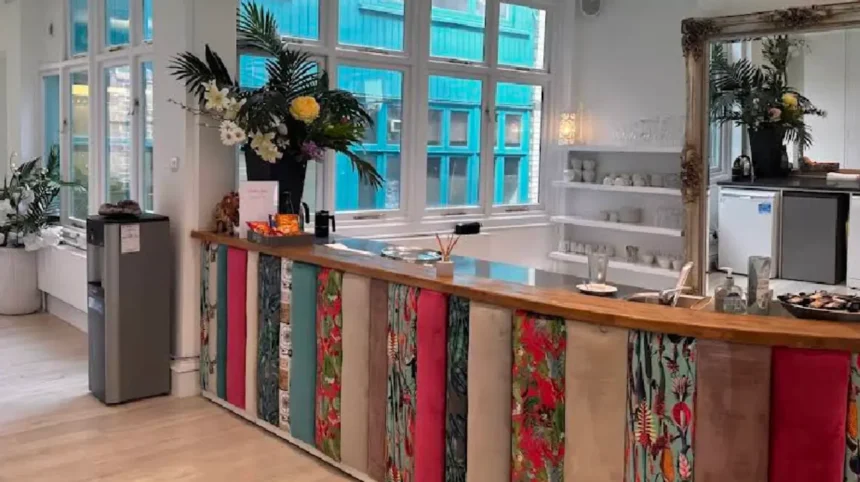
Lucinda Ellery Manchester is a specialized hair loss consultancy for women established in 2009 in King Street, Manchester. Founded by hair loss specialist Lucinda Ellery, who experienced total alopecia at age nine, the organisation offers non-surgical hair replacement systems.
- Which specific hair loss conditions are treated at the Manchester studio?
- How does the Intralace System function for severe female hair thinning?
- What are Medi Connections and how do they differ from standard extensions?
- What specialized variations of the Intralace System exist?
- What is the consultation and fitting process at the Manchester location?
- How does hair integration support emotional and psychological recovery?
- Frequently Asked Questions
- What is the cost of the Intralace System at Lucinda Ellery Manchester?
- Can you wash your hair normally with a Lucinda Ellery mesh integration system?
- How often does the Intralace System require routine studio maintenance?
- Is the Lucinda Ellery hair integration process painful or damaging to natural hair?
- Can you exercise and swim while wearing an Intralace hair system?
The initial founding of the main London consultancy in 1984 laid the technological foundation for female-focused hair restoration techniques. Demand from clients traveling from North West England led to the launch of the Manchester location in 2009. Studio manager Domonique Diamond relocated from London to oversee the expansion.
The original studio occupied a space near Deansgate within the St Ann’s Passage shopping centre on King Street. High demand created client waiting lists, prompting a major expansion in 2023. This expansion expanded total operational floor space to 2,000 square feet and increased technician capacity.
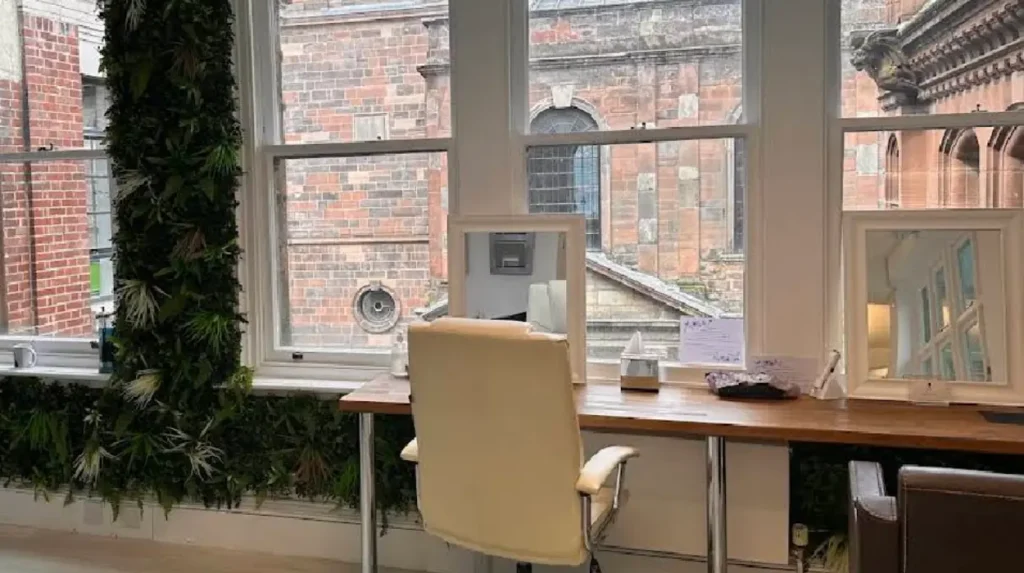
The institution functions strictly as a private hair integration studio rather than a traditional high-street salon. The facility incorporates individual styling bays to protect client privacy during long appointment times. Operations focus entirely on managing hair thinning, medical hair loss, and compulsive hair pulling conditions.
Which specific hair loss conditions are treated at the Manchester studio?
Lucinda Ellery Manchester provides management systems for androgenetic alopecia, alopecia areata, frontal fibrosing alopecia, telogen effluvium, trichotillomania, and chemotherapy-induced hair loss. Each clinical presentation requires specific integration structural parameters based on hair follicle stability.
Androgenetic alopecia, or female pattern hair loss, affects millions of women worldwide. This condition causes progressive follicular miniaturization across the vertex and crown areas. Alopecia areata presents as autoimmune patchy focal loss, whereas frontal fibrosing alopecia causes progressive scarring along the frontal hairline.
Telogen effluvium involves diffuse shedding triggered by systemic physical or psychological stress. Trichotillomania is a hair-pulling disorder categorized under body-focused repetitive behaviors. Chemotherapy treatments damage rapidly dividing hair matrix cells, leading to complete temporary alopecia.
The physical parameters of each condition dictate the technical application chosen by studio specialists. Stabilized non-scarring alopecia allows direct mesh integration. Active inflammatory conditions require regular monitoring to safeguard remaining natural hair roots.
How does the Intralace System function for severe female hair thinning?
The Intralace System is a breathable mesh hair integration structure secured to existing natural hair using targeted physical anchor points. It acts as a permanent prosthetic matrix that allows natural hair growth while providing immediate coverage.
Technicians position a hypoallergenic surgical mesh directly against the scalp. Existing natural hair strands are drawn through the mesh apertures using micro-hooks. Human hair strands are then hand-tied to the mesh matrix to construct natural density across compromised areas.
The system does not rely on medical adhesives, structural glues, or scalp shaving. Natural scalp transpiration continues through the permeable mesh weave, allowing routine washing and drying. Clients wear the system continuously during sleeping, bathing, and physical exercise.
Ongoing biological hair growth shifts the position of the mesh anchor points over time. Clients attend maintenance appointments every six to eight weeks. Technicians release the anchor points, realign the mesh flush to the scalp, and secure it back to the natural hair base.
What are Medi Connections and how do they differ from standard extensions?
Medi Connections are micro-light hair extensions designed to add volume to fragile thinning hair without applying tension to compromised follicles. They use light human hair strands secured by small polymer bonds.
Standard fashion extensions apply physical weight to root shafts, risking traction alopecia on already fine or miniaturized hair. Medi Connections isolate minute bundles of natural hair to disperse physical load evenly across the scalp.
Technicians apply ultra-thin natural hair sections using specialized thermal-polymer points. The synthetic bonding agent matches human hair elasticity, preventing structural snapping during washing and daily grooming routines.
This application method benefits women experiencing early-stage diffuse thinning or recovering from telogen effluvium. The bonds remain in position for three months before requiring professional removal and reapplication.
What specialized variations of the Intralace System exist?
The specialized variations include the Intralace Minima, the Intralace Natural Hair Line, the Intralace Parting, and the Intralace Freewear System. Each variation addresses specific spatial patterns of hair loss across different regions of the scalp.
The Intralace Minima targets localized patches, localized crown thinning, or early parting widening. The Intralace Natural Hair Line integrates ultra-thin silk bases at the front forehead boundary to replicate skin tone and natural emerging follicles.
The Intralace Parting addresses linear thinning along the central line, using a hand-knotted silk membrane to mimic scalp aesthetics. The Intralace Freewear System accommodates total loss conditions, such as alopecia universalis, using custom silicone base retention without requiring existing hair anchors.
Technicians perform precise spatial mapping to match natural hair direction and density gradients. Combining these variations creates customized appliances tailored to individual scalp conditions.
What is the consultation and fitting process at the Manchester location?
The service process begins with an in-person or remote video assessment, followed by customized physical construction and fitting. Technicians evaluate scalp health, measure loss dimensions, and record natural hair color profiles.
Initial consultations analyze scalp skin integrity and natural hair density. Technicians discuss daily routines, lifestyle factors, and expectations to determine structural suitability.
Custom manufacturing uses 100 percent ethically sourced human hair color-matched to the client’s natural shade. Technicians build the mesh, align the hair direction, and configure the anchor placements.
Fitting appointments require several hours of hand-knitting and precision cutting. Stylists integrate the system, trim the lengths, and provide complete instructions on maintenance and home care.
How does hair integration support emotional and psychological recovery?
Hair loss integration systems provide structural coverage that helps reduce anxiety, social withdrawal, and body dysmorphic stress related to hair thinning. Studies show female hair loss creates significant psychological distress.
Hair carries cultural significance tied to identity and health. Chronic hair loss often triggers elevated stress, generalized anxiety, and clinical depression. Restoring hair appearance helps reduce self-consciousness in social and professional settings.
Non-surgical systems offer immediate aesthetic improvements without surgical downtime or systemic medical risks. This fast relief helps break cycles of anxiety linked to progressive hair loss.
The supportive environment in dedicated studios provides validating space for women coping with hair loss. Shared experiences among peers and staff help reduce feelings of isolation during recovery.
Frequently Asked Questions
What is the cost of the Intralace System at Lucinda Ellery Manchester?
The overall cost of an Intralace System varies based on the size of the area being covered, the hair length chosen, and the specific variation required. Standard initial systems generally start from several hundred pounds for smaller areas and scale upward for full-scalp integration. Exact costs are determined during a free initial consultation.
Can you wash your hair normally with a Lucinda Ellery mesh integration system?
Yes, clients wash, blow-dry, and style their hair normally with the system attached. The specialized mesh base allows water and shampoo to penetrate directly to the scalp, keeping your natural hair and scalp clean underneath. Studio technicians provide specific sulphate-free product recommendations and washing instructions during fitting.
How often does the Intralace System require routine studio maintenance?
The Intralace System requires maintenance every six to eight weeks at the Manchester studio. As your natural hair grows, the mesh framework lifts away from the scalp. Studio technicians adjust, tighten, and realign the system back flush against the scalp during these sessions.
Is the Lucinda Ellery hair integration process painful or damaging to natural hair?
The fitting and integration processes are completely non-surgical and painless. The system does not use scalp glues or chemicals, allowing your natural hair to continue growing underneath without direct traction damage when properly maintained.
Can you exercise and swim while wearing an Intralace hair system?
Yes, the Intralace System is designed for continuous daily wear, including high-impact sports, gym workouts, and swimming. Because the system is anchored securely to your existing hair, it remains stable during water activities and intense physical movement.