The Metropolitan Borough of Bury in Greater Manchester contains diverse walking terrain that spans moorland peaks, river valleys, and preserved industrial heritage landscapes. Walking routes in this region provide physical exercise, historical education, and access to protected ecological habitats across the West Pennine Moors. Holcombe Hill reaches an elevation of 334 meters above sea level and serves as a primary geographic focal point for outdoor recreation in the Irwell Valley. The valley features historical canal networks, former railway corridors, and managed country parks such as Burrs Country Park. Outdoor recreation in Bury supports local tourism and public health while preserving industrial history dating back to the eighteenth century.
- What Is the History of Peel Tower and Holcombe Hill?
- How Do You Walk the Holcombe Hill and Peel Tower Circular Route?
- What Features Make the Irwell Valley Trail Popular for Walkers?
- Why Is Burrs Country Park Central to Bury Walking Routes?
- What Unique Landmarks Can You See Around Ramsbottom and Holcombe?
- Frequently Asked Questions
What Is the History of Peel Tower and Holcombe Hill?
Peel Tower stands on Holcombe Hill as a monument erected in 1852 to honor Sir Robert Peel, the former British Prime Minister born in Bury. The tower measures 128 feet in height and was built using locally quarried sandstone to withstand harsh weather conditions on the moorland peak. Sir Robert Peel established the Metropolitan Police Service in 1829 and repealed the Corn Laws in 1846 during his tenure in government. Funding for the monument came from public donations collected across the borough of Bury following Peel’s death in 1850. The site offers panoramic views extending across Greater Manchester, Cheshire, and the West Pennine Moors on clear days.
The land surrounding Holcombe Hill consists of heather moorland, blanket bog, and gritstone outcrops that have sustained sheep farming for centuries. Historic paths across the hill follow ancient trade routes that connected Lancashire farming settlements with commercial markets in Manchester. The public right of way network across Holcombe Hill expanded following formal land access agreements established in the twentieth century. Local conservation bodies maintain the footpaths to prevent soil erosion caused by thousands of annual visitors. The tower displays a flag when open to the public, allowing visitors to climb the
How Do You Walk the Holcombe Hill and Peel Tower Circular Route?
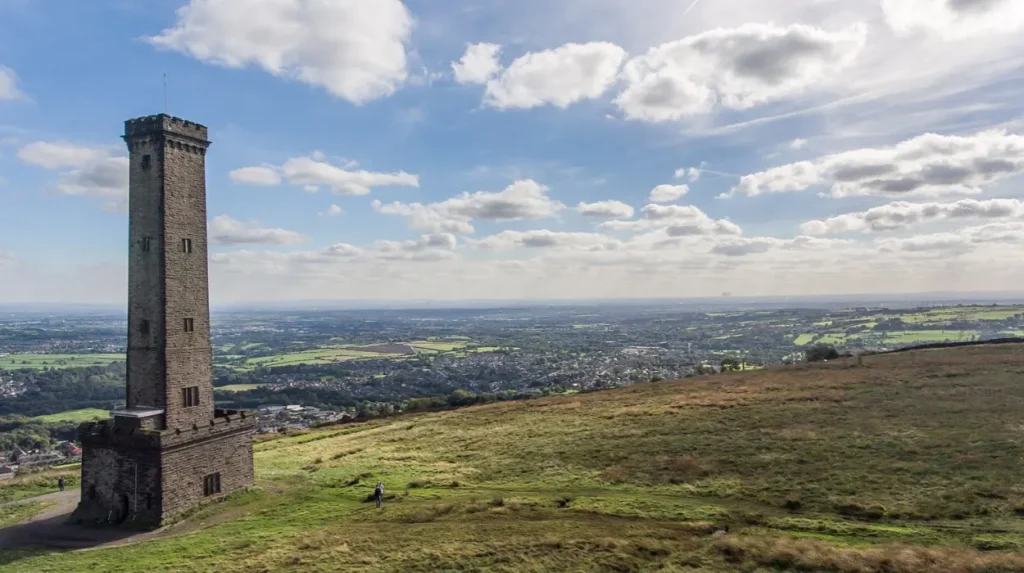
The Holcombe Hill circular route begins at the Shoulder of Mutton pub parking area in Holcombe Village and covers three miles. Hikers climb a steep gradient along a stone track that ascends directly toward the base of Peel Tower. The path turns north across Holcombe Moor toward Pilgrim’s Cross, a historic marker dating back to A.D. 1176. The descent follows Moorbottom Road, a track that loops back down into Holcombe Village through wooded lanes. The full circular walk requires approximately two hours to complete under normal weather conditions.
Proper footwear with ankle support is necessary because the moorland terrain contains uneven gritstone rocks and mud. Rain and fog can develop rapidly on Holcombe Hill, reducing visibility across the open moorland paths. Hikers should check weather forecasts before departing and carry waterproof outer layers during all seasons. The steep initial ascent poses a moderate physical challenge, but the wide paths suit families and dog walkers. Public transport connections link Bury Interchange to Holcombe Village via local bus routes running through Ramsbottom.
What Features Make the Irwell Valley Trail Popular for Walkers?
The Irwell Valley Trail extends along the course of the River Irwell, following repurposed industrial infrastructure, railways, and towpaths. The trail connects Salford to Bacup, passing through central Bury, Burrs Country Park, and Ramsbottom along its route. Walkers experience a flat gradient that accommodates all fitness levels, pram users, and wheelchair accessible sections. The route features preserved structures from the Industrial Revolution, including stone viaducts, weir systems, and textile mill ruins. Rich wildlife habitats line the river banks, providing shelter for kingfishers, gray herons, and roe deer.
The section between Burrs Country Park and Ramsbottom runs parallel to the East Lancashire Railway steam line. Hikers can observe restored steam engines passing along the heritage railway line while walking along the gravel pathways. Interpretive signage along the trail details the history of cotton printing and iron forging operations that once dominated the valley. Multiple entry points allow walkers to customize route lengths ranging from short one-mile strolls to full-day hikes. Refresher stops and public amenities exist at frequent intervals within the towns positioned along the valley floor.
Why Is Burrs Country Park Central to Bury Walking Routes?
Burrs Country Park occupies 86 acres of land situated just one mile north of Bury town center along the River Irwell. The park contains industrial archaeology sites including the foundations of Higher Burrs Mill and Lower Burrs Mill. The site features paved footpaths, an outdoor activity center, a caravan park, and sculpture trail installations. The River Irwell bisects the park, creating aquatic habitats that support wild trout populations and migratory bird species. The park serves as a hub where several long-distance footpaths converge, including the Irwell Sculpture Trail.
Visitors utilize Burrs Country Park as a starting point for extended walks reaching up to Ramsbottom or Holcombe Hill. Parking facilities, public restrooms, and an onsite cafe make the park accessible for visitors of all mobility levels. The sculpture trail displays contemporary artworks created by international artists using stone, metal, and wood materials. Local park rangers manage ecological conservation projects within the park to protect native tree species like oak and birch. Community events and organized health walks take place within the park grounds throughout the year.
What Unique Landmarks Can You See Around Ramsbottom and Holcombe?
The valley and moorland surrounding Ramsbottom host historical landmarks, engineering works, and public art installations within close proximity. Peel Tower remains the most prominent visual landmark visible from almost every point in the lower Irwell Valley. Pilgrim’s Cross stands on Holcombe Moor to mark the location of an ancient stone cross used by medieval travelers. The Peel Monument, Grants Arms, and Ramsbottom Civic Hall reflect nineteenth-century architectural styles supported by local industrial families. Grant’s Tower, a ruined stone folly built in 1829, sits on nearby Top-o’-th’-Moor above Ramsbottom.
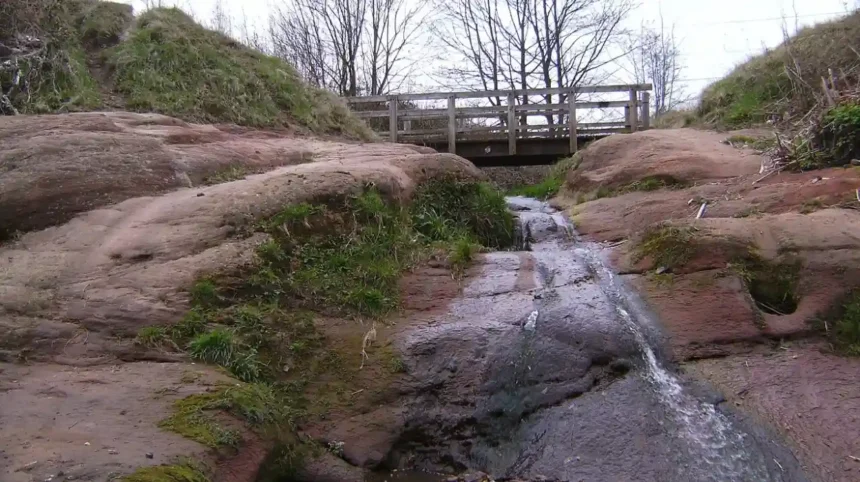
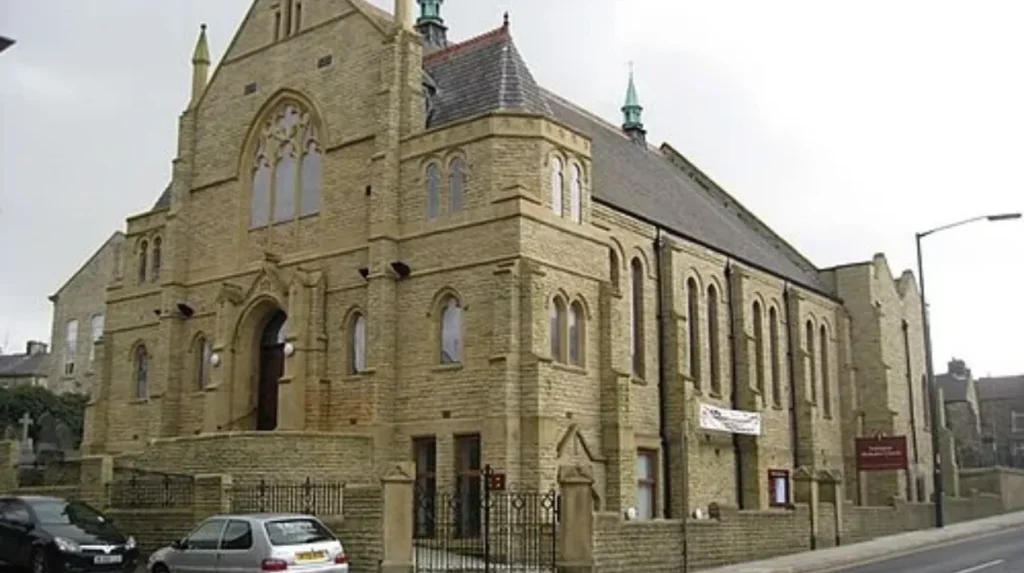
The Irwell Sculpture Trail adds modern cultural interest to the landscape with outdoor installations like the NSPCC Rubbing Stones. Historic railway infrastructure includes the stone-arched Ramsbottom Viaduct and preserved station buildings along the East Lancashire Line. Church structures such as St. Thomas’s Church in Musbury showcase classic Victorian ecclesiastical design using native stone. Deep valleys carved by glacial meltwater contain ancient cloughs and waterfalls like those found in Summerseat. The combination of natural geology and human engineering creates a distinctive landscape identity unique to the Bury district.
Recommended Articles
- Local Property Developments: Lakeside Apartments Proposed in Bury: 38 Flats Planned
- Greater Manchester News: Learn more about regional updates across the borough at the Manchester Mirror.
Frequently Asked Questions
How long does it take to walk up Holcombe Hill to Peel Tower?
The direct walk up Holcombe Hill to Peel Tower from Holcombe Village takes 20 to 30 minutes. The ascent covers a steep distance of under one mile along a well-defined gravel and stone path.
Is Peel Tower open to the public every day?
Peel Tower is not open daily. The monument opens on select weekends and bank holidays when the official flag flies at the top, allowing visitors to climb the inside staircase.
Are the walks around Bury suitable for dogs and families?
Yes, routes like the Irwell Valley Trail and Burrs Country Park offer flat, paved paths ideal for families and dogs. Holcombe Hill is suitable for dogs but requires leashes around livestock.
Where is the best place to park for the Peel Tower walk?
Park at the dedicated car park on Hare and Hounds Lane or along the road in Holcombe Village near the base of Holcombe Hill. Arrive early on weekends due to high demand.
Can you reach Holcombe Hill and Irwell Valley using public transport?
Yes, take local bus services from Bury Interchange to Ramsbottom or Holcombe Village. The East Lancashire Railway also connects Bury to Ramsbottom for trail access.