Manchester abandoned places represent structural remnants of the Industrial Revolution, civic infrastructure shifts, and urban transport evolution. Rapid industrial decentralization during the late 20th century left dozens of textile mills, underground vaults, and railway stations fully disused.
- What is the history behind Mayfield Station as a primary disused railway terminal?
- How were the Victoria Arches constructed and utilized along the River Irwell?
- What historical role did the London Road Fire Station play in municipal infrastructure?
- Why were historical villages around Greater Manchester submerged under water reservoirs?
- What safety hazards and legal regulations apply to disused industrial properties?
- How do municipal authorities preserve and adaptively reuse historic disused landmarks?
- Frequently Asked Questions
The structural landscape of disused properties across Greater Manchester originates from the rapid economic contraction of the late 20th century. During the 19th century, Manchester operated as the global epicenter of textile manufacturing, earning the title Cottonopolis. The city constructed extensive canal networks, massive multi-storey brick mills, and dedicated rail depots to support international commerce. When global manufacturing shifted overseas following World War II, industrial output across Lancashire declined sharply. Hundreds of factories, storage depots, and civic support buildings lost their primary economic function.
The subsequent transition toward a services-based economy left large physical structures unoccupied across districts like Ancoats, Salford, and the city center. Municipal authorities and private property holders faced significant maintenance costs, leading to decades of structural decay. In many cases, complex property boundaries and heritage protections delayed land clearing. This delay preserved an extraordinary collection of Victorian and Edwardian architecture in a state of natural decay. Today, these disused locations serve as physical historical records of industrial mechanics, civic governance, and historical transport networks.
What is the history behind Mayfield Station as a primary disused railway terminal?
Mayfield Station opened in 1910 as an overflow passenger terminus for Manchester Piccadilly before closing to passengers in 1960. The massive iron trainshed and disused platforms survived for decades as a postal sorting depot and urban exploration landmark.
Mayfield Station was constructed by the London and North Western Railway in 1910 to relieve acute track congestion at the adjacent Manchester London Road station, which was later renamed Manchester Piccadilly. Designed with a prominent steel girder frame, brick arcades, and a multi-track layout, the terminal handled suburban commuter traffic across Greater Manchester. Passenger numbers declined following World War II due to changes in regional transit patterns, leading British Railways to officially terminate passenger services in 1960. The facility was subsequently converted into a specialized Royal Mail parcel depot.
Internal tracks were modified to support freight handling equipment, which operated continuously until complete operational closure in 1986. For over thirty years, the nine-acre site stood largely vacant, exposing its cast-iron pillars, timber platforms, and roof trusses to ambient weather conditions. The structural shell retained original railway signaling equipment, iron staircases, and brick subterranean vaults. Urban historians and architects studied the site as a rare intact example of early 20th-century terminus design. In recent years, the Mayfield Partnership initiated a comprehensive regeneration project, transforming parts of the surrounding precinct into public parkland while preserving core industrial elements.
How were the Victoria Arches constructed and utilized along the River Irwell?
The Victoria Arches were constructed in 1838 as cathedral-front embankment vaults along the River Irwell. They functioned as riverboat landing stages, industrial storage spaces, and deep air-raid shelters during World War II before final closure.
The Victoria Arches represent a series of subterranean brick-vaulted chambers built into the riverbank embankment along Victoria Street in central Manchester. Completed in 1838 to elevate the roadway above the natural floodplain, the arches created enclosed interior spaces beneath street level. Industrial enterprises originally leased these spaces as workshops, ironworks, and general storage cellars. In 1895, following the opening of the Manchester Ship Canal, the site was modified to include wooden staircases leading to steam packet landing stages. Steamers such as the Shandon and the Eagle transported over 200,000 passengers annually from these landing stages.
However, frequent industrial pollution and severe river flooding led to the permanent cancellation of packet boat services in the early 20th century. In 1939, the Air Raid Precautions department spent £10,150 converting the subterranean arches into blast-protected bomb shelters capable of holding 1,619 citizens. Contractors installed concrete blast walls, chemical toilets, and auxiliary timber supports throughout the network. Access staircases were removed during post-war street realignments in the 1970s, and all entrance portals along the River Irwell were bricked up. The underground complex remains dark, flooded, and entirely sealed from general public access.
What historical role did the London Road Fire Station play in municipal infrastructure?
London Road Fire Station opened in 1906 as a comprehensive Edwardian civic center combining fire operational bays, police quarters, and coroner courtrooms. It fell into disuse in 1986 and remained vacant for decades due to development standstills.
Designed by Woodhouse and Willoughby in the Baroque Revival style, the London Road Fire Station was constructed for £142,000 and officially opened in 1906. The red terracotta building functioned as an all-in-one municipal emergency compound. It contained the central fire brigade headquarters, a fully operational police station, a coroner court, a gas meter testing station, and residential apartments for firefighters and their families. The station incorporated state-of-the-art technological systems, becoming the first facility in the United Kingdom equipped to receive emergency telegraph signals.
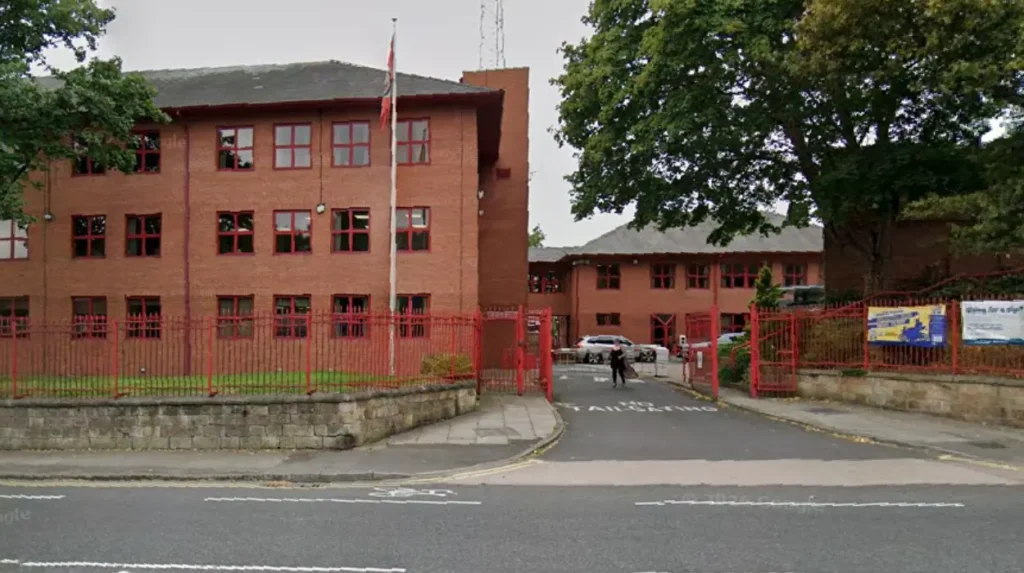
Royal visitors inspected the site in 1942 during wartime operational briefings. Modern firefighting appliances eventually outgrew the narrow Victorian bay doors, prompting the Greater Manchester Fire and Rescue Service to vacate the premises in 1986. The Grade II* listed building subsequently entered a thirty-year period of severe decay under private ownership. Water ingress damaged internal plasterwork, courtyard balconies, and timber fittings, leading to its inclusion on English Heritage’s Buildings at Risk Register in 2001. Legal and planning disputes between local councils and developers stalled restoration efforts until Allied London acquired the site for adaptive reuse.
Why were historical villages around Greater Manchester submerged under water reservoirs?
Several historic villages around Greater Manchester were intentionally submerged between the 1920s and 1960s to build municipal drinking water reservoirs. Communities in Greenbooth, Watergrove, and Ashopton were displaced to fulfill growing urban industrial water demand.
Rapid urban population growth and expanding manufacturing industries during the early 20th century created an urgent demand for clean water across Greater Manchester towns. Municipal water boards identified surrounding valleys as ideal sites for massive storage reservoirs fed by natural rainfall. Constructing these civil engineering projects required compulsory land acquisitions and the total destruction of existing human settlements. In the 1920s, Rochdale Corporation flooded the 700-year-old settlement of Watergrove, demolishing century-old cotton mills, stone cottages, and a Methodist chapel.
In 1943, the Derwent Valley Water Board completed the Ladybower Reservoir, submerging the historic Derbyshire villages of Ashopton and Derwent. Hundreds of residents were relocated, family graves were exhumed, and stone structures were leveled to prevent hazards to navigation. Similarly, during the 1960s, the construction of the Greenbooth Reservoir submerged the historic mill village of Greenbooth in the Naden Valley. During severe summer droughts, falling water levels expose dry stone walls, bridge abutments, and paved roadways from these submerged ghost settlements. These drowned locations illustrate the absolute priority given to industrial utility over rural settlement preservation during the mid-20th century.
What safety hazards and legal regulations apply to disused industrial properties?
Disused industrial properties contain dangerous structural decay, toxic building materials, deep water hazards, and unstable flooring. Accessing these sites without landowner permission constitutes civil trespass under current English property law.
Navigating disused Victorian and Edwardian buildings involves severe physical hazards that can cause catastrophic bodily harm. Decades of uncontrolled water ingress rot load-bearing timber floor joists, making floors susceptible to immediate collapse. Unmaintained masonry structures suffer from spalling brickwork, collapsing roof tiles, and rusted iron supports. Industrial sites built before 1980 frequently contain friable asbestos insulation, toxic heavy metal residues, and volatile chemical compounds left in unsealed vats. Subterranean structures, including the Victoria Arches and disused culverts, present severe risk of oxygen depletion, toxic gas accumulation, and flash flooding.
Under English law, entering private property without explicitly granted authorization constitutes civil trespass under common law doctrines. Landowners owe a limited duty of care under the Occupiers’ Liability Act 1984, but they actively secure perimeters using security patrols, remote surveillance cameras, and motion-activated alarms. Intruders who cause damage, force entry, or remove items face criminal prosecution under the Criminal Damage Act 1971 or the Theft Act 1968. Emergency service rescues in confined disused spaces divert municipal resources and place first responders at risk.
How do municipal authorities preserve and adaptively reuse historic disused landmarks?
Municipal authorities utilize historic listed status, urban heritage grants, and public-private partnerships to adaptively reuse disused structures. Modern planning frameworks prioritize preserving historical facades while redeveloping interior spaces for commercial or community use.
The adaptive reuse of disused buildings balances architectural heritage preservation with modern urban economic requirements. Historic England assigns Grade I, Grade II*, or Grade II listed status to buildings with exceptional architectural or historical interest. This legal designation prevents unauthorized demolition and requires developers to maintain original facades, structural frames, and key historical features. The transformation process involves extensive structural engineering assessments, hazardous material remediation, and modern building regulation compliance upgrades.
In Manchester, projects like the Mayfield Regeneration Scheme demonstrate how disused transport sites can be transformed into multi-use public hubs. Developers stabilized the historic steel trainshed, cleared safety risks, and integrated the structure into a public park and entertainment precinct. Victoria Baths in Chorlton-on-Medlock provides another example, operating as a heritage venue following targeted restoration grants and community advocacy. Converting disused textile mills into residential apartments preserves the city’s red-brick skyline while addressing urban housing needs. These adaptive preservation strategies prevent the loss of historical identity, lower carbon emissions compared to complete demolition, and drive urban regeneration.
Frequently Asked Questions
What is the underground city under Manchester?
The underground city refers to a network of historic subterranean spaces beneath Manchester street levels. It includes the 1838 Victoria Arches along the River Irwell, disused canal tunnels, air-raid shelters, and utility subways. These spaces served as storage vaults, bomb shelters, and transportation corridors during the 19th and 20th centuries.
Can you legally visit Mayfield Station in Manchester?
Public entry inside the historical disused Mayfield Station trainshed is strictly controlled due to safety and structural preservation. While the surrounding Mayfield Park and Depot Mayfield venue are accessible for public events, unguided access to disused platforms remains prohibited. Unauthorized entry constitutes civil trespass on private development land.
Why are there submerged villages near Manchester?
Submerged villages were deliberately flooded in the early to mid-20th century to construct water supply reservoirs. Growing industrial towns required massive volumes of clean drinking water, leading councils to dam valleys. Settlements like Greenbooth, Watergrove, and Ashopton were cleared, demolished, and flooded to fill these reservoirs.
What happened to the London Road Fire Station?
London Road Fire Station closed in 1986 after 80 years of municipal service as a fire, police, and court complex. The Grade II* listed building sat disused for decades during planning disputes between owners and local authorities. It was acquired by developers for structural restoration and adaptive reuse as a hospitality venue.
Is urban exploring legal in Greater Manchester?
Urban exploration on private disused land without explicit owner permission is civil trespass under English common law. Intruders who breach perimeter fences, damage doors, or enter sealed tunnels risk civil legal action or criminal charges under property damage laws. Sealed structures also present severe hazards from weak floors, toxic gases, and deep water.