Manchester experienced severe economic contraction throughout the 1970s as its historic manufacturing base collapsed completely. The decade marked a structural transition away from heavy engineering, textile production, and traditional manufacturing jobs toward severe urban deprivation.
- How Did Post-War Urban Renewal Alter the Cityscape?
- How Did the 1976 Sex Pistols Gig Catalyst the Music Scene?
- How Did Factory Records Redefine Independent Music?
- What Was the Daily Life for Working-Class Mancunians?
- How Did the 1970s Infrastructure Laid Foundations for Regeneration?
- Frequently Asked Questions
- What made Manchester in the 1970s so important for punk music?
- Why were the Hulme Crescents built and why did they fail so quickly?
- How bad was the economic decline in Manchester during the 1970s?
- Who were the Perry Boys in 1970s Manchester youth culture?
- How did Factory Records start in late 1970s Manchester?
The city lost tens of thousands of manufacturing jobs between 1970 and 1979 due to global competition, shifting supply chains, and domestic recession. Factory closures left expansive industrial spaces vacant across areas like Ancoats, East Manchester, and Trafford Park. The national economic crisis exacerbated local conditions, reaching a peak during the 1973 oil shock and the subsequent 1974 Three-Day Week power restrictions.
Inflation reached unprecedented levels across the United Kingdom during this era, severely reducing the purchasing power of local working-class households. Deindustrialization created localized pockets of long-term unemployment, leaving large sections of the adult population without stable income sources. The municipality suffered from a declining tax base, which limited the public sector’s ability to maintain public infrastructure and services.
This economic collapse dismantled the traditional social structures that had bound working-class neighborhoods together for over a century. Former factory workers faced retraining challenges in a national economy that was rapidly shifting away from manual labor. Depleted investment led directly to commercial stagnation in the city center, leaving Manchester vulnerable to physical deterioration.
Despite the prevailing fiscal distress, the abundance of cheap, abandoned real estate laid an unintended spatial foundation for underground cultural movements. Empty warehouses and low-rent commercial districts enabled artists, musicians, and independent organizers to acquire cheap spaces, setting the stage for a dramatic urban transformation.
How Did Post-War Urban Renewal Alter the Cityscape?
Post-war urban planning policies reshaped the physical geography of Manchester in the 1970s through high-density social housing developments and massive slum clearances. Municipal authorities systematically demolished Victorian terrace housing to make room for industrial concrete estates.
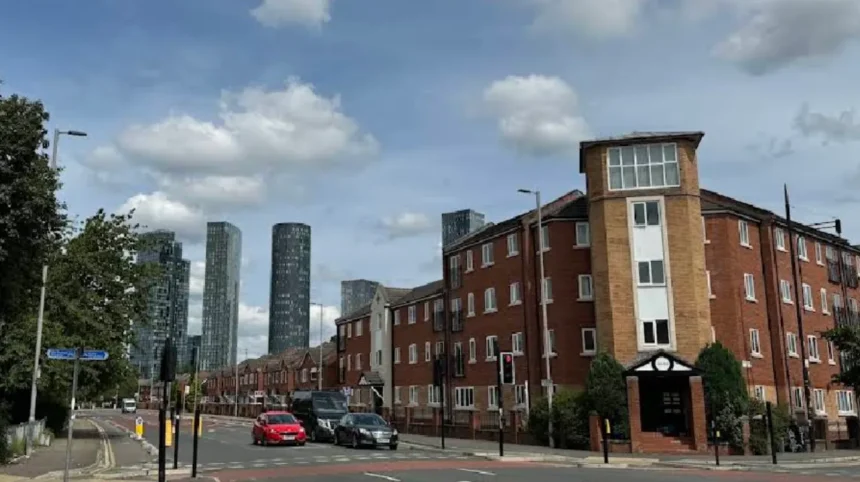
The most notable manifestation of this architectural transition was the construction of the Hulme Crescents, completed in 1972. Built using system-built concrete panel methods, these four massive curved blocks were designed to house over 1200 families in modern, elevated deck-access apartments. Similar high-rise construction projects altered districts such as Moss Side, Collyhurst, and Fort Beswick.
These modern housing structures failed rapidly due to structural defects, severe dampness, inadequate heating systems, and poor pest management. Construction defects led to pest infestations and water ingress within years of completion, rendering hundreds of units uninhabitable for traditional families. Municipal maintenance systems struggled to service the expansive elevated walkways, leading to rapid physical neglect.
Social isolation grew as traditional street-level communities were broken up and relocated into compartmentalized concrete towers. Middle-class residents and employed workers migrated toward suburban districts outer-ring towns, leaving central housing developments occupied primarily by vulnerable populations, students, and squatters. Crime rates inside complex, unpoliced walkway networks rose rapidly throughout the late 1970s.
By 1978, large sections of developments like the Hulme Crescents were officially abandoned by municipal housing authorities. The resulting vacant spaces were quickly occupied by artists, political activists, and counterculture figures, turning structurally failed urban planning projects into breeding grounds for bohemian subcultures.
How Did the 1976 Sex Pistols Gig Catalyst the Music Scene?
The Sex Pistols performed two historic concerts at Manchester’s Lesser Free Trade Hall on June 4 and July 20, 1976, acting as a crucial spark for the UK post-punk movement. Organized by Pete Shelley and Howard Devoto of the local group Buzzcocks, the first event was attended by roughly 40 people.
The audience included key figures who would go on to shape modern music history, including Bernard Sumner, Peter Hook, Mark E. Smith, Steven Patrick Morrissey, and Tony Wilson. The sheer accessibility and stripped-down energy of the performance demonstrated that formal musical training was unnecessary to create impactful art. Attendees immediately set out to form their own independent musical projects, record labels, and underground publications.
Buzzcocks formed shortly before the concert and went on to release the Spiral Scratch EP in January 1977. This release pioneered the Do-It-Yourself (DIY) music production model, proving that independent bands could record, press, distribute, and market their own records without major record label backing.
Bernard Sumner and Peter Hook recruited singer Ian Curtis and drummer Stephen Morris to form Warsaw, which later renamed itself Joy Division in early 1978. Mark E. Smith established The Fall, delivering a dense, literary style of post-punk that reflected the harsh reality of northern industrial life.
The Lesser Free Trade Hall gigs fundamentally shifted Manchester’s cultural focus away from mainstream London trends. The event proved that provincial industrial cities could generate their own self-sustaining cultural infrastructure, establishing a new model for music scenes around the world.
How Did Factory Records Redefine Independent Music?
Factory Records was founded in Manchester in 1978 by television presenter Tony Wilson, band manager Alan Erasmus, graphic designer Peter Saville, and record producer Martin Hannett. The label emerged directly from a weekly club night hosted at the Russell Club in Hulme.
Factory Records operated under an unusual business model that prioritized artistic control over commercial profit. The label famously used non-binding ownership contracts, allowing artists to retain full control over their master recordings and music rights. Every label output—including vinyl records, promotional posters, venue spaces, and stationery—was assigned a unique catalog number starting with FAC 1.
Peter Saville established a minimalist, modernist aesthetic for the label, drawing heavily on industrial art, clean typography, and structural design principles. Album covers omitted standard band photography and promotional text, creating a sleek visual identity that stood in stark contrast to mainstream pop packaging.
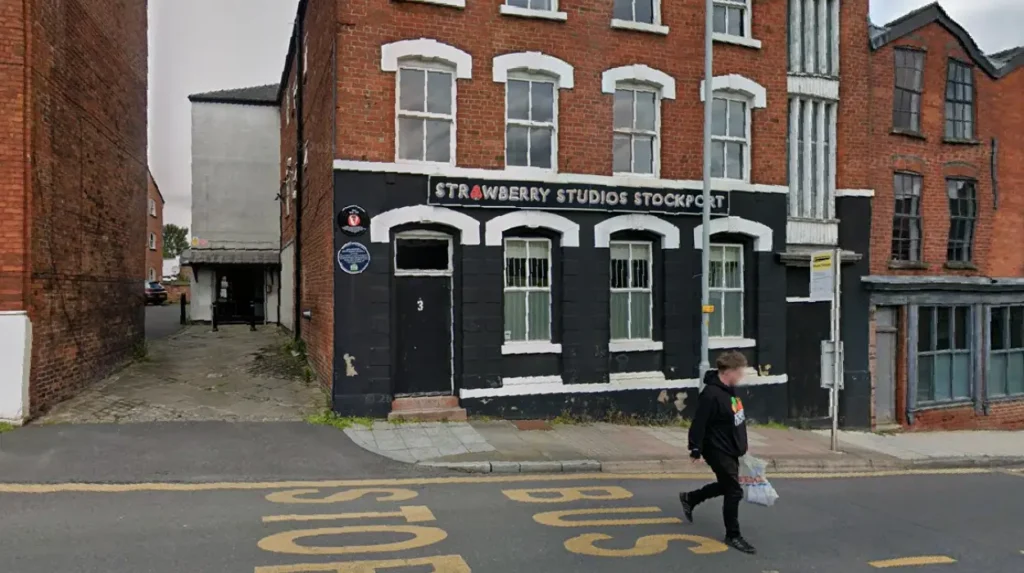
Producer Martin Hannett developed a distinctive, revolutionary recording style at Strawberry Studios in Stockport. Using digital delay units, isolated drum setups, and ambient atmospheric techniques, Hannett created a spacious, melancholic sound that mirrored Manchester’s post-industrial landscape.
Joy Division’s debut album, Unknown Pleasures, released in June 1979 under catalog number FAC 10, became the defining sonic document of the era. Factory Records laid the organizational and financial foundation for Manchester’s music dominance throughout the 1980s, culminating in the opening of the Haçienda nightclub.
What Was the Daily Life for Working-Class Mancunians?
Daily life for working-class Mancunians during the 1970s was defined by economic austerity, shifting labor dynamics, and distinct local youth subcultures. The Winter of Discontent in 1978 and 1979 brought widespread public sector strikes, causing disruptions to garbage collection, public transport, and municipal services across Greater Manchester.
Traditional social gathering places like working men’s clubs, local pubs, and football grounds served as vital focal points for community support. Matchdays at Old Trafford (Manchester United) and Maine Road (Manchester City) provided an emotional outlet for thousands of local workers navigating economic hardship.
Youth subcultures split into distinct style factions throughout the decade. In addition to the growing punk movement, Manchester birthed the Perry Boys subculture during the late 1970s. This group wore Fred Perry polo shirts, mod-style haircuts, and designer sportswear, laying the groundwork for the UK-wide football casual movement.
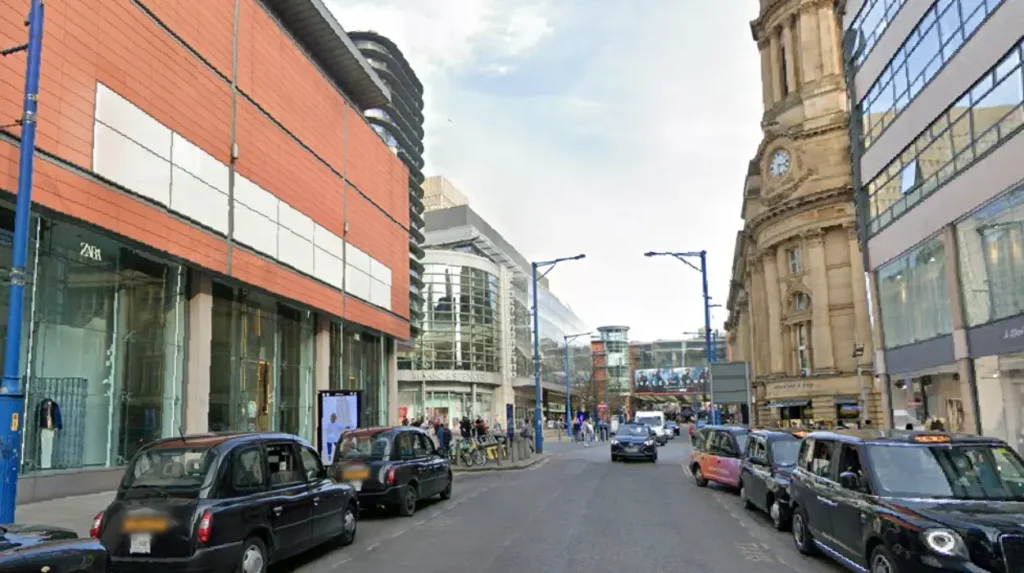
Local air quality and infrastructure remained heavily impacted by the city’s manufacturing past. Coal fires and industrial smoke left Victorian buildings coated in black soot, while modern road projects cut through older residential neighborhoods.
Racial tensions grew in diverse districts such as Moss Side, driven by systemic employment discrimination, discriminatory policing practices, and urban neglect. Despite these severe economic challenges, working-class communities maintained strong social networks through shared neighborhood traditions, informal child care arrangements, and local mutual support.
How Did the 1970s Infrastructure Laid Foundations for Regeneration?
The infrastructure decisions and cultural developments of the 1970s created the structural blueprint for Manchester’s eventual modern urban transformation. The abandonment of heavy industrial production forced civic leaders to pivot away from manufacturing toward service, education, and creative economies.
The establishment of the Greater Manchester Council in 1974 integrated municipal transportation, emergency services, and regional planning across ten local boroughs. This regional administrative restructure helped coordinate major infrastructure improvements, including early planning for unified light rail transport systems that ultimately became Metrolink in the early 1990s.
Vacant industrial warehouses and cotton mills across the city center were gradually repurposed rather than demolished. Cheap spatial footprints accommodated independent fashion designers, rehearsal rooms, recording spaces, and grassroots art collectives throughout the late 1970s.
The international success of local groups like Joy Division, Buzzcocks, and The Fall elevated Manchester’s profile in global popular culture. The city rebranded itself from a fading Victorian manufacturing center into an international capital of youth culture, independent art, and musical innovation.
These cultural and spatial transformations paved the way for major private and public investments throughout the 1980s and 1990s. The post-industrial survival strategies developed during the 1970s directly fueled the cultural dynamism, urban density, and economic recovery that define modern Manchester today.
Frequently Asked Questions
What made Manchester in the 1970s so important for punk music?
Manchester transformed punk from a fashion statement into a self-sustaining independent industry. The 1976 Sex Pistols concerts at the Lesser Free Trade Hall directly inspired local musicians to form bands like Joy Division, Buzzcocks, and The Fall. Groups began producing, distribution, and managing their own releases locally.
Why were the Hulme Crescents built and why did they fail so quickly?
The Hulme Crescents were constructed in 1972 as part of post-war slum clearance efforts to provide modern housing. They failed within a few years due to severe structural defects, dampness, pest infestations, and poor access control. Families moved out, leaving empty apartments to be occupied by students, artists, and squatters.
How bad was the economic decline in Manchester during the 1970s?
The decade brought severe manufacturing job losses as local textile mills, engineering plants, and industrial sites closed down. The city faced rising unemployment, high national inflation, and power cuts during the 1974 Three-Day Week. This decline left vast sections of urban infrastructure vacant and underfunded.
Who were the Perry Boys in 1970s Manchester youth culture?
The Perry Boys were an influential working-class youth subculture that emerged in Greater Manchester during the late 1970s. They were known for wearing designer sportswear, Fred Perry polo shirts, and stylized haircut fashions. Their look and style directly influenced the broader UK football casual subculture in the following decade.
How did Factory Records start in late 1970s Manchester?
Factory Records was founded in 1978 by Tony Wilson, Alan Erasmus, Peter Saville, and Martin Hannett. It evolved from a weekly club night showcasing local underground bands at the Russell Club. The label gained immediate attention for its unique artistic packaging and signing acts like Joy Division.