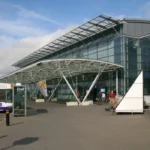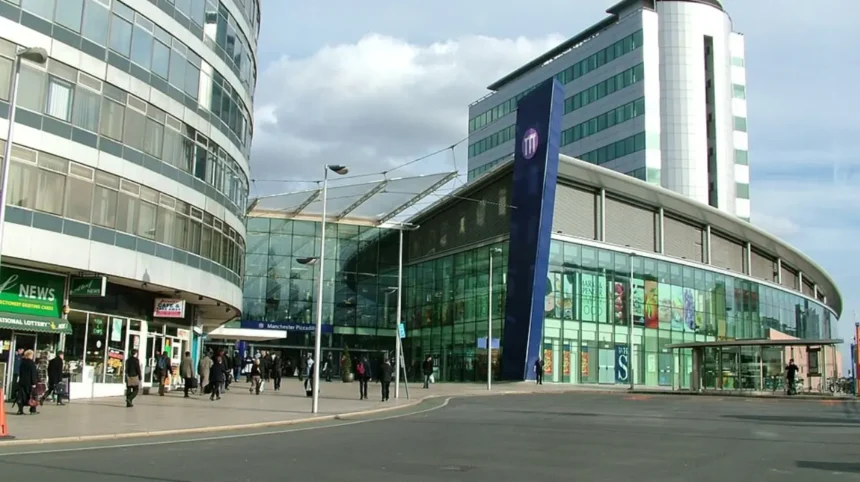
The direct straight-line distance between London and Manchester is 163 miles, which equals 262 kilometers. By land, the driving distance spans 208 miles or 335 kilometers via the principal motorway network. Train tracks cover 184 miles.
- How long does it take to travel from London to Manchester by train?
- How far is the driving route from London to Manchester?
- What is the flight distance and travel time between London and Manchester?
- How does bus and coach travel compare for the London to Manchester route?
- What historical routes connected London and Manchester over time?
- Frequently Asked Questions
Geographical distance between urban centers in the United Kingdom is calculated using two distinct standards: straight-line measurement and actual ground transport routing. The straight-line measurement, frequently termed as the crow flies, ignores topographies, urban infrastructure, and terrain constraints. Land routes deviate significantly from this baseline because physical infrastructure follows historical settlement patterns, protected national parks, and geological formations across the English Midlands.
Modern transportation corridors between the capital city of London in the southeast and the metropolitan hub of Manchester in the northwest serve as vital economic arteries. The physical separation determines supply chain schedules, corporate transit expenses, and daily passenger volumes across multiple transit operators. Measuring precise distances requires identifying exact starting and ending coordinates, typically marked from Charing Cross in central London to St. Peter’s Square in central Manchester.
How long does it take to travel from London to Manchester by train?
The average direct train journey from London Euston to Manchester Piccadilly takes 2 hours and 12 minutes. High-speed express services operate on the West Coast Main Line, delivering passenger transit without intermediate stops in as little as 2 hours and 3 minutes.
Intercity passenger rail serves as the dominant mode of public transportation between these two major metropolitan areas. Avanti West Coast operates the primary direct passenger line departing from London Euston Station in central London and terminating at Manchester Piccadilly Station. During peak weekday commuter periods, services depart every twenty minutes, offering consistent throughput for corporate and leisure travelers.
Rail infrastructure upgrades along the West Coast Main Line have optimized track geometry, overhead line electrification, and signaling networks to maintain speeds up to 125 miles per hour. Secondary rail paths operated by regional carriers like London Northwestern Railway or East Midlands Railway provide alternative routing with intermediate transfers, extending total journey durations between 3 hours and 4 hours. Passenger boarding operations require minimal lead time compared to airport logistics, making station-to-station transit efficient.
How far is the driving route from London to Manchester?
Driving from central London to central Manchester requires traversing 208 miles along major national trunk roads. Under clear road conditions, driving duration ranges between 4 hours and 4 hours and 30 minutes, subject to metropolitan departure delays.
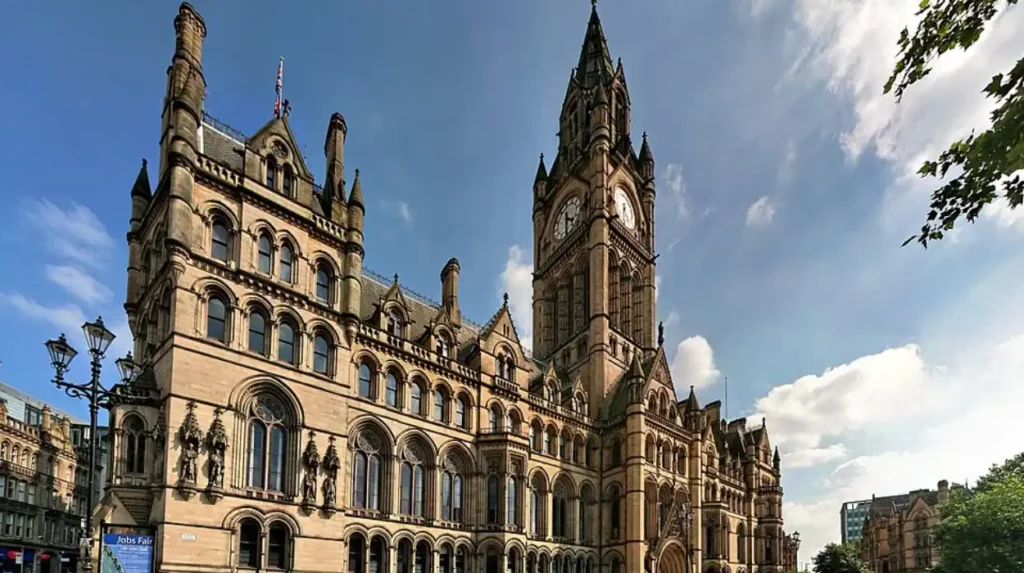
Vehicular routing relies on two primary arterial motorways: the M1 Motorway northbound from London and the M6 Motorway leading into the North West. Drivers typically exit central London along the A41 or A40 corridor, connecting to the M1 in Hertfordshire. Traffic then transitions at the Catthorpe Interchange onto the M6 Motorway, which continues north toward Staffordshire before merging onto the A556 and M56 into Greater Manchester.
Traffic density varies significantly based on time of day, weather conditions, and regional highway maintenance projects. Congestion routinely occurs around the M25 orbital around London, the Birmingham urban nexus, and the M6 corridor through Cheshire. Fleet operators and commuter vehicles often utilize the M6 Toll road around the West Midlands to bypass heavy suburban traffic, reducing overall transit time by twenty to thirty minutes during peak hours.
What is the flight distance and travel time between London and Manchester?
The aerial flight distance between London airports and Manchester Airport is 151 miles, which equates to 243 kilometers. Actual flight duration in the air is approximately 1 hour, though total airport-to-airport transit time exceeds 4 hours.
Commercial air travel between London and Manchester operates primarily out of London Heathrow Airport and terminates at Manchester Airport. British Airways serves as the main carrier managing scheduled domestic flights on this route. Direct air connections function largely as feeder links for international long-haul connections rather than standalone regional transit, owing to the overall door-to-door duration involved in commercial flying.
Total journey time for air travel includes ground transportation to the departure airport, security screening compliance, terminal waiting times, runway taxiing, flight time, baggage retrieval, and final ground transit. Pre-flight check-in requirements add ninety minutes to two hours prior to departure. When airport transfer logistics are aggregated, direct high-speed rail consistently outperforms domestic air transit in speed and productivity.
How does bus and coach travel compare for the London to Manchester route?
Long-distance express coaches cover the 208-mile distance between London Victoria Coach Station and Manchester Shudehill Interchange in 4 hours and 30 minutes to 6 hours. Journey times depend on vehicle route stops and motorway conditions.
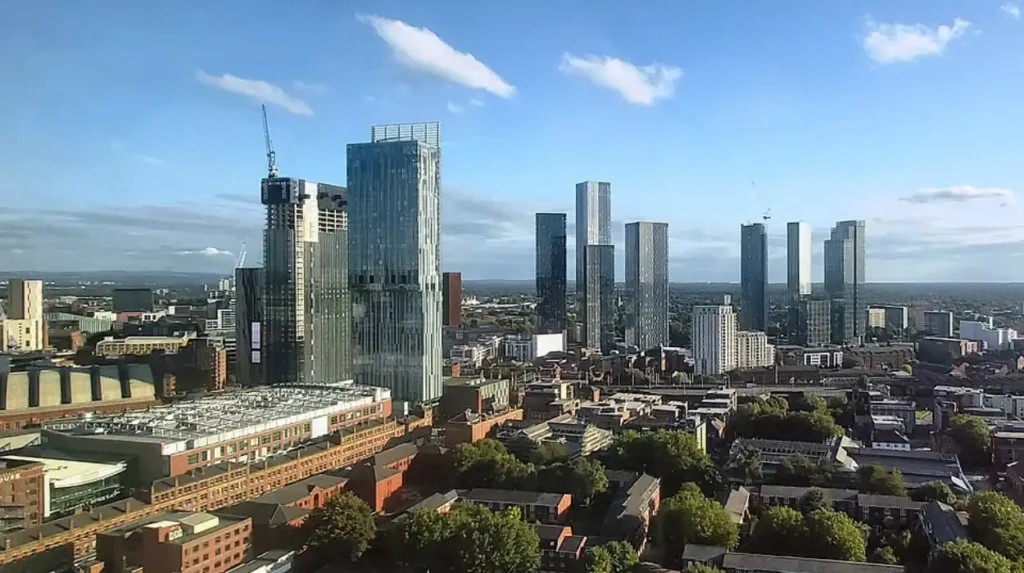
Express coach transportation provides the primary economical road alternative to private automobiles and passenger trains. Commercial national operators including National Express, Megabus, and FlixBus maintain frequent daily schedules connecting major transit hubs. Routes utilize the standard M1 and M6 motorway corridors, making intermediary scheduled stops in regional cities such as Milton Keynes, Coventry, or Birmingham.
Coach transit appeals to budget-conscious commuters due to predictable low fare structures and generous luggage allowances compared to airlines. Modern coach fleets feature climate control, power outlets, and onboard Wi-Fi services to improve passenger utility. However, coach scheduling remains vulnerable to road incidents, highway construction work, and seasonal weather delays that slow general vehicular movement on English motorways.
What historical routes connected London and Manchester over time?
Historical travel between London and Manchester originated along Roman roads like Watling Street, taking several days by horse or stagecoach. The opening of the Grand Junction Railway in 1837 permanently transformed regional connectivity and dramatically reduced travel times.
Before mechanized industrial transport, travelers relied on turnpike roads, stagecoaches, and inland canal systems like the Grand Union Canal to move goods and passengers across Great Britain. Stagecoach travel in the late eighteenth century required over twenty-four hours of continuous transit, with horses changed at established posting inns along the strategy line through the Midlands.
The Industrial Revolution accelerated the development of high-capacity transit links to connect Manchester textile mills with London commercial markets. Railway expansion during the Victorian era unified the nation’s logistics network, replacing stagecoaches with steam locomotives. The continuous modernization of these track routes established the current West Coast Main Line alignment, cementing the corridor as the United Kingdom’s most active north-south transit spine.
Frequently Asked Questions
How far is Manchester from London by train?
The rail distance between London Euston and Manchester Piccadilly is 184 miles. Direct high-speed passenger trains complete the trip in about 2 hours and 12 minutes. Trains depart every twenty minutes during peak weekday hours.
Is it better to drive or take the train from London to Manchester?
Taking the train is significantly faster and avoids heavy motorway congestion on the M1 and M6. Trains land you directly in central city stations within two hours and fifteen minutes. Driving takes over four hours and involves parking fees in central city districts.
Can you do a day trip from London to Manchester?
A day trip is entirely feasible by using direct high-speed express train services. Early morning trains allow visitors to arrive in Manchester before 9:00 AM. Return trains run until late evening, giving travelers twelve hours to explore the city.
How far is Manchester Airport from central London?
Manchester Airport is located 170 miles northwest of central London. Travel by car takes around 3 hours and 30 minutes via the M6 and M56 motorways. Direct rail connections from London Euston to Manchester Airport take roughly 2 hours and 30 minutes with a quick transfer.
What is the cheapest way to travel from London to Manchester?
Long-distance express coaches operated by Megabus or National Express offer the cheapest fares. Advance tickets often start under fifteen pounds for a one-way trip. Coach journeys take between 4.5 to 6 hours depending on road traffic.