
Manchester has a diverse private rental market, with significant differences between city-centre apartments and suburban houses. Rental costs depend on property size, location, transport connections, local amenities and demand. City-centre neighbourhoods attract professionals and students seeking convenient access to employment, universities and entertainment. Suburban areas attract families, couples and tenants seeking larger properties and residential surroundings.
- What Is the Average Rent in Manchester?
- How Much Does It Cost to Rent in Manchester City Centre?
- Is Renting in Manchester Suburbs Cheaper Than the City Centre?
- Which Suburbs Offer More Affordable Accommodation?
- Are Suburban Properties Better Value for Families?
- How Does Average Rent in Manchester Compare by Property Size?
- What Is the Average Rent for a One-Bedroom Property?
- What Is the Average Rent for a Two-Bedroom Property?
- What Is the Average Rent for a Three-Bedroom Property?
- What Is the Average Rent for a Four-Bedroom Property?
- How Do Rental Prices Differ by Property Type?
- Which Manchester Neighbourhoods Offer the Best Balance Between Rent and Location?
- Is Hulme a Good Alternative to Manchester City Centre?
- Is Old Trafford More Affordable Than Central Manchester?
- Is Didsbury Suitable for Families and Professionals?
- Is Prestwich a More Affordable Alternative?
- How Should Tenants Compare Neighbourhoods?
- How Do Transport Costs Affect the Choice Between City Centre and Suburbs?
- What Additional Costs Should Tenants Include in Their Manchester Rental Budget?
- Council Tax
- Energy and Water Bills
- Broadband and Other Household Expenses
- What Are the Legal Rules for Rental Deposits in Manchester?
- How Can Tenants Choose Between Manchester City Centre and Suburbs?
- When Is Manchester City Centre the Better Choice?
- When Are Manchester Suburbs the Better Choice?
- How Much Income Should Tenants Allocate to Rent?
- How Is Manchester’s Rental Market Changing?
- What Is Driving Rental Demand?
- What Do Recent Rental Statistics Reveal?
- What Is the Future Outlook for Manchester Renters?
- Is Manchester City Centre or the Suburbs More Affordable for Renters?
According to the Office for National Statistics (ONS), the average monthly private rent in Manchester reached £1,386 in October 2026, representing a 4.7% annual increase from £1,324 in October 2025. This figure covers the Manchester local authority area rather than the city centre alone. It provides an important benchmark for comparing rental costs across the city. Office for National Statistics+1
Understanding the difference between central and suburban rents helps tenants estimate their housing budgets, compare neighbourhoods and choose accommodation that matches their income and lifestyle.
What Is the Average Rent in Manchester?
The average monthly private rent in Manchester was £1,386 in October 2026, according to ONS statistics. Actual rental prices vary by property size, condition and neighbourhood, with central apartments generally attracting higher asking rents than many suburban properties.
Manchester is one of the North West’s largest rental markets. Its economy, universities, transport infrastructure and employment opportunities attract tenants from across the UK and overseas.
The average rent figure includes privately rented properties across the Manchester local authority boundary. It covers different property categories, including flats, terraced houses, semi-detached homes and detached houses.
How Have Manchester Rental Prices Changed?
Manchester has experienced sustained rental growth over recent years. The ONS recorded an average monthly rent of £1,324 in October 2025. By October 2026, this figure had increased to £1,386.
This represents an additional £62 per month or £744 annually for a property rented at the average rate.
Rental inflation reflects several market conditions:
- Demand from professionals working in Manchester’s business districts.
- Student accommodation requirements near major universities.
- Population growth and household formation.
- Availability of privately rented homes.
- Differences between property supply and tenant demand.
The ONS measures private rental prices using its Price Index of Private Rents. This provides a consistent way to monitor changes in the rental market rather than relying exclusively on advertised property prices. Office for National Statistics+1
What Does the Manchester Average Rent Include?
The Manchester average includes different property sizes and housing types. It does not represent the price of a standard one-bedroom city-centre apartment.
For example, a tenant renting a modern apartment near Deansgate pays for a different property category from a family renting a three-bedroom semi-detached house in Wythenshawe.
The average also differs from advertised asking rents. ONS statistics provide an official measure of private rental prices, while property portals generally show homes currently being marketed.
These distinctions are important when comparing rental costs.
How Much Does It Cost to Rent in Manchester City Centre?
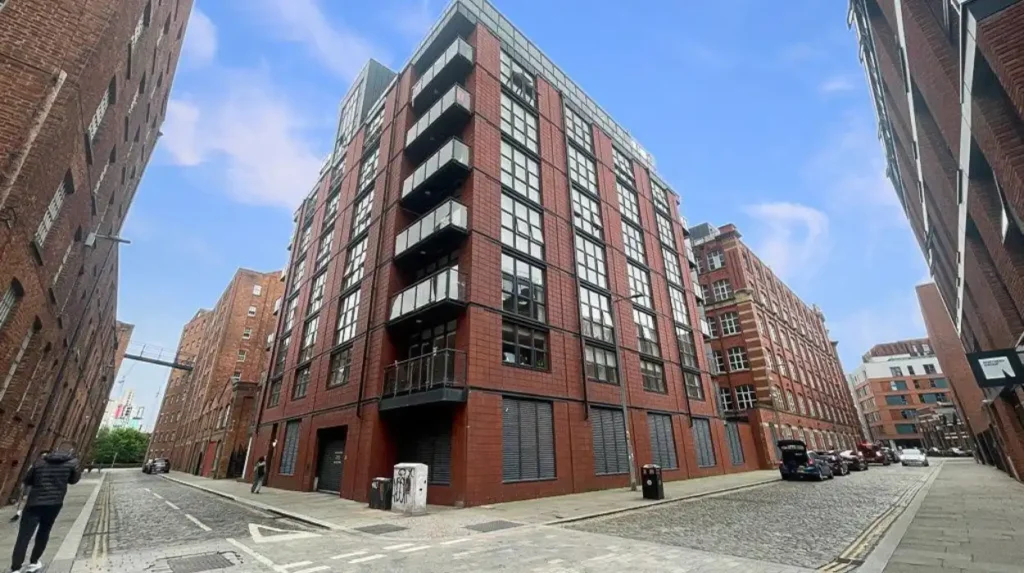
Renting in Manchester city centre generally costs more than renting in many outer neighbourhoods. In Q2 2026, City Centre recorded an average monthly rent of £1,356 in Rentaroof’s analysis of 6,798 rental properties across Manchester.
Manchester city centre includes residential districts such as Deansgate, Spinningfields, the Northern Quarter, Ancoats and Castlefield. These neighbourhoods offer access to offices, restaurants, shopping centres, universities and public transport.
The central rental market contains modern apartment buildings, converted industrial properties and privately managed residential developments.
Which City-Centre Areas Have Higher Rental Prices?
Deansgate and Spinningfields
Deansgate and Spinningfields attract professionals working in finance, law, business services and technology. Modern apartment buildings, restaurants and proximity to major offices support demand for rental accommodation.
Properties with concierge services, gyms, secure parking and balconies generally command higher rents than basic apartments.
Northern Quarter
The Northern Quarter is known for independent businesses, restaurants, creative workplaces and converted warehouse apartments. Its central position attracts young professionals, graduates and tenants working in Manchester’s creative industries.
The availability of character properties and modern apartments creates different rental price levels within the neighbourhood.
Ancoats
Ancoats is a residential district east of the city centre. Former industrial buildings and new apartment developments have transformed its housing market.
One-bedroom apartments in Ancoats and the Northern Quarter fringe generally cost between £1,150 and £1,350 per month, according to Hunters Manchester’s 2026 rental guide. Two-bedroom apartments commonly exceed £1,550 per month.
Castlefield
Castlefield offers canalside accommodation, converted warehouses and modern residential developments. Its proximity to Deansgate railway station and central employment areas makes it attractive to commuters.
Apartments overlooking canals or located in premium developments generally attract higher rents because of their location and facilities.
Why Are City-Centre Apartments Expensive?
Three important factors influence central Manchester rental prices.
- Employment accessibility: Central locations reduce commuting distances for employees working in Spinningfields, Deansgate and the business district.
- Property facilities: Modern developments offer lifts, security, concierge services, gyms and shared amenities.
- Lifestyle convenience: Restaurants, shopping destinations, entertainment venues and transport connections are concentrated in central neighbourhoods.
City-centre properties also attract tenants who prioritise walking and public transport over owning a car. This convenience contributes to rental demand.
Is Renting in Manchester Suburbs Cheaper Than the City Centre?
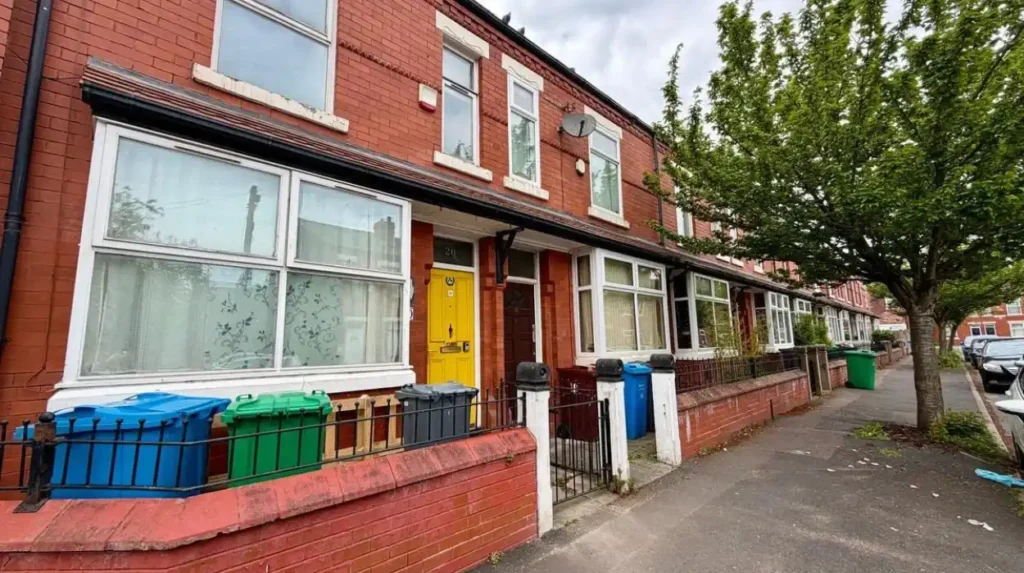
Many Manchester suburbs offer lower rents than premium city-centre neighbourhoods, particularly for larger family homes. Areas such as Rusholme, Gorton, Cheetham Hill and parts of Withington provide alternative accommodation for tenants prioritising affordability.
Suburban Manchester includes established residential neighbourhoods, family housing developments and areas connected to the city through buses, trains and Metrolink services.
The rental market differs considerably between southern, northern and eastern Manchester.
Rentaroof’s Q2 2026 report recorded an average monthly rent of £976 in Rusholme, compared with £1,356 in City Centre. The difference was £380 per month, or £4,560 annually. These figures come from the report’s rental-property dataset, not the official ONS achieved-rent series. Rentaroof
Which Suburbs Offer More Affordable Accommodation?
Rusholme
Rusholme is situated south of Manchester city centre. It is particularly known for Wilmslow Road, the Curry Mile, restaurants and student accommodation.
The area recorded the lowest average rent in Rentaroof’s five-district comparison for Q2 2026, at £976 per month.
Its student-oriented rental market creates demand for shared houses, individual rooms and conventional residential properties. Around 70% of rental properties in the report’s Rusholme dataset were student accommodation. Rentaroof
Gorton
Gorton is an established residential neighbourhood in east Manchester. Its housing stock includes terraced houses, family properties and smaller flats.
Its position outside the central apartment market makes it an option for tenants comparing housing costs and commuting distances.
Cheetham Hill
Cheetham Hill lies north of Manchester city centre. The neighbourhood offers established residential streets, local shopping facilities and access to central Manchester.
One-bedroom homes in Gorton, Cheetham Hill and Old Trafford commonly range between £800 and £1,000 per month, according to Hunters Manchester’s 2026 guide. Actual rents depend on property condition, size and precise location. Hunters
Withington
Withington is a residential district in south Manchester. It attracts students, professionals and households seeking access to universities and healthcare facilities.
Its rental market includes shared student houses, traditional terraces and privately rented apartments.
Fallowfield is one of Manchester’s established student neighbourhoods. It attracts students attending the University of Manchester and Manchester Metropolitan University.
Shared accommodation is a major part of its rental market. Individual room prices are not directly comparable with the monthly rent of an entire apartment or house.
Are Suburban Properties Better Value for Families?
Suburban neighbourhoods often provide more bedrooms and living space for a comparable rental budget. Family tenants generally compare garden access, schools, parking, storage and local services alongside monthly rent.
A two-bedroom suburban house offers a different housing arrangement from a two-bedroom city-centre apartment. The house typically provides more private outdoor space, while the apartment offers easier access to central employment and entertainment.
The financial comparison therefore needs to consider the property itself, not just the advertised monthly price.
How Does Average Rent in Manchester Compare by Property Size?
Property size is one of the strongest influences on Manchester rental costs. ONS October 2026 figures show average monthly rents of £1,010 for one-bedroom properties, £1,244 for two-bedroom homes, £1,448 for three-bedroom properties and £2,032 for homes with four or more bedrooms.
The number of bedrooms affects the rental budget, household suitability and choice of neighbourhood.
The ONS figures cover privately rented properties throughout Manchester rather than individual city-centre or suburban districts. Office for National Statistics
What Is the Average Rent for a One-Bedroom Property?
A one-bedroom property is suitable for single professionals and couples who do not require additional bedrooms.
The average Manchester rent was £1,010 per month in October 2026. However, central apartments in premium developments generally cost more than this city-wide figure.
Tenants searching for one-bedroom accommodation compare:
- Monthly rent.
- Furnished and unfurnished options.
- Heating and energy efficiency.
- Transport accessibility.
- Building facilities and maintenance.
A property in Ancoats or Deansgate provides central access, while a property in Gorton or Cheetham Hill offers an alternative outside the premium central market.
What Is the Average Rent for a Two-Bedroom Property?
The average monthly rent for a two-bedroom property in Manchester reached £1,244 in October 2026.
This property size attracts couples, small families and professional housemates. Two-bedroom accommodation also provides additional flexibility for tenants who work remotely.
The rental price depends on whether the property is an apartment, terraced house or semi-detached home.
What Is the Average Rent for a Three-Bedroom Property?
A three-bedroom property averaged £1,448 per month in Manchester in October 2026.
Three-bedroom houses are particularly relevant to families seeking additional sleeping space, storage and access to residential amenities.
Suburban neighbourhoods offer a wider choice of traditional family housing than the central apartment market. Tenants also compare garden size, parking availability and school accessibility.
What Is the Average Rent for a Four-Bedroom Property?
The average rent for properties with four or more bedrooms was £2,032 per month in October 2026.
Larger properties generally attract families, groups of professionals and households requiring additional working or living space.
The average is higher than the figures for smaller properties because larger homes provide more accommodation and generally have higher maintenance and operating requirements.
How Do Rental Prices Differ by Property Type?
The ONS recorded the following average monthly rents by property type in October 2026:
- Flats and maisonettes: £1,156.
- Terraced properties: £1,419.
- Semi-detached properties: £1,512.
- Detached properties: £1,896.
These figures demonstrate why the overall Manchester average does not represent every rental property equally. Detached homes generally have more space than flats, which contributes to their higher average rental cost. Office for National Statistics
Which Manchester Neighbourhoods Offer the Best Balance Between Rent and Location?
The best balance between rental cost and location depends on commuting requirements, property size and household priorities. Hulme, Rusholme, Old Trafford, Withington and Cheetham Hill provide alternatives to premium central neighbourhoods while maintaining access to Manchester’s employment and transport networks.
Manchester’s rental market includes neighbourhoods that combine residential facilities with access to central employment districts.
Tenants should compare the total cost of accommodation and travel rather than selecting a property based exclusively on its monthly rent.
Is Hulme a Good Alternative to Manchester City Centre?
Hulme is located south-west of the city centre and provides access to Manchester universities, the Oxford Road Corridor and central employment areas.
The neighbourhood includes residential developments, traditional housing and local shopping facilities.
Rentaroof recorded 17.1% annual rental growth in Hulme in Q2 2026, the highest increase among the districts included in its report. This demonstrates that affordable city-fringe neighbourhoods also experience changing demand. Rentaroof
Is Old Trafford More Affordable Than Central Manchester?
Old Trafford is situated in the Trafford area, south-west of Manchester city centre. It is known for its residential neighbourhoods, sports facilities and connections to central Manchester.
The area attracts families, professionals and commuters seeking residential accommodation outside the central apartment market.
Hunters’ 2026 rental guide places one-bedroom properties in its Gorton, Cheetham Hill and Old Trafford grouping at approximately £800–£1,000 per month. This is an indicative letting-agent range rather than a measured Old Trafford-specific average. Hunters
Is Didsbury Suitable for Families and Professionals?
Didsbury is an established residential area in south Manchester. It includes independent shops, restaurants, parks and residential streets.
The neighbourhood attracts professionals and families seeking a suburban environment with transport connections to central Manchester.
Its popularity and residential facilities support demand for apartments, terraced houses and larger family properties. Tenants should compare East Didsbury, West Didsbury and surrounding residential locations because their housing stock and prices differ.
Is Prestwich a More Affordable Alternative?
Prestwich is located north of Manchester, within the Metropolitan Borough of Bury. It is a separate local authority area rather than part of Manchester City Council’s administrative area.
The neighbourhood offers residential housing, parks, shopping facilities and Metrolink connections.
Its location makes it relevant to tenants considering Greater Manchester rather than restricting their search to Manchester city boundaries.
How Should Tenants Compare Neighbourhoods?
A useful comparison includes five considerations:
- Monthly rent and property size.
- Journey time to work or university.
- Public transport availability.
- Local shopping, healthcare and education facilities.
- Energy costs, council tax and parking expenses.
A cheaper property outside the centre does not automatically produce the lowest overall household expenditure. Travel expenses and additional vehicle costs also influence affordability.
How Do Transport Costs Affect the Choice Between City Centre and Suburbs?
Transport costs influence the real affordability of renting in Manchester. City-centre tenants often reduce commuting expenses through walking and cycling, while suburban tenants rely more heavily on Metrolink, buses, trains or private vehicles for regular journeys.
Manchester has an extensive public transport network connecting residential neighbourhoods with employment centres, universities and shopping destinations.
Transport for Greater Manchester (TfGM) operates the Metrolink tram network, which connects central Manchester with destinations including Altrincham, Bury, Eccles, East Didsbury, Rochdale, Ashton-under-Lyne and Manchester Airport.
Which Areas Have Good Metrolink Connections?
Metrolink accessibility is an important consideration when choosing suburban accommodation.
Examples include:
- Didsbury: Connected to central Manchester through the East Didsbury tram route.
- Chorlton: Connected through the Manchester Airport and East Didsbury corridor.
- Sale: Located on the Altrincham route.
- Old Trafford: Connected through the Altrincham line.
- Prestwich: Served by the Bury line.
- Salford Quays: Connected through the Eccles and MediaCityUK routes.
The tram network gives suburban tenants access to employment areas without depending entirely on private cars.
Is Living in the City Centre Cheaper for Commuters?
City-centre accommodation offers shorter journeys for people working in central Manchester. Employees working near Piccadilly, Deansgate, Spinningfields and Oxford Road often have access to walking and cycling routes.
Suburban residents need to consider return journeys, ticket prices and travel frequency.
For example, a tenant saving £150 monthly on suburban rent but spending £100 on additional commuting costs achieves a smaller financial benefit than the rent difference initially suggests.
The correct comparison includes accommodation and transport expenses together.
What Additional Costs Should Tenants Include in Their Manchester Rental Budget?
Monthly rent is only one component of housing expenditure in Manchester. Tenants also need to budget for council tax, energy, water, broadband, contents insurance and initial tenancy payments when comparing city-centre apartments with suburban properties.
The total cost of renting depends on the tenancy agreement, property size, household occupancy and local council tax arrangements.
A property with a lower advertised rent does not necessarily have the lowest overall monthly cost.
Council Tax
Council tax is a local authority charge used to fund services such as waste collection, local roads and community facilities.
The amount depends on the property’s council tax band and the applicable local authority charges.
Manchester city-centre properties generally fall under Manchester City Council, while properties in areas such as Prestwich and Sale fall under different local authorities.
Tenants should check the council tax band and annual charge before signing a tenancy agreement.
Energy and Water Bills
Gas, electricity and water expenses depend on property size, insulation, heating systems and household consumption.
Modern apartments often have different energy requirements from older terraced houses. Larger suburban properties also require more energy to heat when they have additional rooms.
Tenants should inspect the Energy Performance Certificate (EPC), which provides information about a property’s energy efficiency.
Broadband and Other Household Expenses
Broadband is an important expense for professionals working remotely and households using internet-connected services.
Tenants should confirm whether broadband is included in the rent or arranged separately. Contents insurance also protects personal belongings against specified risks.
Other expenses include parking permits, television licences where applicable and regular household maintenance items.
What Are the Legal Rules for Rental Deposits in Manchester?
The Tenant Fees Act 2019 regulates payments landlords and letting agents can request from tenants in England.
For properties with annual rent below £50,000, the refundable tenancy deposit is capped at five weeks’ rent. A holding deposit is capped at one week’s rent. Deposits must also be protected through an approved tenancy deposit scheme.
These rules apply to qualifying private rental properties in Manchester, regardless of whether the property is in the city centre or suburbs.
How Can Tenants Choose Between Manchester City Centre and Suburbs?
Tenants should compare rental prices, property size, commuting requirements and household expenses before choosing accommodation. City-centre apartments suit people prioritising accessibility, while suburban homes often provide more residential space and different housing options.
The right location depends on the relationship between household income and monthly living expenses.
A single professional working in Spinningfields has different accommodation requirements from a family with children attending schools in south Manchester.
When Is Manchester City Centre the Better Choice?
City-centre accommodation suits tenants who work in central employment districts and prioritise convenient access to services.
It is particularly relevant to:
- Young professionals working in central Manchester.
- Graduates beginning their careers.
- Students attending universities near Oxford Road.
- International workers relocating to Manchester.
- Households without private vehicles.
The main financial consideration is the higher rental cost associated with premium central apartments.
When Are Manchester Suburbs the Better Choice?
Suburban accommodation suits tenants who prioritise residential space, family facilities and access to local communities.
It is particularly relevant to families, couples and professionals working outside the central business district.
Suburban neighbourhoods provide different housing types, including terraced houses, semi-detached properties and larger family homes.
However, tenants should evaluate commuting times before choosing a property far from their workplace.
How Much Income Should Tenants Allocate to Rent?
A practical rental budget starts with monthly take-home income rather than headline salary.
Tenants should calculate rent alongside council tax, utilities, transport, groceries, debt repayments and savings.
For example, a household paying £1,200 in monthly rent has an annual rental commitment of £14,400. A household paying £1,500 spends £18,000 annually.
The difference is £3,600 per year.
This calculation demonstrates why even a relatively small monthly rent difference affects long-term household finances.
A realistic housing budget also includes money for emergencies and unexpected expenses.
Explore More Area Guide
How Much Salary Do You Need to Live Comfortably in Manchester?
Manchester City Centre vs Salford: Cost, Housing and Lifestyle
How Is Manchester’s Rental Market Changing?
Manchester’s rental market continues to experience changing demand across central and suburban neighbourhoods. Official ONS figures recorded 4.7% annual rental inflation in October 2026, while district-level research identified different growth patterns across individual neighbourhoods.
Manchester’s rental market has changed alongside the city’s economic and residential development.
The expansion of business districts, university accommodation and modern apartment developments has influenced demand for privately rented homes.
What Is Driving Rental Demand?
Several long-term factors influence Manchester’s housing market.
Employment growth: Manchester attracts workers in technology, finance, healthcare, education, media and professional services. These employment sectors support demand for rental accommodation.
Higher education: The University of Manchester, Manchester Metropolitan University and other educational institutions contribute to the city’s student housing market.
Residential development: New apartment developments increase the supply of privately rented properties, particularly around central Manchester and regeneration areas.
Transport improvements: Metrolink connections and other public transport services make additional residential neighbourhoods accessible to commuters.
What Do Recent Rental Statistics Reveal?
Rentaroof’s Q2 2026 research analysed 6,798 rental properties across Manchester.
Its findings included:
- Average monthly rent of £1,162.
- Annual rental growth of 2.7%.
- Average time on the rental market of 21 days.
- Student accommodation representing 33% of rental supply.
- City-centre average rent of £1,356.
The report also identified different rental trends between central and southern districts. City Centre experienced 10.4% annual rental growth, while Rusholme recorded a 15.9% decline. Rentaroof
These figures demonstrate that Manchester does not have a uniform rental market. Property supply, tenant demand and accommodation types influence rental prices differently across neighbourhoods.
What Is the Future Outlook for Manchester Renters?
Manchester’s growing employment base, higher education sector and residential development activity remain important influences on rental demand.
New apartment developments increase housing availability, while continued demand from professionals and students supports the private rental sector.
The difference between city-centre and suburban rental prices remains important for household affordability.
Tenants comparing neighbourhoods should monitor annual rental statistics, advertised properties and transport developments before committing to long-term accommodation.
Is Manchester City Centre or the Suburbs More Affordable for Renters?
Manchester suburbs generally offer more affordable rental opportunities than premium city-centre neighbourhoods, particularly for larger properties. City-centre accommodation offers greater convenience, while suburban locations provide alternative housing options for families and budget-conscious tenants.
The choice ultimately depends on household income, employment location, property requirements and transport expenses.
The ONS October 2026 average of £1,386 provides a useful benchmark for Manchester’s overall rental market. However, neighbourhood-level comparisons provide a clearer understanding of individual housing costs.
City-centre renters should compare Deansgate, Ancoats, Castlefield and the Northern Quarter. Tenants prioritising residential space should also investigate Rusholme, Withington, Gorton, Cheetham Hill, Old Trafford and Didsbury.
A complete rental budget should include monthly rent, council tax, household bills and commuting costs. Comparing these expenses provides a more accurate picture of affordability than looking at advertised rent alone.
Manchester offers rental accommodation across different price levels and property types. Understanding these differences helps tenants make informed housing decisions and select neighbourhoods that match their financial circumstances.
What is the average rent in Manchester in 2026?
The average monthly private rent in Manchester was £1,386 in October 2026, according to the Office for National Statistics (ONS).