Key Points
- Ainsley France, 28, from Lever Street, Radcliffe, was sentenced to ten years and six months imprisonment.
- On September 4, 2026, he pleaded guilty at Manchester Crown Court of committing two rapes, an assault by penetration and controlling or coercive behavior.
- These offenses were committed between May 31, 2023, and September 5, 2023, against a woman whose name cannot be mentioned.
- Concurrent sentences were imposed on him, i.e., ten years and six months for raping; seven years for assault by penetration; and 18 months for controlling or coercive behavior.
- Moreover, he was put on the register of sex offenders and restraining order not to come in contact with the victim.
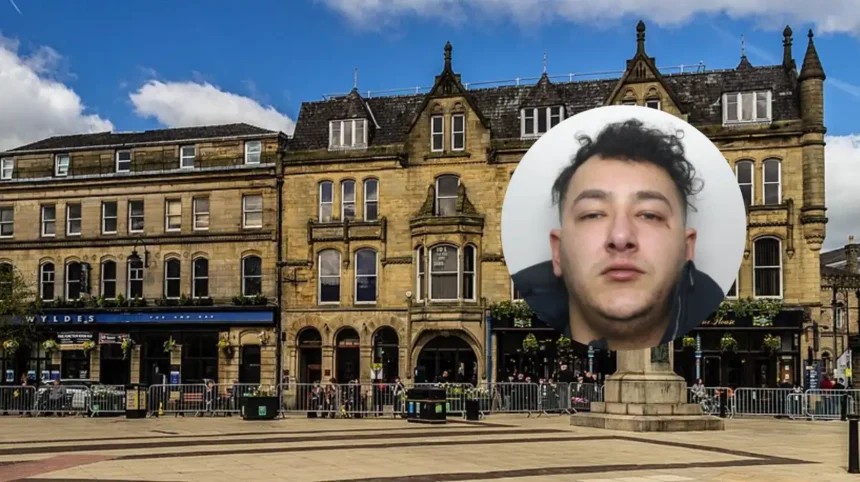
Manchester Crime (Manchester Mirror) October 07, 2026 — A man from Radcliffe has been jailed for more than a decade after being convicted of a series of rape, sexual assault and stalking-related offences against a woman in Greater Manchester. Ainsley France, 28, of Lever Street, Radcliffe, was sentenced at Manchester Crown Court following his conviction on September 4, 2026, for two counts of rape, one count of assault by penetration, and one count of controlling or coercive behaviour.
- Key Points
- What sentence did Ainsley France receive for rape and sexual offences?
- What offences was Ainsley France convicted of at Manchester Crown Court?
- How did the investigation and prosecution unfold in this case?
- What protective orders were imposed alongside the prison sentence?
- How does this sentencing compare to other recent rape cases in Greater Manchester?
- What support is available for victims of rape and domestic abuse in Greater Manchester?
- Background of the development
- Prediction: How this development may affect survivors and communities in Greater Manchester
What sentence did Ainsley France receive for rape and sexual offences?
As reported by journalists at the Bury Times, France was handed a total custodial term of 10 years and six months for the rape offences, with additional concurrent sentences of seven years for assault by penetration and 18 months for controlling or coercive behaviour. All sentences are to run concurrently, meaning the effective term he must serve is 10 years and six months.
In addition to the prison term, the court imposed an indefinite notification requirement, obliging France to register with police as a sex offender for life. He was also issued a restraining order that prohibits him from making any unauthorised contact with the victim, whose identity is protected under legal anonymity provisions.
What offences was Ainsley France convicted of at Manchester Crown Court?
According to court reporting by the Bury Times, France was found guilty of two separate counts of rape, one count of assault by penetration, and one count of controlling or coercive behaviour. The controlling or coercive behaviour included acts of verbal abuse, belittling the victim, and attempting to prevent her from associating with friends.
The offending took place over a period of just over three months, between May 31, 2023, and September 5, 2023. The victim, a woman who cannot be named for legal reasons, was subjected to repeated sexual violence and a pattern of coercive control during this time.
How did the investigation and prosecution unfold in this case?
While specific investigative details have not been fully disclosed in public reports, the case proceeded through Manchester Crown Court, where a jury heard evidence before returning guilty verdicts on September 4, 2026. The Crown Prosecution Service (CPS) North West, which handles prosecutions in Greater Manchester, would have been responsible for bringing the charges, though no named CPS spokesperson has commented publicly on this specific sentencing.
Greater Manchester Police (GMP) regularly publish sentencing outcomes for serious sexual offences in the region, and this case forms part of a broader pattern of enforcement action against perpetrators of rape and domestic abuse in Greater Manchester.
What protective orders were imposed alongside the prison sentence?
In line with sentencing guidelines for serious sexual offences, the court imposed two key protective measures alongside the custodial term. First, France was made subject to an indefinite notification requirement, meaning he must remain on the sex offenders’ register for life and notify police of changes to his address, travel, and other specified details.
Second, a restraining order was issued to protect the victim from further harm. This order prohibits France from making any unauthorised contact with her, whether directly or indirectly, and breach of the order would constitute a separate criminal offence punishable by further imprisonment.
How does this sentencing compare to other recent rape cases in Greater Manchester?
Recent sentencing data from Manchester Crown Court and surrounding courts shows a range of outcomes for rape and related sexual offences, depending on the number of counts, aggravating factors, and harm caused. For example, in April 2026, Jack-Leland Webster was jailed for nine years and five months for rape, strangulation and stalking offences committed while living in Manchester. In another case, Gary Corcoran, 25, was sentenced to 10 years in September 2025 for raping the same vulnerable woman three times, along with additional sexual offences.
More severe sentences have also been recorded: Paul Quinn received 24 years in April 2026 for two counts of rape, grievous bodily harm, and choking with intent to commit a sexual offence. Meanwhile, Mohammed Al Masri was jailed for eight years in August 2026 for raping a woman after posing as a good samaritan. The 10-year-six-month term given to France sits within this spectrum, reflecting the seriousness of multiple rape counts alongside coercive control.
What support is available for victims of rape and domestic abuse in Greater Manchester?
Victims of rape and domestic abuse in Greater Manchester can access support through multiple channels, including Greater Manchester Police’s dedicated safeguarding teams, independent sexual violence advisors (ISVAs), and specialist charities such as Women’s Aid and Rape Crisis England & Wales. GMP has previously highlighted the importance of victim support in high-profile cases, noting that survivors often require long-term assistance with safety planning, mental health care, and navigating the criminal justice process.
The imposition of restraining orders and lifelong registration requirements is intended to provide ongoing protection and reduce the risk of reoffending, though victim support services remain essential for helping survivors rebuild their lives after conviction and sentencing.
Background of the development
This sentencing follows a conviction secured at Manchester Crown Court in early September 2026, after a trial in which evidence of rape, assault by penetration, and coercive control was presented against Ainsley France. The case reflects ongoing efforts by police and prosecutors in Greater Manchester to tackle serious sexual violence and domestic abuse, particularly where patterns of coercive control accompany physical offences.
Over the past year, several high-profile rape and stalking cases have resulted in substantial prison terms across the region, signalling a continued focus on holding perpetrators to account and protecting victims through both custodial sentences and post-release restrictions.
Prediction: How this development may affect survivors and communities in Greater Manchester
This development is likely to reinforce confidence among survivors of sexual violence in Greater Manchester that serious offences will be met with significant prison terms and long-term protective measures. The combination of a lengthy custodial sentence, indefinite registration, and a restraining order may encourage more victims to come forward, knowing that the courts can impose robust safeguards against further harm.
For local communities, the case underscores the reality that rape and coercive control often occur together, and that sentencing reflects the cumulative harm caused by such offending. It may also prompt increased awareness of support services and reporting mechanisms, potentially leading to higher engagement with police and specialist agencies among those affected by similar abuse.