Key Points
- A major day of action has been conducted by Greater Manchester Police against a suspected violent organised crime gang.
- A total of 20 warrants were carried out by officers at locations related to the inquiry.
- Over 250 officers participated in two waves of operation.
- It was reported that the gang was disrupting lives in the local communities.
- This operation was aimed at tackling the suspected serious and organised crime.
- Disruption of violence and organised crime was achieved through searches and arrests.
- The inquiry is still on-going, and those who have been arrested are presumed innocent until proved guilty in a court of law.
- This follows other major actions by Greater Manchester Police.
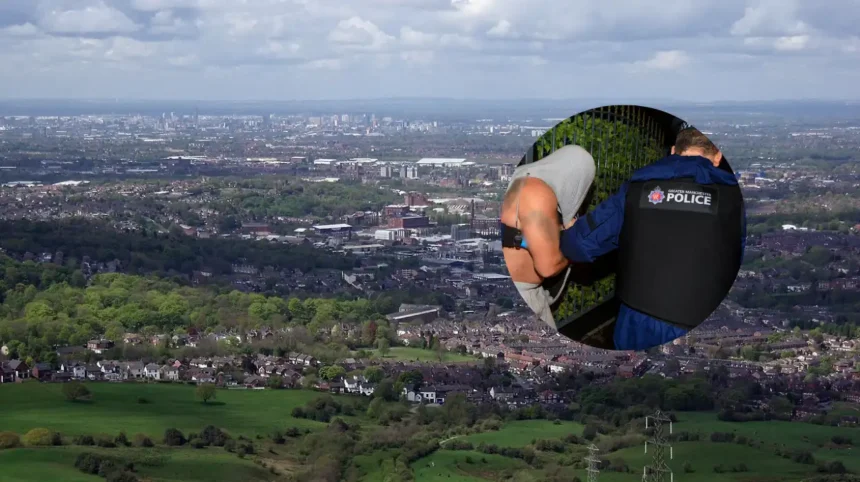
Manchester (Manchester Mirror) October 7, 2026 — Greater Manchester Police said , that more than 250 officers took part in a major day of action during which 20 warrants were executed against addresses linked to a suspected violent organised crime group.
- Key Points
- Why did police execute 20 warrants?
- How many officers took part?
- What did Greater Manchester Police say about the operation?
- What is known about arrests and seizures?
- How does the operation affect local communities?
- Is this part of a wider crime operation?
- What happens after the warrants?
- What should residents know?
- What is the background to the development?
- How could the operation affect local residents?
The operation was conducted in two waves and targeted a group that police said had been causing misery across communities. Officers carried out searches at multiple addresses as part of an investigation into suspected serious and organised criminality.
The force described the activity as a significant intervention designed to disrupt the group’s alleged operations, identify those involved and gather evidence for the ongoing investigation. The exact number of arrests, charges and items seized was not available in the material supplied for this report.
Greater Manchester Police said the operation involved a substantial number of officers from across the force. The deployment reflected the scale of the investigation and the seriousness with which police are treating the alleged activity.
Why did police execute 20 warrants?
According to the Greater Manchester Police announcement, the warrants were executed at addresses associated with a suspected organised crime group believed to be linked to violence and wider criminal activity.
Police forces use search warrants where investigators believe an address may contain evidence relevant to an offence. The searches can help officers locate suspected weapons, drugs, electronic devices, documents, cash or other material that may support an investigation. However, the execution of a warrant does not, by itself, prove that an individual living at or connected with an address has committed a crime.
The police statement characterised the group as violent and said it had been causing misery across the communities affected. The wording describes the focus of the investigation but does not establish criminal liability. Any allegations must be tested through the criminal justice process.
Greater Manchester Police has not, in the information available here, published a full breakdown of the suspected offences, the individual addresses searched or the evidence recovered from each location.
How many officers took part?
More than 250 officers participated in the operation, according to Greater Manchester Police. The force said the activity took place in two waves, indicating a coordinated deployment across several locations rather than a single isolated search.
Large operations of this kind commonly require teams with different responsibilities, including neighbourhood officers, detectives, search specialists, intelligence staff, custody teams and senior operational commanders. The supplied police announcement confirms the number of participating officers but does not identify every unit involved.
The scale of the deployment also indicates that police intended the operation to have an immediate effect on the suspected group’s ability to operate. At the same time, the wider purpose of the searches is likely to be evidence gathering, allowing investigators to determine whether further arrests or charges are appropriate.
Greater Manchester Police has not provided, in the source material available for this article, a complete account of the operational timetable, the precise areas covered or the number of people detained.
What did Greater Manchester Police say about the operation?
As reported in the Greater Manchester Police news release, the force said the activity was aimed at tackling a violent organised crime group that had been causing misery across local communities.
The announcement presents the operation as part of a wider response to serious and organised crime. Police forces typically use such action to disrupt criminal networks, protect residents and develop evidence against suspected offenders.
The statement does not mean that the suspected group has been convicted. At the time of publication, the investigation remained active, and further decisions would depend on the evidence gathered during the searches and on subsequent investigative work.
Any person arrested in connection with the operation would retain the right to legal representation and the presumption of innocence. Charges, if brought, would be determined by the Crown Prosecution Service or another relevant prosecuting authority, depending on the circumstances.
What is known about arrests and seizures?
The supplied information confirms that 20 warrants were executed, but it does not state how many arrests were made. It also does not provide a confirmed list of items seized during the searches.
That distinction is important because the number of warrants does not necessarily correspond to the number of suspects or arrests. A single warrant may relate to one person, several people or an address that investigators believe contains evidence. In some cases, searches lead to arrests; in others, officers may gather evidence without making an arrest at the time.
Greater Manchester Police may provide further information as the investigation develops. Details about charges, court hearings, property seizures or recovered weapons and drugs should be treated as confirmed only when released by the force, a court or another authoritative source.
Until more information is published, it would be inaccurate to claim that every person connected with the searched addresses was arrested or that specific offences have been proved.
How does the operation affect local communities?
The operation is likely to be closely watched by residents in the areas where the warrants were carried out. Police action against a suspected violent organised crime group can lead to a visible increase in officers, road activity and searches in the short term.
Greater Manchester Police said the group had been causing misery across communities. That description points to the potential local impact of the suspected activity, which may include intimidation, violence, drug dealing, criminal exploitation, threats and disorder. The available announcement does not provide a detailed account of individual incidents allegedly connected to the group.
For residents, the immediate significance of the operation is that police have identified the suspected network as a priority target and committed substantial resources to disrupting it. The longer-term impact will depend on whether investigators can secure charges, obtain convictions and prevent the alleged activity from returning.
People with information about organised crime can report concerns to Greater Manchester Police. Information can also be passed anonymously through Crimestoppers. Residents should not approach suspected offenders or attempt to intervene themselves.
Is this part of a wider crime operation?
The October action follows other major operations by Greater Manchester Police involving warrants and arrests across the force area.
A separate Greater Manchester Police release reported that 22 warrants were executed during a major day of action targeting serious and organised crime. The force said 258 officers, including Chief Constable Sir Stephen Watson, took part in that operation and that 23 people were arrested. The same release later stated that 13 people had been charged.
In another operation, Greater Manchester Police reported that officers executed 19 warrants and made 41 arrests in Rochdale during activity connected with Operation AVRO. Search results for that release stated that the operation took place across the Rochdale borough and formed part of the force’s monthly crackdown on crimes affecting local communities.gmp+1
ITV News Granada separately reported that officers carried out 30 warrants between March 2 and March 8 as part of a national operation targeting organised drug networks. The report said 40 people were arrested during the week-long crackdown on county lines.itv
These earlier figures should not be treated as results from the October operation. They provide context about the force’s continuing use of large-scale enforcement activity against suspected organised crime, but each investigation concerns its own suspects, evidence and legal process.
What happens after the warrants?
The next stage will depend on the evidence recovered during the searches and information already held by investigators. Officers may continue interviewing suspects, examining electronic devices, analysing financial records and assessing links between people and addresses.
If investigators believe there is sufficient evidence, suspects may be released under investigation, released on bail, charged or detained while further enquiries continue. A person can be arrested without later being charged, and being charged does not mean that person is guilty.
The Crown Prosecution Service may become involved where prosecutors are asked to consider whether the evidence meets the threshold for charges. If charges are brought, the case may proceed through the magistrates’ court and, for more serious offences, the Crown Court.
Greater Manchester Police has not supplied a final outcome for all 20 warrants in the material available for this report. Further announcements may clarify the number of arrests, charges, seizures and court proceedings.
What should residents know?
Residents may see increased police activity while searches and follow-up enquiries continue. Anyone who witnessed suspicious behaviour, received threats or has information about suspected organised crime should contact police through official channels.
Members of the public should avoid sharing unverified names, photographs or allegations online. Publishing claims that identify people as criminals before a court has reached a verdict can cause serious harm and may create legal risks.
The correct legal position is that those arrested or investigated are innocent unless proven guilty. Police statements describe allegations and investigative activity; they do not replace evidence tested in court.
What is the background to the development?
Greater Manchester Police has continued to use coordinated operations to target suspected serious and organised crime across the region. Recent force announcements have referred to Operation AVRO, warrant activity, arrests and investigations involving suspected drug networks and other forms of organised criminality.
The force’s earlier reports show that these operations can involve hundreds of officers and searches across several districts. The February operation involving 22 warrants and the Rochdale operation involving 19 warrants demonstrate the scale of previous enforcement activity, while the October announcement identifies a separate action involving 20 warrants and more than 250 officers.gmp+1
The common objective is to disrupt criminal networks rather than focus only on individual incidents. However, the success of such operations cannot be measured solely by the number of warrants or arrests. It also depends on the quality of evidence, the number of charges secured, court outcomes, victim support and whether alleged criminal activity is reduced over time.
How could the operation affect local residents?
For local residents, the operation may lead to a stronger police presence and further investigative activity in the areas targeted. If the searches help officers identify suspects, remove weapons or disrupt alleged criminal networks, communities could see longer-term benefits through reduced intimidation and violence.
The immediate effect may also include disruption around searched addresses, public concern and uncertainty while police establish what has been found. Residents should rely on official updates rather than speculation and should report information safely through Greater Manchester Police or Crimestoppers.