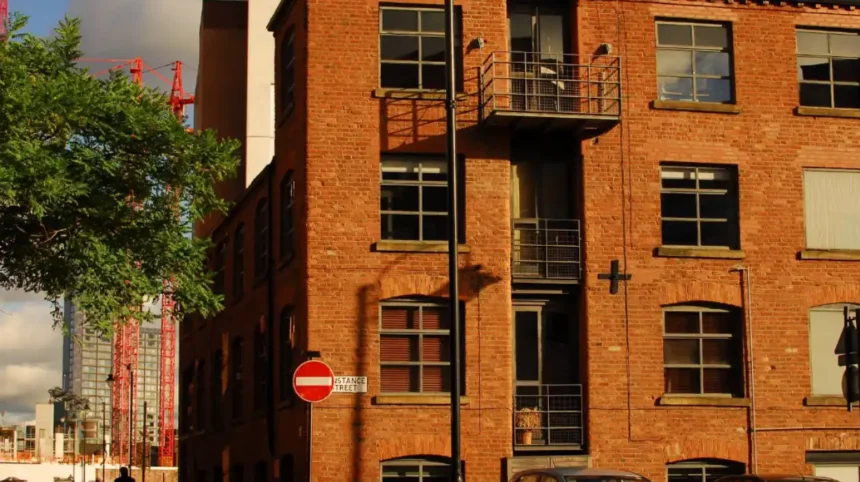
Little Peter Street Manchester is an urban thoroughfare situated in the M15 postcode area of the city centre, connecting Albion Street and Medlock Street within the Southern Gateway district. The street forms a strategic link between the Castlefield conservation area and the First Street commercial neighborhood, featuring a mix of residential apartment complexes and historical infrastructure.
- Where Is Little Peter Street Located in Manchester City Centre?
- How Did Little Peter Street Evolve From an Industrial Hub to a Residential Zone?
- What Types of Residential Properties Are Found on Little Peter Street?
- What Public Transport Links and Connectivity Serve Little Peter Street?
- What Amenities, Cultural Spots, and Leisure Facilities Surround Little Peter Street?
- What Is the Future Development Outlook for the Little Peter Street Area?
- Frequently Asked Questions
- What postcode covers Little Peter Street in Manchester?
- How far is Little Peter Street from Deansgate Station?
- What major residential developments are located on Little Peter Street?
- What cultural attractions are within walking distance of Little Peter Street?
- Is Little Peter Street part of a conservation area?
Little Peter Street played a central role during the Industrial Revolution as a hub for textiles, light engineering, and heavy manufacturing. Early nineteenth-century maps record dense rows of worker housing and industrial premises along the river basin. By the mid-twentieth century, electrical accessory manufacturers, shirt makers, electroplaters, and motor repair garages occupied the thoroughfare.
The urban landscape transitioned during the late twentieth and early twenty-first centuries through targeted municipal regeneration strategies. Industrial warehouses and low-rise commercial garages were systematically cleared to accommodate medium-density residential blocks. The area now serves as a key residential zone within the Southern Gateway framework.
Understanding the geographical positioning, historical evolution, residential property market, and infrastructure connectivity of Little Peter Street provides clear insights into how Manchester transformed former industrial zones into vibrant urban residential districts.
Where Is Little Peter Street Located in Manchester City Centre?
Little Peter Street sits within the M15 4QH postcode district on the southern edge of Manchester city centre, running parallel to the active railway viaduct near Deansgate. The street spans between Albion Street to the west and Medlock Street to the east, providing immediate access to major road networks and public transit links.
Geographically, the thoroughfare sits at the intersection of several distinct city centre quarters. To the north lies the historic Castlefield basin, celebrated for its preserved Roman fort heritage, dual canals, and industrial brick architecture. To the immediate east sits the First Street cultural and commercial district, featuring office spaces, dining establishments, and performance venues like HOME Manchester.
The southern boundary borders the Great Jackson Street framework area, which contains high-rise residential towers and modern public realm spaces. This position gives residents direct access to key urban destinations without placing the street directly inside high-density commercial corridors.
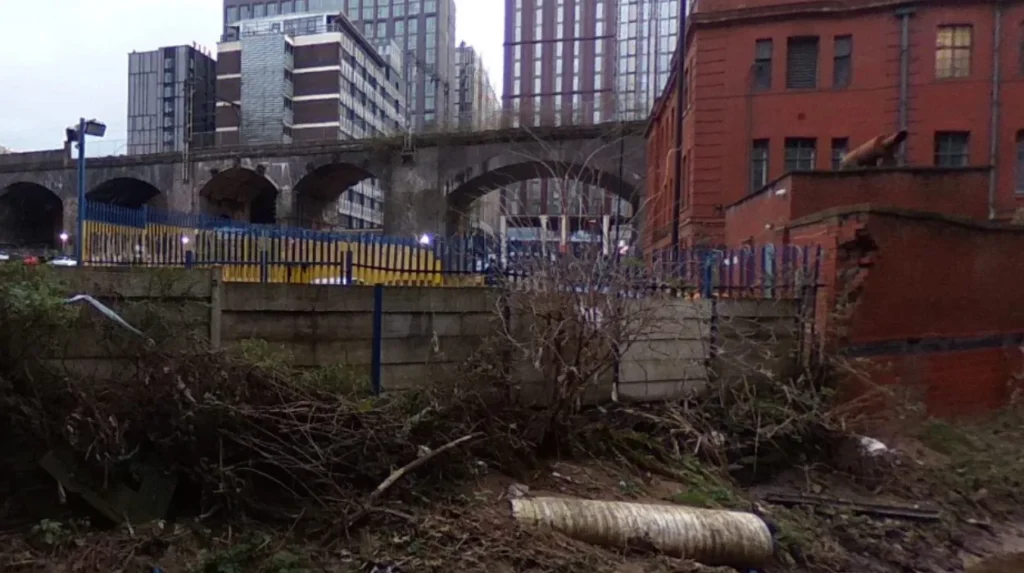
The street benefits from surrounding physical infrastructure. A brick railway viaduct constructed in the nineteenth century runs along its northern side, carrying national rail lines and Metrolink light rail tracks connecting Deansgate Station to Oxford Road Station.
How Did Little Peter Street Evolve From an Industrial Hub to a Residential Zone?

Little Peter Street evolved from a dense nineteenth-century industrial workspace into a modern residential enclave through post-industrial urban redevelopment initiatives led by local government and private property developers. The transition reflects Manchester’s wider economic shift from heavy manufacturing toward services, technology, and city-centre living.
During the nineteenth century, the street contained tight grid rows of back-to-back housing constructed for industrial laborers. Surrounding these homes were iron foundries, textile finishing plants, and chemical storage facilities fed by the nearby Rochdale Canal and River Medlock. Overcrowding and industrial emissions characterized the immediate environment throughout the Victorian era.
By the early twentieth century, light manufacturing businesses replaced domestic housing. Commercial directories from 1927 show electroplaters like P. Bowler & Co, shirt manufacturers like E. Fenwick & Co, fire extinguisher makers John Kerr & Co, and electrical accessory distributors operating from street numbers 20 to 37. The British Driver Harris Company also established cable and wire production operations nearby.
The decline of inner-city manufacturing during the 1970s and 1980s left many structures vacant or underutilized. The establishment of the Central Manchester Development Corporation in 1988 accelerated urban renewal across the Southern Gateway district. Redundant commercial buildings and auto repair centers were demolished to clear land for purpose-built apartment complexes, permanently altering the built environment.
What Types of Residential Properties Are Found on Little Peter Street?
Residential property on Little Peter Street consists primarily of modern, purpose-built apartment blocks offering one-bedroom, two-bedroom, and penthouse layouts targeted at urban professionals. The structures feature contemporary architectural designs alongside brickwork that respects the adjacent historic rail infrastructure.
The Ropeworks development forms one of the dominant residential complexes along the street. Built by George Wimpey, this stylish two-block scheme comprises 300 individual apartments and penthouses. The building features a gull-wing roofline, circular corner turrets, full-height glass windows, and Juliet balconies overlooking the city skyline.
Another major residential installation is the Hill Quays development, situated toward the Medlock Street end. This high-density complex contains multi-storey residential units with underground parking, secure access systems, and private gymnasium facilities for residents.
The residential demographic consists of young working professionals, healthcare staff, corporate contractors, and postgraduate university students. The proximity to commercial centers, tech hubs, and major university campuses makes these apartment developments highly desirable for leaseholders and private renters seeking city-centre living.
What Public Transport Links and Connectivity Serve Little Peter Street?
Little Peter Street features exceptional transport connectivity, sitting within a five-minute walk of Deansgate Railway Station, the Deansgate-Castlefield Metrolink tram stop, and major vehicular arterial roads. These multi-modal transport connections link residents directly to regional networks and regional airports.
Deansgate Station provides direct heavy-rail services across Greater Manchester, Lancashire, Yorkshire, and Liverpool. Oxford Road Railway Station sits just 0.4 miles to the east along Whitworth Street, providing direct transit lines to Manchester Airport and national destinations across the North of England.
The Deansgate-Castlefield Metrolink interchange offers frequent tram services across all light rail lines in Greater Manchester. Passengers can access direct routes to Manchester Piccadilly, Altrincham, Bury, East Didsbury, Ashton-under-Lyne, and the Trafford Centre without changing trains.
For road transit, Little Peter Street connects immediately to Medlock Street, which feeds directly into the A57(M) Mancunian Way. This urban motorway connects the area to the M60 orbital motorway network, providing efficient road vehicle access across the region.
Read more about regional transport and municipal operations in Greater Manchester by exploring our report on Manchester Airport Disruption and Flight Updates.
What Amenities, Cultural Spots, and Leisure Facilities Surround Little Peter Street?
Little Peter Street benefits from immediate access to premier cultural centers, independent dining venues, green spaces, and historic entertainment destinations within a ten-minute walking radius. The location balances quiet residential positioning with proximity to active city nightlife and arts spaces.
Cultural highlights near the street include HOME Manchester, a multi-arts venue located just 0.1 miles away in the First Street complex. HOME features two theater spaces, five art cinemas, a contemporary visual art gallery, and multiple dining options. The Palace Theatre on Oxford Street sits 0.3 miles to the northeast, hosting touring West End theatrical productions.
Dining options surrounding the street range from independent artisan cafes to high-end international restaurants. The adjacent Castlefield district offers waterfront pubs and beer gardens along the Bridgewater Canal basin, while First Street features craft beer taprooms and international food halls.
For physical exercise and outdoor recreation, residents can access public pedestrian paths along the Rochdale Canal and River Medlock. Nearby green spaces include St. John’s Gardens and Hulme Park, offering open lawn spaces, mature tree canopy covers, and quiet walking paths away from street traffic.
Residents interested in seasonal community events can learn more about city events by reading about the Confirmed Dates for Manchester Christmas Markets.
What Is the Future Development Outlook for the Little Peter Street Area?
The future outlook for Little Peter Street involves continued high-density urban infill, public realm enhancements, and integration into the broader First Street Masterplan framework. Municipal planning frameworks focus on expanding commercial office floor space, adding green infrastructure, and enhancing pedestrian linkages.
Manchester City Council’s Executive board endorsed updates to the First Street Development Framework Addendum, which identifies land around Little Peter Street for strategic regeneration. Planning goals prioritize creating high-quality public plazas, widening pedestrian walkways, and adding urban tree planting along Medlock Street and Little Peter Street.
Developments near Cambridge Street and Willmott Street aim to incorporate climate-resilient landscaping, sustainable drainage systems, and opened-up views of the River Medlock basin. These initiatives address local resident feedback requesting more soft landscaping and communal outdoor spaces within hard-paved city zones.
Property developments in neighboring zones, such as Great Jackson Street and Knott Mill, continue to drive private investment into Little Peter Street. The ongoing addition of retail units, public services, and commercial headquarters ensures the street remains an important residential zone in central Manchester.
Frequently Asked Questions
What postcode covers Little Peter Street in Manchester?
Little Peter Street is located within the M15 4QH postcode district in central Manchester. This postcode sits within the City Centre ward and falls under the administrative authority of Manchester City Council.
How far is Little Peter Street from Deansgate Station?
Little Peter Street is approximately a two-minute walk from Deansgate Railway Station and the adjacent Deansgate-Castlefield Metrolink stop. The station sits less than 0.2 miles to the west along Albion Street.
What major residential developments are located on Little Peter Street?
The primary residential developments on Little Peter Street are The Ropeworks and Hill Quays. The Ropeworks features 300 modern apartments across two blocks with Juliet balconies and a distinctive gull-wing roof design.
What cultural attractions are within walking distance of Little Peter Street?
HOME Manchester sits 0.1 miles away, offering independent cinema, live theater, and art galleries. The Castlefield historic canal basin, Science and Industry Museum, and Palace Theatre are all within a ten-minute walk.
Is Little Peter Street part of a conservation area?
Little Peter Street borders the Castlefield Conservation Area to the west and forms part of the Southern Gateway regeneration zone. Development along the street adheres to urban design guidelines set by Manchester City Council.