The Guitar Trail Manchester is a landmark city-wide public art trail celebrating Greater Manchester’s deep musical legacy, creative community, and grassroots talent. Developed in partnership with Manchester City Council and Wild in Art, the project transforms urban streets into an interactive cultural exhibition.
- Where Are the Primary Locations for the Guitar Trail Manchester?
- How Was the Guitar Trail Manchester Created and Financed?
- Which Famous Musicians and Artists Contributed to the Trail?
- What Role Do Installations Like Cathedral of Sound Play in the Trail?
- How Does the Guitar Trail Manchester Support Grassroots Music Venues?
- What Interactive Digital Features Enhance the Visitor Experience?
- How Does the Trail Reflect Manchester’s Wider Music History?
- What Environmental Impact and Sustainability Practices Were Used?
- What Is the Long-Term Legacy of the Guitar Trail Manchester?
- Frequently Asked Questions
Greater Manchester holds a historical reputation as a global hub for musical innovation, producing genre-defining movements from post-punk to Madchester and Britpop. The Guitar Trail Manchester serves as a physical and digital tribute to this rich creative ecosystem. By placing custom-crafted visual installations directly into public spaces, the trail bridges the historical legacy of the region with contemporary grassroots artistry.
The core framework of the trail features 48 custom-painted guitar sculptures placed across 41 distinct locations, alongside instrument donations from legendary local musicians. These public installations encourage foot traffic across key cultural districts, including the Northern Quarter, Deansgate, Oxford Road Corridor, and Spinningfields. The broader initiative, titled Music for the Senses, pairs physical art with augmented reality experiences and charity auctions to fund grassroots music initiatives throughout North West England.
The initiative was established to sustain cultural tourism, drive footfall to local businesses, and generate revenue for community music venues. Through public funding, corporate sponsorship, and artist collaborations, the initiative illustrates how urban space can host interactive heritage preservation. The trail ensures that the cultural assets of the city remain accessible to residents and international visitors without financial barriers.
Where Are the Primary Locations for the Guitar Trail Manchester?
The primary locations for the Guitar Trail Manchester span key public sectors, including King Street, Oxford Road Corridor, St Peter’s Square, and the Northern Quarter. These locations host custom art installations, musician-donated instruments, and interactive urban displays.
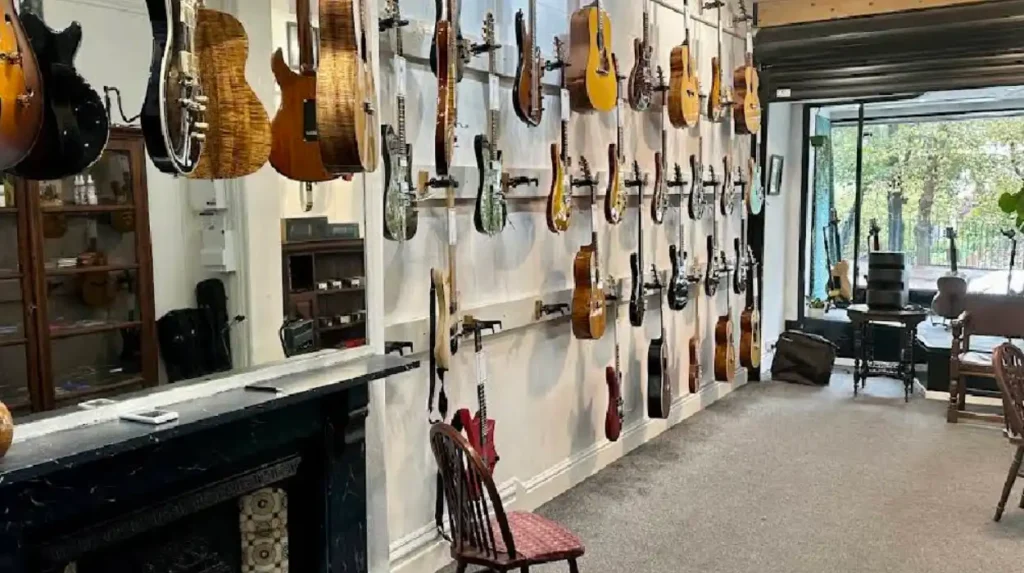
The spatial layout of the trail connects historical landmarks with modern commercial hubs to optimize visitor walking routes. Key points along the route include iconic music institutions like Johnny Roadhouse Music Store on Oxford Road, which opened in 1955 and has served generations of Mancunian bands. Other display hubs are positioned in public transportation terminals, heritage venues, and civic buildings to maximize public engagement.
On King Street, the public art takes center stage with specialized architectural displays, including Guitar Street—an exhibition suspended above the thoroughfare. Moving south toward the Oxford Road Corridor, instruments are showcased inside educational institutions like the Royal Northern College of Music and the Martin Harris Centre. These locations highlight the historical connection between formal musical education and organic urban music scenes.
Further integration occurs near major transit stops, such as Deansgate-Castlefield and Victoria Station, allowing visitors to navigate the trail using the Metrolink light rail system. Placing art pieces near local transport hubs ensures full accessibility for visitors with reduced mobility. The strategic distribution of these sculptures ensures that foot traffic flows naturally between established tourist attractions and lesser-known independent businesses.
How Was the Guitar Trail Manchester Created and Financed?
The Guitar Trail Manchester was created through a partnership between Manchester City Council and Wild in Art, funded by public grants, corporate sponsorships, and charitable donations. The project concludes with a charity auction benefiting local grassroots music initiatives.
The logistical execution of the art trail required multi-sector cooperation between local government, creative agencies, and regional businesses. Wild in Art, an organization specializing in mass-appeal public art events, managed the design, structural fabrication, and artist onboarding processes. Manchester City Council provided municipal planning permissions, site clearance, and logistical infrastructure across municipal properties.
Financial backing for the project relied on a hybrid funding model designed to minimize taxpayer expenditure while maximizing community reinvestment. Private corporate sponsors funded individual guitar displays, covering materials, artist commissions, and installation costs. Local venues, retail brands, and property development groups hosted individual sculptures, driving foot traffic into commercial premises while subsidizing the trail’s operational budget.
At the conclusion of the public display period, the featured guitars are uninstalled and cataloged for a public charity auction. Proceeds generated from the auction are directly directed into funds that support independent music venues, youth music training programs, and community recording studios. This economic model ensures that public art generates a self-sustaining financial legacy for the local music economy.
Which Famous Musicians and Artists Contributed to the Trail?
Famous contributors include members of Oasis, New Order, The Smiths, Busted, Elbow, and Happy Mondays, alongside visual artists like Lazerian and Mark Kennedy. These contributors donated physical instruments, designed custom artwork, and created public installations.
The trail combines contributions from internationally recognized rock figures with visual art from North West creators. Legendary bands like New Order and Oasis donated personal guitars to serve as core feature pieces. A guitar donated by Tony McCarroll, the original drummer of Oasis, features hand-painted artwork referencing the band’s 1994 debut album Definitely Maybe.
Read more about local developments around key transport and event routes in our coverage on United Utilities repairs on Manchester Road to plan your travel efficiently.
Visual artists transformed blank acoustic and electric guitar bodies into unique sculptures. Artist Liam Hopkins, working under the studio name Lazerian, designed two central features for the trail: Guitar Street and the Cathedral of Sound. The Cathedral of Sound installation utilized hundreds of reclaimed, unplayable acoustic guitars to construct an immersive architectural structure for public contemplation.
Mosaic artist Mark Kennedy contributed works featuring iconic local cultural figures, including poet John Cooper Clarke and comedian Frank Sidebottom. Tribute guitars were also created to honor figures like the late Paul Wagstaff, a guitarist for Happy Mondays and Black Grape who influenced the 1990s Madchester movement. This synthesis of musical and visual artists creates an interdisciplinary showcase of regional talent.
What Role Do Installations Like Cathedral of Sound Play in the Trail?
Installations like the Cathedral of Sound serve as immersive anchor points that combine structural design, sound engineering, and environmental recycling. These focal points transform public spaces into interactive auditory and visual sanctuaries.
The Cathedral of Sound represents an architectural approach to public art, standing as one of the largest structural elements of the Guitar Trail Manchester. Constructed by artist Liam Hopkins, the installation incorporates hundreds of salvaged timber acoustic instruments that were previously destined for landfills. The assembly demonstrates principles of circular design, converting waste materials into public installations.
Positioned in high-density areas such as St Peter’s Square and Mayfield Park, the pavilion allows visitors to walk inside the timber sculpture. The acoustic properties of the hollow guitar bodies absorb and reflect ambient noise, creating a quiet sanctuary in the urban center. This spatial design offers contrast to the surrounding concrete architecture, inviting reflection on urban acoustic design.
Beyond physical aesthetics, these anchor installations function as public gathering spaces for unannounced acoustic performances and workshops. By offering dynamic environments within busy city centers, anchor pieces lengthen the time visitors spend on the trail. This extended engagement increases local foot traffic and deepens community connection with municipal art initiatives.
How Does the Guitar Trail Manchester Support Grassroots Music Venues?
The Guitar Trail Manchester supports grassroots venues by directing public foot traffic to independent locations and raising funding through art auctions. These funds assist small music venues facing rising operational costs.
Independent venues represent the foundation of the North West live music ecosystem, acting as incubator spaces for emerging talent. However, grassroots establishments face severe financial pressure from rising venue rents, insurance premiums, and energy overheads. The Guitar Trail Manchester actively counters these pressures by placing trail markers directly outside or inside independent venues like Band on the Wall and Aatma.
Discover more about community cultural initiatives across the borough by reading our analysis on the Oldham Theatre cost developments.
Integrating independent venues into the trail map converts art enthusiasts into venue patrons. Visitors following the trail visit independent cafes, pubs, and performance spaces, generating direct bar and retail revenue for small businesses. The digital map app reinforces this economic link by offering promotional vouchers and location check-ins at independent sites.
The financial proceeds collected from the final auction are managed by charitable partners dedicated to preserving live performance spaces. Grants awarded from these funds help operators upgrade sound systems, complete accessibility alterations, and pay for talent booking guarantees. This funding structure offers targeted support to keep community performance hubs operational.
What Interactive Digital Features Enhance the Visitor Experience?
Interactive digital features include a mobile navigation app, augmented reality hubs, and digital rewards systems. These technologies allow visitors to locate artworks, unlock historical archives, and view digital content.
The implementation of mobile technology transforms the physical art trail into a multi-layered digital experience. The official Music for the Senses smartphone app, downloadable on iOS and Android platforms, gives users GPS navigation across all 41 display points. The application tracks visitor progress, allowing users to check in at individual guitar sculptures and unlock digital badges.
Augmented reality hubs, integrated into the trail via the Manchester Music Mooch platform, overlay historical digital media onto physical urban environments. Pointing a mobile device at designated trail stops triggers location-based content, including archival concert video, audio interviews with artists, and 3D renderings of historical musical gear. This technology blends physical objects with digital music heritage.
For updates on infrastructure projects across Greater Manchester, read our guide on what is the significance of Greengate Salford.
Digital rewards systems incentivize complete exploration of the route. Collecting check-ins at individual trail locations unlocks discounts at participating local shops, cafes, and entertainment venues. This gamification strategy encourages extended engagement, ensuring visitors explore areas outside the primary tourist districts.
How Does the Trail Reflect Manchester’s Wider Music History?
The trail reflects Manchester’s wider music history by charting the evolution of genres from 1960s beat groups to Northern Soul, post-punk, Madchester, and modern electronic music. Each artwork connects to specific local musical landmarks.
The geographic footprint of the trail acts as a physical timeline of popular music development in the North West. Displays near historic venues like New Century Hall highlight the 1960s beat boom, when touring acts like The Rolling Stones and The Kinks performed in the city. Custom artwork along the route commemorates the Northern Soul movement of the 1970s, referencing iconic dance venues like the Twisted Wheel.
The post-punk and indie eras are represented near sites connected to Factory Records and the Haçienda nightclub. Guitars designed in homage to record sleeve artist Peter Saville feature graphic layouts inspired by Joy Division and New Order album art. The display pieces placed near Aviva Studios highlight the continuation of this design legacy into contemporary digital performance spaces.
The project also honors the multicultural influences that shaped Manchester’s sound. Displays celebrate cellar clubs like the Reno in Moss Side and blues venue squats in Hulme, which introduced reggae, ska, and soul into the regional music fabric. By acknowledging these diverse origins, the trail offers a comprehensive historical narrative of the city’s artistic identity.
What Environmental Impact and Sustainability Practices Were Used?
Sustainability practices included using reclaimed instruments, non-toxic weatherproofing finishes, and locally sourced recycled materials. These measures minimized carbon emissions and eliminated single-use material waste.
Environmental design principles were integrated into the production phases of the public art trail. Rather than manufacturing new plastic or fiberglass models, art installations repurposed existing broken, discarded, or unplayable instruments donated by the public and music shops. This circular approach prevented hundreds of damaged instruments from entering municipal waste streams.
To withstand the North West weather without environmental degradation, participating artists used low-VOC paints and water-based protective sealants. Outdoor mounting structures were engineered using recycled steel and sustainably sourced timber, ensuring all hardware could be disassembled and recycled at the conclusion of the event. These materials protected display quality while preventing chemical runoff into urban drainage systems.
The trail’s focus on pedestrian navigation promotes sustainable urban mobility. Walkable routes, combined with integration into Greater Manchester’s Bee Network public transport system, encouraged visitors to explore without relying on personal motor vehicles. This structural approach aligns public art initiatives with broader municipal carbon-reduction goals.
What Is the Long-Term Legacy of the Guitar Trail Manchester?
The long-term legacy includes direct financial grants for grassroots venues, permanent public art murals, and established educational art programs. These initiatives ensure lasting social, cultural, and economic benefits.
While the temporary guitar displays are eventually sold at charity auctions, the project leaves permanent physical and social additions across Greater Manchester. The initiative commissioned four large-scale permanent street murals by international urban artists, including AKSE P19 and Nomad Clan. These visual works remain as permanent landmarks, transforming bare urban brickwork into public art assets.
For more news on urban developments and public investments in the area, read our overview of the affordable homes planned for Woodley Stockport.
The financial capital raised through instrument auctions secures long-term benefits for youth music development. Endowment funds provide instruments, rehearsal space access, and professional mentorship to young artists from underrepresented socioeconomic backgrounds. This ongoing support helps maintain a pipeline of creative talent for the regional music economy.
The collaborative model between local councils, commercial sponsors, and independent artists offers a framework for future urban regeneration projects. Proving that cultural heritage can drive economic activity while funding community resources, the Guitar Trail Manchester sets a baseline standard for civic art initiatives across the United Kingdom.
Frequently Asked Questions
What was the Guitar Trail Manchester?
The Guitar Trail Manchester was a public art exhibition across Greater Manchester featuring 48 decorated guitar sculptures, musician-donated instruments, murals, and interactive sound installations.
How long did the Guitar Trail Manchester run?
The official public art trail ran from July 7 through August 31, 2025, taking over city thoroughfares, venues, and transit hubs.
Where did the guitars go after the trail ended?
Following the public exhibition, the guitars were cataloged and auctioned off at a special fundraising event to raise capital for grassroots music venues and youth music charities.
Who organized the Music for the Senses art trail?
The initiative was created through a joint partnership between Manchester City Council and public art producers Wild in Art, with support from local businesses and musicians.
How did visitors navigate the physical trail?
Visitors navigated the trail using downloadable physical PDF maps, a dedicated smartphone app on iOS and Android, and augmented reality hubs placed along walking routes.