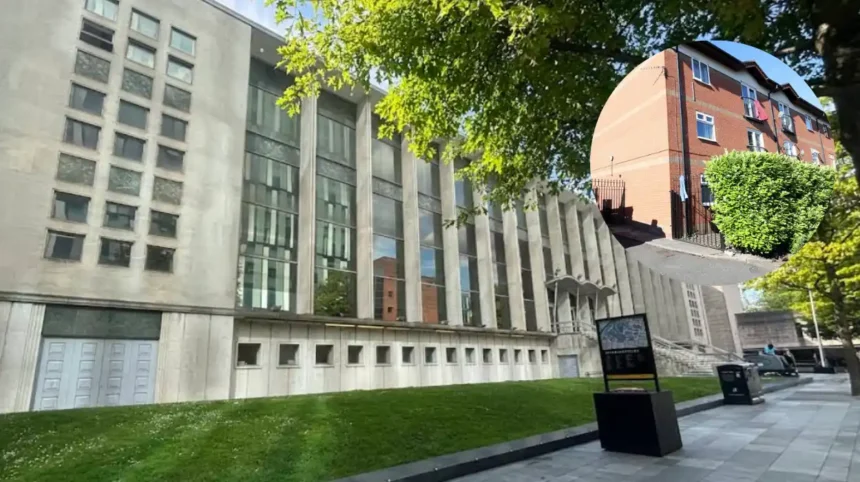
Key Points
- Callum Browne, 28, of Rowland Street, Salford, has been charged with producing ricin, a deadly biological toxin
- Emergency services responded to welfare concerns at a flat on Rowland Street near Salford Quays on Sunday, May 31, 2026
- Greater Manchester Police removed potentially hazardous substances from the property following the incident
- Browne was arrested shortly after the discovery and has now been remanded in custody
- He faces two charges: production of ricin under Section 2 of the Chemical Weapons Act 1996 and attempted production of a psychoactive substance under S1 Criminal Attempts Act 1981
- The suspect is scheduled to appear at Manchester and Salford Magistrates’ Court on June 10, 2026
- Greater Manchester Police confirmed the charges in an update issued on the morning of June 10
Salford Quays (Manchester Mirror)June 10, 2026 – Emergency services were called out to concerns for a person’s welfare at a flat on Rowland Street, near Salford Quays, on Sunday, May 31, 2026. As reported by the Manchester Evening News, Greater Manchester Police (GMP) says substances which were alleged to be potentially hazardous were removed from the property following the incident. A 28-year-old man was later arrested at the scene.
- Key Points
- How Did Greater Manchester Police Confirm the Charges?
- What Is Ricin and Why Does It Pose Serious Public Safety Concerns?
- What Legal Proceedings Will Browne Face at Manchester and Salford Magistrates’ Court?
- Background of the Chemical Weapons Act 1996 and Ricin Prohibition
- How Will This Ricin Production Charge Impact Greater Manchester Residents and Public Safety?
The location, Rowland Street, sits in close proximity to Salford Quays, a well-known residential and commercial development in the Salford area of Greater Manchester. Police resources were deployed to assess the welfare concern, which subsequently led to the discovery of hazardous materials. According to the Manchester Evening News report, the substances removed from the property were alleged to be potentially hazardous, prompting immediate police action and the subsequent arrest.
How Did Greater Manchester Police Confirm the Charges?
In an update issued this morning, June 10, 2026, Greater Manchester Police confirmed that the arrested man had since been charged. As reported by Manchester Evening News journalist covering the Greater Manchester crime beat, GMP named the defendant as Callum Browne, of Rowland Street, Salford. The police statement confirmed Browne has been charged with production of a biological toxin (ricin) under Section 2 of the Chemical Weapons Act 1996 and attempt production of a psychoactive substance contrary to S1 Criminal Attempts Act 1981.
The Chemical Weapons Act 1996 is United Kingdom legislation that implements the Chemical Weapons Convention, prohibiting the production, stockpiling, and use of chemical and biological toxins for hostile purposes. Section 2 specifically addresses the production of biological toxins, making Browne’s alleged actions a serious criminal offence under UK law. The additional charge of attempted production of a psychoactive substance falls under the Criminal Attempts Act 1981, which criminalises attempts to commit offences under the Psychoactive Substances Act 2016.
What Is Ricin and Why Does It Pose Serious Public Safety Concerns?
Ricin is a highly toxic protein naturally found in the seeds of the castor oil plant (Castor communis). As documented in public health records and chemical safety guidelines, ricin is classified as a biological toxin with no legitimate medical or commercial use in general circumstances. The substance is potent enough that even small quantities can cause severe harm or death if ingested, injected, or inhaled.
According to UK government guidance on chemical weapons and toxic substances, ricin production is strictly prohibited under the Chemical Weapons Act 1996. The toxin’s identification as a biological weapon material means any attempt to produce it constitutes a serious criminal offence with potential implications for public safety. The Manchester Evening News report indicates that police deemed the substances removed from Browne’s property as “potentially hazardous,” reflecting the genuine safety concerns surrounding ricin production.
What Legal Proceedings Will Browne Face at Manchester and Salford Magistrates’ Court?
Callum Browne has been remanded in custody ahead of his court appearance. As confirmed by Greater Manchester Police in their June 10 update, Mr Browne is due to appear at Manchester and Salford Magistrates’ Court later today, June 10, 2026. The magistrates’ court will handle the initial proceedings, including consideration of custody status and potential transfer to a higher court if the case merits further审理.
Manchester and Salford Magistrates’ Court serves the local area covering both Manchester and Salford jurisdictions. The court will assess the evidence presented by Greater Manchester Police regarding the ricin production charge and the attempted psychoactive substance production charge. Under UK criminal procedure, Browne will have the opportunity to respond to the charges, though the serious nature of biological toxin production may result in extended custody pending further legal proceedings.
Background of the Chemical Weapons Act 1996 and Ricin Prohibition
The Chemical Weapons Act 1996 represents United Kingdom legislation implementing the international Chemical Weapons Convention (CWC), which was signed in 1993 and entered into force in 1997. The Act prohibits the development, production, stockpiling, acquisition, retention, transfer, and use of chemical weapons, including biological toxins such as ricin. Section 2 of the Act specifically addresses biological toxin production, making it a criminal offence for any person to produce such substances without authorised governmental permission.
Ricin’s classification as a prohibited biological toxin stems from its extreme toxicity and potential use as a weapon. The UK government’s guidance on chemical weapons convention matters explicitly lists ricin among controlled toxic chemicals. The Psychoactive Substances Act 2016, which forms the basis for Browne’s second charge, prohibits the production and supply of substances capable of producing psychoactive effects, excluding already-regulated substances like alcohol, caffeine, and nicotine.
The combination of charges against Browne reflects the seriousness with which UK authorities treat attempts to produce dangerous substances. Greater Manchester Police’s decision to remove hazardous materials from the Rowland Street property and pursue criminal charges demonstrates adherence to established protocols for handling potential chemical weapons incidents.
How Will This Ricin Production Charge Impact Greater Manchester Residents and Public Safety?
This development poses significant implications for public safety in Greater Manchester, particularly for residents living near Salford Quays and Rowland Street. The production of ricin in a residential flat creates immediate health risks for neighbours, emergency responders, and anyone who might encounter the hazardous substances. As reported by the Manchester Evening News, police deemed the materials “potentially hazardous,” indicating genuine concerns about exposure risks.
For Greater Manchester residents, this case reinforces the importance of reporting welfare concerns and unusual activity to police. The fact that emergency services were called due to welfare concerns demonstrates how community vigilance can prevent potentially catastrophic incidents. Residents should remain aware that biological toxin production in residential areas represents an exceptional public safety threat requiring immediate police intervention.
The court proceedings will also impact the local legal system and community perception of safety. Manchester and Salford Magistrates’ Court will handle a case involving serious criminal charges with potential national security implications. For the broader Greater Manchester community, Browne’s custody remand ensures he remains detained while legal proceedings continue, reducing immediate public safety concerns.
Local authorities may review emergency response protocols for similar incidents following this case. Greater Manchester Police’s successful removal of hazardous substances and swift charging of Browne demonstrates effective handling of chemical weapons incidents. However, the incident may prompt increased police monitoring of residential properties in Salford and surrounding areas to prevent future biological toxin production attempts.
The case also highlights the ongoing threat of illegal substance production in urban environments. For residents, this means maintaining awareness of suspicious activities and cooperating with law enforcement when concerns arise. The successful prosecution of Browne under the Chemical Weapons Act 1996 sets a precedent for how UK courts will handle similar biological toxin production cases, potentially influencing future sentencing and legal outcomes for comparable offences.