Key Points
- Harwich runners race from Colchester Harriers and associated local clubs competed in both the 2026 Manchester Marathon and the 130th Boston Marathon on 19‑20 April 2026.
- At the Manchester Marathon, Colchester Harriers athletes recorded personal‑best times and strong placements, with Andrew Jobling finishing in 2:45:17 and Mark Howard cutting nearly 15 minutes from his previous best.
- Harwich‑linked runners also participated in the Boston Marathon, joining a field where Kenya’s John Korir won the elite men’s race in 2:01:52, and Britain’s Eden Rainbow‑Cooper triumphed in the women’s wheelchair division.
- The involvement of Harwich area runners reflects continued local momentum in road‑race participation, following recent success at the Mayflower 400 Harwich Half Marathon, where Colchester Harriers men filled eight of the top‑twenty places.
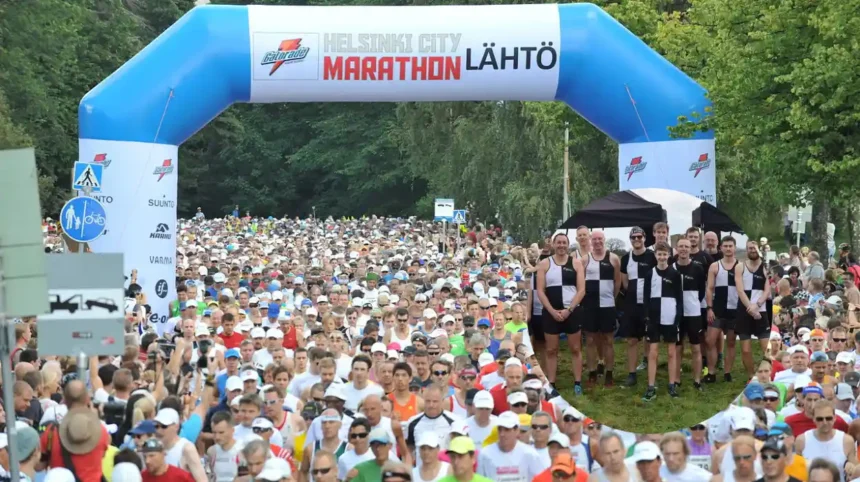
Manchester(Manchester Mirror)April 21, 2026-Harwich‑based runners have doubled down on long‑distance racing this spring, sending a group to the 2026 Manchester Marathon while others joined the mass‑start at the 130th Boston Marathon in the United States. The two events, held in quick succession on 19 and 20 April, saw athletes from Colchester Harriers Athletics Club and affiliated Harwich‑linked runners post personal‑best times and notable finishes against international fields.
- Key Points
- Harwich runners’ performance at the Manchester Marathon
- How the Boston Marathon unfolded
- Harwich‑linked participation in Boston
- Context within Harwich and Colchester running culture
- Why this matters for Harwich area runners
- Background of the development
- Prediction: How this development could affect Harwich area runners
Harwich runners’ performance at the Manchester Marathon
Colchester Harriers’ club website reported that
“A group of Harriers runners made their way up to the North West to compete in the Manchester marathon,”
highlighting several strong performances. Andrew Jobling crossed the line in 2:45:17, marking his first-ever road marathon and delivering a solid debut at the 42.195‑km distance.
Mark Howard followed soon after in 2:53:16, improving his previous best by nearly 15 minutes, while Jerry Walder ran a controlled race to clock 3:04:15, another personal best for him. Jay Waite finished just behind in 3:04:26, also a new PB, underscoring how the Harwich‑linked contingent maximised recovery and pacing on a fast city course.
How the Boston Marathon unfolded
On the other side of the Atlantic, the 130th Boston Marathon unfolded on 20 April 2026 under brisk spring conditions, drawing tens of thousands of runners through the New England route. As reported by GBH – WGBH, Kenya’s John Korir won the professional men’s race in an unofficial time of 2:01:52, setting a new course record and extending his dominance after a previous Boston victory.
According to Runner’s World’s coverage of the 2026 Boston Marathon, Korir’s nearest challenger was Alphonce Felix Simbu of Tanzania, who finished in 2:02:47, while Benson Kipruto (Kenya) completed the podium in 2:02:50. On the women’s side, Sharon Lokedi of Kenya took the elite title in 2:18:51, ahead of Loice Chemnung (2:19:35) and Mary Ngugi‑Cooper (2:20:07).
Harwich‑linked participation in Boston
While the Harwich and Manningtree Standard article does not list detailed split times or positions for every local entrant, it notes that “Harwich runners” took part in the Boston Marathon, following on from earlier UK‑based campaigns such as the Boston Marathon held in Lincolnshire and the Mayflower 400 Harwich Half Marathon. A database of club‑linked results shows Harwich Runners entering the Boston Marathon (UK) in 2023 and 2024, indicating an established pattern of long‑distance ambition that has now spilled into the iconic US race.
The 2026 Boston Marathon also featured standout performances in the wheelchair categories. As covered by GBH WGBH, Marcel Hug of Switzerland won the men’s wheelchair division for a ninth time, finishing in 1:16:06, almost level with the course record he first set in 2024. Eden Rainbow‑Cooper of Great Britain took the women’s wheelchair title for the second time, pacing a personal‑best showing that underlined the competitiveness of the British contingent.
Context within Harwich and Colchester running culture
Harwich’s road‑running scene has gained profile in recent months, helped by the return of the Mayflower 400 Harwich Half Marathon, which was staged for the first time in roughly 30 years. Colchester Harriers’ report noted that their athletes dominated the men’s places, with eight Harriers runners among the top‑twenty finishers, led by Jordan Middlemist, who clocked 1:12:40 to claim victory in a personal best.
This local momentum appears to have fed into the decision to target two major marathons in the same spring window. The Manchester Marathon, with its flat, fast course and strong British turnout, has become a traditional spring target for UK‑based clubs, while Boston remains a symbolic “bucket‑list” race for serious amateur runners.
Why this matters for Harwich area runners
For the Harwich and Colchester Harriers community, the dual‑front participation in Manchester and Boston signals a growing appetite for high‑profile events and a willingness to invest in training and travel. The emergence of multiple personal‑best times at Manchester suggests that local athletes are not only completing races but also improving their performances year‑on‑year, which can help attract new members and sustain club numbers.
At the same time, running in Boston alongside elite international competitors offers exposure to tactics, pacing, and crowd‑support levels that are difficult to replicate in smaller UK marathons. For younger or aspiring runners in the Harwich area, seeing local athletes compete at that level may serve as a practical benchmark, making marathon qualification and international entry feel more attainable.
Background of the development
Over the past few years, Harwich and the surrounding Colchester area have seen a revival in organised road‑running activity. The re‑launch of the Mayflower 400 Harwich Half Marathon brought crowds back to the town and gave local clubs a headline race close to home, while consistent club‑level training and cross‑country events have deepened the talent pool.
Colchester Harriers, as a long‑established athletics club, has played a central role in this rise, fielding competitive squads at regional and national meetings as well as at mass‑participation marathons. The club’s public updates and race reports explicitly link Harwich‑based runners to events in Manchester, London, and further afield, reinforcing the idea that Harwich athletes are now part of a wider national circuit rather than a purely local scene.
On the international side, the Boston Marathon has long been one of the world’s six “World Marathon Majors,” drawing entries from every continent. For non‑elite runners, earning a qualifying time or gaining entry via charity or guaranteed‑entry routes has become a marker of serious commitment. The fact that Harwich‑linked athletes are now among those Boston finishers indicates that the town’s running culture has moved beyond the purely recreational into a more structured, performance‑oriented space.
Prediction: How this development could affect Harwich area runners
If the present trend continues, Harwich‑based and Colchester Harriers runners are likely to see more individuals targeting major marathons in the coming years, both within the UK and abroad. The combination of personal bests at Manchester and the experience of Boston could encourage other club members to build into longer‑distance training blocks, potentially raising average finish times and strengthening the club’s reputation in regional rankings.
For the wider Harwich community, including schools, workplaces, and local businesses, the visibility of local marathon finishers may help normalise long‑distance running as a realistic recreational goal. This could translate into more participation in local 5Ks, 10Ks and half‑marathons, as well as greater support for local event‑sponsoring initiatives and sponsorship‑driven charity runs.
Among younger runners, the sight of Harwich‑linked athletes competing beside world‑class elites in Boston may subtly shift expectations: instead of seeing such events as remote or unattainable, they may come to view marathon‑level running as a credible next step after school‑ or club‑level cross‑country. Over time, this could deepen the local pipeline of talent and help sustain the kind of club activity that made the Mayflower 400 Harwich Half Marathon and the Manchester and Boston campaigns possible.