Key Points
- Greater Manchester Police seized five Lamborghinis and one Mercedes G-Wagon after allegations of dangerous driving on the M66 and M62 motorways on 2nd September 2026.
- Policemen noticed the fleet of cars changing lanes dangerously, performing wheel spins and travelling at speeds as slow as 17 miles per hour on the motorway before they could act.
- Two Lamborghinis were stopped while exiting the motorway; others were intercepted at Rochdale on Edinburgh Way.
- The six cars were confiscated under Section 59 of the Police Reform Act 2002 and the drivers were charged with several driving violations.
- The raid was carried out under the command of TPACC, recently set up by the GMP in collaboration with RPU.
- According to GMP, the recent amendment in Section 59 has empowered them to seize cars without any prior warnings issued to their drivers.
Rochdale (Manchester Mirror) September 04, 2026 — Five Lamborghinis and a Mercedes G-Wagon have been seized by Greater Manchester Police after a convoy of high-performance vehicles was reported driving dangerously on the M66 and M62 motorways, with officers describing behaviour that included lane-weaving, wheel-spinning and slowing to approximately 17mph before the fleet was stopped in Rochdale.
- Key Points
- What happened on the M66 and M62?
- Which vehicles were seized and under what law?
- Who carried out the operation?
- Why were the cars able to be seized immediately?
- Where were the vehicles stopped?
- What did police say about the drivers’ behaviour?
- How did media outlets report the incident?
- Background of the development
- Prediction: how this development can affect drivers and communities
What happened on the M66 and M62?
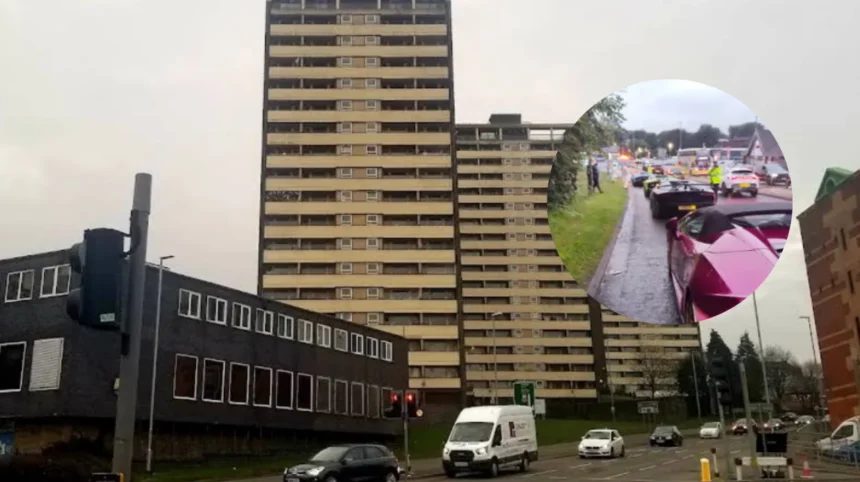
As reported by journalists covering the incident for the Manchester Evening News, the convoy was first spotted on the M66 on the evening of Wednesday 2 September 2026, where officers said the cars were “weaving across lanes, wheel spinning and slowing down to speeds of around 17mph on the motorway”. The vehicles were subsequently seen on the M62, prompting a coordinated response. Two Lamborghinis were stopped as they came off the motorway, while specialist officers brought the remaining cars to a halt on Edinburgh Way in Rochdale, also known as the Rochdale Bypass. Footage shared by police showed the brightly coloured Lamborghinis and the G-Wagon lined up after being intercepted.
Which vehicles were seized and under what law?
Greater Manchester Police confirmed that five Lamborghinis and one Mercedes G-Wagon were seized under Section 59 of the Police Reform Act 2002. In addition to the seizure, the drivers were prosecuted for a number of driving offences, though GMP did not specify the exact charges in its initial update. A GMP spokesperson told the Manchester Evening News: “Last night (Wednesday 2 September 2026) some Lamborghini drivers thought they were on an episode of Drive to Survive. Spoiler alert: they weren’t.” The force added:
“The only pitstop they are making is to the vehicle impound.”
Who carried out the operation?
The enforcement action was conducted by GMP’s newly established Transport Policing and Crime Command (TPACC) team, working alongside the Roads Policing Unit (RPU). In a statement cited by the Rochdale Times, the force said the operation formed part of wider work targeting “careless, anti-social and dangerous behaviour on the region’s roads”. The intervention followed multiple reports from members of the public about dangerous driving involving high-powered vehicles on the M66.
Why were the cars able to be seized immediately?
Greater Manchester Police highlighted that recent changes to Section 59 of the Police Reform Act now enable officers to seize vehicles without having to issue a warning first. ITV News Granada reported the force’s comment that the legislative update strengthens powers to act against vehicles used in a manner causing alarm, distress or danger. The change is intended to reduce procedural delays where drivers have already demonstrated serious risk through their conduct on the road.
Where were the vehicles stopped?
After initial sightings on the M66 and M62, two Lamborghinis were stopped as they exited the motorway network. The remaining vehicles were brought to a stop on Edinburgh Way in Rochdale, where officers closed off part of the dual carriageway to conduct the seizure. Images circulated on social media showed the cars parked on the roadside as recovery arrangements were made.
What did police say about the drivers’ behaviour?
According to GMP, the convoy was reported “swerving between lanes, spinning their wheels, and decelerating to approximately 17 mph on the motorway”. The force said the behaviour amounted to dangerous driving and justified immediate intervention. In its social media post, GMP said the drivers were prosecuted for “a number of driving offences” following the stop.
How did media outlets report the incident?
Multiple outlets covered the seizure. The Manchester Evening News quoted the GMP spokesperson’s “Drive to Survive” remark and detailed the sequence of stops on the M66, M62 and Edinburgh Way. ITV News Granada emphasised the 17mph motorway speed and the use of updated Section 59 powers. The Daily Mail reported that officers seized the fleet after being alerted to dangerous driving on the M66, with the remainder of the vehicles stopped in Rochdale. The Sun described the convoy wheel-spinning and weaving before being halted, publishing stills from police footage. The Rochdale Times and DM News both noted the involvement of TPACC and RPU and the prosecution of drivers.
Background of the development
The seizure follows a series of high-profile incidents involving supercars in Greater Manchester and across the UK in late summer 2026. In late August, a Ferrari 296 was left “a mangled wreck” after its driver lost control in wet conditions on the M602 in Salford, prompting police warnings about speed and weather. Separately, in early September, a wedding-related supercar convoy in North Somerset saw four vehicles, including a Lamborghini Huracán and a Mercedes G63, seized under the same Section 59 powers after reports of dangerous driving on the M4 and M5. The legislative change allowing seizure without prior warning has been cited by forces as a key tool in disrupting organised displays of anti-social motoring.
Prediction: how this development can affect drivers and communities
For drivers of high-performance vehicles, the Rochdale seizure signals tighter enforcement and a lower threshold for immediate seizure when behaviour is deemed dangerous, particularly in convoys. For local communities along the M66 and M62, the operation may reduce the frequency of motorway “racetrack” antics if the visible impounding of multiple supercars acts as a deterrent. For policing, the use of TPACC alongside RPU suggests a model of targeted, intelligence-led stops that could be replicated on other corridors where similar reports arise. However, unless accompanied by sustained patrols and continued public reporting, isolated seizures may only temporarily displace such activity to other routes or times.