Key Points
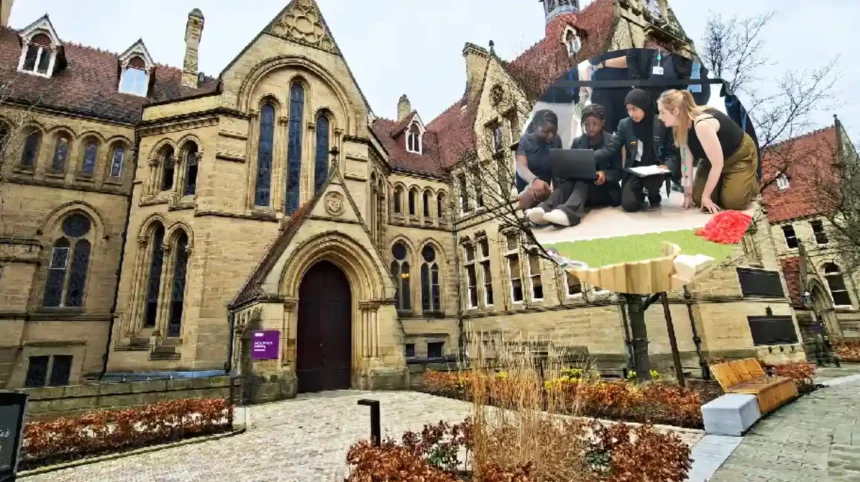
- Students from secondary schools in Greater Manchester created their own mine detecting robots.
- Year 10 and Year 11 teams were involved in the Manchester Minesweeper competition held at The University of Manchester annually.
- This four-week-long competition is based on the electromagnetic sensing research carried out by the University.
- Students were provided with robot kits during a session in June.
- The University of Manchester undergraduates guided the school teams taking part in the event.
- The final event was held on 14 July at the University of Manchester’s Nancy Rothwell Building.
- Co-op Academy Swinton was declared the winner of the competition.
- St Ambrose Barlow RC High School took the second place.
- The team from Chorlton High School South won the Best Presentation prize.
- The competition was sponsored by Institute of Measurement Control Central Northwest Section.
- Also, Endress+Hauser, Technical Partners and Tetra Tech Consulting contributed to the event.
- According to the organizers, this event aimed to motivate students to pursue STEM careers.
Manchester (Manchester Mirror) September 14, 2026 – secondary school pupils from across Greater Manchester have tested their engineering skills in the University’s annual Manchester Minesweeper challenge, a practical competition involving robot design, electronics and metal detection.
- Key Points
- How did pupils take part in the Manchester Minesweeper challenge?
- What was the purpose of the robot competition?
- When and where did the final take place?
- Which school won the Manchester Minesweeper competition?
- What did the competition organisers say?
- Which organisations supported the event?
- Why is practical engineering experience important for pupils?
- What did pupils learn during the project?
- Background to the Manchester Minesweeper challenge
- How could the challenge affect Greater Manchester pupils?
The Manchester Minesweeper challenge brought together secondary school pupils from across Greater Manchester to design, build and operate robots capable of detecting buried metal objects.
The event gave Year 10 and Year 11 pupils the opportunity to work on a real-world engineering problem over four weeks. Each participating team developed its own mine-detecting robotic system before competing in live detection challenges at the University’s Nancy Rothwell Building.
The competition is now in its third year. It was sponsored by the Institute of Measurement Control Central Northwest Section and supported by several engineering businesses, including Endress+Hauser, Technical Partners and Tetra Tech Consulting.
How did pupils take part in the Manchester Minesweeper challenge?
The pupils began the project with an introductory workshop in June. During the session, they received robot kits and took part in practical engineering activities intended to introduce them to the technical principles behind the challenge.
The workshop also included careers talks and opportunities for pupils to meet professionals working in the electrical engineering sector. The participants were able to ask questions about engineering careers, university study and the types of work carried out in the industry.
Following the workshop, each school team was paired with undergraduate engineering students from The University of Manchester. The university mentors visited the schools during the development period and helped pupils work through the design and construction stages.
The pupils were responsible for developing their own solutions. The project required them to consider how the robot would move, how it would detect metal and how its electronic systems would operate during the competition.
The four-week format also required teams to manage the different stages of a technical project. This included developing ideas, testing equipment, identifying problems and making changes before the final event.
What was the purpose of the robot competition?
The Manchester Minesweeper challenge was inspired by research conducted by the University’s electromagnetic sensing team. The project used the theme of mine detection to show pupils how engineering can be applied to difficult problems involving buried landmines and other hidden objects underground.
The competition did not simply focus on building a robot. It also introduced pupils to electronics engineering, design, problem-solving and teamwork. These skills are used across many areas of engineering and technology.
According to The University of Manchester, the initiative aims to give young people hands-on experience of a genuine engineering challenge. It also seeks to encourage more pupils to consider careers in science, technology, engineering and mathematics, commonly known as STEM.
The subject of buried landmine detection provided a practical context for the project. Engineers working in this field need to develop systems that can identify objects beneath the ground while dealing with technical limitations and uncertain conditions.
By giving pupils a simplified version of this type of problem, the challenge allowed them to explore engineering through practical work rather than classroom theory alone.
When and where did the final take place?
The final event took place on 14 July at The University of Manchester’s Nancy Rothwell Building. Teams brought their completed robots to the University and entered a series of arena challenges.
The practical tests were designed to assess both detection performance and engineering skills. Pupils had to put their designs into operation and demonstrate how effectively their robots could respond to the challenges set by the organisers.
The final marked the end of the four-week development period. It also gave the teams an opportunity to compare their work with that of other schools from across Greater Manchester.
Representatives from the supporting engineering organisations attended the event. They joined the judging process and saw the pupils’ robots being tested in the competition arena.
The University’s published account of the event included photographs identified as Minesweeper challenge images. However, the announcement did not provide a separate scoring table or detailed results for each individual arena test.
Which school won the Manchester Minesweeper competition?
Co-op Academy Swinton took first place overall in the competition. St Ambrose Barlow RC High School finished as runners-up.
Chorlton High School South received the award for Best Presentation. The winning schools received specially engraved trophies.
The awards recognised different aspects of the teams’ work. The overall result acknowledged performance across the competition, while the presentation award highlighted how a team explained and presented its project.
The published announcement did not state the exact scores achieved by the schools or provide a breakdown of how the judging categories were weighted.
What did the competition organisers say?
Dr Michael O’Toole, who led the competition, said the challenge allowed pupils to work on a genuine engineering problem and build a functioning product.
“Manchester Minesweeper challenge gives pupils the chance to take on a genuine engineering challenge and build something that works in the real world,” Dr O’Toole said.
He added that pupils learned about electronics, problem-solving, teamwork and design during the four-week project. He also said that working with current engineering students helped participants develop their ideas and build confidence in the possibility of studying at university and pursuing STEM careers.
Dr O’Toole’s comments focused on the educational value of the competition. Rather than treating the event solely as a contest, he described it as a structured opportunity for pupils to develop technical and collaborative skills.
Dave Green, vice-president of the Institute of Measurement Control, also praised the teams’ work.
“It’s incredibly rewarding to see the creativity, determination and technical skills that the teams develop, and we hope the experience encourages some of them to consider studying engineering or another STEM subject in the future,” Mr Green said.
His statement linked the competition to the wider objective of encouraging young people to consider engineering and related subjects as future areas of study.
Which organisations supported the event?
The competition was sponsored by the Institute of Measurement Control Central Northwest Section. It also received support from Endress+Hauser, Technical Partners and Tetra Tech Consulting.
Representatives from the supporting businesses attended the final event and helped judge the competition. Their involvement connected the pupils’ classroom and university-based activities with professionals from the engineering sector.
The University of Manchester said the initiative was originally established with support from a Royal Academy of Engineering Ingenious award. The Ingenious programme supports projects intended to engage young people with engineering and show how the subject relates to real-world issues.
This year’s support from local engineering businesses provided additional industry involvement. The published announcement did not state the individual financial contributions made by the sponsors or provide details of future funding arrangements.
Why is practical engineering experience important for pupils?
The challenge gave pupils an opportunity to see how a technical idea develops into a working system. In a conventional classroom exercise, students may study individual principles such as circuits, sensors or programming. In this project, they had to combine several elements and consider how they would function together.
The work also introduced pupils to the importance of testing. A robot that works during an early trial may behave differently in a competition arena. Teams therefore had to identify faults, adjust their designs and make decisions within the time available.
The involvement of undergraduate mentors provided another element of the programme. Pupils were able to work with students who were already studying engineering at university, while the mentors gained experience in supporting younger learners.
The University’s account described the programme as a way to help pupils gain confidence that university and a career in STEM could be within their reach. It did not claim that all participants would pursue engineering, but it presented the competition as an opportunity to make those routes more visible.
For schools, activities of this kind can also demonstrate how science and mathematics are applied in practical situations. The challenge connected technical learning with a specific problem, allowing pupils to explore why sensors, electronics and robotic systems are important.
What did pupils learn during the project?
The University identified electronics, problem-solving, teamwork and design as key areas covered by the competition. Pupils also had to communicate their ideas and explain their work, as shown by the Best Presentation award given to Chorlton High School South.
The project required different types of contribution from team members. Some pupils may have focused more closely on construction or electronics, while others may have worked on planning, testing or explaining the robot. The announcement did not list individual pupil roles or name the members of each team.
The careers talks and meetings with electrical engineering professionals gave pupils information about the sector beyond the competition itself. Those sessions were part of the introductory workshop before the teams began their four-week development period.
The university mentors then supported the teams during school visits. The announcement did not specify how often each mentor visited or describe the precise technical advice given to each school.
Background to the Manchester Minesweeper challenge
The Manchester Minesweeper challenge is an annual University of Manchester competition for secondary school pupils. The 2026 event was described as the third year of the challenge.
Its central activity is the design and construction of a mine-detecting robot. The format is inspired by research from the University’s electromagnetic sensing team, which studies methods of detecting buried objects and materials.
The initiative was originally supported by a Royal Academy of Engineering Ingenious award. In 2026, the programme received sponsorship from the Institute of Measurement Control Central Northwest Section, alongside support from Endress+Hauser, Technical Partners and Tetra Tech Consulting.
The programme combines a June introductory workshop, a four-week school-based design and build period, undergraduate mentoring and a final event at the University’s Nancy Rothwell Building. The 2026 final was held on 14 July.
How could the challenge affect Greater Manchester pupils?
The development is likely to give participating pupils a clearer understanding of how engineering operates beyond textbook exercises. By designing and testing robots, pupils can see how electronics, sensing, mechanical construction and teamwork contribute to one working system.
The involvement of university mentors and industry professionals may also make engineering study and STEM careers more familiar to secondary school pupils. The University and event organisers have specifically identified future STEM participation as one of the competition’s aims.
The effect will not be the same for every participant. Some pupils may become more interested in engineering, while others may mainly benefit from experience in teamwork, presentation and problem-solving. The available announcement does not provide longer-term data showing how many former participants later chose engineering courses or STEM careers.