Key Points
- A proposal to convert the empty Rose & Crown pub at Manchester Old Road to three self-contained residential flats has been recommended for approval by Bury Council planning officers.
- The development will consist of one two-bedroom flat at ground-floor level and two one-bedroom flats at first-floor level, accommodating a total of up to five people.
- Bury Council Planning Control Committee members will consider the application on Tuesday, October 20, 2026.
- Six objections to the application have been raised by five neighbouring households, citing issues with parking, traffic, antisocial behaviour, services provision, fly-tipping, overlooking and the loss of a community facility.
- It has been confirmed by planning officers that the proposed development does not qualify as a House In Multiple Occupation (HMO), as the flats would be self-contained and would share only the rear garden space.
- There will be no off-street parking provided at the development, although it has been determined by planning officers that concerns regarding parking are not sufficiently weighty for refusing consent, as permit applications can be made for future residents.
Bury (Manchester Mirror) October 15, 2026 – A former Bury pub could be converted into three self-contained apartments after council planning officers recommended the scheme for approval, despite objections from nearby residents.
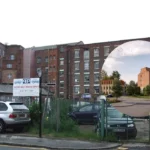
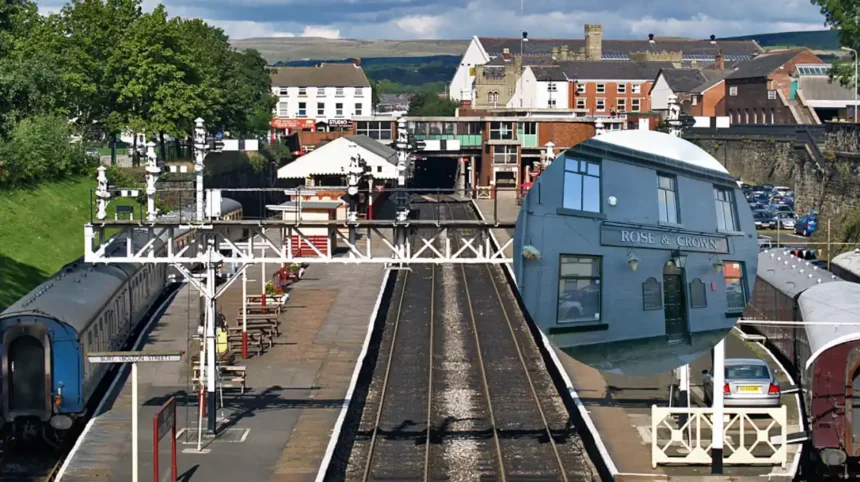
As reported by the Bury Times, members of Bury Council’s Planning Control Committee will consider the application for the vacant Rose & Crown pub, at the junction of Manchester Old Road and Barker Street, when they meet on October 20. The proposal would see the former public house converted into three apartments, with planning officers saying the development would accommodate a maximum of five people.
The recommendation marks the latest stage in a planning history that has already seen a larger proposal for the same building refused. According to the Bury Times, the site was previously at the centre of a controversial application to convert the pub into a 12-bedroom house in multiple occupation, but that scheme was rejected by Bury Council in June.
What Would The Rose & Crown Become?
The revised proposal is substantially smaller than the earlier HMO application. According to the committee report, cited by the Bury Times, it would provide one two-bedroom apartment on the ground floor and two one-bedroom apartments on the first floor.
Planning officers said the residential use would be acceptable because the pub sits within a predominantly residential street. The report states:
“Given the site is located within a predominantly residential street, a residential use within this area would be considered acceptable.”
The application was submitted for 36 Manchester Old Road, Bury, BL9 0TR. Earlier reporting by the Bury Times identified IPS& Architectural as the agent behind the revised proposal, while the Manchester Evening News reported that the applicant was Omair Akram.
There is a discrepancy in the earlier coverage over the number of flats originally proposed. The Bury Times reported in July that the application proposed four self-contained apartments, while the Manchester Evening News also reported a plan for four one-bedroom apartments. The current committee report, however, describes a scheme for three self-contained apartments: one with two bedrooms and two with one bedroom each.
Why Have Residents Objected?
The application has drawn opposition from people living close to the former pub. As reported by the Bury Times, five neighbouring properties lodged objections, producing six objection comments in total.
Residents raised concerns about parking pressure, anti-social behaviour, the impact on local services and traffic—particularly during school hours. Some objectors said there were already too many shared houses in the area, while others raised concerns about fly-tipping, overlooking and the loss of a place where local people could socialise.
The Manchester Evening News previously reported that the earlier 12-bedroom HMO proposal attracted 43 objections. Those concerns included increased traffic and parking difficulties, the absence of designated parking spaces, inadequate outdoor space, privacy issues and the potential for anti-social behaviour.
In response to concerns that the new flats could effectively operate as an HMO, planning officers said the proposal was clearly for self-contained homes. The report states: “The proposal is not for an HMO, the proposed plans clearly show self-contained apartments with no shared facilities, other than the rear garden area.”
Officers also addressed objections based on the prospective occupants of the flats. According to the Bury Times, the report said: “Objections based on who will live there, and whether they will integrate into the community, are not material planning considerations.”
Could Parking Concerns Stop The Scheme?
Parking has been one of the central issues in the objections. The proposed conversion does not include any off-street parking spaces, even though surrounding streets operate under a permit scheme.
Despite this, planning officers concluded that the lack of parking was not a sufficient reason to refuse the application. Bury Council’s traffic section said that, because the building had previously operated as a pub and included living accommodation on the first floor, it would not be reasonable to object on parking grounds.
Parking services also told planners they were “not aware of any recent complaints regarding lack of available parking on this street”, according to the report cited by the Bury Times. The report adds that residents of the new apartments would be able to apply for parking permits.
The scheme would provide four cycle-storage spaces. Officers also noted that the site is close to public transport and nearby public open space, which they said made the limited outdoor space at the rear yard acceptable.
Is The Loss Of The Pub Acceptable?
The loss of the Rose & Crown as a public house was assessed as part of the planning process. Planning officers said the applicant had identified six other pubs within approximately 800 metres of the site.
Those pubs were listed in the committee report as the Staff of Life, The Knowsley, The Art Picture House, The Robert Peel, Old White Lion and The Clarence. Officers concluded that, given the availability of alternative pubs nearby and the site’s proximity to Bury town centre, the proposal complied with planning policy.
The Bury Times reported that officers found all three apartments would meet national minimum space standards and that the conversion would have no unacceptable impact on neighbouring homes.
The proposals also include energy-efficiency improvements. According to the report, these would involve insulation upgrades, improved heating controls and energy-efficient lighting.
What Happens Next?
Planning officers have recommended that councillors approve the application, subject to a number of conditions. The final decision will be made by Bury Council’s Planning Control Committee at its meeting on October 20.
Bury Council’s own committee information says the Planning Control Committee meets regularly to assess planning applications and make decisions on major developments and other applications where objections have been received. The council’s meetings calendar confirms that the committee is scheduled to meet at 7pm on Tuesday, October 20.
If councillors follow the officers’ recommendation, the former pub could be converted into three homes. If they decide otherwise, the application could be refused, deferred for further information, or subject to a different set of conditions.
Background Of The Development
The Rose & Crown Inn is a former public house at 36 Manchester Old Road, Bury, at the junction with Barker Street. The building has been vacant since the pub closed and is surrounded by traditional terraced housing.
The site first became the focus of local controversy when an application was made to convert it into a 12-bedroom HMO. As reported by the Manchester Evening News, that proposal received 43 objections from residents, who cited traffic and parking problems, potential anti-social behaviour and the number of HMOs in the neighbourhood.
Bury Council refused that application in June. The Manchester Evening News reported that officials found two proposed roof rooms would overlook neighbouring homes, creating unacceptable privacy harm. The council also reported that only two other HMOs were within 100 metres of the site, below the policy threshold of four, meaning the scheme would not create an overconcentration of HMOs.
A revised application was then submitted for a smaller residential conversion. The Bury Times reported in July that the new scheme involved minimal external changes and was intended to address earlier concerns by moving from an HMO to smaller-scale, self-contained residential accommodation.
The current recommendation for three apartments follows that revised approach. It reduces the proposed number of homes from the four flats described in earlier application coverage to three, while retaining the principle of converting the vacant pub into residential use.
How Could This Affect Local Residents?
For nearby residents, the decision could determine whether a long-vacant pub building returns to active residential use. If approved, the development is expected to bring up to five residents to the site, with no dedicated off-street parking, although the future occupants would be able to apply for street-parking permits.
Residents who objected may remain concerned about parking availability, traffic around school hours and the wider impact of additional households in the area. However, the planning report indicates that officers do not consider those concerns sufficient to refuse permission, particularly given the building’s former pub use and the availability of nearby public transport.
For prospective tenants or buyers, approval could create three smaller homes close to Bury town centre, with access to public transport, cycle storage and energy-efficiency measures. The two one-bedroom flats and one two-bedroom flat would be self-contained, rather than rooms within a shared HMO.
For Bury’s wider housing market, the case illustrates how former pub buildings may be brought back into use as residential accommodation where officers judge that alternative pubs remain available nearby. The outcome on October 20 will show whether councillors accept the officers’ assessment that the benefits and impacts of the three-flat conversion outweigh the objections raised by neighbours.