Key Points
- Pudsey Town Hall has now been sold to a property developer based in Manchester.
- It is thought that the purchaser specialises in transforming old mills and buildings into flats and accommodation.
- Leeds City Council has already announced that the property is surplus to the council’s needs.
- This sale was attributed to financial difficulties and the cost of upkeep of the building.
- This building dates back to the late 19th century and has been underused for some years now.
- Residents were strongly opposed to the sale with petitions of more than 1,000 signatures and objections from councillors.
- An initiative to make the property community-owned through the Pudsey Town Hall Community Interest Company failed to offer an alternative to this sale.
- Historic England rejected an application to list the building which paved the way for the sale to go through.
- Any future development plans will have to go through the proper planning process.
- This development may result in the creation of residential or mixed-use accommodation but will end any hope of bringing the town hall back into community ownership.
Manchester (Manchester Mirror) September 19, 2026 – The Pudsey Town Hall sale to a Manchester-based property developer has been confirmed by local councillors, according to John Baron of West Leeds Dispatch.
- Key Points
- Why was Pudsey Town Hall put up for sale?
- How did councillors and residents respond?
- What happened to the community ownership proposal?
- What is known about the building’s history?
- Could the building become flats?
- What financial pressures influenced the decision?
- What happens next after the sale?
- What is the background to the Pudsey Town Hall development?
- How could the sale affect Pudsey residents?
The confirmation marks the latest stage in a long-running dispute over the future of the historic building. The property had been declared surplus to Leeds City Council’s operational requirements after remaining vacant or significantly underused for several years. The council had argued that selling the building was necessary amid financial pressures and the continuing cost of maintaining an unused civic asset.
West Leeds Dispatch reported that councillors had confirmed the sale to a developer based in Manchester. The company is understood to have experience in converting historic mills and other older properties into flats and accommodation.
The confirmed sale does not itself approve a redevelopment scheme. Any future conversion, change of use or building work would require the appropriate planning process, with the council expected to consider matters including design, heritage, access, transport and the effect on the town centre.
Why was Pudsey Town Hall put up for sale?
Leeds City Council began the process of disposing of Pudsey Town Hall after concluding that the building was no longer required for its operational needs. Earlier reporting by West Leeds Dispatch stated that the council was seeking to raise money and reduce the costs associated with retaining the property.
The building was placed on the open market through property agents Lambert Smith Hampton. A January report by Place Yorkshire said the town hall, built in 1880, provided approximately 21,500 square feet of space and had been vacant since around 2020. The property was marketed as a freehold opportunity, with unconditional offers invited.
An earlier West Leeds Dispatch report said the council’s guidance document indicated that town-centre uses would be considered favourably. It also stated that residential use was encouraged in parts of town centres outside shopping frontages, provided it did not compromise the function of the centre.
The marketing of the building therefore created the possibility of a residential or mixed-use conversion. However, the council’s decision to sell was opposed by campaigners and several local councillors, who argued that the town hall represented an important part of Pudsey’s civic identity.
How did councillors and residents respond?
The decision attracted opposition before the sale was confirmed. BBC reporting in January said more than 1,000 people had signed a petition against the proposal. Councillors also raised objections, with concerns focusing on the limited consultation and the possible loss of a historic public building.
The proposal was reviewed through a scrutiny process after a formal call-in request. A call-in allows councillors to ask for an executive decision to be examined before it proceeds. According to West Leeds Dispatch, the request to refer the sale decision back for reconsideration was rejected by eight votes to four.
The BBC reported that a council scrutiny committee considered the decision after opposition members initiated the review. Despite the objections, councillors ultimately allowed the sale process to move forward in a divided vote.
The disagreement reflected two competing priorities. Leeds City Council was seeking to manage its property estate and reduce financial pressures, while opponents wanted the authority to protect the building for public or community use.
What happened to the community ownership proposal?
A community ownership option was considered before the sale was advanced. The Pudsey Town Hall Community Interest Company had explored the possibility of taking the building into community ownership and finding a new public use for it.
However, Leeds City Council said that no viable alternative solution had been found after discussions with ward members and the community organisation. In an earlier statement reported by West Leeds Dispatch, a council spokesperson said the authority had spent a significant amount of time working with local representatives and the Community Interest Company before deciding to progress with the sale.
The failure to secure a community-led purchase left the council with fewer alternatives for the building. Without an agreed funding and operating model, the town hall remained an expensive asset requiring maintenance while not providing a regular public service.
The confirmed sale means that the community ownership campaign will not take control of the property. It also means that any future public or community use would depend on the plans put forward by the new owner and the outcome of the planning process.
What is known about the building’s history?
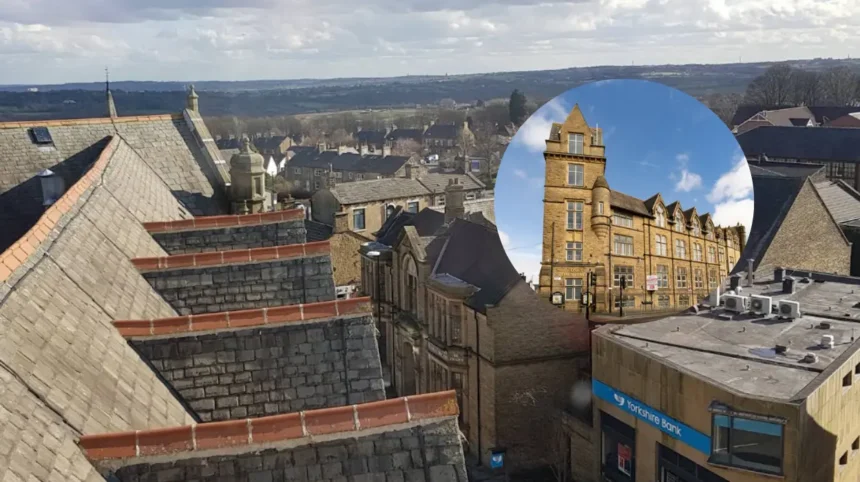
Pudsey Town Hall is a late-19th-century civic building with a prominent place in the history of the town. Different reports have referred to the building as dating from 1879, 1880 or around 1890, reflecting variations in descriptions of its construction and opening.
The building was used for civic and public purposes but had not been fully used since 2016, according to a West Leeds Dispatch weekly roundup. Its declining use contributed to the council’s decision to consider disposal.
The property’s historical character was central to the campaign against its sale. Opponents argued that the town hall was more than an unused building and that its loss could weaken Pudsey’s sense of identity.
A bid to secure formal protection through listing was also made. However, Historic England refused the application by the Pudsey Civic Society, according to reporting cited by West Leeds Dispatch. The unsuccessful listing attempt removed one potential obstacle to the sale, although any future planning application may still need to address the building’s historic features.
Could the building become flats?
The buyer’s reported background suggests that residential accommodation could form part of the building’s future. West Leeds Dispatch previously reported that the successful bidder was proposing a residential and mixed-use conversion. The developer was also described as a Manchester company specialising in the conversion of old mills and properties into flats and accommodation.
The property’s town-centre location could support a range of possible uses. These might include housing, offices, commercial space or a combination of uses. The final outcome will depend on the buyer’s detailed proposals and the decisions of Leeds City Council’s planning authority.
The earlier marketing material did not guarantee approval for residential development. Instead, it identified residential use as a possibility within the council’s broad planning guidance. A developer would still need to submit plans and demonstrate that the scheme complies with local policies.
Issues likely to be considered include the building’s external appearance, internal layout, fire safety, accessibility, parking, servicing, energy efficiency and the effect on nearby properties. If a conversion is proposed, the council may also assess whether important architectural features can be retained.
What financial pressures influenced the decision?
The sale took place against a wider background of financial pressure at Leeds City Council. West Leeds Dispatch reported that the authority had said the empty town hall was costing approximately £30,000 a year to maintain.
For the council, selling the property could provide a capital receipt while removing the ongoing responsibility for an unused building. The exact sale price has not been stated in the available reports.
The council’s wider approach has involved reviewing properties and services as it attempts to balance its budget. The decision to dispose of Pudsey Town Hall was therefore presented as part of estate management rather than simply a planning or regeneration project.
Critics of the sale have questioned whether the immediate financial benefit outweighs the long-term value of retaining the building for public use. Supporters of the council’s decision have pointed to the cost of maintaining an empty property and the absence of a funded community alternative.
What happens next after the sale?
The next significant stage is expected to involve the buyer’s plans for the building. Confirmation of the sale transfers the property from council control to the Manchester-based developer, but it does not automatically grant permission for conversion or redevelopment.
The developer will need to determine whether the building can be adapted economically and what form of use is suitable. If planning permission is required, the proposal would be assessed through the normal application process.
Residents and local representatives may have opportunities to comment on any application. The eventual scheme could influence the appearance and use of the town centre, particularly if the proposal involves a substantial residential conversion.
There is currently no confirmed timetable for construction, no publicly stated final design and no confirmed number of homes or commercial units. Those details should only become clear if and when the buyer submits formal plans.
What is the background to the Pudsey Town Hall development?
Pudsey Town Hall became the subject of a sale proposal after Leeds City Council declared it surplus to operational requirements. West Leeds Dispatch reported in October 2025 that the council was reviewing advice from Lambert Smith Hampton after exploring alternative solutions with local representatives and the Pudsey Town Hall Community Interest Company.
In January 2026, the council’s decision to sell was reviewed after a call-in request. West Leeds Dispatch reported that the scrutiny challenge was rejected by eight votes to four. The building was subsequently advertised on the open market.
Place Yorkshire reported that Lambert Smith Hampton was instructed to handle the disposal and that unconditional offers were invited, with a deadline of February 12, 2026. West Leeds Dispatch later reported that council chiefs had agreed to proceed with the highest bidder while talks continued to finalise the sale.
The identity of the Manchester-based purchaser was not initially disclosed. Later reporting indicated that the company was understood to specialise in converting former mills and older properties into flats and accommodation.
The Pudsey Civic Society’s attempt to secure listing protection was unsuccessful. With no community ownership arrangement in place and no successful listing bid, the sale was confirmed by local councillors in September 2026.
How could the sale affect Pudsey residents?
The Pudsey Town Hall sale could eventually bring a new use to a long-vacant building, particularly if the developer secures permission for a residential or mixed-use scheme. Reusing the property could prevent further deterioration and introduce new activity into the town centre.
The development could also create concerns about the loss of a civic building and the reduction of publicly controlled space. For residents who supported community ownership, the sale represents the end of an opportunity to restore the town hall for local activities.
The immediate effect is likely to be limited because redevelopment cannot begin until the buyer’s plans are prepared and any required approvals are obtained. The longer-term impact will depend on the scale and design of the proposed conversion, the number of homes or business units created and whether historic features are retained.
For the local community, the most important next development will be the publication of detailed plans. Those plans will determine whether the sale leads to a sensitive reuse of Pudsey Town Hall or a more substantial change to the building and its surroundings.