Key Points
- Drivers heading towards Greater Manchester faced major delays on the M6 after a fire on the southbound carriageway.
- Two lanes were closed between junction 28 at Leyland and junction 27 at Standish.
- National Highways said Lancashire Fire and Rescue Service was working at the scene to bring the blaze under control.
- Traffic queues reached around 50 minutes, with tailbacks stretching for three miles.
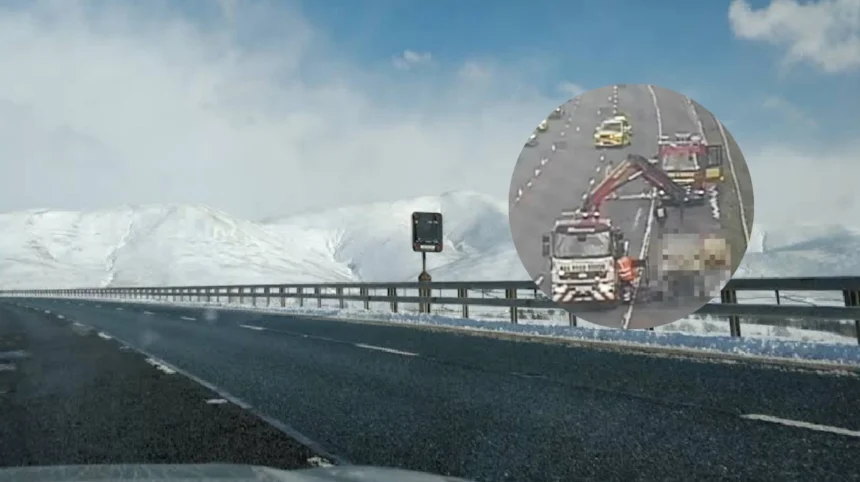
- Images from the scene showed severe fire damage to the front of a vehicle, and traffic cameras showed long queues.
- The incident has since cleared.
Manchester Fire (Manchester Mirror) August 01, 2026 – Drivers heading towards Greater Manchester were hit by heavy delays on the M6 after a vehicle fire led to lane closures between junction 28 at Leyland and junction 27 at Standish.
What happened on the M6?
Blog Preston reported that two lanes of traffic were closed on the southbound carriageway while Lancashire Fire and Rescue Service worked at the scene to bring the blaze under control. The closure caused major congestion on a stretch of motorway used by commuters, freight traffic and long-distance drivers travelling through Lancashire.
The report said there were 50-minute queues on the motorway, with traffic tailing back for three miles. It also noted that images from the scene showed a vehicle with severe fire damage to its front end, while traffic cameras captured long lines of vehicles waiting behind the incident.
How serious was the disruption?
The disruption was significant because the fire affected a busy southbound route at peak travel pressure, causing queues to build quickly. Blog Preston said the congestion stretched to about three miles, which matches the kind of knock-on delay often seen when even a brief incident blocks lanes on the M6.
The incident has since cleared, meaning traffic conditions have returned to normal after the emergency response and recovery work were completed.
What did authorities say?
National Highways said Lancashire Fire and Rescue Service was on site to deal with the blaze, and the priority was to bring the fire under control before traffic could be safely released. That response follows the usual pattern on major motorway incidents, where lane closures are kept in place until the scene is secure.
Why did it affect so many drivers?
The M6 is one of the busiest strategic roads in the North West, so a closure between Leyland and Standish can quickly affect a large number of journeys. Traffic heading towards Greater Manchester is especially vulnerable to delays on that section because there are limited options for passing the scene once lanes are blocked.
Background of the development
Vehicle fires on the M6 have repeatedly caused delays in Lancashire and surrounding areas. Previous reports on incidents between Leyland and Standish show similar disruption, including closures, long tailbacks and recovery work that took time to complete.
In earlier cases, traffic was held while emergency services dealt with fires or collisions, and delays sometimes reached around an hour. That pattern explains why the latest incident, even though it has now cleared, still caused widespread disruption while it was active.
Prediction
For commuters and regular M6 users, incidents like this are likely to mean sudden delays, missed connections and pressure on nearby A roads whenever a lane is blocked. If a similar fire happens again on this stretch, drivers travelling towards Greater Manchester should expect traffic to build fast, especially during busy daytime hours.
For haulage firms and delivery drivers, the practical effect is likely to be timetable disruption and a need to monitor live traffic updates more closely before entering this section of the motorway. Once the incident clears, queues should ease, but the risk of short-notice delays on the M6 will remain whenever emergency services are called to the carriageway.