Key Points
- The roof of a building located at New Welcome Street, Hulme, Manchester was affected by fire on Tuesday, September 22, 2026.
- The emergency services responded to the report of house fire at the location.
- The nearby residents were temporarily relocated as the firefighters worked to extinguish the fire.
- There were suspicions that the building in question was being used as a cannabis farm.
- A police and fire service cordoned off parts of New Welcome Street.
- Pictures that were published in the Manchester Evening News showed that the roof of the building was badly damaged and burnt.
- The exact cause of the fire, the extent of the damage and whether there were any casualties were yet to be independently verified in the reports.
- Greater Manchester Fire and Rescue Service and Greater Manchester Police were contacted for more information.
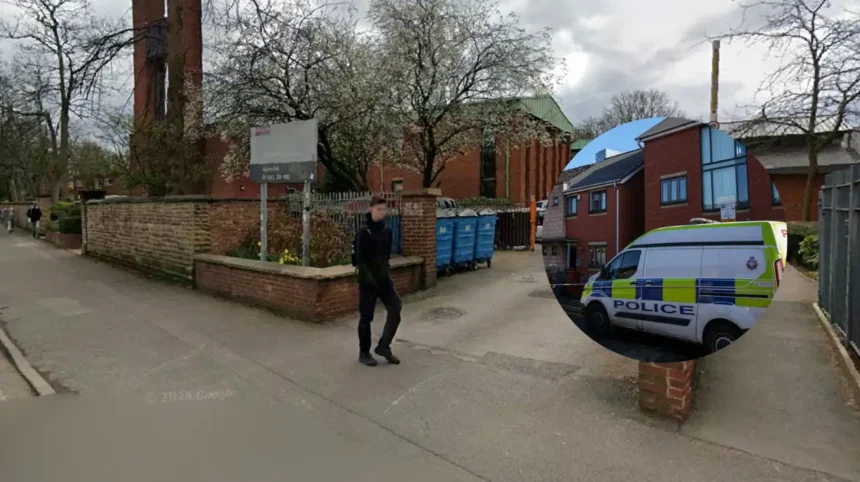
Hulme Fire (Manchester Mirror) September 22, 2026 – a suspected cannabis farm fire damaged the roof of a property on New Welcome Street in Hulme , prompting emergency services to evacuate nearby residents and place part of the street under a cordon.
- Key Points
- What happened on New Welcome Street?
- Were nearby residents evacuated?
- Why was the property suspected of being a cannabis farm?
- What have authorities confirmed?
- What damage did the fire cause?
- What happens next in the investigation?
- How common are fires linked to cannabis farms?
- Background: Cannabis farms and residential fire risks
- Prediction: What could this mean for Hulme residents?
The incident was reported during the morning after firefighters and police attended what was described initially as a potential house fire. The affected property appeared to have suffered significant damage to its roof, according to photographs published by the Manchester Evening News.
The fire’s connection with a cannabis-growing operation remained a suspicion in the available reporting. Authorities had not, at the time of publication, confirmed the nature of the property, the cause of the blaze or whether any arrests had been made.
What happened on New Welcome Street?
The fire occurred at a property on New Welcome Street in Hulme, an area of Manchester. Emergency crews attended the address after reports of a house fire, while a section of the street was closed to the public.
The Manchester Evening News reported that police and firefighters were present at the scene on the morning of Tuesday, September 22. The newspaper said a perimeter had been established around the affected area and that images appeared to show a home with a severely damaged and blackened roof. The report also stated that the precise details of the incident had not yet been verified.
A separate report published by Suara Garut described the building as a suspected cannabis farm and said emergency services had extinguished a loft fire after nearby residents were evacuated. However, the publication’s article could not be independently verified through the available source access.
Because the reports were published while the incident was developing, several key details remained subject to confirmation. These included the exact time the fire started, the number of appliances sent to the address, the extent of internal damage and whether the property was occupied when the fire broke out.
Were nearby residents evacuated?
Nearby residents were reportedly evacuated as a precaution while emergency services dealt with the fire. Evacuations are commonly used during residential fires when flames, smoke, structural damage or electrical hazards could threaten neighbouring properties.
The available report did not state how many people were moved from their homes or how long they were unable to return. It also did not confirm whether any residents required medical treatment.
The evacuation was particularly relevant because the visible damage appeared to involve the roof and loft area. Fires in roof spaces can spread quickly through timber, insulation and concealed voids, while damaged structures may remain unsafe after flames have been extinguished.
Residents and motorists were also affected by the road closure. The police cordon restricted access to part of New Welcome Street as investigators and emergency crews worked at the scene.
Why was the property suspected of being a cannabis farm?
The property was described in the available reports as a suspected cannabis farm, but no official statement confirming cannabis cultivation had been included at the time of reporting.
A suspected cannabis farm generally refers to a property believed to have been adapted for the illegal cultivation of cannabis plants. Such sites may involve high-powered lighting, ventilation systems, heating equipment and extensive electrical alterations. These installations can create additional fire risks, particularly when electricity is diverted or wiring is modified without appropriate safety controls.
The Manchester Evening News report focused on the emergency response and the damaged roof. It said the circumstances were still being established and that the newspaper had contacted Greater Manchester Fire and Rescue Service and Greater Manchester Police for further details.
It is therefore important to distinguish between a reported suspicion and a confirmed police finding. The available information did not establish how investigators reached the conclusion that the property may have been used for cannabis production, nor did it say whether equipment or plants had been recovered.
What have authorities confirmed?
At the time of the available reporting, authorities had not released a complete account of the incident.
The Manchester Evening News said it had contacted Greater Manchester Fire and Rescue Service and Greater Manchester Police for additional information. The report was presented as a developing live update rather than a final account of the fire.
The outstanding questions included:
- What time emergency services were called.
- How many fire engines and firefighters attended.
- Whether the fire began in the loft, roof or another part of the property.
- Whether the suspected cannabis-growing equipment contributed to the blaze.
- Whether anyone was injured or required hospital treatment.
- Whether the building was structurally safe.
- Whether police had made any arrests.
- Whether residents had been allowed to return to nearby homes.
Until emergency services publish further information, reports about the cause and consequences of the fire should be treated cautiously.
What damage did the fire cause?
The roof was reported to have been badly damaged, with photographs appearing to show extensive charring. The full structural impact was not confirmed in the available reports.
Damage to a roof can affect the safety of the entire building, particularly when fire has entered the loft or weakened supporting timbers. Water used during firefighting can also damage ceilings, walls, electrical systems and personal belongings.
The report did not provide an estimated financial value for the damage. It also did not say whether adjoining properties had been affected by heat, smoke or water.
A formal assessment would normally be required before the building could be declared safe. This may involve fire investigators, structural specialists, utility companies and local authority officers, depending on the circumstances.
What happens next in the investigation?
Fire investigators are expected to examine where and how the blaze began. If police confirm that the property was being used for illegal cannabis cultivation, the investigation could also examine electricity use, tenancy arrangements, ownership and possible links to organised criminal activity.
The suspected use of a residential property as a cannabis farm could create separate criminal and safety investigations. Police may seek information from neighbours, landlords or other people who had contact with the address.
No arrests or charges were reported in the available coverage. The absence of an arrest at this stage does not indicate that no offence occurred; it reflects the limited information available while the emergency response and initial investigation were under way.
Authorities may also issue advice to residents about road access, temporary relocation, structural safety and the reporting of suspicious activity.
How common are fires linked to cannabis farms?
Fire risks associated with illegal cannabis cultivation have been reported in several parts of the United Kingdom. In August 2025, ITV News reported that a suspected cannabis factory fire in a house in Walthamstow destroyed most of the ground floor, part of the first floor and the roof. The London Fire Brigade said such fires can be especially dangerous because criminals may use unsafe wiring to obtain electricity illegally.
The same report said cannabis factories are often established in upper floors or lofts, allowing a fire to spread through roof spaces and damage neighbouring buildings.
The Telegraph reported on September 17, 2026, that fires caused by equipment used in suspected cannabis farms had risen by 218 per cent, from 17 incidents in 2015 to 54 in 2024, citing insurance data from Zurich UK. That wider trend does not prove the cause of the Hulme fire, but it provides context for why emergency services treat suspected cultivation sites as potentially hazardous.
Previous BBC reports have also described cannabis-growing operations being discovered after fires in homes in Bradford, Leeds, Nottinghamshire and Birmingham. Those incidents involved investigations into illegal electricity diversions, cultivation equipment and damage to residential buildings.
Background: Cannabis farms and residential fire risks
Illegal cannabis farms are often established in houses, flats, commercial premises and unused buildings. The sites may be altered to support cultivation, including the installation of electrical lighting, fans, heating systems and ventilation equipment.
The danger increases when electrical systems are overloaded or bypassed. Illegal connections may expose live wiring, create heat and reduce the effectiveness of normal household safety systems. Water and damp conditions around improvised equipment can add further hazards.
Fire services have previously warned that cultivation sites can be difficult to identify from outside. Covered windows, unusual lighting, persistent noise from fans, condensation, strong smells and people visiting briefly at unusual hours may be viewed as possible warning signs, although none of these features alone proves criminal activity.
The discovery of a suspected cannabis farm after a fire can also complicate firefighting. Crews may need to consider unsafe wiring, structural alterations, chemicals, blocked access routes and the possibility that residents or neighbouring occupants may be unaware of the danger.
In Hulme, the available reports indicated that emergency crews had dealt with a roof fire and that residents nearby were evacuated. A final account will depend on statements from Greater Manchester Fire and Rescue Service, Greater Manchester Police and any subsequent investigation.
Prediction: What could this mean for Hulme residents?
For people living near New Welcome Street, the immediate effect is likely to be continued disruption while the building is assessed and investigators determine whether it is safe. Residents may face restricted access, temporary displacement, smoke damage or delays before nearby roads and properties return to normal.
If authorities confirm that the address was being used as a cannabis farm, police may increase attention on comparable properties in the area, particularly where residents report possible electrical hazards or unusual activity. That could lead to further inspections, safeguarding measures or criminal investigations, although no such wider operation had been announced in the available reports.
The most significant practical concern for the local audience is safety. Residents should avoid entering the damaged property or crossing the cordon, even if the fire appears to be out. Further information about injuries, structural conditions, road closures and any arrests should come from official statements rather than unverified social-media claims.