Key Points
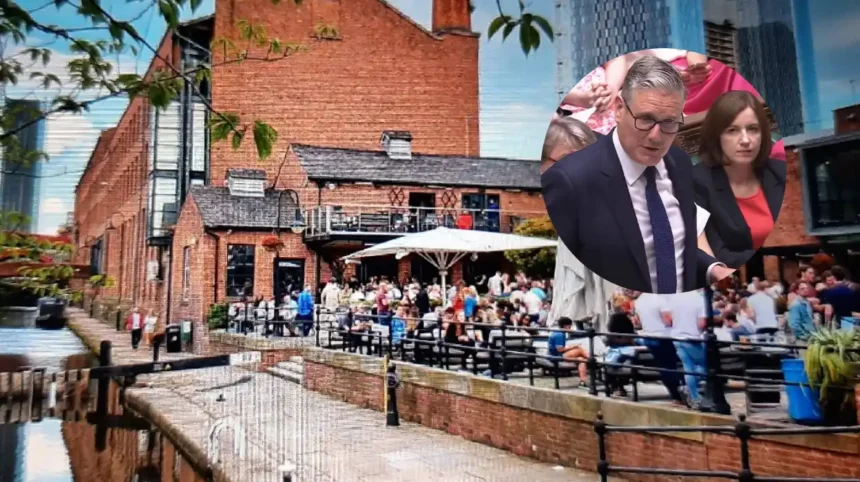
- Andy Burnham is planning to move parts of the No 10 operation to Manchester as part of measures to devolve power away from London.
- He is expected to say next week that he wants to transfer parts of the prime minister’s office to the north if he becomes prime minister later this year.
- The move was first reported by the Financial Times and is expected to feature in a speech on his devolution agenda.
- A spokesperson for Burnham declined to comment.
- The former Greater Manchester mayor is due to deliver his first major policy speech since winning the Makerfield seat.
- Burnham is the overwhelming favourite to enter No 10 as soon as next month after Keir Starmer said he intends to resign.
- Burnham has argued that Britain’s regional inequality is linked to the centralisation of political power in London.
- He has promised to judge policy by a “Makerfield test” based on how it would affect his new constituents.
- Burnham has previously called for every area of the UK to get its own devolved settlement and for a “basic law” to help equalise living standards across the country.
- It is not clear whether he will follow advice from Andy Haldane to split the Treasury and create a new growth ministry in the north.
Manchester (Manchester Mirror) June 24, 2026 – Andy Burnham is reported to be preparing to set out a plan that would move parts of the No 10 operation to Manchester, in what would be one of the clearest signals yet of a drive to shift political power away from London.
As reported by the Guardian, the Makerfield MP is considering a northern base for the prime minister’s office and is expected to announce the idea next week. The report says the proposal would form part of a broader approach to decentralisation rather than a wholesale relocation of government institutions. The central idea is that parts of the operation could be run from Manchester, reflecting a political and administrative balance between the capital and the North West.
The timing matters because the story comes amid heightened speculation about Burnham’s future role in national politics. Separate Guardian and BBC reports suggest he has been in contact with Keir Starmer and is being discussed as a possible successor figure within Labour politics. That makes the Manchester proposal more than an administrative suggestion; it also reads as a political statement about where authority should sit in the UK.
Why Manchester?
Manchester has long been associated with English devolution and city-regional government, so the city is a symbolic choice for any plan to move power outside Westminster. Greater Manchester already has a deeper devolution settlement than many parts of England, including control over areas such as transport, housing, planning, skills and employment. That existing framework gives the city region a practical case for hosting more of the machinery of government.
The Guardian report frames the proposal as part of a strategy to “devolve power away from London”. That fits the direction of the English Devolution White Paper, which sets out an ambition to widen devolution and strengthen strategic authorities across England. In that wider policy setting, Manchester becomes both a political symbol and a test case for how far central government is willing to redistribute influence.
How does it fit devolution?
The broader policy backdrop is the government’s devolution agenda, which aims to move more authority, funding and decision-making from Westminster to local and regional leaders. Official material says mayors will be given stronger powers over housing, planning, transport, energy, skills and employment support. It also says England will move towards universal coverage of strategic authorities, backed by integrated funding in some regions.
That matters because Burnham’s reported plan is not a standalone gesture. It sits within a longer trend of constitutional and administrative reform that has already expanded Greater Manchester’s role in local governance. If part of the prime minister’s office were based in Manchester, it would represent a further step from local devolution towards a more geographically dispersed model of national government.
What are the political stakes?
The political significance is twofold: first, the proposal would reinforce Burnham’s long-standing image as a leading advocate of regional power. Second, it would be interpreted as a challenge to the traditional concentration of state authority in London. For supporters, that could signal a more balanced union; for critics, it could look like a headline-grabbing move unless backed by concrete machinery and funding.
Recent reports about Burnham’s meetings and Westminster manoeuvring add another layer of interest. The Guardian has also reported that his return to Westminster has been a subject of discussion, while his profile has remained closely tied to Greater Manchester. In that context, a northern base for No 10 could be read as both a policy idea and a political message about leadership style and territorial balance.
What happens next?
According to the report, Burnham is expected to set out the proposal next week. At that stage, the key questions will be whether the plan is described as symbolic, administrative or legally substantive. A serious implementation would likely require detailed decisions on staffing, ministerial access, security, communications and the functions that could realistically be run outside London.
It also remains to be seen whether the idea gains support beyond Burnham’s own political base. Devolution policy is already moving through formal channels, and any relocation of parts of No 10 would have to sit inside that wider framework rather than compete with it. In practical terms, the next announcement will matter less for the slogan than for the specifics of what would actually move north.
Background
Greater Manchester has been one of the main centres of English devolution for more than a decade. Earlier agreements transferred powers over transport, housing, planning and other local responsibilities to the combined authority and its directly elected mayor. The latest devolution framework published by the government continues that trend by aiming to extend strategic authorities and strengthen regional decision-making across England.
Burnham himself has been closely associated with that devolution agenda. He has also remained a national political figure, with recent reporting linking him to discussions about Labour leadership dynamics and Westminster transition. The Manchester proposal therefore sits at the intersection of regional power, party politics and the continuing argument over how centralised Britain should remain.
Prediction
For residents and workers in Manchester and the wider North West, the proposal could increase attention, investment and political visibility if it leads to a real administrative presence. It may also strengthen the case for more public-sector jobs and regular ministerial activity outside London.
For the wider UK audience, the main effect would be symbolic unless the plan is backed by formal changes in decision-making. If implemented seriously, it could encourage a broader shift towards regional government and make future administrations more likely to distribute power across England. If it remains only a political signal, it will still influence the debate over how Britain is governed, but with limited immediate impact on daily life.