Key Points
- Hekmat Omar Ali Hakim, aged 49, entered a plea of not guilty to charges of failing to disclose terrorist information.
- This charge is related to an attack on the Heaton Park Hebrew Congregation Synagogue in Manchester that took place on 2 October 2025.
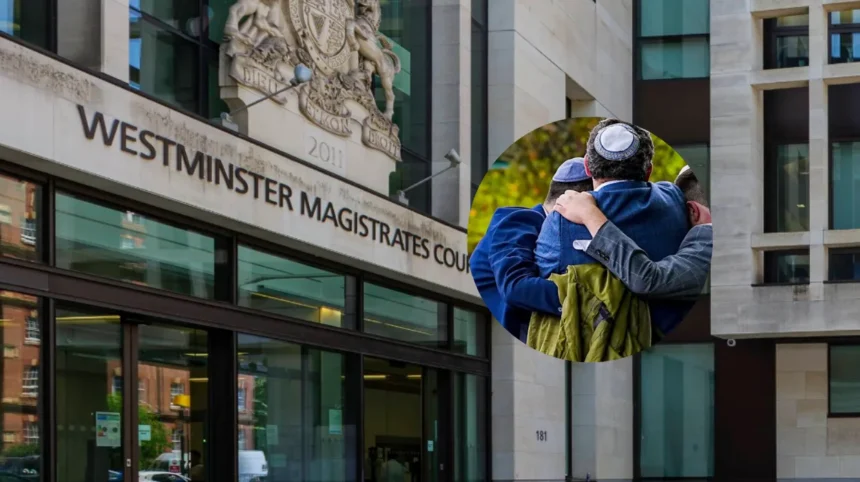
- Hakim made a brief appearance at the Westminster Magistrates’ Court where he pleaded not guilty by confirming his name only.
- Hakim was then held in custody pending another court hearing scheduled for 25 September at the Old Bailey.
- The worshippers Melvin Cravitz and Adrian Daulby lost their lives in the synagogue massacre.
- The attacker, Jihad Al-Shamie, who drove a car through the synagogue gates and conducted a knife attack was shot dead by armed police officers, it is officially stated.
- The charges against Hekmat Hakim are allegations only.
Manchester Crime (Manchester Mirror) August 21, 2026 – Synagogue attack defendant Hekmat Omar Ali Hakim has denied an allegation that he failed to disclose information relating to terrorist activity in connection with the 2025 attack at Heaton Park Hebrew Congregation Synagogue.
Hakim, 49, of St James Road in Higher Broughton, Salford, appeared before Westminster Magistrates’ Court, where he entered a not-guilty plea. He spoke only to confirm his name and indicate his plea, according to the case details provided.
The defendant was remanded in custody. He is scheduled to appear at the Old Bailey on 25 September, when the case is expected to move to the next stage of criminal proceedings.
The charge concerns an alleged failure to disclose information relating to terrorist activity. It does not itself allege that Hakim carried out the synagogue attack. The allegation remains unproven, and he is entitled to the presumption of innocence unless a court decides otherwise.
Counter Terrorism Policing announced on 20 August that Hakim had been charged in connection with its continuing inquiry into the attack. The statement, published under the byline Editor01 by Counter Terrorism Policing, identified Hakim by name, date of birth and address, and said the charge related to the terrorist attack at the Heaton Park Hebrew Congregation Synagogue.
BBC News reported that the charge was the first described as directly connected to the events of 2 October, following a number of arrests made during the wider investigation.
What is Hekmat Omar Ali Hakim accused of?
Hakim is accused of failing to disclose information regarding terrorist activity. Prosecutors would need to set out the exact basis of the allegation in court, including the information they say should have been disclosed and the circumstances in which they allege the legal duty arose.
No evidence against Hakim was tested during the brief magistrates’ court hearing. His plea means that the prosecution case will now be considered in further proceedings at the Old Bailey.
Counter Terrorism Policing North West has characterised the charge as directly related to the synagogue attack investigation. In its update, the force did not publicly provide detailed allegations about what information Hakim is said to have possessed or failed to share.
Assistant Chief Constable Rob Potts, speaking in a report published by BBC News on the charging decision, described it as “a significant development” in the investigation and said officers remained committed to establishing the full circumstances of the attack.
The court process will determine what evidence, if any, can be presented in support of the allegation. Reporting restrictions or later court directions may limit what can be published as the case progresses.
What happened in the Manchester synagogue attack?
The charge follows the attack at Heaton Park Hebrew Congregation Synagogue in Crumpsall, Manchester, on 2 October 2025. The incident occurred on Yom Kippur, the holiest day in the Jewish calendar.
According to the Home Secretary’s statement to Parliament, Jihad Al-Shamie drove a vehicle at worshippers outside the synagogue, left the vehicle armed with a knife and continued the attack. He was wearing what was later determined to be a fake explosive device. Armed officers were deployed after the emergency call, and Al-Shamie was shot dead within seven minutes of the first call, the Government said.
Worshippers Melvin Cravitz and Adrian Daulby were killed. The Government said Mr Cravitz was killed by the attacker, while initial findings indicated that Mr Daulby sustained a gunshot wound during the armed police response. The Independent Office for Police Conduct opened an investigation, as is standard where a member of the public dies following police use of firearms.
BBC News reported that three other men were seriously injured during the incident.
The Home Secretary told Parliament that Al-Shamie, 35, was a British citizen of Syrian descent and that investigators believed he had been influenced by extreme Islamist ideology. The statement said he made a 999 call during the attack in which he pledged allegiance to Islamic State.
Government statements and media reports have described the incident as a terrorist attack. The wider counter-terrorism investigation has continued since the killings.
How does this case relate to earlier proceedings?
The criminal case against Hakim is separate from the death of Al-Shamie, who was killed at the scene by police. The proceedings concern the allegation that Hakim failed to disclose information, rather than an allegation that he committed the violence at the synagogue.
The investigation has also led to a separate prosecution of Mohammed Asim Bashir. Counter Terrorism Policing stated in July that Bashir had been sentenced at Manchester Crown Court after conducting hostile reconnaissance at a military base alongside Al-Shamie before the synagogue attack.
BBC News reported that Bashir had driven Al-Shamie to the UK Defence Academy at Shrivenham, Oxfordshire, in August 2025. The report said he was given a life sentence with a minimum term of 17 years in that separate case.
Those earlier proceedings do not determine Hakim’s case. Each defendant faces separate allegations, and the evidence in Hakim’s case will have to be considered by the court independently.
What is the background to the Manchester synagogue attack case?
The Heaton Park Hebrew Congregation Synagogue attack prompted a major counter-terrorism investigation and increased security measures at Jewish sites across the UK.
In the parliamentary statement published on GOV.UK, the Home Secretary said six people were initially arrested after the attack and released without charge, while one person was later re-arrested and bailed. The Government also said additional support had been made available to more than 500 locations following the attack, alongside increased visible police patrols at synagogues and other sites.
The investigation has focused on establishing the full circumstances of the attack, including whether any other individuals had information relevant to terrorist activity. Hakim’s Old Bailey hearing on 25 September will be the next reported court date in his case.
How could this development affect Manchester’s Jewish community and the public?
The case is likely to keep attention on the continuing investigation into the synagogue attack and the security concerns experienced by Jewish communities in Manchester and elsewhere in the UK.
For survivors, bereaved families and worshippers, court proceedings may provide further information only when evidence can lawfully be aired in open court. The not-guilty plea means there is no final legal finding against Hakim at this stage.
For the public, the case may also reinforce the importance of distinguishing between confirmed facts, allegations made by police or prosecutors, and findings that have been tested and decided by a court. Further details will depend on the Old Bailey proceedings and any future updates from Counter Terrorism Policing or the Crown Prosecution Service.