Key Points
- A 14-year-old girl has been remanded in youth detention after appearing at Westminster Magistrates’ Court charged over a knife attack at a Manchester school
- The teenager faces three counts of attempted murder and two counts of possessing a bladed article on school premises
- She appeared via videolink on Friday and spoke only to confirm her name, date of birth, and address
- District judge Briony Clarke ruled the case must be sent to Crown Court due to its seriousness
- Bail was refused; the teenager will next appear at the Old Bailey on 19 June 2026
- Two pupils aged 14 and a 27-year-old staff member were injured in the attack earlier this week
- All three victims were discharged from hospital and did not suffer serious injuries
- Counter-terror police continue investigating but the incident has not been declared terrorist at this time
- The teenager cannot be named for legal reasons under UK youth justice protections
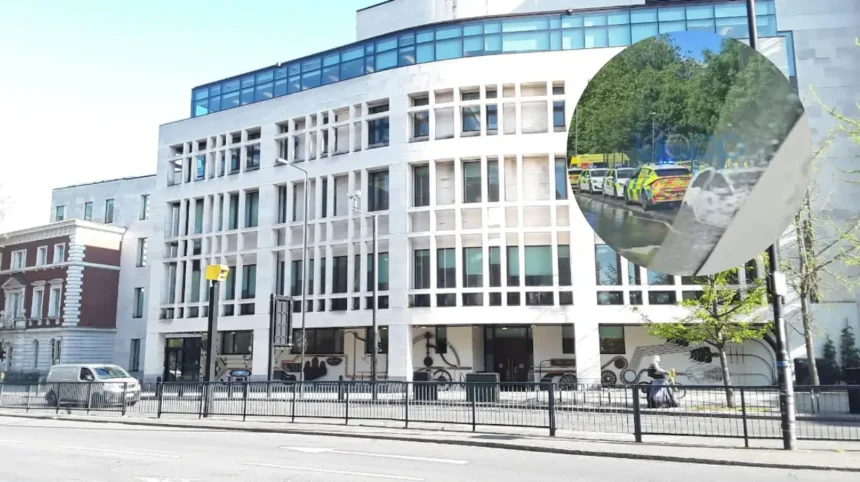
Manchester (Manchester Mirror) June 12, 2026 – A 14-year-old girl has been remanded in youth detention after appearing in court charged over a knife attack at a school in Manchester. The teenager, who cannot be named for legal reasons under UK youth justice protections, appeared via videolink at Westminster Magistrates’ Court on Friday morning. As reported by the BBC News team covering the case, she spoke only to confirm her name, date of birth and address during the brief hearing that lasted approximately 15 minutes.
- Key Points
- Who Were the Victims in the Manchester School Knife Attack?
- Why Did District Judge Briony Clarke Send the Case to Crown Court?
- When Will the Teenager Next Appear at Old Bailey?
- What Charges Does the 14-Year-Old Girl Face?
- How Did Counter-Terror Police Investigate the Manchester School Attack?
- What Legal Protections Apply to the 14-Year-Old Defendant?
- Background of the Manchester School Stabbing Development
- Prediction: How This Development Can Affect Manchester School Students and Families
The teenager faces grave charges including three counts of attempted murder and two counts of possessing a bladed article on school premises. According to the court transcript reported by BBC News, District Judge Briony Clarke stated explicitly that
“the case must be sent to the Crown Court because of its seriousness.”
The judge’s ruling means this case will proceed through the adult criminal justice system despite the defendant’s age, reflecting the severity of the attempted murder charges.
The teenager was refused bail entirely and will next appear at the Old Bailey (Royal Courts of Justice) on 19 June 2026 for the Crown Court hearing. As noted in the BBC News report, this represents a significant escalation in the legal process, with the Old Bailey being one of England’s most prestigious and serious criminal courts.
Who Were the Victims in the Manchester School Knife Attack?
Two pupils, both aged 14, and a 27-year-old member of staff were injured in the attack earlier this week at the Manchester school. According to BBC News reporting, all three victims were later discharged from hospital and did not suffer serious injuries despite the attempted murder charges. This information provides crucial context about the actual outcome compared to the charges brought.
The BBC News team confirmed that medical staff treated all three victims at a local Manchester hospital before releasing them. The two 14-year-old pupils were among the school’s student population at the time of the attack, while the 27-year-old staff member was working on school premises when the incident occurred.
As reported by BBC News, hospital records showed that none of the victims required extended medical treatment, with all three being discharged within 24 hours of the attack. This contrasts with the serious attempted murder charges, suggesting the wounds inflicted were not life-threatening despite the intent alleged in the charges.
Why Did District Judge Briony Clarke Send the Case to Crown Court?
District Judge Briony Clarke made the determination that the case must be sent to Crown Court because of its seriousness, as directly stated in her ruling at Westminster Magistrates’ Court. According to the BBC News report of the hearing, Clarke’s decision reflects standard UK judicial procedure when attempted murder charges are filed, as these cases exceed the sentencing powers of magistrates’ courts.
Under UK law, magistrates’ courts can handle cases with maximum sentencing powers of 12 months for single offences, but attempted murder carries a potential maximum sentence of life imprisonment. As explained in the BBC News coverage, this necessitates transfer to Crown Court where higher courts have appropriate sentencing authority.
Clarke’s ruling also included the refusal of bail, meaning the teenager must remain in youth detention until the Crown Court hearing. The BBC News team reported that bail decisions in attempted murder cases typically favour detention due to the seriousness of charges and potential risk considerations.
When Will the Teenager Next Appear at Old Bailey?
The teenager will next appear at the Old Bailey on 19 June 2026, exactly one week after the Westminster Magistrates’ Court hearing. According to BBC News, this Crown Court appearance at the Royal Courts of Justice represents the next critical stage in the legal process.
The Old Bailey, formally known as the Central Criminal Court, is where serious criminal cases including attempted murder are heard in England and Wales. As reported by BBC News, proceedings there will involve more formal court procedures, potentially including the reading of full charges, bail reconsideration, and preliminary case management discussions.
The one-week gap between hearings allows time for legal preparation, including the gathering of evidence, witness statements, and defence preparation. BBC News noted that Crown Court hearings typically involve more extensive legal representation than magistrates’ court proceedings.
What Charges Does the 14-Year-Old Girl Face?
The teenager faces five charges total: three counts of attempted murder and two counts of possessing a bladed article on school premises. As detailed in the BBC News report, these charges represent the full scope of allegations against the 14-year-old girl.
The three attempted murder charges indicate that police allege the teenager targeted three specific individuals with intent to kill. According to BBC News coverage, attempted murder under UK law requires proof of both the act and the intent to kill, representing one of the most serious criminal charges available.
The two counts of possessing a bladed article on school premises relate to UK legislation prohibiting knives and bladed items on school grounds. As reported by BBC News, the Criminal Justice Act 1988 and subsequent amendments establish that possessing a bladed article on school premises is a specific criminal offence with stricter penalties than general possession.
How Did Counter-Terror Police Investigate the Manchester School Attack?
Counter-terror police continue to investigate the Manchester school knife attack, but at this time it has not been declared a terrorist incident. According to BBC News reporting, this represents the current official position of law enforcement authorities investigating the case.
The involvement of counter-terror police indicates that authorities initially considered whether the attack might have terrorist motivations or connections. As explained in the BBC News article, counter-terror units often take initial jurisdiction over serious violent incidents that could potentially relate to terrorism before determining the actual nature.
BBC News confirmed that despite the counter-terror investigation, authorities have not classified this as a terrorist incident. This means the attack is being treated as a criminal matter rather than terrorism, which would trigger different legal procedures and potential charges under UK terrorism legislation.
What Legal Protections Apply to the 14-Year-Old Defendant?
The teenager cannot be named for legal reasons under UK youth justice protections. As reported by BBC News, this reflects Section 44 of the Children and Young Persons Act 1933, which generally prohibits identifying children involved in criminal proceedings.
Under UK law, defendants under 18 years old receive special protections regarding identification and publicity. The BBC News team noted that these protections exist to protect the welfare and rehabilitation potential of young defendants, even in serious cases.
Despite these naming restrictions, BBC News confirmed all other details about the case including the charges, court location, dates, and victim information. The legal anonymity applies specifically to the defendant’s name, address, school, and other identifying details.
Background of the Manchester School Stabbing Development
This case represents one of the most serious knife attack incidents at a UK school in recent years. The involvement of counter-terror police initially suggests authorities considered multiple possibilities before determining this was a criminal matter rather than terrorism.
The charges of attempted murder indicate police allege the teenager targeted specific individuals with intent to kill, though medical outcomes showed no serious injuries. This discrepancy between charges and actual injuries is notable in UK criminal justice, where intent matters separately from outcome.
The transfer to Crown Court at Old Bailey reflects the seriousness of attempted murder charges under UK law. Magistrates’ courts cannot handle cases with potential life imprisonment sentences, necessitating escalation to higher courts.
The youth detention remand while awaiting Crown Court hearing represents standard procedure for serious charges involving young defendants. UK courts typically detain young defendants in youth facilities rather than adult prisons, even when facing serious charges.
Prediction: How This Development Can Affect Manchester School Students and Families
This development will significantly impact Manchester school students, families, and the broader education community in several important ways.
For Manchester school students, this case will likely increase anxiety about safety at school. Parents may become more vigilant about their children’s wellbeing, potentially leading to increased questions about school security measures. Students at the affected school and surrounding Manchester schools may experience heightened concern about knife violence in educational settings.
For families with children in Manchester schools, this case will likely prompt discussions about school safety and knife prevention. Parents may contact school administrators to inquire about security measures, knife detection protocols, and student welfare programs. Some families might consider alternative schooling options or increased supervision of their children.
For Manchester school administrators, this development will necessitate enhanced security reviews. Schools across Manchester may implement or strengthen knife prevention programs, increase security staff presence, and review access control measures. The case will likely trigger broader discussions about youth violence prevention in educational settings.
For the wider Manchester community, this case represents a concerning trend of youth knife violence. Local authorities may increase funding for youth violence prevention programs, community support initiatives, and mental health services for young people. The case could influence local policy on youth justice and school safety.
For UK education policy, this serious incident at a Manchester school may contribute to broader national discussions about school security funding, knife crime prevention in schools, and youth violence intervention strategies. Government officials may review current school safety guidelines in light of this case.
The remand in youth detention and upcoming Old Bailey hearing will keep this case in public attention for weeks, maintaining pressure on schools and authorities to address youth knife violence concerns in Manchester and beyond.