Great Ducie Street Manchester represents a critical arterial roadway and designated economic development corridor located on the immediate northern boundary of the city centre. The geographical thoroughfare transitions directly into Bury New Road, functioning as the primary link between the central commercial core and the administrative districts of north Manchester. The specific zone falls within the administrative boundaries of Manchester City Council, serving as a historic anchor for the wholesale textile trade, light industrial manufacturing, and commercial storage sectors since the nineteenth century.
- What is the history of Great Ducie Street Manchester?
- What is the Great Ducie Street Strategic Regeneration Framework?
- Which real estate developments are transforming Great Ducie Street Manchester?
- How does Great Ducie Street connect to the wider Manchester transport network?
- What is the economic impact of the local textile and wholesale trade?
- Frequently Asked Questions
- What major public projects are happening near Great Ducie Street Manchester?
- Is Great Ducie Street Manchester located within the Clean Air Zone?
- What type of commercial properties are available on Great Ducie Street Manchester?
- How far is Great Ducie Street Manchester from the Northern Quarter?
- Who is managing the residential regeneration along Great Ducie Street Manchester?
The structural evolution of the corridor reflects the wider economic shifts of the region, shifting from a steam-powered manufacturing hub into a high-density, mixed-use regeneration district. The street acts as a physical barrier and connection point between the expanding commercial zones of NOMA and the historic industrial sector of Strangeways. Local government strategies focus explicitly on converting underutilized surface parking facilities and low-density warehouses into multi-story residential towers, commercial offices, and educational campuses. The implementation of the Strategic Regeneration Framework guarantees the preservation of industrial heritage while injecting modern infrastructure assets into the local urban ecosystem.
What is the history of Great Ducie Street Manchester?
Great Ducie Street Manchester developed rapidly during the nineteenth century as a core industrial conduit designed to facilitate the rapid movement of manufactured goods from northern textile mills to the central rail networks. The expansion coincided with the rise of the city as a global epicenter for the international cotton trade, which established the local area as a high-density warehousing hub. The proximity to the River Irwell and Victoria Station allowed Victorian businesses to establish large-scale distribution operations directly along the roadway. Landmark buildings, such as the massive iron-framed and brick-clad commercial structures, came to dominate the physical skyline of the corridor.
The local area remained a highly resilient commercial cluster throughout the twentieth century, surviving the severe deindustrialization cycles that affected alternative British manufacturing centers. As large-scale spinning operations declined, the street adapted by accommodating a dense network of independent clothing wholesalers, fabric distributors, and import-export businesses. This specific business ecosystem created a unique retail and wholesale environment that defined the urban character of the northern city fringe for over five decades. The historical layout featured rigid, tightly packed grid patterns that maximized spatial usage for heavy vehicle loading and storage capabilities.
Modern municipal evaluations highlight the preservation value of the remaining Victorian architecture along the route. The structural durability of the brick mills allows modern developers to utilize adaptive reuse strategies, converting older commercial spaces into modern creative studios and office environments. The historical legacy of enterprise continues to influence the current layout, ensuring that new spatial plans respect the established street hierarchies and architectural scales. The industrial heritage provides a distinct identity that distinguishes the district from standard modern glass-and-steel city expansions.
What is the Great Ducie Street Strategic Regeneration Framework?
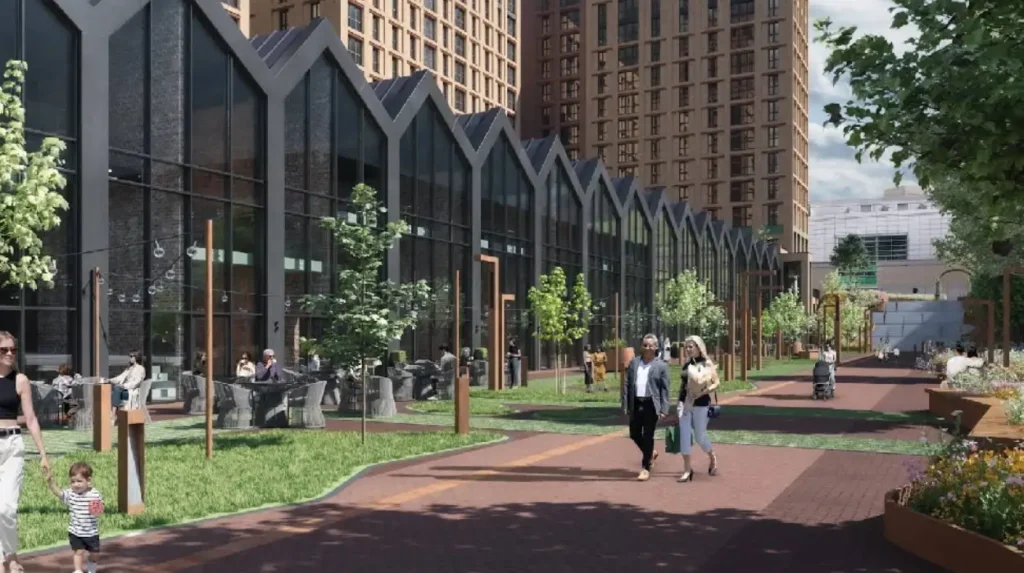
The Great Ducie Street Strategic Regeneration Framework is an official municipal planning document adopted by Manchester City Council to guide the comprehensive redevelopment of the northern city fringe. The framework establishes clear spatial guidelines, density parameters, and land-use priorities for an institutional delivery period spanning twenty years. The strategic zone covers land stretching north from the Inner Ring Road, wrapping around the historic former Boddingtons Brewery site. The primary goal is to convert low-density industrial yards and surface car parks into a highly integrated, high-density urban neighborhood.
The policy document outlines the delivery of approximately 2.8 million square feet of modern commercial space alongside thousands of high-density residential properties. The planning guidelines prioritize the creation of specific character areas, including the Cheetham Hill Gateway and Park Place zones, which dictate varying building scales and design typologies. The southern sections near Trinity Way allow for prominent high-rise structures that match the growing skyline of the central business district. The northern sections transition gradually to complement the lower-scale commercial properties of the Strangeways district.
Sustainability forms a foundational element of the regeneration guidelines, with mandatory requirements for green infrastructure, public realms, and direct pedestrian access to the River Irwell. The document acts as a formal material consideration for all subsequent planning applications submitted by private developers within the boundary. The local government uses the framework to coordinate infrastructural investments, ensuring utility networks, transport links, and public spaces expand in direct proportion to the local population. This structured approach prevents piecemeal development while maximizing long-term economic productivity across the site.
Which real estate developments are transforming Great Ducie Street Manchester?
Great Ducie Street Manchester is experiencing substantial private and institutional real estate investment driven by large-scale residential and commercial infrastructure projects. A primary anchor project is Waterhouse Gardens, a major residential-led development by Salboy situated on the former Boddingtons Brewery site. The scheme delivers hundreds of modern apartments, extensive commercial units, and highly activated public avenues designed to bridge the gap between the city centre and north Manchester. The project utilizes high-quality architectural finishes that set a new aesthetic benchmark for the entire regeneration corridor.
Complementing this anchor is the Latimer Brewery Gardens project, which adds substantial high-density housing options to the immediate geographic vicinity. Additionally, Rani Developments has progressed plans for Dutton Point, a twenty-story residential tower located at the intersection of Dutton Street and Robert Street. The scheme introduces 185 modern apartments and four distinct townhouses onto a site formerly utilized for recreational sports infrastructure. These collective projects represent an intentional shift toward high-density vertical living on the northern city fringe.
The influx of capital extends into the wider Strangeways and Cambridge regeneration zones, where multiple private entities are advancing towers exceeding twenty stories. The construction pipelines involve major firms such as ZephyrX, Linear, and the Benjamin Property Group, all targeting underutilized light industrial plots. The rapid delivery of these assets is converting the traditional daytime wholesale market into a vibrant, twenty-four-hour residential community. The scale of construction represents one of the largest spatial expansions of the Manchester city center boundary in recent history.
How does Great Ducie Street connect to the wider Manchester transport network?
Great Ducie Street Manchester operates as a vital transport link due to its position directly adjacent to the Inner Ring Road at Trinity Way. The geographical placement provides vehicular traffic with immediate access to the regional motorway networks, including the M60 and M62 corridors. The street functions as a major northern gateway for bus rapid transit routes connecting the city center to Bury, Salford, and Rochdale. The heavy flow of commuter vehicles requires the strategic maintenance of high-capacity transport infrastructure along the main roadway.
The district benefits from its immediate proximity to Manchester Victoria Station, which sits less than five hundred meters from the southern entrance of the corridor. Victoria Station provides comprehensive national rail connections alongside extensive Metrolink tram services reaching across Greater Manchester. The local light rail access enables residents to commute to major employment hubs, such as MediaCityUK and the Manchester Airport Enterprise Zone, without relying on private vehicles. The close proximity to major transport hubs enhances the underlying land value and reinforces the feasibility of high-density residential developments.
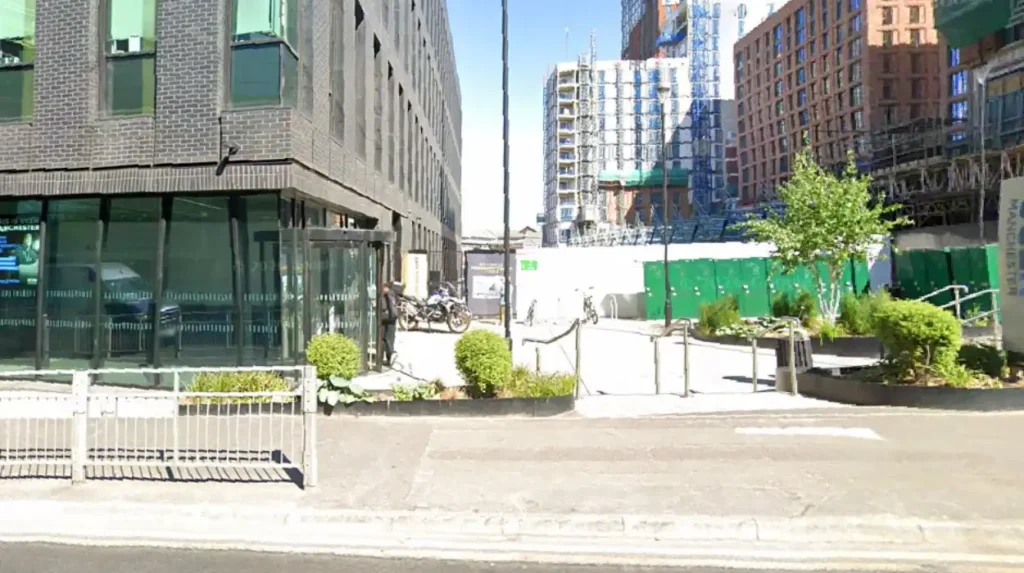
The Strategic Regeneration Framework mandates a complete redesign of the local pedestrian and cycling infrastructure to support active travel. The new street layouts prioritize wider pedestrian walkways, segregated cycle paths, and improved crossing points across busy intersections. The transport strategy aims to reduce local reliance on private cars, transitioning the area from a vehicle-dominated conduit into a highly permeable pedestrian zone. These infrastructure enhancements align with the wider carbon-neutral objectives established by the Greater Manchester Combined Authority.
What is the economic impact of the local textile and wholesale trade?
Great Ducie Street Manchester has long functioned as the foundational core of the regional independent textile, fashion apparel, and wholesale import sector. The high concentration of specialized businesses created an agglomeration economy where international buyers, local designers, and distributors operated in close physical proximity. The affordable commercial rents provided by older industrial units allowed startup businesses and independent traders to establish operations near the city core. The district generated substantial economic output, supporting thousands of localized jobs in logistics, procurement, and manufacturing.
The current economic strategy aims to modernize this historical asset rather than completely replacing the industrial base. The municipal framework encourages the growth of digital e-commerce, independent fashion design studios, and high-value ‘Made in Britain’ manufacturing brands within the district. The creation of modern commercial spaces with large floorplates is intended to attract professional service firms, technology startups, and creative agencies. This diversification strategy protects the historic identity of the area while insulating the local economy against sectoral declines.
The transition toward a modern commercial model has generated friction regarding the potential displacement of legacy businesses and alternative cultural venues. Local advocacy groups and creative collectives have highlighted the risk of rising land values pricing out the independent enterprises that defined the city fringe. In response, planning authorities are actively encouraging private developers to incorporate affordable, flexible workspaces within their ground-floor masterplans. The balanced approach ensures the district maintains its historic entrepreneurial energy while transitioning toward higher-value digital and professional economic sectors.
Frequently Asked Questions
What major public projects are happening near Great Ducie Street Manchester?
The area sits adjacent to the massive Strangeways and Cambridge masterplan, which aims to deliver up to 7,000 new homes. The long-term plan includes the proposed relocation of HMP Manchester to unlock major central plots for public parks, schools, and civic infrastructure.
Is Great Ducie Street Manchester located within the Clean Air Zone?
The road sits directly on the boundary of the Manchester Inner Ring Road transport management zone. Local transport initiatives focus on reducing vehicle emissions through expanded cycling infrastructure and strict emissions monitoring along major northern arterial routes.
What type of commercial properties are available on Great Ducie Street Manchester?
The local property stock comprises a mixture of traditional Victorian brick warehouses, modern light industrial units, and brand-new ground-floor retail spaces. The newer developments focus on providing flexible floorplates tailored for digital media companies, technology startups, and creative fashion studios.
How far is Great Ducie Street Manchester from the Northern Quarter?
The southern end of the street is located approximately one kilometer from the heart of the Northern Quarter. Residents can walk between the two districts in less than fifteen minutes via the NOMA development walk-ways and the ring road pedestrian links.
Who is managing the residential regeneration along Great Ducie Street Manchester?
Redevelopment is driven by a combination of Manchester City Council planning oversight and private investment firms. Key developers actively building high-density residential properties in the immediate zone include Salboy, Latimer, and Rani Developments.