Grape Street Manchester represents a vital nexus of industrial heritage and contemporary urban regeneration located within the historic St Johns district. Originally serving as a critical logistics hub for nineteenth-century rail transport, the thoroughfare transitioned into the creative heart of British television broadcasting before its modern evolution into a cultural destination. Understanding this specific location requires examining its transformation from a Victorian railway infrastructure asset into a media production site and finally into a component of the Enterprise City commercial neighborhood. This comprehensive analysis details the history, architectural importance, broadcasting legacy, and ongoing commercial developments that define the area.
- What is the historical origins of Grape Street Manchester?
- The development of Victorian rail infrastructure
- The transition from transport hub to corporate enclosure
- How did Grape Street Manchester shape the legacy of television production?
- What architectural features define the Grape Street bonded warehouse?
- How is the modern regeneration of Grape Street Manchester transforming the city center?
- What public events and cultural spaces define Grape Street Manchester today?
- Frequently Asked Questions
What is the historical origins of Grape Street Manchester?
Grape Street Manchester originated during the industrial expansion of the nineteenth century as a dedicated thoroughfare designed to facilitate transport links between regional railways and urban warehouses. The location served as a vital operational corridor for the London and North Western Railway company which required efficient transit routes for goods entering the urban center. Industrial operations at the site commenced primarily with the construction of dedicated transport infrastructure between 1867 and 1868 to manage the heavy influx of commercial commodities. The geographic positioning of the street allowed direct connectivity to the Liverpool Road Station complex which stands as the oldest terminal passenger railway station in the world.
The development of Victorian rail infrastructure
The expansion of the rail network in the northwest of England necessitated specialized storage facilities capable of handling vast quantities of industrial goods. The London and North Western Railway selected the district near the River Irwell due to its proximity to existing canal networks and central commercial markets. Workers laid the cobblestones of the thoroughfare to support heavy horse-drawn drays and early mechanical transport vehicles transferring cargo from rail cars. The street functioned as a high-density transit zone where logistics personnel managed shipments of textiles, machinery, raw materials, and agricultural imports daily. This infrastructural layout established the foundational blueprint of the district as an industrial core.
The transition from transport hub to corporate enclosure
As rail transport patterns shifted during the mid-twentieth century, the nationalized British Rail network optimized its land holdings by leasing surplus urban tracks. The decline of traditional warehousing operations left the thoroughfare underutilized until regional television networks recognized the spatial potential of the large open yards. Granada Television acquired operational rights to the land bordering the street to expand its production capacity beyond its primary Quay Street studios. The municipal authorities eventually permitted the formal incorporation of the public right of way into the private studio complex during the late twentieth century. This transition effectively altered the status of the street from a public commercial highway into a secure corporate production facility.
How did Grape Street Manchester shape the legacy of television production?
Grape Street Manchester served as the physical location for the first permanent outdoor filming set of the internationally acclaimed British television soap opera Coronation Street from 1968 until 1982. Granada Television executives secured the site from British Rail to transition their flagship program from indoor studio sets to authentic open-air filming environments. The move allowed production teams to utilize electronic editing techniques and capture realistic environmental conditions that enhanced the visual quality of the broadcast. This specific backlot hosted historical storylines that established the program as a definitive cultural milestone in global television history.
Technical construction of the outdoor backlot
Production designers initially constructed a wooden mockup of the fictional street in the open yard during the winter months of 1967. The initial timber frames featured weatherproofed textures designed to simulate real brickwork for black and white television cameras. The production crew filmed the first outdoor sequences at this location for an episode broadcast on January 24, 1968, depicting the demolition of a vestry. The set underwent a complete reconstruction using genuine brick materials in November 1969 to accommodate the transition to color broadcasting standards. The physical dimensions of the set were scaled down to seventy-five percent of real-world proportions to fit the spatial constraints of the yard.
Public tourism and the studio tour era
The television company recognized the public interest in the filming location and initiated formal studio tours for the general public in 1988. The attraction allowed visitors to walk along the cobblestones of the famous backlot and view the detailed exterior facades of the television houses. The original Grape Street lot remained an integral part of the visitor experience until structural reconfigurations altered the studio layout. The production of multiple weekly episodes eventually necessitated the construction of an expanded set elsewhere, leading to the decommissioning of the old lot. The site later transitioned into a corporate car park while retaining its historical value under the studio ownership.
What architectural features define the Grape Street bonded warehouse?
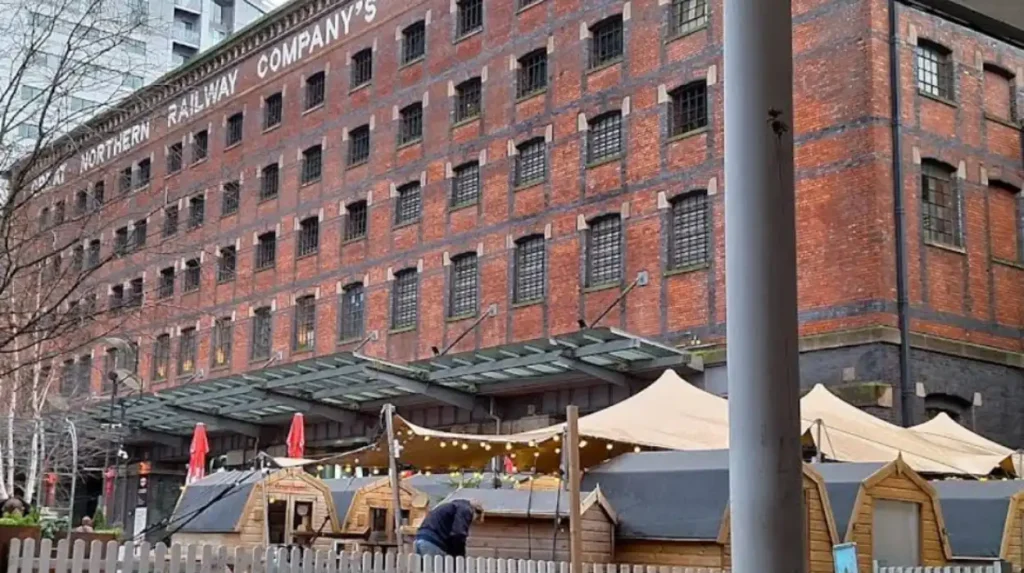
The Grape Street bonded warehouse represents a premier example of Victorian industrial architecture featuring a sophisticated multi-level design constructed with robust engineering standards. Built between 1867 and 1868, the structure possesses a Grade II listing from Historic England due to its high architectural interest and preservation of original components. The exterior exhibits distinctive polychromatic brickwork combined with ashlar stone decoration that highlights the prosperity of the nineteenth-century rail companies. The internal framework contains cast-iron support columns, traditional brick jack-arch flooring systems, heavy timber structures, and an original queen-post roof configuration.
Engineering specifications of the multi-level facility
The builders engineered the warehouse to withstand immense structural loads by utilizing internal cast-iron columns to distribute weight across multiple floors. The installation of brick jack-arches provided essential fireproofing capabilities which was a critical safety requirement for storing high-value bonded goods. The ground level featured large goods doors designed to accommodate direct rail car access for efficient loading operations. The upper levels retained regular arrangements of traditional window frames alongside dedicated taking-in doors for mechanical hoist systems. These architectural assets ensured that the building remained structurally sound despite subsequent internal modifications during the twentieth and twenty-first centuries.
Group value and historic preservation status
Historic England grants conservation status based on both individual merit and the collective value of surrounding historical assets. The Grape Street facility maintains significant group value due to its direct proximity to the Grade I listed Liverpool Road Station complex. The warehouse forms a contiguous historical landscape with two adjacent Grade II listed storage structures and nearby railway viaducts. This cluster of preserved structures provides a complete physical record of early railway logistics engineering within one major industrial city. Preservation mandates ensure that any modern redevelopment projects must protect the external brickwork and primary internal structural systems from demolition.
How is the modern regeneration of Grape Street Manchester transforming the city center?
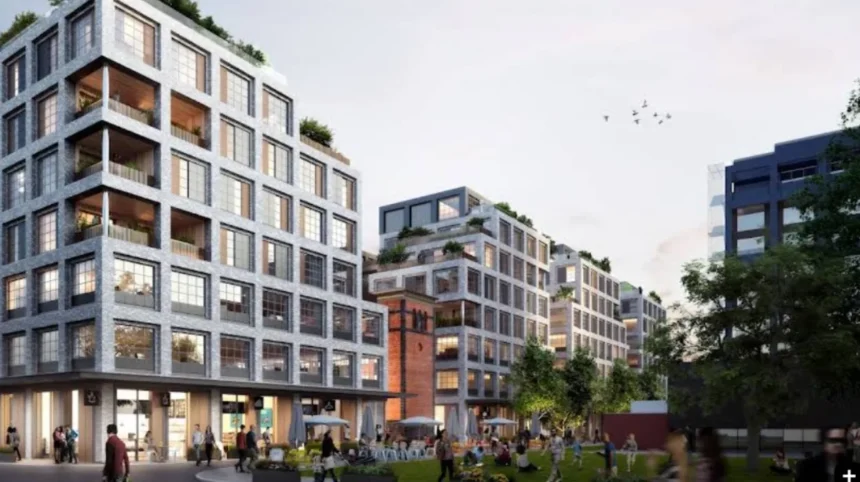
The modern regeneration of Grape Street Manchester incorporates the historic site into a major commercial district known as Enterprise City. The development strategy focuses on converting former television production facilities and industrial warehouses into hubs for tech, media, and creative industries. The initiative introduces the Grape Street Deck which provides a diverse multi-level market hall concept featuring ten independent street food kitchens. The master plan bridges the gap between commercial office requirements and public lifestyle spaces to revitalize the St Johns neighborhood.
The master plan of Enterprise City
The overarching development framework aims to establish a cluster for modern industry by integrating heritage buildings with new construction projects. The project brings together key assets including the Bonded Warehouse, the ABC Buildings, Manchester Goods Yard, and the newly established Aviva Studios. Developers designed the commercial offices to attract global technology corporations, media production agencies, and digital start-up enterprises. The inclusion of residential units, hotel spaces, and retail zones ensures that the district remains active outside of standard commercial business hours. This balanced approach prevents the creation of an isolated corporate park within the city center.
Sustainable adaptive reuse practices
Architects working on the regeneration project utilize adaptive reuse principles to minimize the environmental impact of the construction work. Retaining the massive brick facades and cast-iron pillars of the Victorian warehouses significantly reduces the requirement for new building materials. The integration of modern insulation, energy-efficient lighting, and smart climate control systems updates the historic structures to meet contemporary sustainability standards. The pedestrianization of the surrounding thoroughfares encourages walking and cycling among workers and visitors alike. This methodology demonstrates how historical preservation can coexist with aggressive urban economic expansion goals.
What public events and cultural spaces define Grape Street Manchester today?
The current configuration of Grape Street Manchester centers around dynamic public spaces including The Green at St Johns and expansive outdoor terraces. The area functions as a premium destination for community programming, live sports broadcasts, classic cinematic screenings, and weekly lifestyle activities. The open-air setup includes tiered step seating, substantial social benches, large entertainment screens, and dedicated beverage operations. The spaces host local food operators and regional independent businesses to provide alternative culinary options within the urban core.
The Green at St Johns community programming
The establishment of The Green provides an outdoor community square that accommodates residents, office employees, and international tourists. The management schedules regular fitness sessions, local community markets, and seasonal cultural festivals to engage diverse age groups. The inclusion of a permanent large-scale media screen allows the public to gather for major international sporting events. The configuration of deckchairs and lawn spaces creates a relaxed environment that contrasts with the dense commercial activity of nearby Spinningfields. The space operates as a vital social anchor for the broader district throughout the year.
Culinary innovation and market dynamics
The culinary offerings at the location are anchored by the Grape Street Deck market hall and local establishments like The Stables Tavern. The market hall utilizes rotating pop-up kitchens to showcase emerging culinary operators specializing in diverse regional cuisines. Traditional pubs in the immediate vicinity preserve classic hospitality elements by serving regional craft beers, local pies, and seasonal menus. The combination of casual outdoor street food options and structured indoor dining venues drives regular foot traffic to the area. This commercial variety supports the economic sustainability of independent regional hospitality brands.
Frequently Asked Questions
What was the original purpose of Grape Street Manchester?
The thoroughfare was constructed between 1867 and 1868 by the London and North Western Railway company. It functioned as a vital logistics transit lane for horse-drawn drays and cargo shipments moving goods between local rail tracks and the Grade II listed bonded warehouse.
How is Coronation Street connected to Grape Street Manchester?
Granada Television leased the land immediately off the thoroughfare from British Rail to build its very first permanent outdoor filming set. The production crew utilized this specific backlot to film the exterior scenes of the famous soap opera from 1968 until 1982.
Is the Grape Street bonded warehouse open to the public?
The exterior of the Grade II listed Victorian building can be viewed directly from the public walkways within the St Johns neighborhood. The interior spaces have been adapted into modern commercial offices, co-working areas, and food markets under the Enterprise City master plan.
What can visitors do at the Grape Street Deck today?
The location operates as a modern lifestyle and culinary hub featuring a multi-level market hall with ten street food kitchens. Visitors can access outdoor event spaces, attend community fitness programs, view live sports on large screens, or visit regional taverns.