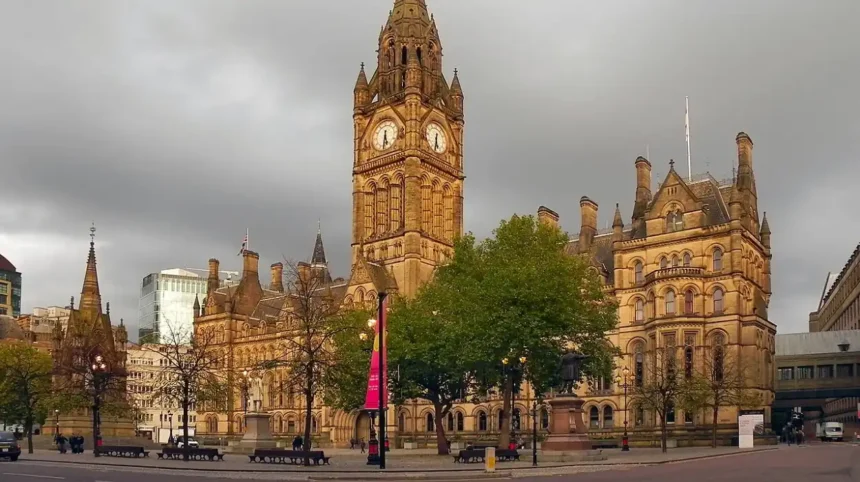
Ancoats is an inner-city district of Manchester, England, situated directly northeast of the city centre. Historically recognized as the world’s first industrial suburb, Ancoats transformed during the Industrial Revolution from a rural settlement into a major international manufacturing hub dominated by steam-powered cotton mills, brick warehouses, and shipping canals. Today, the district is protected within a designated conservation area where historic industrial architecture stands alongside modern residential developments, public plazas, and pedestrianized waterside walkways.
- How Can You Explore Ancoats Canalside and Historic Basins for Free?
- What Historic Architecture and Mills Can You View in Ancoats for Free?
- Which Public Parks and Green Spaces Are Open to Everyone in Ancoats?
- Where Can You See Free Street Art and Outdoor Monuments in Ancoats?
- What Free Self-Guided Walking Trails Can You Follow in Ancoats?
- Frequently Asked Questions
During the late eighteenth century, industrialist developers established textile infrastructure along the Rochdale Canal. Key historical sites include Murrays’ Mills, founded in 1798, and Royal Mill, constructed in 1912. The area also served as the primary settlement for Manchester’s nineteenth-century Italian immigrant community, giving rise to the neighborhood known historically as Little Italy along Jersey Street and Blossom Street.
Visitors exploring Ancoats without purchasing admission tickets can access public heritage sites, open urban spaces, architectural landmarks, and public art trails. The district operates as an open-air historical archive where public access requires no ticketing, registration, or financial transactions.
How Can You Explore Ancoats Canalside and Historic Basins for Free?
You can explore the Ancoats canalside for free by walking along the public towpaths of the Rochdale Canal and New Islington Marina, which offer continuous pedestrian access past historic cotton mills, brick waterways, basin lock systems, and open-air public plazas.
The Rochdale Canal opened in 1804 to transport raw cotton, coal, and manufactured textiles between Manchester and Yorkshire. The section running through Ancoats, parallel to Redhill Street, features preserved stone locks, iron bridges, and brick canal walls constructed over two centuries ago. Pedestrians can walk the towpaths continuously from Great Ancoats Street through to Miles Platting without paying entry fees.
New Islington Marina, formerly known as Ancoats Basin, serves as the central water feature of the district. The marina was remediated during urban renewal projects in the 2000s and now provides publicly accessible timber boardwalks, floating ecosystems, and water fowl habitats. Visitors can view historical canal narrowboats moored along the basin while observing urban wildlife such as swans, mallards, and coots.
Walking along the canalside allows visitors to inspect historical hydraulic engineering structures up close. The water basins provided cooling water for the steam engines that powered nearby factories during the nineteenth century. Today, these waterways form an essential part of Manchester’s green and blue infrastructure network, offering free recreational space for walkers, joggers, and cyclists.
For detailed routes through these historic industrial channels, review the guide on how to follow a half-day walking route through Ancoats.
What Historic Architecture and Mills Can You View in Ancoats for Free?
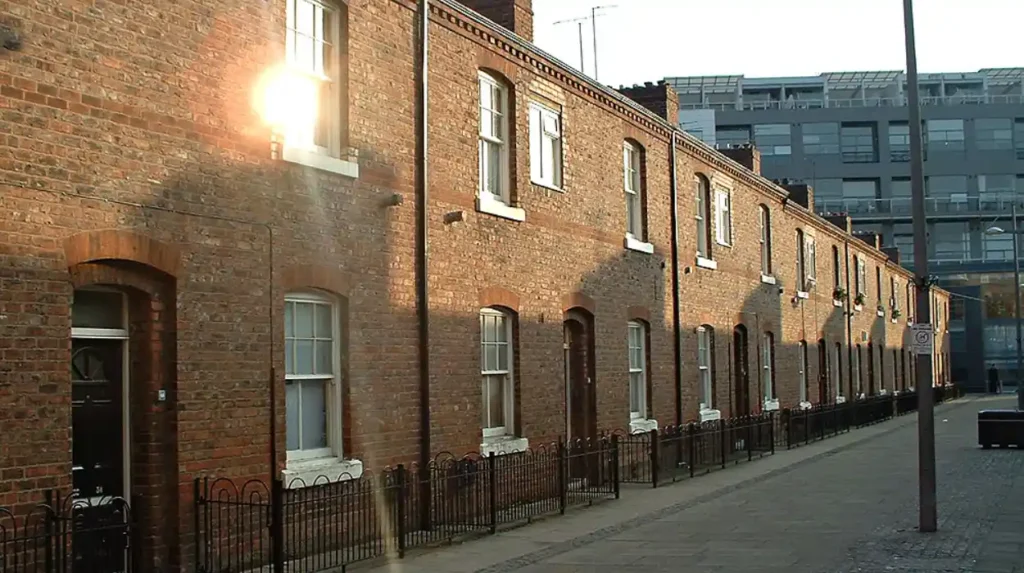
You can view world historic architecture in Ancoats for free by walking along Redhill Street, Jersey Street, and Great Ancoats Street to observe original nineteenth-century steam mills, Art Deco newspaper production buildings, and restored industrial warehouses from the street level.
Ancoats contains one of the dense concentrations of Grade II and Grade II* listed industrial buildings in the United Kingdom. Murrays’ Mills, located on Redhill Street, is one of the oldest surviving steam-powered cotton mill complexes in the world. Established in 1798 by Adam and George Murray, the complex features a central quadrangle surrounding a private canal basin that was historically used to unload raw materials directly into the factory premises.
Royal Mill and Paragon Mill, situated along Jersey Street, represent early twentieth-century textile factory design. Built around 1912, these multi-story red-brick structures feature internal iron frames, large window bays designed to maximize sunlight for workers, and ornate terracotta detailing. Across Great Ancoats Street sits the Daily Express Building, completed in 1939 in the Streamline Moderne style, featuring curved black glass and chromium cladding.
The exterior architectural details of these listed buildings are fully visible from public footpaths. Architectural elements to observe include cast-iron lintels, decorative brick cornices, historical hoist towers, and high-level water tanks originally installed for fire prevention in cotton storage areas.
To understand how these structures shaped the development of Greater Manchester, examine what is the historical significance of Ancoats in Manchester.
Which Public Parks and Green Spaces Are Open to Everyone in Ancoats?
Cotton Field Park and Cutting Room Square are public open spaces in Ancoats that are completely free to enter, offering outdoor seating, public art installations, lawns, boardwalks, and clear paved areas for recreation without requiring tickets or fees.
Cotton Field Park is a public park located behind New Islington Marina. Spanning over two hectares, the park features structured wetlands, open lawns, boardwalk trails, and native species planting, including alder, birch, and willow trees. The park was engineered to manage urban rainwater runoff while providing dedicated green space for inner-city residents and visitors.
Cutting Room Square functions as the civic center of modern Ancoats. Located at the intersection of Blossom Street and Fairfield Street, this open paved plaza features public seating carved from local stone, high-level lighting arrays, and broad open spaces. The square is framed by historic industrial structures and converted ecclesiastical buildings, creating a quiet urban environment isolated from heavy motor traffic.
These public areas offer open access twenty-four hours a day, seven days a week. Visitors use these green and open spaces for picnics, relaxation, birdwatching, and casual walking without purchasing entry passes or commercial services.
If you are deciding where to spend your leisure time in central Manchester, consider reading Ancoats vs Northern Quarter: which Manchester neighbourhood should you stay in.
Where Can You See Free Street Art and Outdoor Monuments in Ancoats?
You can see free street art, bronze sculptures, and historic outdoor monuments by walking along Blossom Street, Cutting Room Square, and the Rochdale Canal towpath, where public art displays and industrial artifacts are permanently installed outdoors for free viewing.

Cutting Room Square features permanent outdoor art installations designed to document the heritage of the surrounding factories. Integrated into the paving are large concrete framing slabs containing oversized photographs that depict historic mill workers, machinery parts, and archival manufacturing images from the nineteenth century. Bronze monoliths crafted by local artists display detailed relief carvings of textile production processes.
The street art in Ancoats includes large-scale murals commissioned by regional arts funds and created during street art festivals. High-profile wall murals can be found along the gables of red-brick residential terraces on Anita Street, Jersey Street, and Bengal Street. These artworks portray industrial motifs, regional wildlife, and abstract patterns honoring Manchester’s history.
Public monuments in the area also commemorate the historic Italian community that settled in Ancoats during the late nineteenth century. Plaque installations along Blossom Street detail the heritage of local ice cream makers, organ grinders, and mosaic artisans who lived and worked in Little Italy between 1870 and 1950.
What Free Self-Guided Walking Trails Can You Follow in Ancoats?
You can follow self-guided walking trails through Ancoats for free by using public navigation maps to trace routes covering the Little Italy Heritage Trail, the Industrial Cotton Route, and the Rochdale Canal Heritage Walk at your own pace.
The Little Italy Heritage Trail guides pedestrians through the network of streets once inhabited by Italian immigrants. The route passes along Anita Street, formerly known as Sanitary Street, which was constructed in 1897 by the Manchester Corporation as worker housing equipped with private indoor plumbing. The trail leads past historical bakery locations, chapel sites, and community gathering spots.
The Industrial Cotton Route focuses on the mechanical history of the district. This route begins at Great Ancoats Street, follows the Rochdale Canal along Redhill Street, and turns into Radium Street and Jersey Street. Walkers encounter preserved mill complexes, iron sluice gates, coal chutes, and chimney bases that powered the world’s early automated cotton spinning machinery.
These routes are completely self-guided and accessible on foot at any time of day. Pedestrians can access free digital boundary maps and route descriptions through local council archives or walking apps without purchasing printed guidebooks or commercial tours.
Frequently Asked Questions
What are the best free outdoor spots in Ancoats?
The best free outdoor spots in Ancoats include Cotton Field Park, New Islington Marina, and Cutting Room Square. These locations offer open green space, timber boardwalks, and urban plazas that are completely free to enter without a ticket.
Is Ancoats accessible for walking tours without paying entry fees?
Yes, Ancoats is fully accessible for self-guided walking tours without paying any entry fees. The neighborhood features open public footpaths, canal towpaths, and pedestrianized streets that showcase historic industrial architecture for free.
Are there free family-friendly activities available in Ancoats?
Yes, families can explore the wetlands at Cotton Field Park, watch canal boats at New Islington Marina, and view street art murals around Cutting Room Square. All of these activities are located in public spaces with continuous free access.
When is the best time to visit Ancoats for free self-guided walks?
The best time to visit Ancoats for self-guided walking is during daylight hours, between morning and early evening. Daylight provides the best visibility for reading historical plaques, viewing architecture, and exploring canalside towpaths.