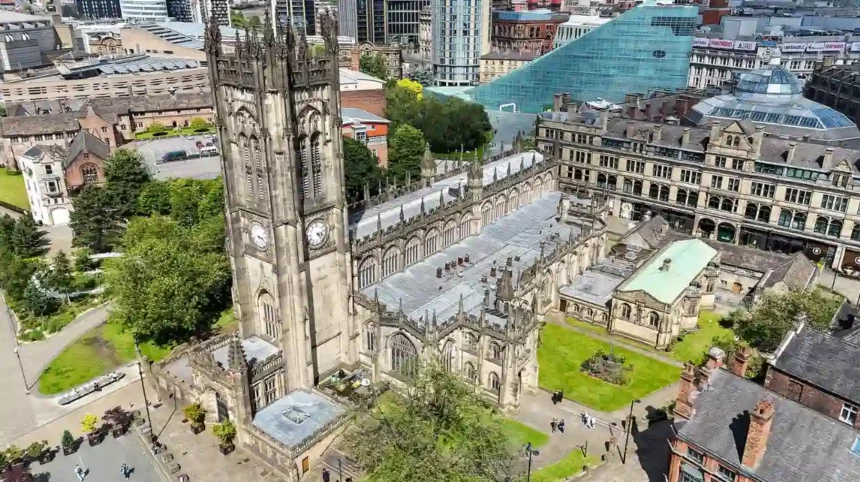
Ancoats is an inner city suburb located in the east central sector of Manchester, England, situated directly northeast of Piccadilly station and adjacent to the Rochdale Canal. The area developed rapidly during the Industrial Revolution into the industrial birthplace of the global cotton textile industry.
- How Do You Start A Walking Route From The Rochdale Canal Locks?
- Which Historic Mills Can You Explore Along Redhill Street?
- Where Can You Stop For Artisan Coffee And Breakfast In Ancoats?
- What Architectural Details Define Cutting Room Square?
- How Does New Islington Marina Extend The Half-Day Walk?
- Frequently Asked Questions
- How long does it take to complete the Ancoats walking route?
- Is the Ancoats walking route accessible for wheelchairs and prams?
- What are the best coffee shops to visit in Ancoats along the route?
- When is the best time of day to do the Ancoats walking tour?
- How do I get to the start of the Ancoats walking route from Piccadilly Station?
The geographical layout of the district covers approximately fifty hectares, bounded by Great Ancoats Street, Oldham Road, Poll Street, and the Ashton Canal corridor. By the late eighteenth century, steam powered cotton spinning mills transformed the previously rural landscape into a dense urban manufacturing center. Royal Mill, Murray Mill, and Paragon Mill represent preserved examples of nineteenth century industrial architecture featuring red brick masonry and timber construction.
The Rochdale Canal opened through the area in 1804, establishing vital transport connections between Lancashire and Yorkshire for moving raw cotton and finished cloth. The canal network included basins and lock structures that supplied water power and facilitated freight transport directly into mill complexes. Urban decline during the mid twentieth century caused industrial closures and depopulation across the entire district until major urban regeneration initiatives commenced in the late 1990s.
Modern Ancoats contains preserved grade two listed structures integrated with contemporary residential, commercial, and retail developments. The district maintains its historic grid street pattern established during its original rapid industrial expansion. Today the area forms a recognized conservation area showcasing urban industrial heritage alongside modern commercial infrastructure.
How Do You Start A Walking Route From The Rochdale Canal Locks?
A half-day walking route begins at Dale Street Basin where the Rochdale Canal links Manchester city centre to the historic industrial core of Ancoats. Walkers follow the towpath northeast toward Lock 81 and Lock 82 to observe authentic nineteenth century canal engineering structures.
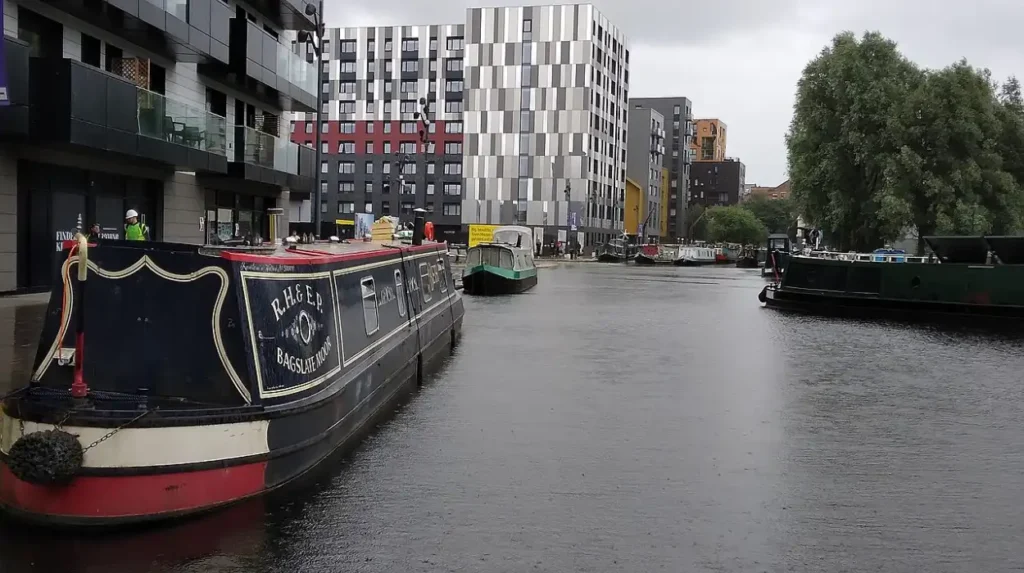
The Rochdale Canal corridor features masonry lock chambers, cast iron roving bridges, and timber lock gates engineered between 1794 and 1804 by engineer Benjamin Outram. The canal route covers six hundred meters from Dale Street to Union Street, providing direct pedestrian access through preserved mill precincts. Walking along the stone paved towpaths allows observers to study original water management systems used by industrial textile factories.
The water surface reflects historic brick facades of adjacent mill buildings, creating clear photographic opportunities along the linear canal path. Pedestrians navigate flat towpath terrain, making the route accessible for all fitness levels throughout every season of the year. The canal route connects directly into the center of the Ancoats urban conservation zone at Redhill Street.
The path passes beneath historic masonry bridges that previously carried rail and horse drawn cart traffic across the waterway. Interpreting lock mechanisms provides insight into historical inland water transport operations during the peak industrial era. The walking path transitions seamlessly from the aquatic corridor into the architectural heart of the cotton manufacturing district.
Which Historic Mills Can You Explore Along Redhill Street?
Redhill Street hosts the highest concentration of preserved nineteenth century cotton spinning mills in Manchester, including Murrays’ Mills and Royal Mill. Murrays’ Mills was established in 1797 by Scottish entrepreneurs Adam and George Murray as a steam-powered textile manufacturing complex.
The building complex represents one of the oldest surviving steam-powered cotton mills in the world, featuring an internal canal basin structure. Royal Mill stands adjacent to Murrays’ Mills, constructed in 1912 on the site of the earlier McConnel and Kennedy mill enterprise. McConnel and Kennedy operated fine cotton spinning mills on this site from 1798, employing over fifteen hundred workers by 1815.
The architectural features include multi-story brick elevations, large grid windows designed to maximize daylight, and internal cast iron structural columns. Paragon Mill, built in 1912, demonstrates early use of reinforced concrete floors combined with traditional brick external load-bearing walls. The exterior facades retain original decorative brickwork, stone lintels, and historic signage cast into structural iron headers.
Visitors walking down Redhill Street observe the sheer physical scale of industrial structures that dominated global cotton yarn production. These mills operated thousands of mechanical spindles driven by central steam engines connected to complex overhead shaft drive systems. Today these structures house residential apartments, creative agency offices, and local commercial businesses, demonstrating successful adaptive reuse practices.
Where Can You Stop For Artisan Coffee And Breakfast In Ancoats?
Ancoats contains numerous independent specialty coffee shops and artisan bakeries concentrated primarily around Cutting Room Square and Blossom Street. Local establishments offer precision espresso beverages, filter coffees, sourdough bread, and freshly prepared breakfast meals daily.
Ancoats Coffee Company operates inside the historic courtyard of Royal Mill, offering single origin coffees roasted on site in small batches. Pollen Bakery, located along the New Islington Marina water front, produces sourdough pastries, croissants, and specialty filter coffee products daily. Companio Bakery on Radium Street offers hand-crafted sourdough loaves, pastries, and takeaway coffee items to pedestrians traversing the neighborhood route.
The specialty coffee venues maintain high brewing standards, utilizing calibrated water filtration systems, precise extraction ratios, and specialty milk options. Breakfast menus feature locally sourced ingredients, organic eggs, artisan cheeses, and seasonal produce supplied by regional agricultural producers. Seating options include indoor dining tables inside restored industrial spaces and outdoor pavement seating areas along pedestrianized streets.
Average prices for specialty coffee range from three to five pounds sterling, while breakfast items range from six to twelve pounds. These hospitality venues operate within converted mill spaces, preserving raw brick walls, exposed pipework, and concrete architectural elements. Stopping at these establishments provides refreshment while allowing visitors to experience the vibrant contemporary food culture of Ancoats.
What Architectural Details Define Cutting Room Square?
Cutting Room Square serves as the central public plaza and cultural heart of contemporary Ancoats, surrounded by preserved historic structures and modern buildings. The square features public art installations, stone paving, seating benches, and outdoor dining areas managed by adjacent hospitality businesses.
The square derives its name from the historic garment cutting rooms that operated within neighboring textile mills during the nineteenth century. Hallé St Michael’s, a former Roman Catholic church built in 1859, stands prominently on the eastern boundary of the square. The church building now functions as a rehearsal, recording, and performance venue for the world-famous Hallé Orchestra ensemble.
Large bronze acoustic sculptures created by artist Dan Dubowitz are embedded directly into the paving and walls across the square. These permanent art pieces display historic photographic portraits of former factory workers who inhabited the surrounding streets during the Victorian era. The surrounding architectural buildings demonstrate a mix of mid Victorian Italianate styles and contemporary brick-clad residential apartment developments.
The public square provides a fully pedestrianized environment, free from motorized vehicular traffic, promoting safe pedestrian movement and community gatherings. Architectural lighting highlights historic building facades during evening hours, accentuating original brick masonry, arched windows, and timber roof structures. The spatial design of the square links residential streets with commercial precincts, serving as a focal point for urban exploration.
How Does New Islington Marina Extend The Half-Day Walk?
David Jones
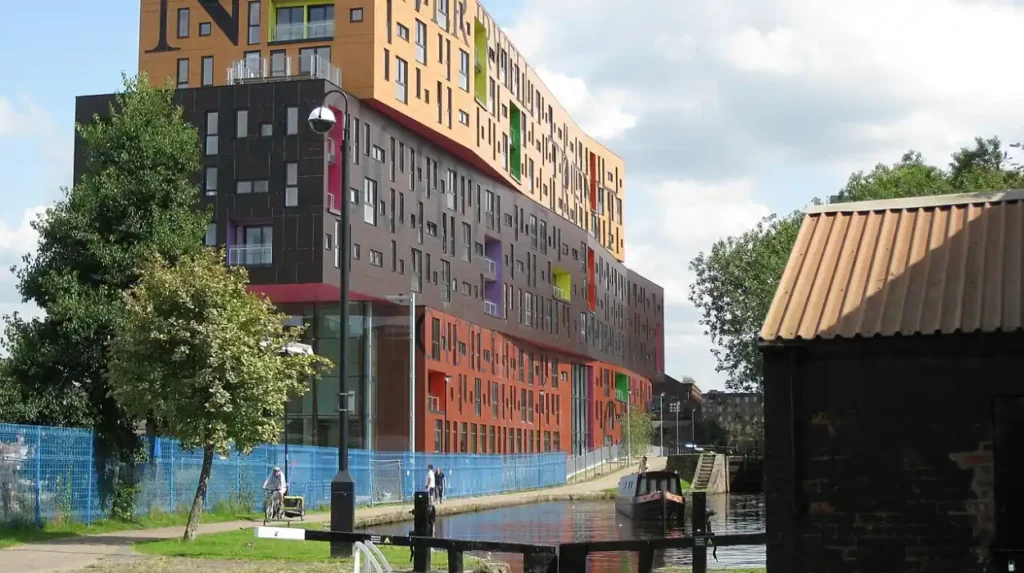
New Islington Marina extends the walking route east of Ancoats, offering an urban waterfront ecosystem with canal boats, footbridges, and landscaped green spaces. The marina was constructed as part of a comprehensive millennium urban regeneration project managed by the Urban Splash property group.
The water basin connects the Rochdale Canal to the Ashton Canal, providing boat mooring facilities for resident canal barges and visiting watercraft. Boardwalks constructed from durable timber planks surround the perimeter of the water basin, allowing pedestrians to walk safely beside the water. Cotton Field Park borders the marina, providing green lawns, native trees, wild flower plantings, and timber seating platforms for public use.
The park area covers approximately two hectares, creating a natural habitat for urban wildlife species, including swans, ducks, and freshwater fish. Footbridges span across the canal channels, linking residential housing developments with public walkways and commercial retail spaces located along the water. The surrounding architecture includes low-rise timber clad housing alongside contemporary brick apartment buildings designed by modern European architectural firms.
Visitors can walk the complete perimeter loop of the marina in twenty minutes while observing sustainable urban water management infrastructure. The marina transition area demonstrates how historic industrial canal infrastructure can be adapted into functional ecological recreation space for cities. This section completes the half-day walking route by combining industrial heritage, modern architecture, and natural blue-green infrastructure.
Frequently Asked Questions
How long does it take to complete the Ancoats walking route?
The full walking route through Ancoats takes approximately two to three hours to complete at a comfortable leisure pace. This duration includes time spent visiting historic mill sites, walking along the Rochdale Canal towpaths, and stopping for coffee. Visitors who choose to sit down for a full breakfast or explore New Islington Marina in depth may extend the route into a four-hour excursion.
Is the Ancoats walking route accessible for wheelchairs and prams?
The majority of the walking route through Ancoats features flat, paved footpaths that are fully accessible for wheelchairs and pushchairs. The main streets around Cutting Room Square and Redhill Street have level paving and drop curbs at all major intersections. Some historic canal towpath sections feature uneven cobbled surfaces, but alternative paved access roads run parallel to the waterway.
What are the best coffee shops to visit in Ancoats along the route?
Ancoats Coffee Company inside Royal Mill and Pollen Bakery at New Islington Marina are widely considered top specialty coffee spots. Companio Bakery on Radium Street also offers exceptional takeaway filter coffee and fresh sourdough pastries daily. Each establishment serves freshly roasted specialty beans and high-quality breakfast options within restored historic industrial settings.
When is the best time of day to do the Ancoats walking tour?
Starting the walking route in the morning between eight and nine o’clock allows you to visit bakeries when pastries are fresh. Morning hours also offer quieter walking conditions along the Rochdale Canal towpaths before foot traffic increases in the afternoon. Weekend mornings provide a vibrant neighborhood atmosphere as local markets and outdoor seating areas open around Cutting Room Square.
How do I get to the start of the Ancoats walking route from Piccadilly Station?
Ancoats is located less than a ten-minute walk from Manchester Piccadilly Railway Station via the Northern Quarter district. Pedestrians can walk northeast along Ducie Street or Dale Street until reaching the Rochdale Canal locks at Great Ancoats Street. Public Metrolink trams also stop nearby at Piccadilly Gardens and New Islington, providing convenient transit access to the starting point.