Choosing between Manchester City Centre and Salford involves comparing housing costs, transport connections, employment opportunities, lifestyle, education, green spaces and access to everyday services. Both locations form part of Greater Manchester, but they offer different residential environments.
- How Do Manchester City Centre and Salford Differ as Residential Areas?
- What Is the Historical Background of Manchester City Centre and Salford?
- Which Area Has More Affordable Housing and Rental Properties?
- What Are Rental Prices Like in Manchester City Centre?
- What Are Rental Prices Like in Salford?
- Which Area Is More Suitable for Property Buyers?
- Which Location Has Better Transport Connections?
- How Does Public Transport Work in Salford?
- Is Manchester City Centre Easier to Explore Without a Car?
- Which Area Offers Better Employment Opportunities?
- Which Area Has Better Shopping, Restaurants and Entertainment?
- Which Location Has Better Parks and Green Spaces?
- Which Area Is Better for Families and Long-Term Living?
- What Schools and Educational Facilities Are Available?
- Which Location Is More Suitable for Families With Children?
- Which Area Has Better Healthcare and Everyday Services?
- Is Manchester City Centre or Salford Better for Students and Young Professionals?
- Which Area Provides Better Student Accommodation Options?
- Where Should Young Professionals Consider Living?
- What Are the Main Disadvantages of Living in Manchester City Centre and Salford?
- How Will Future Development Affect Manchester City Centre and Salford?
- Which Area Should You Choose: Manchester City Centre or Salford?
Manchester City Centre is the commercial, cultural and administrative heart of Manchester. It includes neighbourhoods such as Deansgate, Ancoats, Northern Quarter, Castlefield and Piccadilly. The area has high-density apartments, major employment centres, shopping destinations, restaurants and extensive public transport connections.
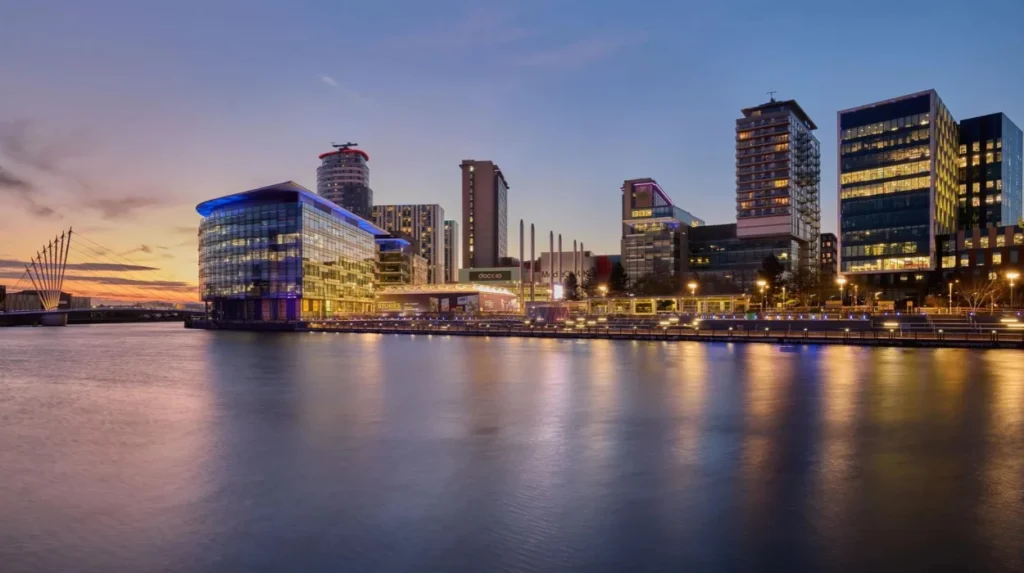
Salford is a separate city within Greater Manchester, located immediately west of Manchester City Centre. It includes residential neighbourhoods such as Salford Quays, MediaCityUK, Ordsall, Pendleton, Eccles and Swinton. Its housing includes modern waterfront apartments, traditional terraced properties, family homes and purpose-built residential developments.
The comparison is not simply between two neighbouring locations. It is between Manchester’s central urban environment and a wider city containing several distinct residential communities.
How Do Manchester City Centre and Salford Differ as Residential Areas?
Manchester City Centre offers a concentrated urban lifestyle with apartments, offices, shopping and entertainment within walking distance. Salford provides a wider choice of residential neighbourhoods, including waterfront developments, traditional communities and suburban areas with different housing options.
The geographical distinction is important when comparing the two locations. Manchester City Centre sits within the City of Manchester local authority, while Salford operates under Salford City Council. Both belong to Greater Manchester, the metropolitan county covering ten local authority districts.
Manchester City Centre has a strong concentration of commercial and cultural activity. Deansgate contains offices, restaurants and residential developments. Ancoats combines converted industrial buildings with modern apartments and independent businesses. The Northern Quarter attracts residents interested in independent shops, music venues and restaurants.
Salford has a more geographically varied residential structure. Salford Quays and MediaCityUK form a modern waterfront district. Ordsall contains established residential streets alongside newer developments. Pendleton has established housing and regeneration projects, while Eccles and Swinton provide town-centre facilities and suburban housing.
The two locations also have different population and development patterns. Manchester’s city-centre population is concentrated in apartments and high-density developments. Salford accommodates a broader mixture of housing types across its neighbourhoods.
According to Nomis, Salford had an estimated population of 297,004 in 2025. Manchester City Council’s 2025 monitoring report recorded an estimated Manchester population of 645,097 in mid-2025. These figures cover the entire local authorities rather than their city-centre neighbourhoods.
What Is the Historical Background of Manchester City Centre and Salford?
Manchester developed as a major industrial and commercial centre through textile manufacturing, trade and transport infrastructure. Salford also became an important industrial city, with canals, cotton mills, railway connections and docks shaping its historical development.
Manchester and Salford share a closely connected industrial history. The River Irwell separates parts of the two cities, but their economic development has been interconnected for centuries.
Manchester expanded rapidly during the Industrial Revolution. Cotton manufacturing, textile warehouses, railway infrastructure and commercial markets transformed its urban landscape. Areas such as Ancoats became important centres of industrial production.
Manchester City Council records that the first cotton mills in Ancoats appeared around 1790. The Rochdale Canal opened in 1804 and supported the movement of industrial materials and finished goods. Many historic industrial buildings remain part of the neighbourhood’s architectural identity. Manchester City Council+1
Salford developed alongside Manchester as an industrial settlement. Its medieval town received the right to hold a market in 1228 and became a free borough in 1230.
During the 18th and 19th centuries, Salford expanded through textile manufacturing, engineering, canals and railway infrastructure. The Bridgewater Canal opened in 1761, while the Manchester–Liverpool railway opened in 1830.
The Manchester Ship Canal opened in 1894 and supported the development of Salford Docks. The docks became an important centre for shipping and industrial activity before closing during the 1980s.
Their closure created significant opportunities and challenges for regeneration. The former docklands eventually became Salford Quays, now home to residential developments, cultural attractions and MediaCityUK.
Salford officially received city status in 1926. Its modern administrative boundaries were established through local government reorganisation in 1974.
Which Area Has More Affordable Housing and Rental Properties?
Salford generally has lower average housing costs than Manchester across the local authority areas. Manchester City Centre contains a concentrated apartment market, while Salford offers apartments, terraced houses and family properties across several neighbourhoods.
Housing affordability is one of the most important considerations when choosing between Manchester City Centre and Salford.
The Office for National Statistics (ONS) provides local housing information through its UK House Price Index and Price Index of Private Rents. These datasets measure average property prices and private rental costs across local authorities.
The latest October 2026 rental figures show a difference between Manchester and Salford.
Average monthly private rent
Salford’s local-authority average was £209 per month lower. These figures do not represent Manchester City Centre and Salford Quays individually.
Source: Office for National Statistics, October 2026.
The difference provides a useful starting point for renters. However, individual properties in central Manchester and premium waterfront developments in Salford can have substantially different asking prices.
What Are Rental Prices Like in Manchester City Centre?
Manchester City Centre has a large supply of apartments, including studio flats, one-bedroom apartments and larger properties in high-rise developments.
The main residential neighbourhoods include:
- Deansgate, with modern apartments close to offices and restaurants.
- Ancoats, with converted warehouses and contemporary residential buildings.
- Northern Quarter, with apartments near independent businesses and nightlife.
- Castlefield, with canal-side developments and historic surroundings.
- Spinningfields, with premium apartments close to commercial offices.
City-centre renters often pay for proximity to employment, entertainment and transport. Service charges, parking costs and building facilities also influence the total cost of living.
What Are Rental Prices Like in Salford?
Salford provides a wider range of residential settings.
Salford Quays attracts renters interested in modern apartments, waterfront views and access to MediaCityUK. Ordsall provides a combination of established residential streets and newer apartment developments.
Pendleton, Eccles and Swinton offer different housing choices, including traditional terraced homes and larger properties.
According to October 2026 ONS figures, average Salford rents by bedroom number were:
- One-bedroom property: £891 per month.
- Two-bedroom property: £1,090 per month.
- Three-bedroom property: £1,297 per month.
- Four-bedroom or larger property: £1,780 per month.
These figures cover the entire Salford local authority rather than individual neighbourhoods. Office for National Statistics
Which Area Is More Suitable for Property Buyers?
These figures demonstrate why Salford attracts buyers seeking different property types and price points.
Manchester City Centre generally suits buyers interested in apartments close to employment and entertainment. Salford provides additional opportunities for buyers looking for houses, larger living spaces and residential neighbourhoods outside the immediate commercial centre.
Buyers should also examine lease length, ground rent, service charges, building maintenance, energy efficiency and management arrangements before purchasing an apartment.
Which Location Has Better Transport Connections?
Manchester City Centre provides direct access to major railway stations, bus services and Metrolink connections. Salford also has strong public transport, particularly around Salford Quays, MediaCityUK and Salford Crescent, connecting residential areas with central Manchester.
Transport connectivity is a major advantage of living in either location. Their close geographical relationship allows residents to travel between the two cities for employment, education, shopping and entertainment.
Manchester City Centre contains several important transport hubs.
Manchester Piccadilly connects the city with destinations across the United Kingdom. Manchester Victoria provides additional regional and national rail connections. Oxford Road and Deansgate stations serve central employment and residential districts.
The Bee Network, Greater Manchester’s integrated public transport system, includes buses, trams and local transport connections.
Transport for Greater Manchester operates Metrolink, which connects central Manchester with Salford and other Greater Manchester districts.
How Does Public Transport Work in Salford?
Salford has several transport connections depending on the neighbourhood.
Salford Crescent railway station serves the University of Salford and surrounding residential communities. Salford Central provides access to central areas, while Eccles railway station connects residents with regional destinations.
Salford Quays and MediaCityUK have dedicated Metrolink stops.
The MediaCityUK–Piccadilly and Eccles–Piccadilly tram routes connect the Quays with Manchester City Centre. Other nearby stops include Broadway, Harbour City, Anchorage, Salford Quays and Exchange Quay.
The University of Salford also identifies Peel Park, Frederick Road and MediaCity as its three main campuses, each with transport connections.
Is Manchester City Centre Easier to Explore Without a Car?
Manchester City Centre has extensive pedestrian infrastructure. Residents can walk between shopping areas, offices, restaurants, cultural attractions and railway stations.
This arrangement reduces the need for private vehicles when daily activities remain within the central district.
Salford residents also benefit from walkable neighbourhoods, particularly around Salford Quays and the University of Salford. However, residents in more distant areas such as Worsley, Irlam and parts of Swinton often depend more heavily on buses, trains or cars.
The most suitable location therefore depends on the exact property address and daily commuting destination.
Which Area Offers Better Employment Opportunities?
Manchester City Centre concentrates employment in finance, professional services, retail, hospitality, technology and business administration. Salford has important opportunities in media, broadcasting, digital technology, education, healthcare, logistics and professional services.
Manchester is one of the principal employment centres in North West England. Its commercial districts attract employers from different industries and provide access to a large regional workforce.
Spinningfields is a major business district with professional services, financial companies, offices and restaurants. Deansgate and St Peter’s Square also contain significant commercial developments.
The Northern Quarter and Ancoats support independent businesses, creative industries, hospitality and technology-related companies.
Manchester City Centre is particularly relevant for professionals working in:
- Banking and financial services, including major corporate offices.
- Legal and professional services, including consultancy and accountancy.
- Retail and hospitality, including shopping centres, hotels and restaurants.
- Digital and technology businesses, including software and creative agencies.
- Public administration and education, including central institutional offices.
Salford has developed a significant employment identity of its own.
Why Is MediaCityUK Important to Salford?
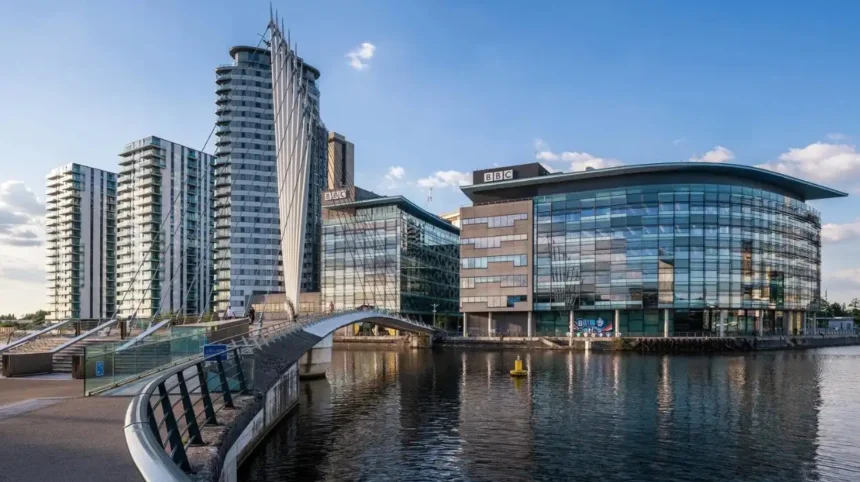
MediaCityUK is a major media, digital and creative business district located at Salford Quays.
It opened in 2011 and became home to major organisations, including BBC and ITV operations. The area also contains technology businesses, production facilities, educational institutions and creative workspaces.
Salford City Council reports that MediaCityUK hosts more than 250 creative and technology businesses. The council also identifies plans for further expansion and additional residential development. salford.gov.uk
This employment concentration makes Salford relevant to people working in broadcasting, television production, digital technology, marketing and creative industries.
The University of Salford also operates a MediaCity campus, connecting higher education with the local media and technology economy.
Which Area Is More Convenient for Daily Commuting?
Manchester City Centre is convenient for people whose workplaces are located around Piccadilly, Deansgate, Spinningfields, St Peter’s Square and the Northern Quarter.
Salford Quays and MediaCityUK are convenient for people employed within the waterfront business district.
Residents working in Manchester City Centre can also consider Salford neighbourhoods near Salford Central, Salford Crescent or Metrolink stations.
Commuters should compare door-to-door travel times rather than relying exclusively on the distance between neighbourhoods.
Which Area Has Better Shopping, Restaurants and Entertainment?
Manchester City Centre has a larger concentration of shopping destinations, restaurants, nightlife venues and cultural attractions. Salford offers established leisure destinations, particularly around Salford Quays, MediaCityUK, Chapel Street and its neighbourhood town centres.
Manchester City Centre is a major shopping and entertainment destination in Greater Manchester.
The Arndale Centre provides access to high-street retailers, restaurants and everyday shopping facilities. Market Street and Exchange Square contain additional retail destinations.
The Northern Quarter has independent shops, vintage clothing businesses, coffee shops, restaurants and music venues.
Spinningfields offers restaurants, bars and leisure facilities alongside its commercial buildings. Deansgate provides further dining and entertainment options.
Residents can also access major cultural attractions, including Manchester Art Gallery, the Science and Industry Museum and the National Football Museum.
What Entertainment Does Salford Offer?
Salford has a distinct cultural and entertainment offering.
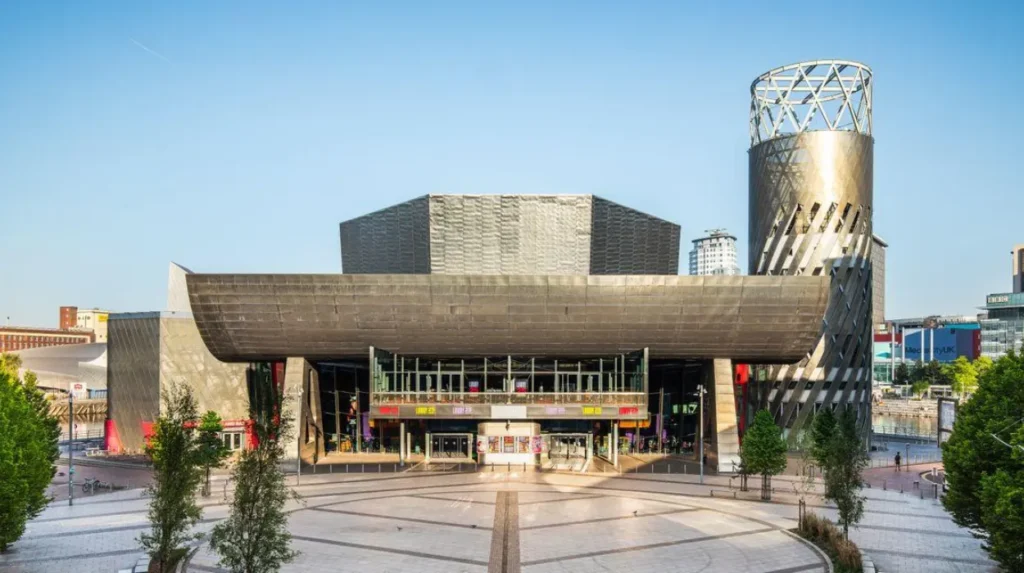
The Lowry is a major arts and entertainment complex at Salford Quays. It contains theatres, galleries and exhibition spaces. The venue hosts performances, exhibitions and cultural events.
The Imperial War Museum North is another major attraction. Its exhibitions examine the impact of conflict on people and societies.
MediaCityUK offers restaurants, cafés, bars and public spaces around the waterfront.
Residents in central Salford can also access independent businesses, restaurants and traditional pubs around Chapel Street and surrounding neighbourhoods.
Manchester provides a broader concentration of central shopping and nightlife. Salford provides a different combination of waterfront leisure, cultural attractions and neighbourhood facilities.
Which Location Has Better Parks and Green Spaces?
Salford has extensive green infrastructure across its wider local authority area, including parks, waterways, countryside and riverside paths. Manchester City Centre provides smaller urban green spaces, canal-side routes and landscaped public areas within its central neighbourhoods.
Access to green space contributes to residential quality, physical activity and everyday recreation.
Manchester City Centre contains several green and waterside environments.
Castlefield provides canalside walks, historic bridges and public spaces. Residents can access walking routes around the Bridgewater Canal and Rochdale Canal.
Piccadilly Gardens provides a central public space, while smaller landscaped areas and riverside routes offer opportunities for outdoor activities.
Salford has a wider network of parks and open spaces.
What Green Spaces Are Available in Salford?
Important green destinations include:
- Peel Park: A historic public park close to the University of Salford.
- Buile Hill Park: A large public park with open spaces and recreational facilities.
- Worsley: A historic village environment with canal-side walking routes.
- Ordsall Park: A neighbourhood green space serving nearby residential communities.
- Irwell River Park: A developing riverside environment connecting parts of Salford and Manchester.
Salford City Council reports that approximately 60% of the city consists of green space. It also identifies 18 square miles of countryside and parks and 30 miles of rivers and canals. salford.gov.uk
This wider geographical coverage makes Salford relevant to residents who value access to parks, waterways and outdoor recreation.
However, access depends on the individual neighbourhood. Someone living in a Salford Quays apartment has a different immediate environment from someone living near Worsley or Buile Hill Park.
Which Area Is Better for Families and Long-Term Living?
Salford offers a broader selection of family-oriented residential neighbourhoods, parks and traditional housing. Manchester City Centre provides convenient access to schools, healthcare, shopping and employment, but its housing market contains a higher concentration of apartments.
Family requirements differ from those of young professionals and students. Parents often prioritise bedroom space, school access, parks, healthcare facilities, childcare and reliable transport.
Manchester City Centre offers modern apartments with convenient access to central facilities. Families living in Castlefield, Deansgate and Ancoats can access shops, restaurants and public transport without long journeys.
However, apartment living requires careful consideration of available bedrooms, storage, outdoor space and building facilities.
Salford provides additional neighbourhood choices for families.
Ordsall has residential streets and newer housing developments. Pendleton offers established communities and regeneration projects. Eccles and Swinton provide town-centre facilities, residential streets and access to wider suburban areas.
What Schools and Educational Facilities Are Available?
Both cities have access to primary schools, secondary schools, colleges and higher education institutions.
Manchester City Centre is close to educational facilities across the central area and neighbouring districts. Families should check school catchment arrangements and admission requirements through Manchester City Council.
Salford has its own education network, managed through Salford City Council. Families can investigate schools in neighbourhoods such as Ordsall, Pendleton, Eccles and Swinton.
The University of Salford is an important higher education institution. Its main campuses include Peel Park, Frederick Road and MediaCity.
The University of Manchester and Manchester Metropolitan University also provide higher education opportunities within the wider central Manchester area.
School selection should involve checking Ofsted inspection reports, admissions policies, travel arrangements and available places. Proximity to a school does not automatically guarantee admission.
Which Location Is More Suitable for Families With Children?
Families looking for larger houses and access to suburban neighbourhoods should investigate Salford beyond the Quays.
Manchester City Centre is relevant to families who prioritise proximity to work, public transport and central facilities.
Parents should compare individual properties rather than assuming that every Salford neighbourhood offers lower housing costs or that every central Manchester apartment lacks family facilities.
Which Area Has Better Healthcare and Everyday Services?
Manchester City Centre and Salford both provide access to hospitals, GP practices, pharmacies, dental services and community healthcare. Manchester has major central hospitals, while Salford residents use local facilities and healthcare services across Greater Manchester.
Healthcare access is an important consideration when selecting a permanent home.
Manchester has several major healthcare institutions. Manchester Royal Infirmary is part of Manchester University NHS Foundation Trust and provides specialist and general hospital services.
Other central healthcare facilities include Manchester Dental Hospital and the Manchester Royal Eye Hospital.
The wider Manchester University NHS Foundation Trust network also includes hospitals serving different parts of Greater Manchester.
Salford residents have access to Salford Royal Hospital, which forms part of Northern Care Alliance NHS Foundation Trust.
Salford Royal provides hospital services, including emergency care and specialist treatment.
Local GP practices, pharmacies and dental surgeries provide additional everyday healthcare services across both cities.
How Should Residents Compare Healthcare Access?
Residents should consider the location of their nearest GP surgery, pharmacy, dental practice and urgent care service.
The NHS Find a GP service provides information about registered practices, opening arrangements and available services.
Hospital access should be assessed using actual journey times, particularly for households with children, older residents or people who require regular medical appointments.
Healthcare availability depends on local registration arrangements, service capacity and eligibility. Living near a hospital does not guarantee access to every specialist service.
Is Manchester City Centre or Salford Better for Students and Young Professionals?
Manchester City Centre suits students and young professionals seeking central accommodation, nightlife, employment and convenient transport. Salford provides access to the University of Salford, MediaCityUK and Manchester’s employment market through nearby railway and Metrolink connections.
Manchester and Salford form a connected student and graduate employment market.
Manchester City Centre attracts students because of its proximity to universities, restaurants, entertainment venues and public transport.
The Oxford Road Corridor is particularly important for higher education. It connects major university facilities with student accommodation, research institutions and cultural destinations.
Ancoats, Northern Quarter and Deansgate attract young professionals interested in apartment living and access to central workplaces.
Salford also has a substantial student population.
The University of Salford’s Peel Park campus is close to Manchester City Centre. Its MediaCity campus connects students with businesses operating in broadcasting, digital technology and creative industries.
According to the University of Salford, its main Peel Park campus is approximately a 20-minute walk from Spinningfields. Salford Crescent railway station also provides a connection to central Manchester. University of Salford
Which Area Provides Better Student Accommodation Options?
Manchester City Centre contains purpose-built student accommodation, private rented apartments and shared housing.
Salford provides student accommodation near the University of Salford and residential properties across surrounding neighbourhoods.
Students should compare:
- Distance from their university campus.
- Monthly rent and included bills.
- Deposit and tenancy arrangements.
- Access to supermarkets and libraries.
- Evening transport availability.
- Internet access and study facilities.
The best accommodation location depends on the campus attended and the student’s budget.
Where Should Young Professionals Consider Living?
Young professionals working in central Manchester can consider Deansgate, Castlefield, Ancoats and Northern Quarter.
People employed at BBC, ITV and other MediaCity businesses can investigate Salford Quays, Ordsall and nearby residential districts.
Those working across both cities can compare properties close to railway stations and Metrolink stops.
What Are the Main Disadvantages of Living in Manchester City Centre and Salford?
Manchester City Centre has higher average local-authority rental costs, dense development and busy nightlife districts. Salford has neighbourhoods with more limited transport access, uneven regeneration and varying service availability, making property-level research important.
Both locations have practical disadvantages that residents should consider before signing a tenancy or purchasing a property.
Manchester City Centre’s high-density residential environment creates competition for popular apartments. Some developments have limited parking, shared facilities and additional service charges.
Noise is another consideration. Residents living near nightlife venues, busy roads or entertainment districts experience different conditions from those in quieter residential streets.
Parking availability also affects households that depend on private vehicles. Central parking spaces can involve additional monthly costs.
Salford’s disadvantages vary considerably between neighbourhoods.
Salford Quays has a concentration of modern apartments, but some residents prefer traditional residential streets and larger houses.
Further from the waterfront, public transport frequency and journey times vary by location. Residents in suburban areas need to examine local bus, train and tram connections.
Regeneration also creates differences between neighbouring districts. New residential developments do not automatically mean that every nearby street has the same level of infrastructure, amenities or public investment.
What Should Renters Check Before Moving?
Renters should examine the full tenancy cost rather than focusing exclusively on monthly rent.
Important considerations include:
- Council tax band and applicable local charges.
- Electricity, gas, water and broadband expenses.
- Deposit requirements and tenancy conditions.
- Parking permits and private parking charges.
- Apartment service charges where applicable.
- Building management and maintenance arrangements.
- Transport expenses for regular commuting.
Residents should also visit properties at different times of the day. This helps identify traffic noise, nightlife activity, parking pressure and the availability of local services.
Explore More Area Guide
Cheapest Areas to Live in Manchester in 2026: Top Affordable Neighbourhoods
Best Areas to Rent in Manchester for Young Professionals
How Will Future Development Affect Manchester City Centre and Salford?
Manchester City Centre and Salford are both experiencing continued residential and commercial development. Investment in housing, transport, business districts and public spaces is shaping future opportunities across central Manchester, Salford Quays and surrounding neighbourhoods.
Future development is relevant to both renters and property buyers because infrastructure investment influences residential demand and neighbourhood services.
Manchester City Centre continues to expand through residential construction, commercial development and improvements to public spaces.
Areas such as Ancoats, New Islington, Castlefield and the wider central district have experienced substantial changes through regeneration and residential investment.
Manchester City Council’s 2024–2025 Authority Monitoring Report identifies the City Centre, including the higher education corridor, as covering approximately 462 hectares. The wider regional centre covers approximately 1,141 hectares. Manchester City Council
Salford also has an ambitious development programme.
Salford City Council identifies four strategic growth locations:
- City Centre Salford.
- MediaCityUK and Salford Quays.
- Greater Manchester Western Gateway.
- Salford’s towns.
The council’s strategic ambition is to deliver 40,000 new homes and 40,000 new jobs by 2040 across these growth locations. salford.gov.uk
MediaCityUK is an important part of this strategy. Salford City Council identifies plans for the district to double in size over the next decade, alongside proposals for additional housing and business development. salford.gov.uk
These developments are relevant to people considering long-term residence in Salford.
However, planned homes and employment opportunities should not be treated as completed projects. Buyers and renters should examine planning approvals, construction schedules and completed infrastructure before making decisions.
Which Area Should You Choose: Manchester City Centre or Salford?
Manchester City Centre and Salford serve different residential priorities. Manchester offers concentrated employment, shopping and entertainment. Salford provides a wider selection of neighbourhoods, green spaces and housing types, alongside convenient connections to central Manchester.
The right location depends on household income, employment, housing requirements and preferred lifestyle.
Manchester City Centre is suitable for residents who prioritise:
- Walking access to offices and commercial districts.
- Shopping, restaurants and nightlife.
- Major railway stations and central transport connections.
- Modern apartment developments.
- Proximity to universities and cultural attractions.
Salford is suitable for residents who prioritise:
- A wider selection of residential neighbourhoods.
- Access to waterfront living around Salford Quays.
- Traditional housing and family-oriented communities.
- Green spaces, parks and canal-side routes.
- Employment opportunities around MediaCityUK.
- Access to Manchester without living directly in its commercial centre.
The following geographical comparison helps identify the main residential districts.
For young professionals, the decision often comes down to workplace location and monthly accommodation costs. Manchester City Centre offers immediate access to central offices, while Salford provides alternative residential options within commuting distance.
For families, neighbourhoods such as Eccles, Swinton, Pendleton and Ordsall deserve consideration alongside central Manchester. Property size, school access, parks and healthcare should influence the final choice.
For students, both locations provide access to universities and educational facilities. The relevant campus and accommodation budget determine the most practical option.
For property buyers, local-authority average prices offer useful background information, but individual property valuations, leasehold arrangements and future maintenance costs require separate investigation.
Ultimately, Manchester City Centre and Salford are closely connected residential markets. Manchester provides a concentrated city-centre experience, while Salford offers greater geographical variety and a distinct waterfront and suburban identity. Comparing individual neighbourhoods rather than relying exclusively on city-wide averages provides a more accurate basis for choosing a home.
Is Manchester City Centre more expensive than Salford?
Manchester City Centre generally has higher housing costs than many Salford neighbourhoods. Salford offers a wider range of residential properties, including traditional houses and modern apartments, at different price points.