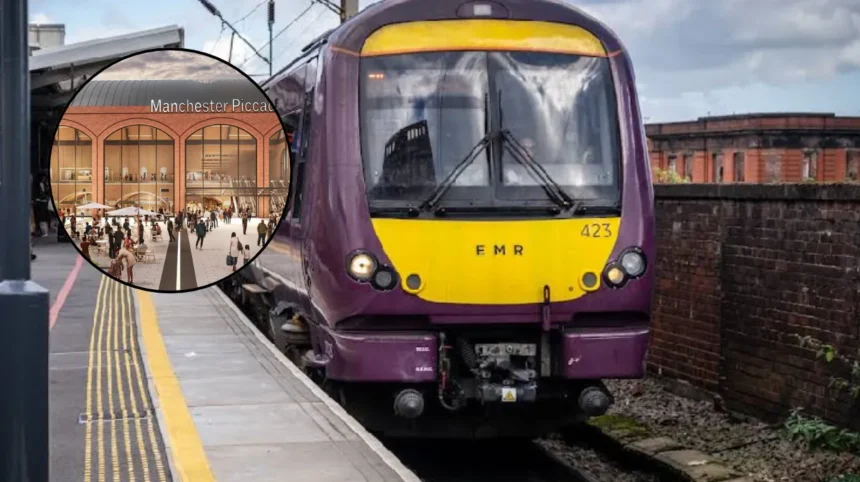
Key Points
- Metrolink tram stops at Manchester Piccadilly face potential relocation to accommodate plans for a new underground railway station.
- The proposed underground station forms a central component of the wider £45 billion Northern Powerhouse Rail (NPR) project, designed to enhance east-west rail connectivity across northern England.
- Greater Manchester’s expanding Bee Network is positioned to integrate directly into the broader transport development, linking Manchester with cities including Liverpool, Leeds, and York.
- More than £3 million from the government’s City Region Sustainable Transport Settlement (CRSTS) has been allocated for development activities running through to March 2027.
- A joint review into the Piccadilly underground station proposal commenced in January, co-led by Greater Manchester’s transport commissioner Vernon Everitt and rail minister Lord Hendy.
- Transport for Greater Manchester (TfGM) confirmed that part of the £3 million budget will fund the creation of a preferred proposal for moving the Metrolink infrastructure at Piccadilly.
- The government is also preparing to launch a separate review into the design and location of a proposed NPR station at Manchester Airport, situated on land adjacent to Terminal Two.
Manchester (Manchester Mirror) November 25, 2026 – Metrolink tram services at Manchester Piccadilly could be relocated to make way for a proposed underground railway station under the £45 billion Northern Powerhouse Rail (NPR) scheme, according to newly released transport documents.The plans, outlined in a Transport for Greater Manchester (TfGM) report, reveal that more than £3 million in public funding has been ring-fenced for development work up to March 2027, including drafting a preferred option for moving the existing tram infrastructure at the city’s main railway hub.The funding comes via a drawdown from the government’s City Region Sustainable Transport Settlement (CRSTS) and will also support an ongoing joint review into the underground station proposal, led by Greater Manchester’s transport commissioner Vernon Everitt and rail minister Lord Hendy.
- Key Points
- Why are Metrolink trams at Manchester Piccadilly being considered for relocation?
- How does the underground station fit into the £45 billion Northern Powerhouse Rail project?
- Background of the Northern Powerhouse Rail and Piccadilly Station Proposals
- How could these developments affect commuters and northern rail passengers?
Why are Metrolink trams at Manchester Piccadilly being considered for relocation?
The potential relocation of the Metrolink stop at Manchester Piccadilly is directly tied to the physical and operational requirements of constructing a subterranean railway station beneath the existing transport hub. As TfGM prepares for an impending government decision on the underground facility, transport planners are mapping out how local light rail services will interact with major heavy rail infrastructure.
In its report, TfGM confirmed that a portion of the newly allocated £3 million budget will be dedicated to developing a
“preferred proposal for the relocation of Metrolink at Piccadilly in the context of an underground station.”
Moving the tram platforms and tracks would allow engineers to construct the underground station box and passenger concourses while maintaining connectivity between the national rail network and Greater Manchester’s expanding Bee Network.
An urgent case was previously put forward in June arguing that an underground through-station at Piccadilly is essential to alleviate severe platform congestion and passenger queuing. Integrating the relocated Metrolink services with the proposed underground terminal is intended to streamline passenger transfers across Greater Manchester’s public transport system.
How does the underground station fit into the £45 billion Northern Powerhouse Rail project?
The proposed subterranean development at Manchester Piccadilly serves as the anchor for the wider £45 billion Northern Powerhouse Rail programme, which aims to transform east-west rail transport across the north of England. Under the overarching vision for the scheme, Manchester Piccadilly has been earmarked to become the “King’s Cross of the North,” acting as a high-capacity interchange linking Manchester with major northern economic centres including Liverpool, Leeds, and York.
A formal joint review into the feasibility and design of the underground station at Piccadilly began in January. The review is jointly headed by Vernon Everitt, Greater Manchester’s transport commissioner, and rail minister Lord Hendy.
Alongside funding the Metrolink relocation plans, the £3 million CRSTS drawdown will finance the completion of this joint review over the period leading up to March 2027.
What is planned for the proposed Manchester Airport NPR station?
Beyond the city centre, the TfGM report indicates that transport authorities and central government are advancing parallel plans for a new Northern Powerhouse Rail station at Manchester Airport. The government is seeking to initiate a dedicated review to determine the optimal engineering solution and exact siting for the airport rail link.
Part of the £3 million development fund will be directed toward
“re-commencing discussions with government in relation to proposals for an NPR Airport Station, including Metrolink, highways and construction mitigation measures,”
according to the TfGM document.
Current plans place the proposed airport station on land adjacent to Terminal Two. Following the recent redevelopment of Terminal Two, which has resulted in record passenger volumes, improved direct rail access is viewed by transport planners as a critical measure to support regional air travel and enable passengers from across the country to reach flights departing from Manchester.
Explore More Local Manchester News
Lorna Young Wins Unfair Dismissal Tribunal Against Manchester City Council 2026
Chief Ben Davis Proposes Dodge Durango Lease Plan in Manchester 2026
Background of the Northern Powerhouse Rail and Piccadilly Station Proposals
The debate over whether to build an underground or surface-level station at Manchester Piccadilly has been a central issue in northern transport planning for several years. Historically, regional leaders in Greater Manchester have advocated for an underground through-station, arguing that a surface-level turnback station would consume valuable city centre regeneration land, require massive viaducts, and create operational bottlenecks for trains travelling between Liverpool, Manchester, and Leeds.
The Northern Powerhouse Rail initiative was originally conceived to address decades of underinvestment in cross-Pennine and northern rail infrastructure, where slow journey times and limited track capacity have constrained regional economic growth.
Following revisions to national rail projects in previous years, the £45 billion NPR programme was refocused on improving east-west connectivity and integrating local transit systems, such as Greater Manchester’s franchised Bee Network, with intercity rail corridors. The joint review launched in January by Vernon Everitt and Lord Hendy represents the latest formal effort between regional authorities and the Department for Transport to establish a unified technical consensus on Piccadilly’s layout.
How could these developments affect commuters and northern rail passengers?
For daily Metrolink commuters travelling through Manchester Piccadilly, the progression of the underground station plans signals impending changes to how they navigate the city centre hub.
If the preferred relocation proposal is adopted and construction moves forward, tram passengers can expect altered walking routes between Metrolink platforms and national rail services, alongside potential temporary service diversions or modified stop locations during the construction phase.
In the longer term, the integration of a relocated Metrolink stop with an underground NPR station and the broader Bee Network is designed to reduce overcrowding on concourses and shorten transfer times for regional commuters.
Furthermore, if the parallel plans for an NPR station next to Terminal Two at Manchester Airport are realised, travellers across northern England—including those commuting from Liverpool, Leeds, and York—would gain faster, direct rail access to international flights without needing to change trains in central Manchester, easing pressure on both local road networks and existing airport rail links.