Ashton-under-Lyne is a historic market town located in the borough of Tameside within Greater Manchester, England. Positioned six miles east of Manchester city centre, it sits along the north bank of the River Tame at the foothills of the Pennines.
- What Is the Historical Significance of Ashton-under-Lyne?
- What Are the Main Attractions to See in Ashton-under-Lyne?
- How Accessible Is Ashton-under-Lyne via Transport Networks?
- What Shopping and Dining Options Exist in Ashton-under-Lyne?
- What Outdoor and Green Spaces Are Available for Visitors?
- Who Should Consider Visiting Ashton-under-Lyne?
- What Are the Major Challenges Facing Ashton-under-Lyne Today?
- Frequently Asked Questions
Ashton-under-Lyne serves as the administrative centre for the metropolitan borough of Tameside. The town geographical positioning places it between urban Manchester and the rural landscapes of the Peak District. Historically situated within the county boundaries of Lancashire, the town underwent administrative changes under the Local Government Act 1972, officially becoming part of Greater Manchester in 1974. The total area encompasses distinct suburban areas including Hurst, Waterloo, Cockbrook, Haughton Green, and Hazelhurst. The local topography transitions from flat valley ground near the River Tame to elevated ground toward the east. Transportation infrastructure connects the town directly to regional transport corridors including the M60 motorway network.
What Is the Historical Significance of Ashton-under-Lyne?
Ashton-under-Lyne established its historic identity through medieval manorial governance and subsequent rapid expansion as a major textile manufacturing hub during the British Industrial Revolution. The town developed advanced coal mining, canal infrastructure, and mechanized cotton spinning operations.
The earliest recorded history dates back to the Anglo-Saxon period, with the name derived from Old English terms meaning town among ash trees. Medieval authority was centered around the Assheton family at Ashton Old Hall. Industrial development accelerated rapidly during the eighteenth century following the construction of the Ashton Canal in 1792. Cotton manufacturing became the dominant industry, leading to the construction of large-scale textile mills such as Cavendish Mill, Guide Bridge Mill, and Cedar Mill. Coal extraction supported industrial boilers across the Tameside basin. The historic town layout shifted from a rural village to a planned grid pattern designed during the nineteenth century by local landowners. Municipal governance expanded with the construction of Ashton Town Hall in 1840.
What Are the Main Attractions to See in Ashton-under-Lyne?
Key attractions in Ashton-under-Lyne include the Portland Basin Museum, Ashton Market Hall, Stamford Park, and Park Bridge Industrial Hamlet. These destinations offer cultural heritage, historic architecture, outdoor recreation, and local retail experiences.
Portland Basin Museum is situated inside a restored nineteenth-century canal warehouse at the junction of the Ashton Canal and Peak Forest Canal. The museum displays social history, industrial machinery, and a reconstructed 1920s street. Ashton Market Hall stands in the central Market Square as one of the oldest operational indoor markets in North West England, original construction dating back to 1829. Stamford Park covers over sixty acres on the border of Stalybridge, featuring formal Victorian gardens, a boating lake, and heritage floral displays. Park Bridge Industrial Hamlet lies in the Medlock Valley, preserving the historic remnants of ironworks active during the eighteenth and nineteenth centuries. Additional civic points of interest include St Michael and All Angels Church.
How Accessible Is Ashton-under-Lyne via Transport Networks?
Ashton-under-Lyne operates as a major regional transport interchange served by Metrolink tram services, Northern rail trains, regular bus routes, and direct access to the M60 motorway. Connectivity allows rapid access from central Manchester.
Public transportation infrastructure centres on the Ashton-under-Lyne transport interchange, combining bus terminals and light rail platforms. Metrolink light rail trains run along the East Manchester Line, providing direct service to Manchester Piccadilly, Etihad Campus, and Manchester city centre at twelve-minute intervals. National Rail passenger services run from Ashton-under-Lyne railway station, connecting passengers to Manchester Victoria station in under fifteen minutes. Highway access is facilitated via Junction 23 of the M60 ring road, linking the town to the regional motorway grid. Bus corridors operated by Stagecoach Manchester connect the town to neighboring districts including Oldham, Stockport, Hyde, and Glossop. Pedestrian and cycle paths run along the Ashton Canal towpath network.
What Shopping and Dining Options Exist in Ashton-under-Lyne?
Shopping and dining options in Ashton-under-Lyne consist of traditional retail stalls inside the historic Market Hall, independent high-street shops, modern retail parks, and diverse international eateries. The town provides both local markets and commercial retail facilities.

Retail trade centers around the outdoor Market Square and the indoor Market Hall, housing independent vendors selling fresh produce, meat, baked goods, and household merchandise. Modern retail developments include the Ladysmith Shopping Centre and the Arcades Shopping Centre, containing high-street chain outlets, fashion retailers, and mobile service providers. Out-of-town retail parks such as Snipe Retail Park feature national department outlets, home improvement centres, and furniture stores. Dining choices reflect demographic diversity, offering traditional English cafes, fish and chip establishments, South Asian curry houses, and Mediterranean restaurants. Pub culture remains active through historic public houses scattered across the town centre, alongside contemporary coffee shops and fast-food franchises.
What Outdoor and Green Spaces Are Available for Visitors?
Outdoor spaces in Ashton-under-Lyne include Stamford Park, Daisy Nook Country Park, the Medlock Valley, and the Ashton Canal towpaths. These sites provide paths for walking, cycling, wildlife observation, and family leisure.
Stamford Park provides formal grounds, tree-lined avenues, water fountains, and open grassy areas suited for community sports. Daisy Nook Country Park spans 40 hectares of waterways, woodland, and meadows situated along the border with Oldham. The park contains Crime Lake and Vale Cottage, offering footpaths suitable for birdwatching, walking, and angling. The Medlock Valley offers continuous green corridors connecting urban neighborhoods with rural countryside. The Ashton Canal towpath serves as a traffic-free route extending from Manchester city centre into Ashton, continuing toward the Peak Forest Canal at Portland Basin. Local nature reserves including Hartshead Pike offer elevated hiking trails leading to iconic regional landmarks with views across Lancashire and Cheshire.
Who Should Consider Visiting Ashton-under-Lyne?
Ashton-under-Lyne is suited for industrial history enthusiasts, day trippers from Manchester, canal boaters, families seeking low-cost cultural activities, and heritage researchers. The town delivers practical heritage experiences without heavy tourist crowds.
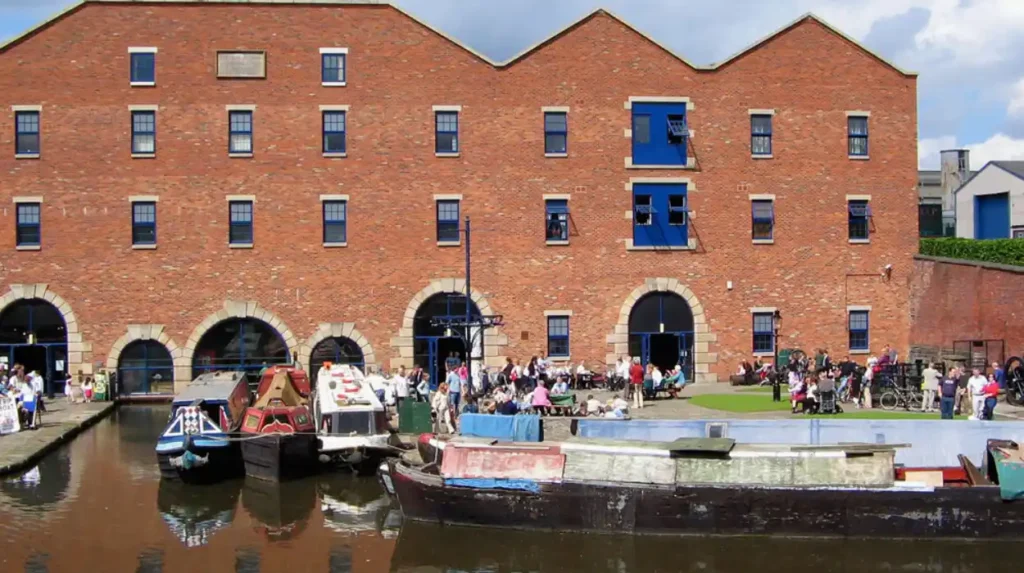
Industrial history researchers find value in preserved textile mill structures, canal junctions, and ironworks history displayed at the local museums. Day visitors residing in central Manchester benefit from short travel times via public transit to explore regional culture. Families utilize public amenities such as Stamford Park and interactive educational exhibits at Portland Basin Museum. Recreational canal users navigate the historic canal networks meeting at the basin. Travel planners seeking budget-friendly destinations access free municipal museums, affordable dining options, and public green spaces. The destination provides an authentic look at working-class northern English industrial development rather than a commercialized resort environment.
What Are the Major Challenges Facing Ashton-under-Lyne Today?
Ashton-under-Lyne faces modern challenges including town centre retail decline, commercial vacancy rates, economic regeneration delays, and urban traffic congestion. These issues reflect wider national economic shifts affecting post-industrial towns.
Shifted consumer shopping habits toward online retail and larger regional shopping centres like the Trafford Centre have impacted high-street occupancy rates. Vacant storefronts inside town centre arcades present economic challenges for local municipal planners. Historic buildings require significant restoration capital, as seen with structural repair requirements for Ashton Town Hall and cultural venues like the Tameside Hippodrome. Road congestion occurs along major arterial corridors including the A635 during peak commute hours. Economic regeneration plans led by Tameside Council aim to address structural vacancies through urban redevelopment projects, infrastructure upgrades, and housing construction initiatives designed to revitalize the urban core.
- Read More: For ongoing regional news, read about how Manchester NHS Trust Appoints Nazir Afzal OBE as Chair to lead regional healthcare administration.
Frequently Asked Questions
What is Ashton-under-Lyne famous for historically?
Ashton-under-Lyne is historically famous for its major role in the industrial revolution, particularly cotton spinning and coal mining. The town developed an extensive canal network at Portland Basin and hosted one of the largest open-air markets in North West England.
How long does it take to travel from Manchester to Ashton-under-Lyne?
Travel time from central Manchester to Ashton-under-Lyne is roughly fifteen minutes by Northern rail trains from Manchester Victoria station. The Metrolink tram trip from Piccadilly takes approximately thirty minutes.
Is Portland Basin Museum free to visit for tourists?
Yes, Portland Basin Museum offers free admission to the public year-round. Visitors can explore historic exhibits, restored canal warehouses, and a reconstructed 1920s street without paying entrance fees.
Does Ashton-under-Lyne have good park facilities for families?
Ashton-under-Lyne features several well-maintained green spaces, including Stamford Park and Daisy Nook Country Park. Stamford Park offers Victorian gardens, play areas, and a boating lake suitable for family outings.
What is the best way to get around Ashton-under-Lyne?
The town centre is easily navigable on foot due to its compact grid layout. For surrounding areas, local bus services and Metrolink tram connections provide direct transport across the borough.