Karl Marx visited Manchester multiple times between 1845 and 1870 to examine the rapid growth of industrial capitalism. Guided by Friedrich Engels, Marx inspected factories, slum districts, and labor conditions to gather empirical data for his economic critique.
- Why Did Karl Marx Visit Manchester in the Nineteenth Century?
- How Did Industrial Manchester Influence Karl Marx Economic Theories?
- What Role Did Chetham Library Play in Karl Marx Research?
- Where Did Karl Marx and Friedrich Engels Meet in Manchester?
- What Is the Historical Legacy of Karl Marx Connection to Manchester?
- Frequently Asked Questions
- What did Karl Marx actually do while staying in Manchester?
- Why was Manchester important to Marx and Engels theories?
- Can you visit the desk where Karl Marx worked in Manchester?
- Which places in Manchester are linked to Karl Marx and Friedrich Engels?
- Did Karl Marx write Das Kapital while living in Manchester?
Manchester operated as the hub of global cotton manufacturing during the nineteenth century. The city experienced explosive urban growth, creating extreme wealth alongside severe working-class poverty. Marx recognized that Manchester offered a direct blueprint of industrial capitalist development.
His research trips to the city provided the concrete evidence needed to move his theories from abstract philosophy to political economy. Marx and Engels analyzed the urban landscape to understand class division, factory labor, and capital accumulation. The observations made in Manchester directly influenced their joint intellectual outputs.
Why Did Karl Marx Visit Manchester in the Nineteenth Century?
Karl Marx visited Manchester primarily because Friedrich Engels lived there and managed his family cotton business, Ermen and Engels. Manchester offered Marx direct access to advanced industrial infrastructure, working-class slums, and specialized economic research literature held at Chetham Library.
Engels relocated to Manchester in December 1842 to work at the Victoria Mill in Weaste. During his residency, Engels conducted extensive investigations into local working conditions. In 1845, Engels published his findings in The Condition of the Working Class in England.
Marx arrived in Manchester for his first extended study trip in the summer of 1845. Engels introduced Marx to local political activists, labor leaders, and Chartists. The city provided Marx with real-world examples of factory mechanization, wage labor exploitation, and urban segregation.
These field observations allowed Marx to test his philosophical concepts against real economic realities. Marx returned to Manchester repeatedly over twenty-five years to consult economic texts and discuss political strategy with Engels. Manchester functioned as an empirical laboratory for Marxian economic theory.
How Did Industrial Manchester Influence Karl Marx Economic Theories?
Industrial Manchester influenced Karl Marx by providing visible proof of capital concentration, labor alienation, and structural class inequality. The city demonstrated how technological innovation in cotton mills accelerated the division of labor and transformed independent craftsmen into wage laborers.
During the nineteenth century, Manchester produced over forty percent of the global cotton cloth supply. The rapid expansion of steam-powered machinery generated vast wealth for mill owners while subjecting workers to long hours, dangerous machinery, and low wages. Marx observed these dynamics firsthand in districts like Ancoats and Little Ireland.
These industrial conditions helped Marx formulate his theory of surplus value. Marx argued that capitalist profits derived directly from unpaid labor extracted from the working class. The stark divide between wealthy merchants in the Royal Exchange and impoverished workers in polluted slums confirmed his concept of class struggle.
Manchester also illustrated the cyclical nature of economic booms and busts within industrial markets. Marx integrated data on Manchester production output, trade statistics, and factory inspector reports into his writings. This empirical foundation formed the core arguments developed in his major work, Capital.
What Role Did Chetham Library Play in Karl Marx Research?
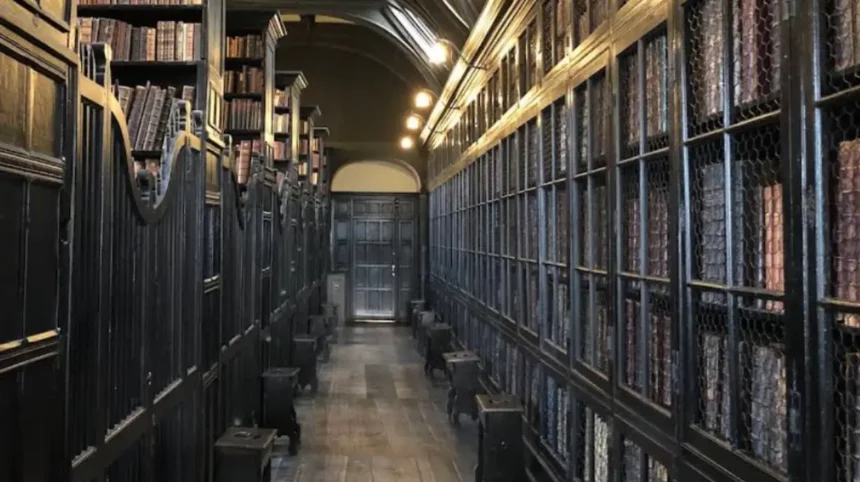
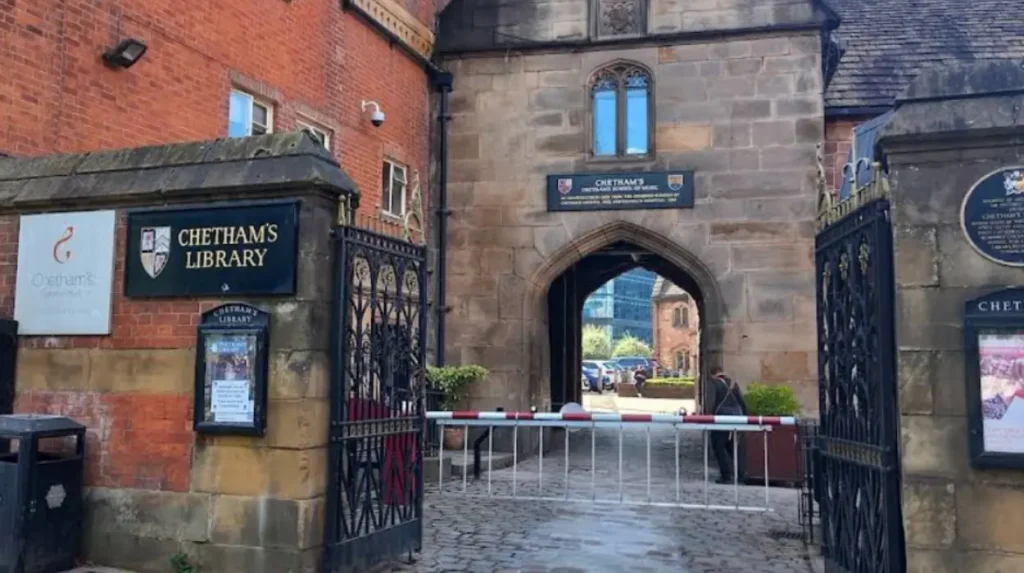
Chetham Library served as the primary intellectual workspace where Karl Marx and Friedrich Engels read economic literature, analyzed statistical reports, and drafted political manuscripts during their joint study sessions in Manchester.
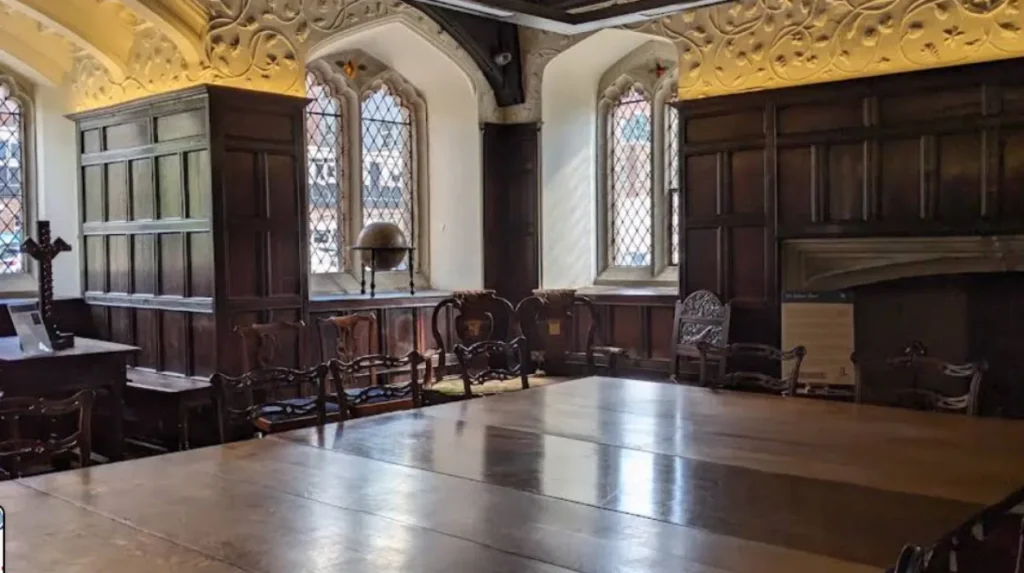
Established in 1653, Chetham Library is the oldest free public library in the English-speaking world. In July and August 1845, Marx and Engels spent weeks studying in the library reading room. They sat at a specific four-sided oak desk located in a windowed alcove overlooking the courtyard.
The library possessed an extensive collection of seventeenth and eighteenth-century economic books, trade tracts, and official government blue books. Marx studied works by economists such as Adam Smith, David Ricardo, Thomas Sadler, and William Petty to understand the historical development of political economy.
The concentrated study sessions at Chetham Library enabled Marx and Engels to synthesize historical economics with contemporary industrial data. The notes and outlines produced at this desk provided the conceptual groundwork for their joint publication, The Communist Manifesto, published in 1848.
Where Did Karl Marx and Friedrich Engels Meet in Manchester?
Karl Marx and Friedrich Engels frequented specific locations across Manchester, including Chetham Library, the Ermen and Engels office in Southgate, local pubs, meeting halls, and industrial working-class residential areas.
Their daily work centered on Chetham Library, where they conducted literature research. Outside the library, Engels maintained a business presence at the Ermen and Engels office near Southgate and traded at the Royal Exchange on St Ann Square. Marx visited these commercial hubs to observe business transactions directly.
To inspect worker living conditions, Marx and Engels walked through the slum district known as Little Ireland, located near modern-day Oxford Road station. They also visited Angel Meadow, an impoverished area northeast of the city center characterized by severe overcrowding and poor sanitation.
For political organizing, they attended meetings at the Hall of Science on Campfield, a prominent gathering space for Owenite Socialists and Chartists. They also socialized in local taverns across Salford and Manchester, discussing revolutionary strategy away from factory management oversight.
What Is the Historical Legacy of Karl Marx Connection to Manchester?
The historical legacy of Karl Marx connection to Manchester lies in the transformation of Manchester into a foundational reference point for socialist theory, anti-capitalist literature, and labor movement history worldwide.
Manchester provided the empirical material that validated historical materialism. The collaborative work conducted by Marx and Engels in the city established a link between theoretical economics and working-class political action. Their analysis of Manchester industrialization influenced global political movements throughout the twentieth century.
Today, Manchester preserves several physical sites associated with Marx and Engels. Chetham Library maintains the original oak desk and alcove where Marx studied, drawing researchers, historians, and visitors from around the world.
The city contains monuments honoring this legacy, including a statue of Friedrich Engels brought from Ukraine and installed at Tony Wilson Place in 2017. Manchester status as the world first industrial city remains tied to its role as the intellectual birthplace of modern Marxism.
Frequently Asked Questions
What did Karl Marx actually do while staying in Manchester?
Karl Marx visited Manchester to study industrial manufacturing and research economic texts with Friedrich Engels. He spent time reading at Chetham Library, visiting cotton mills, and inspecting working-class slums. These field observations provided real-world data for his economic critique of capitalism.
Why was Manchester important to Marx and Engels theories?
Manchester was the world first fully industrialized city, controlling a vast portion of global cotton production. It presented the most extreme contrast between wealthy factory owners and impoverished workers. Marx and Engels used Manchester as a real-life model to analyze class struggle and capital accumulation.
Can you visit the desk where Karl Marx worked in Manchester?
Yes, the desk where Karl Marx and Friedrich Engels studied in 1845 is preserved at Chetham Library in Manchester. Visitors can view the original oak desk and alcove in the library reading room. The library retains the historical books and texts that both thinkers used during their research.
Which places in Manchester are linked to Karl Marx and Friedrich Engels?
Key sites include Chetham Library, the site of the former Ermen and Engels office on Southgate, and the Royal Exchange. Historical slum areas like Little Ireland near Oxford Road and Angel Meadow are also central to their legacy. Additionally, a statue of Friedrich Engels stands at Tony Wilson Place.
Did Karl Marx write Das Kapital while living in Manchester?
Karl Marx did not live in Manchester permanently, but he used research gathered there to write Capital. He lived primarily in London while visiting Engels in Manchester to collect data and review factory reports. The statistics and factory observations obtained in Manchester formed a core part of the book.