The Manchester City Plan serves as an overarching strategic framework designed to guide urban development, economic growth, housing production, and environmental sustainability across the municipality. It coordinates public sector investment, private development, land use policies, and infrastructure expansion across specific timelines to ensure balanced regional growth.
- How Did the Manchester City Plan Evolve Historically?
- What Are the Key Components of the Development Framework?
- How Does the Plan Address Housing and Residential Growth?
- What Transportation and Infrastructure Improvements Are Included?
- How Are Sustainability and Net Zero Goals Integrated?
- What Economic and Commercial Impacts Are Expected?
- How Does the Plan Impact Community and Civic Spaces?
- What Are the Main Challenges and Implementation Risks?
- How Will the Manchester City Plan Shape the Next Decade?
- Frequently Asked Questions
The framework establishes baseline targets for commercial expansion, residential density, public transit integration, and green space allocation. Local authorities utilize this plan to evaluate development applications, allocate municipal capital, and coordinate with national agencies. The spatial strategy targets high-density regeneration in former industrial zones while preserving historic architecture in the central core. Economic goals align with national industrial policies to attract foreign direct investment in technology, finance, and advanced manufacturing sectors.
Environmental metrics form a core operational component, mandating reduced carbon emissions from municipal operations and new construction projects. Infrastructure coordination ensures water, power, broadband, and transport capacity expand alongside residential growth. By setting clear planning parameters, the framework provides long-term certainty for developers, investors, and local communities across the Greater Manchester region.
How Did the Manchester City Plan Evolve Historically?
How did the historical evolution of Manchester urban planning shape the modern framework seen today? Urban planning in Manchester evolved from nineteenth-century industrial expansion responses into modern, comprehensive spatial planning frameworks. Early industrial growth produced dense housing adjacent to manufacturing sites without centralized oversight, leading to structural public health crises and infrastructure deficits that required legislative intervention during the late Victorian era.
Post-war reconstruction in the mid-twentieth century introduced municipal clearance schemes and outer-estate developments designed to relocate inner-city populations. The 1945 Plan for Manchester established early concepts of zoning and highway development, though financial constraints limited full implementation. The loss of industrial manufacturing during the late twentieth century prompted local authorities to pivot toward private sector partnerships and asset-led regeneration strategies.
Reconstruction following the 1996 city centre bombing accelerated public-private coalition planning models, transforming commercial districts and establishing civic spaces. Strategic frameworks shifted focus toward high-density urban living, cultural assets, and service sector infrastructure. Recent iterations incorporate digital connectivity metrics, climate adaptation strategies, and regional integration via combined authority frameworks.
What Are the Key Components of the Development Framework?
What essential components and core focus areas comprise the structural framework of the plan? The development framework comprises residential expansion targets, commercial district enhancement, transport network integration, public domain design standards, and environmental management systems. Each component operates with specific measurable targets designed to guide municipal land allocation and capital deployment over multi-year planning horizons.
Residential components mandate the delivery of diverse housing types across brownfield development sites to accommodate population growth. Commercial planning focuses on establishing high-yield office space, research hubs, and retail zones connected directly to multi-modal transit networks. Infrastructure policies prioritize non-car transport modes, setting explicit targets for walking, cycling, and public transit usage across the central area.
Public space frameworks dictate design standards for parks, civic plazas, and pedestrian corridors to improve urban liveability and air quality. Environmental management regulations set mandatory performance levels for building energy efficiency, waste diversion, and urban canopy cover. Combined, these structural elements ensure capital investment aligns directly with long-term economic, social, and spatial policy goals.
How Does the Plan Address Housing and Residential Growth?
How does the strategic framework manage housing targets, residential density, and brownfield development? Strategic housing plans establish binding targets for home construction on former industrial brownfield sites to prevent urban sprawl and maximize existing transit utility. Planning guidelines enforce minimum density metrics near public transit hubs while setting affordable housing requirements for large-scale private residential projects across all wards.
Municipal authorities maintain an active register of suitable sites to ensure a continuous land supply for commercial and social housing developers. Design codes specify structural performance, accessibility standards, and spatial dimensions to maintain residential building quality across the city centre and surrounding neighborhoods. Development contributions collected under local frameworks fund local amenities, educational facilities, and healthcare expansions alongside housing growth.
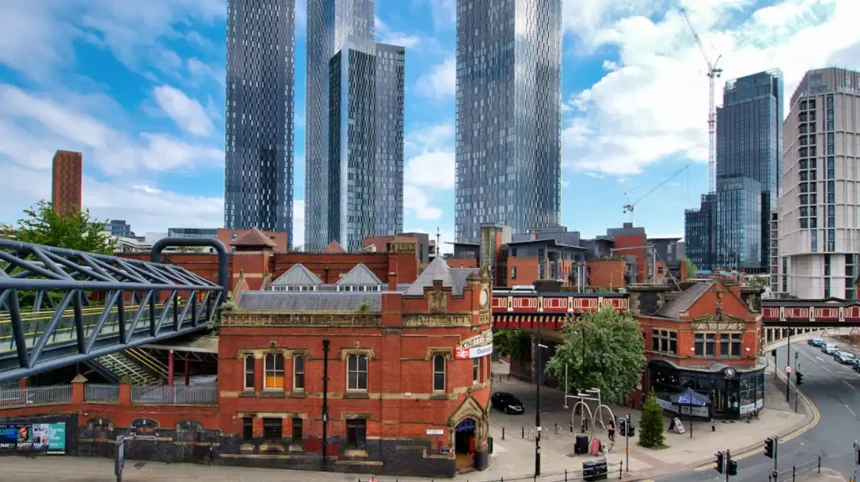
Regeneration policies target underutilized commercial property and former manufacturing land for conversion into mixed-use residential quarters. High-density residential towers are concentrated in designated growth zones to preserve lower-density historic neighborhoods. Through targeted brownfield development, local authorities balance population density needs with civic infrastructure constraints and urban preservation rules.
What Transportation and Infrastructure Improvements Are Included?
What specific transportation networks and infrastructure projects form the core of the urban plan? Transportation policies prioritize the expansion of rapid transit networks, pedestrian pathways, cycle corridors, and digital infrastructure connections. The strategy focuses on reducing vehicular congestion within the central ring road while improving orbital connectivity across outlying regional boroughs through integrated ticketing and schedule alignment.
Tram network extensions connect commercial districts directly to suburban population nodes, decreasing personal car reliance. Dedicated active travel routes separate bicycle traffic from high-volume roadways to improve safety metrics and encourage non-motorized commuting. Upgrades to electricity supply networks accommodate higher demand driven by building electrification and electric vehicle charging infrastructure installations across commercial car parks.
Digital infrastructure policies require high-speed gigabit fiber installations across all new commercial and multi-unit residential developments. Stormwater management systems incorporate green infrastructure elements to mitigate surface flooding risks associated with intense rainfall events. By modernizing physical and digital utilities simultaneously, the municipality supports higher economic productivity without compromising service reliability.
How Are Sustainability and Net Zero Goals Integrated?
Sustainability policies mandate strict energy performance limits for all new construction alongside deep retrofitting guidelines for existing civic and commercial buildings. The framework establishes specific target dates for achieving zero-carbon municipal operations through renewable power purchasing, building insulation upgrades, and district heat network connections.
Planning consents require developers to integrate passive design principles, renewable energy generation, and low-impact construction materials into structural proposals. Urban greening policies enforce biodiversity net gain rules, requiring developers to increase plant, tree, and wildlife habitats relative to pre-development levels. Waste management frameworks prioritize circular economy principles by requiring material recycling plans for all demolition and site preparation activities.
Microclimate management guidelines address urban heat island effects through roof greening requirements and permeable surface mandates. Low-emission zones restrict heavily polluting vehicles from core commercial areas to improve air quality metrics across dense pedestrian corridors. These integrated measures enforce environmental compliance while transitioning municipal infrastructure toward sustainable operating standards.
What Economic and Commercial Impacts Are Expected?
The spatial strategy drives economic growth by concentrating high-value knowledge sectors, commercial offices, and technology research facilities near major transport nodes. Commercial density policies encourage enterprise clustering, which increases productivity, fosters business supply chain integration, and creates specialized employment opportunities across key service sectors.
Large-scale capital projects stimulate construction sector employment and generate supply chain demand for regional materials and technical services. Public investment in civic infrastructure attracts international private capital, boosting real estate asset valuations and local business investment certainty. Retailing policies adapt commercial cores to mixed-use leisure destinations, mitigating structural declines in traditional brick-and-mortar retail sectors.
Increased commercial capacity expands the municipal tax base, generating revenue to fund ongoing public services and social infrastructure projects. Foreign direct investment streams target key growth corridors designated for technology, biomedical research, and creative industries. The combined economic impacts elevate regional gross value added while improving overall employment resilience against macro-economic shifts.
How Does the Plan Impact Community and Civic Spaces?
Public domain strategies focus on creating accessible, inclusive civic spaces that support recreational activity, community events, and public assembly. The plan establishes strict design accessibility standards ensuring public spaces and civic buildings accommodate individuals with mobility, visual, or sensory impairments.
Community infrastructure planning requires developers to contribute funds toward neighborhood health facilities, public libraries, primary schools, and community centers. Open space preservation mandates protect existing parks while creating new pocket parks in high-density development districts. Active ground-floor uses, such as cafes and community space, are enforced along major pedestrian paths to promote natural surveillance and neighborhood safety.
Pedestrianization projects remove motor traffic from key shopping streets, creating safer, cleaner environments for social gathering and recreation. Cultural heritage policies preserve historic structures, converting surplus industrial buildings into community arts hubs and flexible civic venues. Through these spatial measures, the municipality maintains social cohesion alongside rapid economic and physical development.
What Are the Main Challenges and Implementation Risks?
What financial, political, and operational risks threaten the execution of the spatial strategy? Execution risks stem primarily from macro-economic volatility, inflation in construction materials, interest rate fluctuations, and private capital availability. Public sector funding constraints can delay critical infrastructure works required to unlock private sector residential and commercial developments on brownfield sites.
Complex land ownership patterns require prolonged land assembly processes, occasionally forcing local authorities to exercise compulsory purchase powers. Opposition from existing local communities regarding building heights, development density, and traffic congestion can lead to delayed planning approvals. Coordinating policy execution across multiple municipal jurisdictions within a broader combined authority presents ongoing governance challenges.
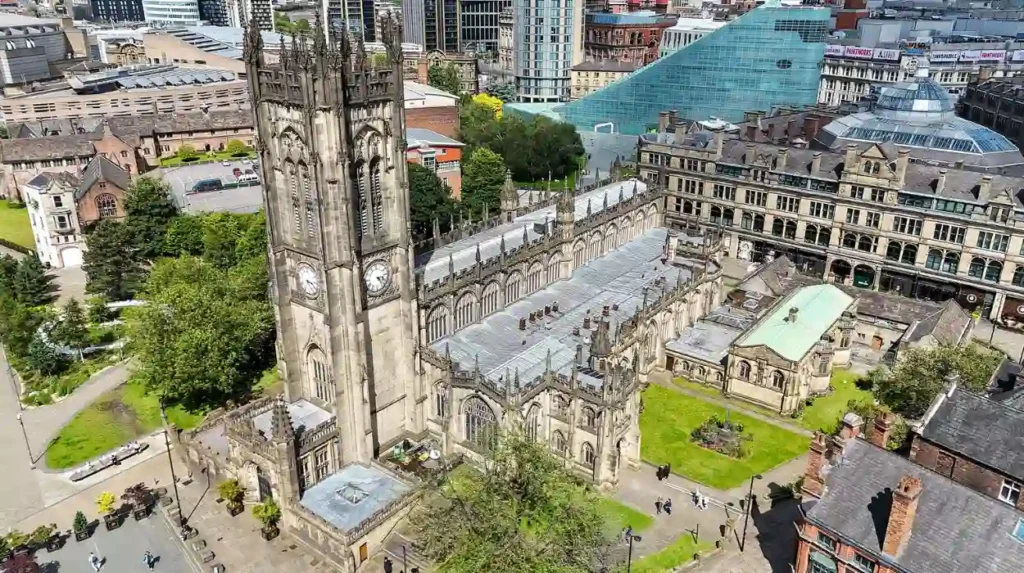
Climate change projections require continuous policy adjustments to handle severe weather events, heatwaves, and flooding risks exceeding historical design baselines. Supply chain disruptions and skilled labor shortages within the engineering and construction sectors threaten project delivery schedules. Managing these financial, administrative, and physical hazards requires continuous risk monitoring and dynamic capital reallocation.
How Will the Manchester City Plan Shape the Next Decade?
Over the next decade, the planning framework will transform the city into an integrated, low-carbon regional economy with high digital and physical transit connectivity. Development density will shift toward designated suburban hubs, relieving pressure on the central core while expanding access to high-quality employment centers.
Advancements in smart city infrastructure will enable real-time tracking of traffic flows, air quality, energy consumption, and municipal waste management. Fully integrated multi-modal transit networks will significantly reduce private vehicle journeys across Greater Manchester, driving down regional carbon emissions. Advanced research clusters surrounding life sciences and digital technology will consolidate the city’s position as an international commercial node.
Housing expansion will deliver diverse tenure options across formerly neglected urban corridors, improving residential stability and neighborhood density. Green infrastructure investments will create continuous ecological corridors linking outer parklands with inner-city public spaces. Through sustained execution, the framework establishes a durable platform for economic competitiveness, environmental sustainability, and urban liveability.
Frequently Asked Questions
What is the main goal of the Manchester City Plan?
The main goal of the framework is to guide spatial growth, economic development, housing supply, and transport infrastructure across the region. It establishes binding policy parameters for brownfield development, carbon reduction targets, and public transit expansion to support long-term population growth efficiently.
How does the plan support net zero carbon emissions?
The plan enforces strict energy efficiency building codes, mandatory low-carbon heating systems, biodiversity net gains, and low-emission transport zones. It prioritizes active travel corridors and rapid public transit networks to reduce reliance on fossil-fuel vehicle trips throughout the urban core.
How does the planning framework impact housing development?
The framework establishes specific residential construction targets, focusing primarily on brownfield regeneration near transport nodes. It sets affordable housing mandates for private developments, dictates structural building standards, and requires contributions toward local community infrastructure from developers.
How does the city plan affect local public transport?
Public transport is expanded through integrated tram extensions, cycle networks, active travel pathways, and multi-modal ticketing systems. Transport policy prioritizes non-car movement within the ring road, reducing congestion and improving connectivity between suburban areas and commercial hubs.
What role do brownfield sites play in future development?
Brownfield sites serve as the primary land supply for high-density residential, commercial, and mixed-use regeneration projects. Prioritizing former industrial sites prevents urban sprawl, protects greenfield areas, and maximizes the use of existing utility and transport infrastructure.