Key Points
- City’s 6-1 demolition at Old Trafford in October 2011 is still City’s most convincing derby win, and Manchester United’s heaviest home defeat since 1955.
- Vincent Kompany’s goal during the first half in April 2012 played an instrumental part in City’s first Premier League victory.
- The history of this rivalry goes way back to 1881 when St. Mark’s (now City) played against Newton Heath LYR (United).
- Some other classic derbies include City’s 5-1 win at Maine Road in 1989 and the 2023 FA Cup Final win.
- Recent matches have seen some very high-scoring games such as the 6-3 game in 2022 and 3-0 City win in 2025.
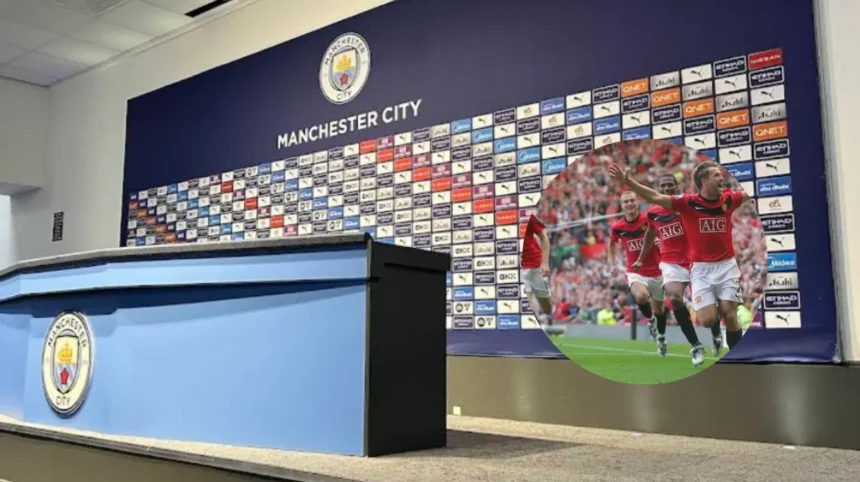
Manchester Sports (Manchester Mirror) September 09, 2026 – The Manchester derby stands as one of English football’s fiercest rivalries, with decades of drama, controversy and unforgettable moments etched into the memories of supporters on both sides. For Manchester City fans, certain fixtures stand out as defining chapters in the club’s modern history, marking shifts in power, tactical mastery and emotional triumphs. Five particular derby moments have become immortalised in City folklore, ranging from the emphatic 6-1 demolition at Old Trafford to Vincent Kompany’s crucial header that set the stage for the club’s first Premier League title.
The 6-1 Masterclass at Old Trafford
The 6-1 victory at Old Trafford on 23 October 2011 remains the crown jewel of Manchester derby history for City supporters. Mario Balotelli opened the scoring in the 22nd minute, before Jonny Evans was sent off in the 47th minute after fouling the Italian striker. City capitalised on their numerical advantage, with goals from Balotelli, David Silva, Edin Dzeko and others sealing a historic triumph.
According to Manchester Evening News, the result represented more than just three points it symbolised a seismic shift in Manchester’s football hierarchy. For decades, United had dominated the city’s football narrative, but this result announced City’s emergence as genuine title contenders under Roberto Mancini. Fans still regularly sing about the match, with verses commemorating how each goal from 3-1 onwards triggered a mass exodus of United supporters from the Stretford End.
Kompany’s Title-Deciding Header
Vincent Kompany’s towering header on 30 April 2012 occupies a unique place in City’s modern history. City entered the match three points behind United with only three fixtures remaining in the season. In first-half stoppage time, Kompany rose highest to meet David Silva’s corner, powering the ball past David de Gea to secure a 1-0 victory.
The goal sent City back to the top of the table on goal difference, a position they would not relinquish. Two weeks later, Sergio Aguero’s last-gasp strike against Queens Park Rangers would clinch the title, but Kompany’s header laid the essential foundation. In post-match interviews, Kompany described the moment as embodying the emotions of all City supporters inside and outside the stadium.
The 1989 Maine Road Thrashing
Long before the Premier League era, City delivered one of their most emphatic derby statements with a 5-1 victory at Maine Road in September 1989. This result underscored City’s competitive credentials during a period when United were beginning to establish themselves under Alex Ferguson.
The match featured dominant attacking displays from the home side, with City overwhelming their neighbours in front of a passionate Maine Road crowd. For older City fans, this victory remains a cherished memory from an era before the club’s modern transformation.
FA Cup Final Triumphs
The 2023 FA Cup Final at Wembley Stadium added another chapter to derby history, with City defeating United 2-1 to complete a historic treble. İlkay Gündoğan scored the fastest goal in FA Cup Final history, setting the tone for City’s victory.
This win proved particularly significant as it came during City’s treble-winning season, cementing their status as England’s dominant force. United would respond by winning the 2024 FA Cup Final 2-1, creating a rare consecutive derby final matchup, but City’s 2023 triumph remains the more celebrated occasion for their supporters.
Recent Derby Dominance
The 2020s have witnessed several high-profile derby encounters, with City establishing clear superiority in recent years. A 6-3 thriller in 2022 showcased attacking intensity from both sides, while a 3-0 victory in 2025 highlighted City’s tactical control and firepower, with goals from Erling Haaland and Phil Foden among the highlights.
These recent results have reinforced City’s position as the city’s leading club, with consistent derby victories contributing to their broader trophy haul under Pep Guardiola. For contemporary City fans, these matches represent the continuation of a power shift that began with the 6-1 victory in 2011.
Background of the Manchester Derby Rivalry
The Manchester derby traces its origins to 1881, when St. Mark’s (the precursor to Manchester City) hosted Newton Heath LYR (which would become Manchester United). Over more than 140 years, the fixture has evolved from local bragging rights into a contest with national and international significance, particularly as both clubs achieved success in the Premier League era.
Historical records show City producing emphatic triumphs over United in 1926 and again in 2011, with the latter representing a watershed moment in the rivalry’s modern history. The 1970s saw Denis Law’s volley seal United’s relegation in 1974, while the 1990s featured United’s 5-0 victory in 1994 during Ferguson’s dominant period. The balance of power has shifted considerably since 2011, with City’s investment and tactical evolution under managers including Mancini, Pellegrini and Guardiola producing sustained success against their neighbours.
Predictions: How This Development Affects City Supporters
For Manchester City fans, the accumulation of memorable derby victories has transformed the psychological dynamic of the rivalry. Where previous generations endured decades of United dominance, contemporary supporters now approach derby day with justified confidence. This shift affects fan culture in several measurable ways: attendance demand for derby fixtures has increased, social media engagement around derby content has grown substantially, and the emotional stakes of each encounter have evolved from hopeful anticipation to expectation of victory.
Looking ahead, continued derby success would further cement City’s identity as Manchester’s pre-eminent club, potentially influencing recruitment, commercial partnerships and global brand recognition. For supporters, this translates into enhanced matchday experiences, stronger community pride and the satisfaction of witnessing their club’s historical narrative rewritten in real time. However, football’s inherent unpredictability ensures that each derby remains a distinct contest, with past results offering no guarantee of future outcomes.