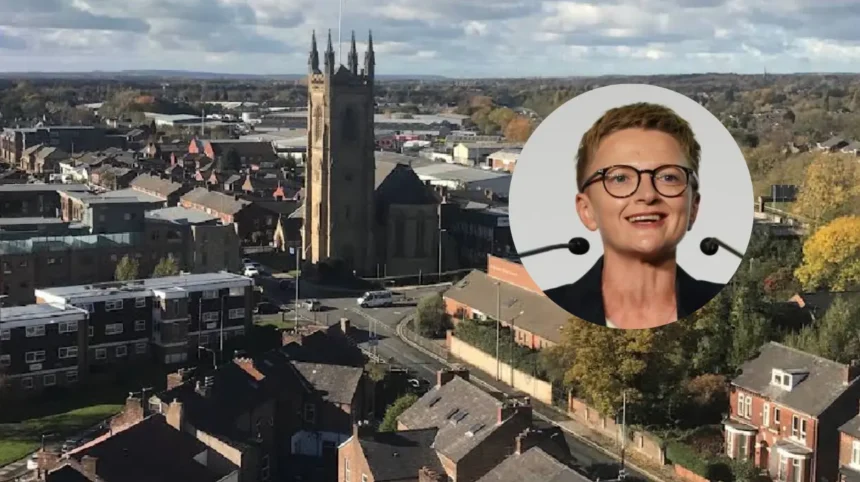
Key Points
- Labour’s Bev Craig won the 2026 Greater Manchester mayoral election after the count of first and second preference votes.
- Ms Craig secured 309,525 votes across Greater Manchester, ahead of Reform UK’s Sian Astley on 157,178.
- In Bolton, Ms Craig received 19,718 first preference votes, while Ms Astley won 12,524.
- Bolton recorded a turnout of 23 per cent, with 49,213 verified ballot papers from an electorate of 217,169.
- Across Greater Manchester, turnout stood at 25.14 per cent.
- Labour led the field in Bolton and across the city region, while Reform UK also put in a strong local showing.
- The Conservatives finished fourth in Bolton, narrowly behind the Green Party.
- The wider result means Labour retained control of the Greater Manchester mayoralty.
Bolton Election (Manchester Mirror) August 01, 2026 – Labour’s Bev Craig has been elected Mayor of Greater Manchester after a decisive city-region victory that also saw her top the poll in Bolton, according to the full local result reported by The Bolton News.
As reported by the staff of The Bolton News, Ms Craig finished with 309,525 votes across Greater Manchester, comfortably ahead of Reform UK’s Sian Astley on 157,178, giving Labour and Co-operative Party candidate Ms Craig a winning margin of more than 152,000 votes.
How did Labour perform in Bolton?
The Bolton result showed a clear lead for Ms Craig, who took 19,718 first preference votes, compared with 12,524 for Ms Astley. That left Labour ahead by 7,194 votes in the borough at the first stage of the count.
The count also showed that Labour’s lead in Bolton was strong, although the contest was closer locally than in some other districts across Greater Manchester. Reform UK’s share was significant in the borough, with Ms Astley collecting around 63 per cent of Labour’s first preference total, according to the result reported by The Bolton News.
What happened in the second preference count?
In Bolton, Ms Craig gained an extra 4,170 votes from second preferences, while Ms Astley added 4,998. Across Greater Manchester, Ms Craig received 58,076 second preference votes and Ms Astley gained 45,250.
The second preference count helped widen Labour’s final lead across the city region. Ms Craig’s first-round total of 251,449 rose to 309,525 after second preferences were added, while Ms Astley moved from 111,928 to 157,178, but remained well behind the winning total.
How did the other parties fare?
What did the rest of the field look like in Bolton and across Greater Manchester? In Bolton, the Green Party finished third with 5,095 votes, just ahead of the Conservatives on 5,041. Restore Britain followed on 4,820, the Liberal Democrats on 1,016, and independent candidate Marcus Farmer on 484.
Across Greater Manchester, the Green Party’s Geraldine Coggins came third with 64,968 votes, Restore Britain’s Marlon West was fourth with 46,289, and Conservative candidate Phil Eckersley finished fifth on 41,021. The Liberal Democrats took 14,702 votes across the city region, while Marcus Farmer received 2,969.
What was the turnout in Bolton?
The borough recorded 49,213 verified ballot papers from an electorate of 217,169, which produced a turnout of 23 per cent. That was slightly below the Greater Manchester-wide turnout of 25.14 per cent.
The result suggests a relatively low level of participation compared with the size of the electorate, even though the mayoral race drew enough support to produce a clear city-region winner. Bolton’s figures closely mirrored the wider Greater Manchester picture, where Labour maintained a decisive advantage from the first round.
Why does the result matter?
The outcome means Labour retains control of the Greater Manchester mayoralty, with Ms Craig now leading the city-region after a strong performance in Bolton and across the wider area. The result also confirms a significant challenge from Reform UK, which finished second overall and secured a substantial share of the vote.
As reported by The Bolton News, Bolton contributed a meaningful share of Labour’s support, helping Ms Craig secure her overall victory. The borough’s result, while closer than some others, still aligned with the broader city-region trend that returned Labour to office with a comfortable margin.
Background of the development
Greater Manchester mayoral elections carry importance because the mayor holds responsibilities over transport, housing, economic development and regional planning. The contest on July 30 was therefore not only a party political race, but also a vote on the direction of the region.
The Bolton result fits within a wider pattern in which Labour remained dominant across Greater Manchester, but Reform UK emerged as a clear challenger in several areas. The detailed vote totals reported by The Bolton News show how the city-region race was shaped by both first preference strength and the transfer of second preference votes.
Prediction
In the short term, the outcome is likely to give Labour a strong mandate to continue its approach on transport, investment and local coordination across Greater Manchester. For Bolton residents, that may mean continued alignment with city-region priorities, while Reform UK’s performance suggests future contests may be more competitive in some wards and boroughs.
For the wider audience, the result may encourage parties to focus more heavily on local delivery and voter turnout ahead of future mayoral elections. The relatively low turnout in Bolton also suggests that mobilisation, rather than support alone, could shape the next major regional race.