Key Points
- Andy Burnham delivered a 10-year mission from the People’s History Museum in Manchester, focusing on growth, regeneration and devolution.
- He argued that Manchester has been the best performing city for investment and growth over the past 10 years.
- Burnham said he wants to extend devolution across the UK and give more power back to elected regional representatives.
- He described Westminster as broken and said the country is stuck in a rut.
- He called for politics to be changed now, saying the broadest coalition of people should help build Britain’s future.
- Burnham said he wants to act as a “circuit breaker” in traditional politics and make government work for the people.
- He contrasted the “Greater Manchester way” of public-private collaboration with Westminster and Whitehall, which he said are built for conflict.
- He pointed to Stockport as an example, saying its Mayoral Development Corporation has attracted over £1 billion in investment.
- He said devolution would allow authentic local representatives to deliver what is best for their areas.
- Burnham said his vision is for good growth, not the old trickle-down model, and named “No 10 North” as the nerve centre of a rewired Britain.
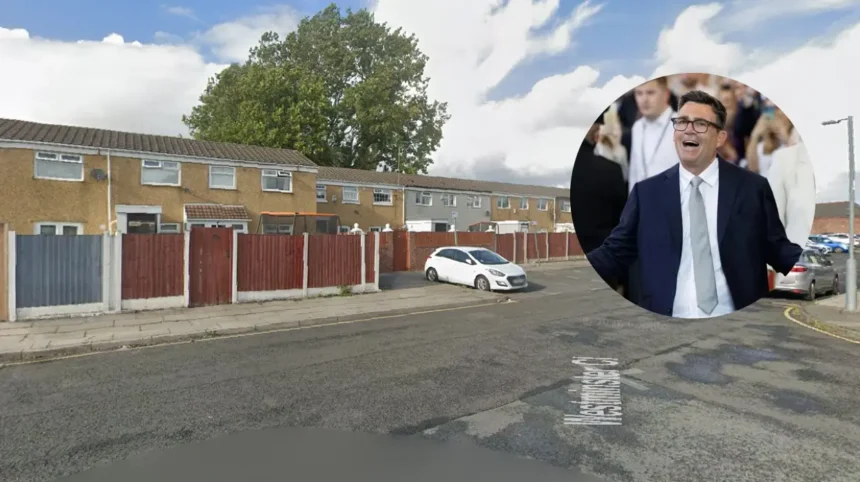
Manchester (Manchester Mirror) June 29, 2026 – former Greater Manchester Mayor Andy Burnham used his speech at the People’s History Museum to set out a 10-year mission built around growth, regeneration and a wider transfer of power away from Westminster.
He said Manchester had been the best performing city for investment and growth over the past decade, and used that example to argue that devolution should be extended across the UK. His message was that regional leaders should be trusted to shape opportunity in their own areas, rather than having decisions imposed from central government. He framed the speech as a call for a new political direction, saying the country needs to change course now.
Why is he targeting Westminster?
Burnham argued that Westminster is broken and that the UK is stuck in a rut, with the current system failing many regions outside London.
He said politicians must take responsibility for fixing that problem and building a broader coalition around change.
According to the text of his remarks, he wants to replace conflict between Whitehall and the regions with a more collaborative model.
That approach, he said, has already worked in Greater Manchester because public and private sectors have pulled in the same direction.
What is the ‘Manchester way’?
Burnham used “the Greater Manchester way” to describe a model based on cooperation between business, local government and communities.
He said that model has produced results, and that places such as Stockport show how devolved power can support regeneration.
He highlighted Stockport’s Mayoral Development Corporation, which he said has attracted more than £1 billion of investment for town-centre regeneration, housing, jobs and green spaces.
In his view, this is proof that power closer to the ground can deliver more practical outcomes.
What does he mean by good growth?
Burnham said he wants a rebalance of power that supports growth from the bottom up rather than relying on the trickle-down model.
He linked that to greater financial control, better use of new technology, stronger infrastructure and more secure access to good homes and jobs.
He also said every part of the UK should be able to create a growth model that fits its own strengths and assets.
For towns like Stockport, he said this should lead to higher ambition and more local opportunity.
What is No 10 North?
Burnham described “No 10 North” as the nerve centre of a rewired Britain.
The phrase suggests a northern centre of government power, intended to symbolise a shift away from a London-dominated political system.
He presented it as part of a wider plan to change how the country is run, not just how individual projects are delivered.
His closing line, “Imagine, good growth in every postcode and hope in every heart,” was used to reinforce the national scope of the message.
Background of the development
Burnham has built much of his political reputation around devolution, particularly through Greater Manchester’s model of combined authority and mayoral leadership.
The new mission appears to expand that argument from a regional success story into a national governing philosophy.
It also reflects a wider debate about how to spread investment, jobs and regeneration more evenly across the UK.
In that context, the Manchester speech is being presented as both a political pitch and a statement of intent about how Burnham would govern differently.
Prediction for affected audiences
For audiences in Greater Manchester and other northern regions, Burnham’s message could raise expectations of greater local control over investment, housing and economic strategy.
For places such as Stockport, it may strengthen the argument that devolved powers can unlock regeneration and attract further funding.
For voters, the practical question will be whether this model can be scaled nationally without losing its local focus.
For Westminster, the speech signals a stronger challenge to centralised government and could intensify pressure to move more power to the regions.