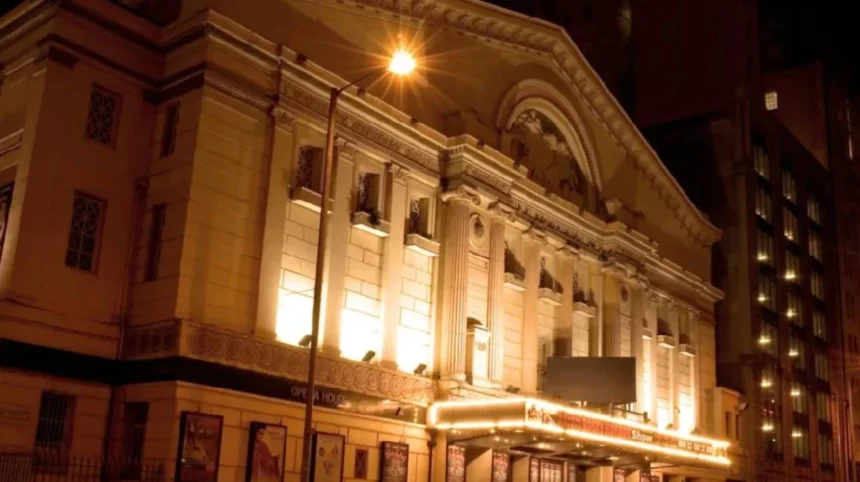
The Opera House Manchester is a prominent commercial touring theatre located on Quay Street in Manchester, England. It serves as a premier receiving house for large scale theatrical productions, including West End musicals, classical ballets, musical concerts, and seasonal pantomimes. The structural entity is officially designated as a Grade II listed building by Historic England, highlighting its national architectural and cultural significance. The venue operates under the management of the parent company, Ambassador Theatre Group, which also administers its sister site, the Palace Theatre on Oxford Street.
- What Is the Layout of the Opera House Manchester Seating Plan?
- What Architectural Features Define the Building?
- How Do Spectators Access the Venue and Amenities?
- What Accessibility Services Are Provided at the Theatre?
- FAQs About Opera House Manchester
- What are the best options for parking near the Quay Street venue?
- Can individuals with limited mobility access the upper Circle and Gallery tiers?
- What is the precise seating capacity of the Manchester Opera House auditorium?
- Is there a traditional restaurant operating inside the theatre building?
- How early does the box office open before a scheduled performance?
The structural project originated in 1912 under the original name of the New Theatre. The design was executed by the architectural partnership of Albert Richardson, Charles Lovett Gill, and John Farquarson. The theatre struggled initially to maintain financial stability due to intense regional competition. In 1915, the operational assets were transferred to United Theatres Limited, which prompted a temporary name change to the New Queen’s Theatre. The modern designation was established to honor Sir Thomas Beecham, an influential conductor who directed several historic operatic performances within the venue.
The property underwent several physical and functional reclassifications throughout the twentieth century. The infrastructure successfully survived the widespread urban destruction of the Manchester Blitz during the Second World War in 1940. Economic pressures during the postwar era forced the venue to cease theatrical operations, leading to its conversion into a functional cinema and later a commercial bingo hall. The building returned to its original purpose as a live performing arts theatre in 1984. A comprehensive structural refurbishment was completed in 2003, followed by an interior redecoration project in March 2011 to modernise amenities while preserving the heritage aesthetics.
What Is the Layout of the Opera House Manchester Seating Plan?
The internal auditorium of the venue features a total physical capacity of 1920 fixed seats. The total accommodation space is strictly divided across three distinct vertical levels, consisting of the Stalls, the Circle, and the Gallery. The architectural blueprint optimizes viewing lines through two curved cantilevered balconies that extend significantly over the lower levels. The technical spatial allocation provides 830 individual seats within the Stalls, 552 seats within the Circle level, and 533 seats within the upper Gallery tier.
The Stalls constitute the ground level of the auditorium and contain rows designated alphabetically from Row A to Row Z. The physical section offers step free access directly from the main Quay Street entrance foyer. The floor is constructed with a gradual upward incline, known as a rake, which improves visibility over preceding audience members. The front rows, specifically from Row A to Row F, position patrons in close proximity to the stage, though extreme side seats can feature slight view obstructions depending on specific stage scenery designs. The rear rows, from Row V to Row Z, are positioned beneath the physical overhang of the Circle balcony level.
The Circle represents the mid-tier balcony level and contains seating configurations from Row A to Row L. This level is accessible exclusively via internal staircases as there is no public elevator installation in the historic building structure. The front rows of the Circle, particularly central seats in Row B through Row D, are highly regarded for providing clear panoramic views of expansive musical choreographies. The structural safety handrail positioned directly in front of Row A can introduce visual obstructions for individuals shorter than 175 centimeters. The rear section of the Circle is subject to the secondary overhang generated by the upper Gallery structure.
The Gallery forms the highest elevated tier in the theatre auditorium, containing rows structured from Row A to Row G. The section requires patrons to ascend a minimum of 78 steep and uneven historical steps. The seating arrangement features a steep vertical pitch to ensure clear sightlines over the rows ahead, though it creates a distant viewing experience from the performance platform. Central seats within Row A through Row D represent the premium options within this specific tier. The rear rows, from Row E to Row G, function as budget pricing zones due to the distance from the stage and restricted legroom.
What Architectural Features Define the Building?
The interior architecture of the auditorium exhibits classical Edwardian design elements with structural choices from the early twentieth century. The main stage measures 37 feet in total width and 42 feet in physical depth, providing ample dimensions for complex scenery. The proscenium arch framing the stage is decorated with a detailed circular plaster medallion flanked on either side by classical gryphon figures. The flanking walls contain stacked theater boxes arranged neatly between matching pairs of fluted Corinthian columns. The main ceiling spans the entire auditorium space in the shape of a large coffered segmental tunnel vault.
The historical color scheme consists of a traditional green and gold palette that has been maintained across multiple preservation cycles. The building facade on Quay Street presents a symmetrical neoclassical exterior rendered in durable white stone materials. The entrance configuration incorporates multiple sets of double-wide doors measuring 123 centimeters in opening width to manage audience ingress and egress. The physical assets are protected by law under the Grade II listed building classification, which prevents unauthorized modifications to structural components.
How Do Spectators Access the Venue and Amenities?
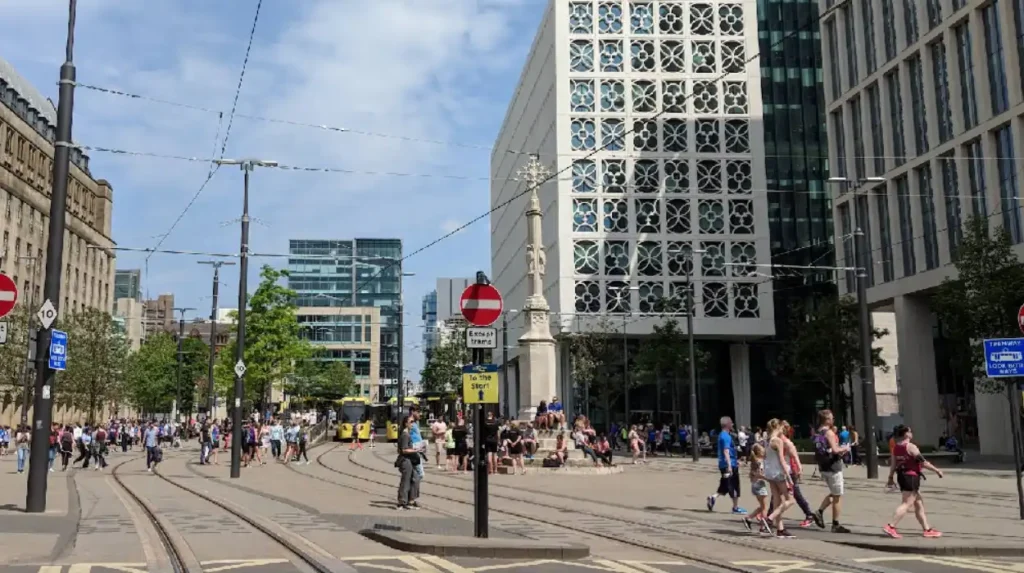
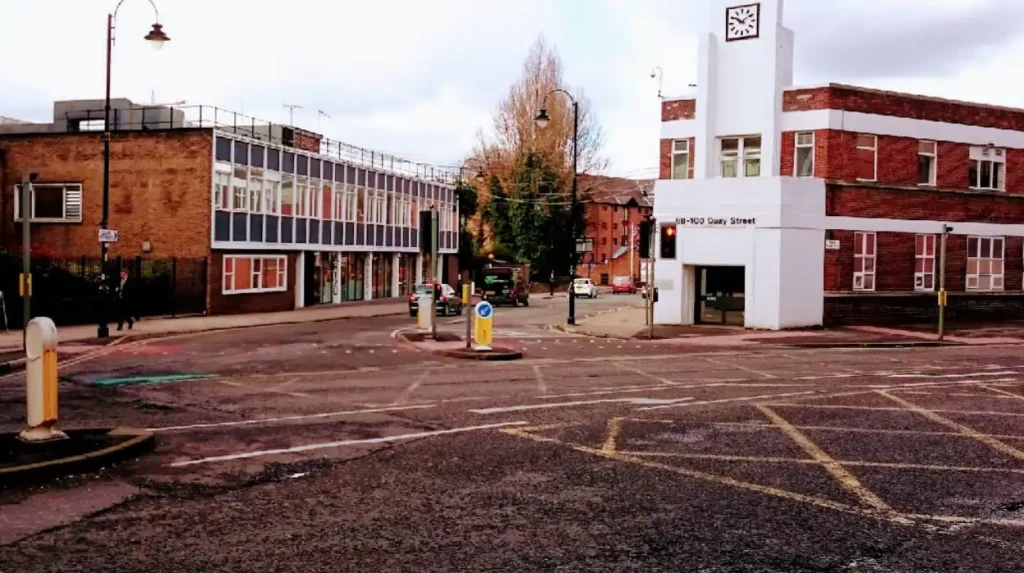
The geographic coordinates of the site place it at 3 Quay Street within the central business district of Manchester. Navigating the surrounding urban environment involves several transit options, including the nearby Deansgate railway station and the St Peter’s Square Metrolink tram stop. Physical vehicle parking infrastructure includes designated street bays on Lower Byrom street and adjacent commercial parking lots. The main entrance features a minor threshold lip of 2 centimeters, allowing smooth access into the carpeted ground level foyer.
The hospitality infrastructure includes separate bars distributed across the internal footprint of the property. The Beecham Bar is situated on the street level and offers full step-free accessibility to all patrons. The premium Ambassador Lounge is located on an upper floor and requires ascending a dedicated set of stairs to gain entry. The public restrooms are distributed across all three vertical viewing levels to handle crowds during peak intermission periods. The ground floor accessible toilet facility includes an emergency assistance pull cord linked directly to the front-of-house management team.
What Accessibility Services Are Provided at the Theatre?
The Ambassador Theatre Group enforces a strict operational framework to assist patrons with diverse physical and sensory requirements. Step free access is limited to the ground floor Stalls section, which accommodates specific wheelchair spaces paired with companion seating. The historical architecture lacks internal elevators, meaning the Circle and Gallery levels are unsuitable for individuals with mobility limitations. The venue utilizes a cashless transaction framework, requiring credit, debit, or contactless payment methods at all internal point-of-sale terminals.
Auditory assistance infrastructure includes the integrated MobileConnect software system alongside a traditional induction loop network. The auditory signal operates with peak performance efficiency when receivers are located within the central Stalls seating area. The administrative team reserves specific central seats for captioned performances to guarantee uncompromised sightlines to the digital captioning displays. Visually impaired patrons can access specialized audio description audio feeds and pre-show touch tours of the stage materials. Guide dogs are permitted inside the main auditorium, or they can be minded by staff members during the performance duration.
FAQs About Opera House Manchester
What are the best options for parking near the Quay Street venue?
Paid vehicle parking is available at the NCP Manchester Spinningfields parking garage located approximately 200 meters from the theatre entrance. There are also designated on-street parking bays situated along Lower Byrom Street and St John Street. The local council enforces strict parking zone restrictions across the city center during performance hours.
Can individuals with limited mobility access the upper Circle and Gallery tiers?
The upper tiers of the auditorium are accessible exclusively via historical staircases and are not served by an elevator system. Individuals requiring step-free access must book tickets situated within the ground-floor Stalls section. The front-of-house staff provides dedicated ramped entry assistance through the auditorium access doors on Quay Street.
What is the precise seating capacity of the Manchester Opera House auditorium?
The precise maximum seating capacity of the venue stands at 1920 individual spectator seats. This capacity is split into 830 seats in the ground floor Stalls, 552 seats in the middle Circle, and 533 seats in the high Gallery. The presence of technical equipment or custom stage designs can occasionally reduce the total number of available seats.
Is there a traditional restaurant operating inside the theatre building?
The historic building does not feature a dedicated full-service restaurant facility for pre-show dining. Patrons can purchase light snacks and beverages at the Beecham Bar, the Circle Bar, or the Ambassador Lounge. The surrounding Spinningfields district contains numerous independent restaurants situated within brief walking distance.
How early does the box office open before a scheduled performance?
The physical box office counter located inside the main entrance foyer opens exactly 90 minutes before the scheduled curtain time. The facility operates strictly on a cashless basis for all transactions, including ticket collections and program purchases. Patrons are advised to arrive at least 45 minutes prior to the performance start time to clear security checks.