Key Points
- Seven members of an Organised Crime Group based in Oldham and Rochdale jailed for combined 46 years at Manchester Crown Square Court on Friday 29 May 2026
- The gang operated across England and Scotland in wholesale Class A and B drugs supply and sophisticated money laundering
- Criminal activity spanned January 2024 to May 2025, with suspects travelling across Europe in luxury vehicles displaying lavish lifestyles
- Investigation uncovered 80kg of cannabis valued at over £1 million, plus cocaine, heroin, crack cocaine and ketamine
- Umar Vakas received the longest sentence at 11 years for conspiracy to supply Class A and B drugs in England and Scotland
- Money launderers Bilal Irshad and Mohamed Kayani laundered between £500,000 and £2 million through business accounts
- Police seized nearly £100,000 cash, safe and cash-counting machine at Salford office operating as ZA Investments Ltd
- Detective DI Rick Castley called it a “highly sophisticated outfit” with many layers dismantled through intelligence-led policing
- Three gang members observed travelling through France, Switzerland, Monaco and Italy in Audi, Lamborghini and Mercedes vehicles
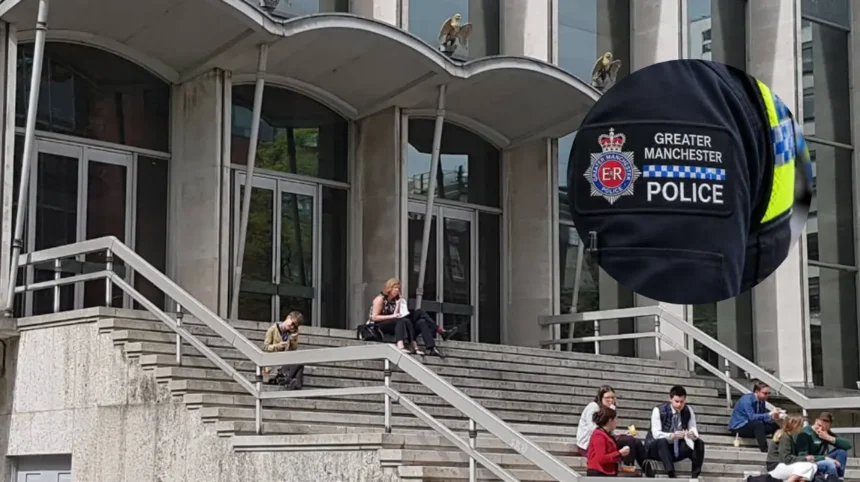
Oldham(Manchester Mirror) May 30, 2026 – Seven members of an Organised Crime Group based in Oldham and Rochdale have been jailed for a combined 46 years at Manchester Crown Square Court today (Friday 29 May 2026), bringing to conclusion an 18-month investigation into a sophisticated drug supply and money laundering network operating across England and Scotland.
- Key Points
- Who Were the Seven Defendants and What Sentences Did They Receive?
- What Evidence Did Police Gather During the Investigation?
- What Roles Did Each Member Play in the Organised Crime Group?
- What Did Detective Inspector Rick Castley Say About the Investigation?
- How Much Drugs and Cash Were Seized During the Operation?
- Background of the Particular Development
- Prediction: How This Development Can Affect Local Communities and Organised Crime in Greater Manchester
As reported by Greater Manchester Police in their official news release published at 10:39 on 30/05/2026, the group was involved in wholesale supply of Class A and B drugs alongside a sophisticated money laundering operation. Their criminal activity spanned between January 2024 to May 2025, during which time suspects travelled around Europe in luxury vehicles, showing off lavish lifestyles gained through illegal avenues .
Who Were the Seven Defendants and What Sentences Did They Receive?
Sajjad Anwar (23/03/1991) of Bronte Close, Rochdale, has been jailed for three years after being found guilty of conspiracy to transfer criminal property in England, according to the official GMP announcement .
Umar Vakas (16/02/1996) of Rising Lane, Oldham, received the longest sentence at 11 years after being found guilty of conspiracy to supply Class A drugs and conspiracy to supply Class B drugs in England and conspiracy to supply Class B drugs in Scotland, as reported by Greater Manchester Police .
Anthony Carter (03/06/1973) of Briarwood Crescent, Stockport, has been jailed for nine years and nine months after being found guilty of conspiracy to supply Class A drugs, according to the police news release .
Talha Nasim of Boundary Street, Rochdale, has been jailed for two years and four months after being found guilty of conspiracy to supply Class B drugs in England and Scotland, as stated in the GMP announcement .
Waqas Mustafa of Fitzwilliam Road, Rotherham, has been jailed for nine years and eight months after being found guilty of conspiracy to supply Class A drugs and conspiracy to supply Class B drugs in England, according to Greater Manchester Police .
Bilal Irshad of Aubrey Street, Rochdale, has been jailed for six years and eight months after being found guilty of conspiracy to transfer criminal property in England and Scotland, as reported by GMP .
Mohamed Kayani of Shelfield Lane, Rochdale has been jailed for four years after being found guilty of conspiracy to transfer criminal property in England and Scotland, according to the official police statement .
What Evidence Did Police Gather During the Investigation?
In August 2024 Umar Vakas, Sajjad Anwar, and Talha Nasim were observed travelling through France, Switzerland, Monaco, and Italy in luxury vehicles such as top-of-the-range Audi’s, Lamborghini’s and Mercedes, as documented in the investigation evidence reported by Greater Manchester Police .
Later that year, investigations showed communications between Mohammed Kayani and Bilal Irshad revealed the movement of large sums of cash, including £60,000 in one transaction and further discussions involving over £100,000, according to the court evidence cited in the GMP news release .
The court heard how in February 2025 evidence linked Vakas and Nasim to the supply of high-grade “moon rock” cannabis, with videos and messages between the two confirming an 80kg deal valued at over £1 million, as reported by Greater Manchester Police . That same month, Kayani was stopped by officers on the M62, with a search of his vehicle uncovered more than £115,000 in cash concealed in a bag for life in a footwell behind Kayani’s seat, according to the police announcement .
In the final months of the investigation, Bilal Irshad was arrested at an office in Salford operating under the name ZA Investments Ltd. Police seized nearly £100,000 in cash, a safe, and a cash-counting machine, as stated in the GMP news release .
Further evidence showed Vakas arranging cocaine deals, which included videos of kilogram blocks of cocaine branded to indicate high purity, according to Greater Manchester Police . On 8 May 2025, officers executed a warrant at a property on Fitzwilliam Road in Rotherham, where Waqas Mustafa was found in possession of crack cocaine, heroin, cannabis, and cutting agents, as reported by GMP .
What Roles Did Each Member Play in the Organised Crime Group?
Anwar had a significant role in the money-laundering network; he directed others and oversaw the movement and concealment of criminal proceeds, according to evidence presented at court as reported by Greater Manchester Police .
Vakas was a central figure in the drug-supply operation, acting as a broker arranging wholesale transactions between suppliers and buyers. He was involved in the supply of cocaine, cannabis and ketamine in England and cannabis into Scotland, as stated in the court evidence cited by GMP .
Carter was a wholesale purchaser who received multi-kilogram quantities of cocaine under the instruction of Vakas during a period in April 2025, according to the police news release .
Nasim played a key role in the supply of cannabis, including cross-border distribution into Scotland, as reported by Greater Manchester Police .
Mustafa acted as a custodian and a courier of wholesale amounts of drugs. The 33-year-old maintained detailed drug ledgers documenting transactions and quantities. He was found in possession of drugs and paraphernalia at the time of arrest, according to GMP .
Irshad and Kayani together operated a sophisticated money-laundering network using business accounts, cash-storage locations and structured transfers. The pair laundered between £500,000 and £2 million, with Irshad in a leading role and Kayani providing significant support, as stated in the court evidence reported by Greater Manchester Police .
What Did Detective Inspector Rick Castley Say About the Investigation?
Detective Inspector Rick Castley from Greater Manchester Police’s Serious and Organised Crime Division said: “This group was a highly sophisticated outfit, they were a network with many layers where everyone played their part. From the couriers to purchasers, to laundering cash under what seemed to be, legitimate businesses,” as reported in the official GMP news release .
DI Castley continued: “The individuals involved operated across borders, using sophisticated methods to conceal their activities and avoid detection,” according to the police announcement .
“Through determination, collaboration, and intelligence-led policing, we have dismantled their network and prevented further harm that these drugs might have done to communities both here in Greater Manchester and across the United Kingdom,” Detective Inspector Castley stated, as quoted by Greater Manchester Police .
“I would like to thank all officers and partner agencies involved [in the] hard work and dedication during the length of this investigation. The sentences that have been handed out over the past two days sends a clear message: organised crime will not be tolerated, and those who seek to profit from it will be relentlessly pursued and brought to justice,” DI Castley said, according to the official GMP statement .
How Much Drugs and Cash Were Seized During the Operation?
Throughout the investigation, significant amounts of cash and drugs were moved, including the supply of 80kg worth of cannabis valued at over £1 million, according to the Greater Manchester Police news release .
Police seized more than £115,000 in cash from Mohamed Kayani’s vehicle on the M62, as reported by GMP . At the Salford office operating as ZA Investments Ltd, officers seized nearly £100,000 in cash along with a safe and cash-counting machine, according to the police announcement .
The money-laundering network operated by Irshad and Kayani laundered between £500,000 and £2 million through business accounts, cash-storage locations and structured transfers, as stated in the court evidence reported by Greater Manchester Police .
Background of the Particular Development
This case represents a significant victory in Greater Manchester Police’s ongoing fight against organised crime, particularly in tackling sophisticated drug supply networks that operate across multiple jurisdictions. The 18-month operation demonstrates the complexity of investigating organised crime groups that deliberately span borders between England and Scotland, as well as travelling internationally to evade detection.
The involvement of Class A drugs including cocaine and heroin alongside Class B drugs such as cannabis and ketamine reflects the多样化 nature of modern organised crime operations. As documented in the GMP news release, the gang’s wholesale supply model indicates they operated at a higher level than street-level dealers, potentially distributing drugs to smaller networks throughout the region .
The money laundering operation using legitimate-appearing business accounts, including ZA Investments Ltd in Salford, represents a common tactic employed by organised crime groups to conceal criminal proceeds. The £500,000 to £2 million laundered by Irshad and Kayani demonstrates the substantial financial scale of their criminal enterprise, as reported by Greater Manchester Police .
The lavish lifestyle displayed through European travel in luxury vehicles including Audi, Lamborghini and Mercedes reflects how organised crime groups often publicly display wealth gained through illegal activities. This behaviour, observed by police in August 2024 during travels through France, Switzerland, Monaco and Italy, ultimately provided investigators with evidence of criminal proceeds, according to the GMP announcement .
Manchester Crown Square Court’s handling of this complex case involving seven defendants and multiple charges across different jurisdictions demonstrates the judicial system’s capacity to prosecute sophisticated organised crime operations. The combined 46-year sentence represents one of the significant multi-defendant organised crime prosecutions in Greater Manchester’s recent history, as noted in the police news release .
Prediction: How This Development Can Affect Local Communities and Organised Crime in Greater Manchester
The jailing of seven members of this Organised Crime Group will have immediate and long-term effects on drug supply patterns in Oldham, Rochdale, and surrounding areas across Greater Manchester. The removal of key figures including Umar Vakas, the central drug-supply broker, and the money laundering network operated by Irshad and Kayani disrupts the criminal infrastructure that enabled wholesale drug distribution across England and Scotland, according to the pattern of similar organised crime prosecutions described by Detective Inspector Rick Castley .
For residents in Oldham and Rochdale, the dismantling of this network should result in reduced availability of Class A and B drugs in the immediate aftermath. The 80kg of cannabis valued at over £1 million that was part of their operation would have supplied numerous smaller dealers across the region, meaning its removal from circulation significantly impacts local drug markets, as reported by Greater Manchester Police .
However, criminal markets often respond to disruption by attempting to establish replacement networks. The wholesale nature of this operation means other criminal groups may attempt to fill the vacuum left by Vakas’s removal, particularly in cocaine, cannabis, and ketamine supply chains that operated across England and Scotland. Local communities should remain vigilant, and continued police presence may be necessary to prevent new networks from establishing themselves, a pattern commonly observed in organised crime enforcement according to DI Castley’s statement about relentless pursuit of those who profit from crime .
The substantial sentences, particularly Vakas’s 11 years and Carter’s nine years and nine months for Class A drug supply, send a strong deterrent message to potential participants in organised crime. As Detective Inspector Castley stated, “organised crime will not be tolerated, and those who seek to profit from it will be relentlessly pursued and brought to justice,” which may discourage individuals from joining similar criminal enterprises in Greater Manchester, according to the official GMP news release .
The successful prosecution of money laundering offences between £500,000 and £2 million demonstrates that financial investigations can successfully trace and disrupt criminal proceeds. This has implications beyond local drug supply, as it undermines the financial infrastructure that enables organised crime to operate profitably. Potential money launderers may be deterred when they see that sophisticated concealment methods through business accounts like ZA Investments Ltd can be uncovered, as documented in the court evidence reported by GMP .
For legitimate businesses in Oldham, Rochdale, and Salford, this prosecution may improve operating conditions by reducing the infiltration of criminal money into local economies. The seizure of nearly £100,000 cash, a safe, and cash-counting machine at the Salford office indicates how criminal groups attempt to use legitimate business fronts, and its removal reduces competition from illicitly-funded operations, according to the police announcement .
Greater Manchester Police’s Serious and Organised Crime Division has demonstrated through this 18-month investigation that intelligence-led policing and cross-border collaboration can successfully dismantle sophisticated criminal networks. This success may influence future resource allocation toward similar organised crime investigations across the region. DI Castley’s acknowledgment of “determination, collaboration, and intelligence-led policing” as key factors suggests this approach will continue to be prioritised in tackling organised crime, as stated in the GMP news release .
The case also highlights the importance of international cooperation in organised crime investigations, given the gang’s travel through France, Switzerland, Monaco, and Italy. Future investigations may benefit from enhanced international intelligence sharing, potentially improving Greater Manchester Police’s ability to track organised crime groups that operate across borders, as noted in DI Castley’s comments about the group operating across borders using sophisticated methods .
Community confidence in law enforcement should be strengthened by this successful prosecution. When residents see that police can successfully investigate complex organised crime cases over 18 months resulting in substantial custodial sentences, it reinforces trust in the criminal justice system’s ability to address serious criminal threats to community safety in Greater Manchester, according to the tone of DI Castley’s statement about preventing further harm to communities .