Manchester City Council has established comprehensive development plans for the Northern Quarter (NQ), one of Manchester’s most distinctive cultural and creative districts. The Northern Quarter, bounded by Piccadilly, Great Ancoats Street, Swan Street, and Corporation Street, represents a critical area for urban regeneration and economic development within the city centre. These plans encompass infrastructure modernisation, heritage preservation, business support, housing development, and public realm improvements designed to maintain the area’s unique character while addressing contemporary urban challenges. The Council’s strategic framework focuses on balancing commercial growth with cultural preservation, ensuring the Northern Quarter remains accessible, vibrant, and economically sustainable for residents, businesses, and visitors.
- What is the Northern Quarter, and why is Manchester City Council focusing development efforts on this specific area?
- How does Manchester City Council plan to support existing businesses while managing development in the Northern Quarter?
- What housing and residential development does Manchester City Council plan for the Northern Quarter?
- How does Manchester City Council plan to preserve the Northern Quarter’s cultural character while encouraging development?
- What transport and accessibility improvements does Manchester City Council plan for the Northern Quarter?
- What timelines and implementation mechanisms does Manchester City Council use for delivering Northern Quarter plans?
- FAQs About Manchester City Council NQ Plans
- Will Manchester City Council’s plans force independent businesses out of the Northern Quarter?
- How much money is the Manchester City Council investing in the Northern Quarter?
- Can I still afford to live in the Northern Quarter with new housing developments?
- When will the Northern Quarter improvements be completed?
The Manchester City Council NQ plans integrate multiple policy areas, including planning, transport, housing, and economic development. These initiatives respond to increasing demand for residential and commercial space while protecting the area’s independent retail character and creative industries. The Council recognises the Northern Quarter as a strategic asset requiring targeted investment and coordinated management to prevent displacement of existing communities and businesses. Implementation involves partnership working with property developers, business improvement districts, community organisations, and cultural institutions. The plans address immediate concerns about public safety, cleanliness, and accessibility while establishing long-term frameworks for sustainable growth and development that respect the Northern Quarter’s historical significance and contemporary cultural value.
What is the Northern Quarter, and why is Manchester City Council focusing development efforts on this specific area?
The Northern Quarter is a designated conservation area covering approximately 28 acres in central Manchester, characterised by Victorian warehouse architecture, independent businesses, and creative industries. Manchester City Council targets this area because it requires coordinated regeneration to address infrastructure deterioration, support economic vitality, preserve cultural heritage, and manage development pressure from Manchester’s expanding city centre growth.
The Northern Quarter developed during the 19th century as Manchester’s commercial and warehouse district, housing textile businesses, printing works, and retail operations. The area declined significantly during the mid-20th century following deindustrialisation and the relocation of commercial activities. From the 1990s onwards, the district experienced organic regeneration driven by artists, musicians, and independent retailers attracted by affordable rents and available building stock. This transformation established the Northern Quarter’s reputation as Manchester’s creative and cultural hub, distinguished from surrounding city centre areas by its independent character and bohemian atmosphere.
Manchester City Council designated the Northern Quarter a conservation area in 1998, recognising the architectural and historical significance of its Victorian buildings. The conservation status provides legal protection for building facades and streetscapes while guiding appropriate development standards. The Council’s current focus reflects recognition that without strategic intervention, the area faces challenges, including building deterioration, displacement of independent businesses through rent increases, inadequate infrastructure, public realm degradation, and loss of distinctive character through inappropriate development. The Northern Quarter’s proximity to major development sites, including NOMA and the Piccadilly Station redevelopment, creates additional pressure requiring a managed response.
The Council’s strategic approach acknowledges the Northern Quarter’s economic significance. The area contains approximately 500 businesses employing over 3,000 people, generating substantial economic activity through retail, hospitality, creative industries, and professional services. The district attracts approximately 2 million visitors annually, contributing to Manchester’s reputation as a cultural and tourist destination. Maintaining the Northern Quarter’s distinctive character provides a competitive advantage for Manchester’s broader economic strategy by offering unique retail and cultural experiences unavailable in standardised commercial districts. The Council’s plans therefore, balance economic development objectives with heritage preservation and community sustainability goals.
What specific infrastructure improvements does Manchester City Council plan for the Northern Quarter?
Manchester City Council’s infrastructure plans include public realm enhancements covering street resurfacing, pedestrian improvements, lighting upgrades, and public space creation. Projects focus on Church Street, Tib Street, and Thomas Street, with investment totalling approximately £5 million allocated for streetscape improvements, accessibility enhancements, and environmental upgrades designed to improve visitor experience and support business operations.
The public realm improvement programme addresses deteriorated street surfaces, inadequate pedestrian infrastructure, and poor-quality public spaces throughout the Northern Quarter. Church Street represents a priority corridor receiving a comprehensive redesign, including wider pavements, improved street lighting, enhanced cycling infrastructure, and public seating areas. The improvements aim to reduce vehicle dominance, create pedestrian-priority environments, and establish a cohesive streetscape design that reinforces the area’s historic character. Materials selection emphasises durability and aesthetic compatibility with Victorian architecture, using natural stone paving, heritage-style street furniture, and sympathetic lighting fixtures.
The Council plans significant investment in accessibility improvements, addressing current deficiencies in disabled access throughout the Northern Quarter. Projects include dropped kerbs at all crossing points, tactile paving for visual impairment assistance, accessible parking provision, and improved signage systems. These improvements respond to legal requirements under the Equality Act 2010 while supporting inclusive access for all residents and visitors. The accessibility programme coordinates with individual building improvements, encouraging property owners to enhance entrance accessibility and internal circulation.
Utilities infrastructure requires substantial upgrading to support current and projected demand in the Northern Quarter. The Council coordinates with United Utilities, Electricity Northwest, and telecommunications providers to modernise underground infrastructure, including water mains, sewerage systems, electrical supply, and digital connectivity. These works address regular service disruptions affecting businesses and residents while providing capacity for future development. The Council requires utility companies to coordinate excavation works, minimising disruption to businesses and maintaining street quality following completion. Fibre optic installation throughout the area supports digital economy businesses requiring high-speed connectivity.
Environmental sustainability forms a core component of infrastructure planning. Projects include sustainable drainage systems reducing surface water runoff, tree planting programmes improving air quality and urban cooling, and waste management infrastructure supporting recycling and reduction initiatives. The Council works with businesses through the Cityco business improvement district to improve waste collection efficiency and reduce visual impact of refuse storage. Green infrastructure initiatives include pocket parks, green walls, and planter installations that enhance environmental quality while respecting the limited available space in the dense urban environment.
How does Manchester City Council plan to support existing businesses while managing development in the Northern Quarter?
The Council implements business support programmes providing financial assistance, planning guidance, and regulatory flexibility specifically for Northern Quarter enterprises. Initiatives include the Independent Retailers Grant Scheme offering up to £5,000 for shopfront improvements, business rate relief programmes, and planning policies protecting retail uses at street level while discouraging chain retailer proliferation that would erode the area’s independent character.
The Independent Retailers Support Programme provides targeted assistance, helping small businesses manage operational costs and invest in premises improvements. Grants cover shopfront renovations, signage upgrades, accessibility improvements, and energy efficiency measures. The programme requires businesses to maintain operations for minimum periods following grant receipt, protecting against displacement. The Council provides application support through dedicated business advisors who assist with documentation, planning permissions, and project management. This hands-on approach recognises that many Northern Quarter businesses operate with limited administrative capacity and benefit from direct Council engagement.
Planning policy instruments provide crucial protection for the Northern Quarter’s business ecosystem. The Council’s Core Strategy and the Northern Quarter Conservation Area Appraisal establish policies limiting chain retailers, protecting ground-floor retail uses, and requiring development proposals to demonstrate compatibility with existing character. Planning applications undergo assessment considering impact on independent business viability, pedestrian flow patterns, building scale appropriateness, and heritage asset preservation. The Council uses Article 4 directions removing permitted development rights for certain property changes, ensuring planning oversight of uses that might damage the area’s distinctive character.
The Council facilitates collective business organisation through support for the Cityco business improvement district covering the Northern Quarter. The BID provides coordinated marketing, events programming, security services, and environmental maintenance funded through business rate supplements. Manchester City Council works closely with Cityco on strategic planning, ensuring business community perspectives inform Council decision-making. Regular consultation forums enable businesses to raise concerns, propose initiatives, and participate in area management decisions. This partnership approach recognises that sustainable regeneration requires active business community engagement rather than top-down imposition of Council priorities.
Business rate relief programmes provide financial support, reducing occupancy costs for qualifying businesses. The Council administers government-mandated relief schemes, including small business rate relief, while exercising local discretion through discretionary relief programmes targeting independent retailers, creative industries, and community organisations. Relief programmes particularly benefit start-up businesses and cultural enterprises operating on marginal financial bases. The Council publishes clear eligibility criteria and application processes, with dedicated staff providing application assistance. These programmes recognise that preserving the Northern Quarter’s independent character requires active intervention preventing displacement through cost pressures.
What housing and residential development does Manchester City Council plan for the Northern Quarter?
Manchester City Council promotes residential conversion of upper floors in commercial buildings, targeting the creation of approximately 200 new residential units within existing structures. Plans emphasise maintaining ground-floor commercial uses while developing unused upper-floor space, supporting mixed-use development that increases residential population without displacing existing businesses or requiring new construction that would alter the area’s architectural character.
The upper-floor residential conversion programme addresses substantial underutilised space above Northern Quarter retail and commercial premises. Many Victorian warehouse buildings contain multiple floors currently vacant or used for low-value storage despite their suitability for residential conversion. The Council provides planning support, regulatory guidance, and potential financial assistance for property owners undertaking conversions. These conversions create residential accommodation while maintaining street-level activity and avoiding demolition of heritage buildings. Planning policies require conversions to meet modern building standards including sound insulation, fire safety, and accessibility requirements, while respecting historic building fabric.
The Council’s housing strategy for the Northern Quarter prioritises affordable housing provision within new residential development. Planning policies require developments exceeding specified thresholds to include affordable housing components or make financial contributions toward affordable housing elsewhere in Manchester. This approach addresses concerns that residential development might exclusively serve luxury markets, pricing out existing communities and workers in Northern Quarter businesses. The Council defines affordability relative to local median incomes, ensuring housing remains accessible to diverse income groups, including creative sector workers, service industry employees, and young professionals who contribute to the area’s character.
Residential development guidelines address design quality, ensuring new housing respects the Northern Quarter’s architectural heritage. The Council requires developments to demonstrate contextual appropriateness through materials selection, building scale, window patterns, and facade treatment. Modern interventions must be distinguishable from historic fabric while respecting established architectural rhythms and streetscape coherence. The planning process includes heritage impact assessments for developments affecting conservation area character or individual listed buildings. These requirements balance development promotion with heritage protection, recognising that inappropriate residential development could damage precisely the characteristics that make the Northern Quarter attractive.
The Council recognises residential development generates additional demand for community infrastructure, including healthcare, education, and public space. Planning obligations require developers to contribute toward infrastructure improvements proportionate to development scale. These contributions fund local improvements, including public realm enhancement, community facility provision, and transport infrastructure. The Council coordinates infrastructure delivery through the Community Infrastructure Levy and Section 106 agreements, ensuring residential growth does not overwhelm existing capacity. Strategic planning considers cumulative impacts of multiple developments, addressing concerns about infrastructure strain from Manchester’s broader city centre residential growth.
How does Manchester City Council plan to preserve the Northern Quarter’s cultural character while encouraging development?
The Council employs conservation area controls, heritage protection policies, and cultural programme funding to preserve distinctive character. Strategies include listed building protection covering 47 designated structures, Article 4 directions controlling shopfront changes, and cultural grants totalling approximately £150,000 annually supporting music venues, artist studios, and community spaces that define the Northern Quarter’s creative identity and distinguish it from generic commercial districts.
Heritage protection mechanisms provide legal frameworks preventing inappropriate alteration or demolition of significant buildings. The Council maintains detailed records of heritage assets within the Northern Quarter conservation area, including listed buildings, buildings of local interest, and characteristic street furniture. Planning applications affecting heritage assets require heritage statements demonstrating an understanding of significance and justifying proposed interventions. The Council employs conservation officers providing specialist advice to applicants and assessing applications for heritage impact. Enforcement action addresses unauthorised works damaging heritage assets, with powers including reversal requirements and prosecution for serious breaches.
Cultural infrastructure support recognises that the Northern Quarter’s distinctive character derives from creative industries, live music venues, artist studios, and independent cultural organisations. The Council provides grants supporting venue operation, cultural programming, and artist workspace provision. Funding priorities include organisations serving diverse communities, emerging artists, and activities complementing rather than duplicating mainstream cultural provision. The Night Time Economy Advisor role, established by the Council, advocates for music venues and cultural spaces facing pressures from residential development, licensing restrictions, and commercial rent increases. This dedicated advocacy recognises cultural activity’s economic value and community significance.
The Council addresses tension between residential development and existing cultural uses, including music venues and late-night hospitality. Planning policies implement the Agent of Change principle, requiring residential developers to incorporate sound insulation and design measures protecting residents from noise while preventing complaints threatening existing venue operations. This approach reverses traditional planning assumptions that placed responsibility on existing uses to accommodate new residents. The Agent of Change principle recognises that cultural activities define the Northern Quarter’s appeal, and residential developers choosing to build in the area must accommodate existing character rather than expecting existing businesses to curtail operations.
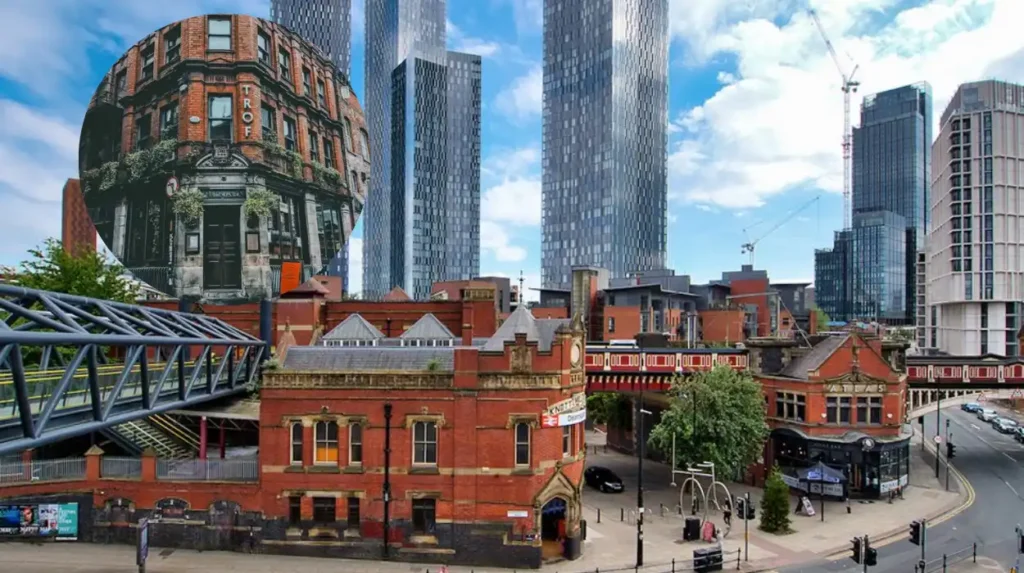
Public art and cultural programming receive Council support as placemaking tools, reinforcing the Northern Quarter’s identity. The Council commissions public artworks, supports street art and mural programmes, and facilitates cultural events including festivals, markets, and performances. These activities animate public spaces, attract visitors, support business activity, and reinforce perceptions of the Northern Quarter as Manchester’s creative district. The Council works with cultural organisations, artists, and business groups to programme activities throughout the year, maintaining consistent cultural activity rather than sporadic events. This programming approach recognises that sustained cultural vitality requires ongoing investment and coordination rather than relying solely on spontaneous activity.
What transport and accessibility improvements does Manchester City Council plan for the Northern Quarter?
Transport improvements include pedestrian priority measures, cycling infrastructure expansion, and public transport enhancements. Projects involve creating pedestrian zones on key streets, installing 15 kilometres of protected cycle lanes connecting the Northern Quarter to broader Manchester cycle networks, and improving bus stop accessibility with investment totalling approximately £3 million coordinated with Transport for Greater Manchester’s strategic transport plans.
Pedestrian priority initiatives address vehicle dominance on streets where walking constitutes the primary movement mode. The Council implements traffic calming measures, including reduced speed limits, raised crossings, and restricted vehicle access on selected streets. Thomas Street and Tib Street receive particular focus as primary pedestrian corridors requiring improved crossing provision, wider pavements, and reduced vehicle speeds. These interventions improve safety, enhance pedestrian experience, and support retail activity by creating more pleasant walking environments. The Council conducts traffic modelling, ensuring pedestrian improvements do not create unacceptable congestion on surrounding roads while recognising that some vehicle capacity reduction serves legitimate policy objectives of reducing city centre car dependence.
Cycling infrastructure development connects the Northern Quarter to Manchester’s expanding Beeline cycle network. Protected cycle lanes provide safe routes for cyclists of all abilities, encouraging cycling as practical transport for commuting, shopping, and leisure. The Council installs cycle parking throughout the area, including Sheffield stands on streets and secure cycle storage in public car parks. Planning policies require new developments to provide cycle parking proportionate to building use and size. These measures support Manchester’s target of becoming carbon-neutral by 2038 by enabling low-carbon transport modes. The Northern Quarter’s compact geography and flat terrain make cycling particularly viable for local journeys and connections to surrounding districts.
Public transport improvements focus on bus service accessibility and frequency. The Council works with Transport for Greater Manchester and bus operators to maintain frequent services connecting the Northern Quarter to residential areas, employment centres, and transport hubs including Piccadilly and Victoria stations. Bus stop improvements include raised boarding platforms assisting disabled passengers, real-time information displays, and weather-protected waiting areas. The Council considers future tram extensions potentially serving the Northern Quarter, though no confirmed plans exist for new Metrolink routes directly serving the area. Public transport improvements recognise that not all visitors and workers can walk or cycle, requiring accessible alternatives to car travel.
Parking management balances limited availability with business needs and residential demands. The Council operates public car parks serving the Northern Quarter while implementing parking restrictions and managing on-street parking demand. Residential parking permit schemes protect residential streets from commuter parking while allowing resident vehicle storage.
The Council’s parking strategy explicitly limits parking supply to discourage car travel while ensuring reasonable provision for disabled drivers, deliveries, and visitors requiring vehicle access. This approach recognises that unlimited parking provision would contradict sustainability objectives and prove physically impossible within the constrained urban environment. Loading bay provision supports business operations while restricting durations, preventing all-day parking that would reduce turnover.
What timelines and implementation mechanisms does Manchester City Council use for delivering Northern Quarter plans?
The Council implements plans through phased delivery spanning 2024 to 2030, coordinating public infrastructure projects, planning policy enforcement, and partnership programmes. The Northern Quarter Business Plan 2026-27 allocates £8.2 million for public realm works, business support, and cultural programming, with delivery managed through dedicated project teams coordinating Council departments, external partners, and community stakeholders through quarterly monitoring and annual reviews.
Implementation operates through multiple Council departments, including Planning, Highways, Economic Development, and Housing, working under coordinated frameworks. The Strategic Regeneration Framework establishes overall objectives and priorities while departmental work programmes detail specific projects, budgets, and delivery schedules. The Council establishes project governance structures, including steering groups with senior officer representation, ensuring cross-departmental coordination. Regular progress monitoring tracks project delivery against timelines and budgets, identifying issues requiring management intervention. This structured approach addresses the complexity inherent in coordinating multiple simultaneous projects affecting a compact geographic area with diverse stakeholders.
Capital investment programmes fund infrastructure projects through multiple sources, including Council capital budgets, government grants, developer contributions, and partnership funding. The Council’s capital programme allocates specific budgets for Northern Quarter projects with spending profiled across financial years reflecting project timelines. Government funding sources include the Greater Manchester Combined Authority, Historic England heritage grants, and Department for Transport active travel funding. The Council actively pursues external funding opportunities, preparing bids demonstrating strategic fit with funding priorities and evidencing local need. Developer contributions through Section 106 agreements and Community Infrastructure Levy provide additional resources, though these depend on development activity levels and cannot be guaranteed for long-term planning.
Partnership working arrangements involve external organisations, including Cityco business improvement district, Marketing Manchester, community groups, and major property owners. Formal partnership agreements establish roles, responsibilities, and financial contributions. The Council convenes partnership forums enabling collective discussion of issues, coordination of activities, and resolution of conflicts. This collaborative approach recognises that Council resources alone cannot deliver comprehensive regeneration, requiring private sector investment, business community engagement, and community organisation participation. Successful implementation depends on maintaining productive relationships across diverse stakeholder groups with varying priorities and interests.
Monitoring and evaluation processes track outcomes against objectives, including economic indicators like business survival rates and employment levels, physical improvements measured through public realm quality assessments, and community satisfaction monitored through resident and visitor surveys. The Council publishes annual performance reports documenting progress and identifying challenges. Evaluation findings inform programme adjustments, allowing responsive management to adapt to changing circumstances and emerging issues. This evidence-based approach enables the Council to demonstrate accountability to residents and businesses while learning from implementation experience to improve future planning and delivery effectiveness in the Northern Quarter and other regeneration areas across Manchester.
FAQs About Manchester City Council NQ Plans
Will Manchester City Council’s plans force independent businesses out of the Northern Quarter?
The Council has implemented protection measures specifically designed to prevent displacement, including business rate relief programmes, grants up to £5,000 for shopfront improvements, and planning policies that restrict chain retailers. Article 4 directions and conservation area controls limit changes that could damage the area’s independent character. However, concerns remain about rising rents driven by development pressure, which the Council addresses through ongoing monitoring and business support programmes.
How much money is the Manchester City Council investing in the Northern Quarter?
The Northern Quarter Business Plan 2026-27 allocates £8.2 million for various improvements, including public realm works, business support, and cultural programming. Additional investments include approximately £5 million for streetscape improvements and £3 million for transport and accessibility enhancements. These funds come from Council capital budgets, government grants, developer contributions through Section 106 agreements, and partnership funding from organisations like Transport for Greater Manchester.
Can I still afford to live in the Northern Quarter with new housing developments?
The Council requires new residential developments to include affordable housing components or make financial contributions toward affordable housing elsewhere in Manchester. Upper-floor conversion programmes aim to create approximately 200 new residential units while maintaining ground-floor commercial uses. However, affordability remains challenging as Manchester’s city centre experiences high demand, and residents should research specific developments and available affordable housing schemes when considering moving to the area.
When will the Northern Quarter improvements be completed?
Manchester City Council implements improvements through phased delivery spanning 2024 to 2030, meaning different projects will be completed at different times. Priority infrastructure projects on Church Street, Tib Street, and Thomas Street are underway, with some completing by 2026, while longer-term initiatives continue through the decade. The Council publishes annual progress reports and maintains ongoing programmes rather than a single completion date, as the Northern Quarter requires continuous management and investment to maintain its character and vitality.