Didsbury retail village is the commercial network centred on Wilmslow Road and Burton Road in South Manchester. It serves approximately 30,000 residents across East Didsbury, West Didsbury, and Didsbury Village. The retail village includes independent shops, restaurants, bars, cafes, and service businesses that collectively define the area’s local economy and social identity.
- What Are the Core Didsbury Retail Village Concerns Raised by Residents and Businesses?
- Why Are Independent Businesses Closing in Didsbury’s Retail Village?
- How Has the Clone Town Effect Reshaped Didsbury Retail Village’s Identity?
- How Do Parking and Infrastructure Problems Worsen Didsbury Retail Village Concerns?
- What Economic Data Explains the Scale of Didsbury Retail Village Challenges?
- What Actions Can Address Didsbury Retail Village Concerns in the Long Term?
- What Does the Future of Didsbury Retail Village Look Like Without Intervention?
Didsbury’s commercial life developed rapidly following the opening of the Manchester South District Line by the Midland Railway in 1880. Rail connections transformed Didsbury from a rural village into a prosperous suburban settlement. By the early 20th century, the suburb had established itself as one of Manchester’s most affluent residential areas, with independent retailers forming the backbone of the local economy. The Didsbury Traders Association continues to represent commercial interests in the area today.
The area holds 48% full-time employment among its residents, compared with 33% across Manchester and 41% for England as a whole. The retail village is not simply a shopping destination. It functions as a social infrastructure that sustains community identity, local employment, and property values across a catchment area that extends into Withington, Burnage, and Chorlton. Disruption to that retail environment creates economic and social consequences that extend far beyond shop closures.
What Are the Core Didsbury Retail Village Concerns Raised by Residents and Businesses?
The core Didsbury retail village concerns include the closure of long-standing independent businesses, the arrival of national chains replacing local operators, deteriorating infrastructure in retail zones, inadequate parking provision, unresolved vehicle pollution along Wilmslow Road, and a breakdown in communication between Manchester City Council and the community organisations responsible for monitoring these issues.
The Didsbury Civic Society, a registered charity founded in 1966 with over 300 members, has formally documented these concerns in meeting minutes between 2022 and 2024. Their records identify deteriorating road surfaces adjacent to the Lansdowne House retail parade, the introduction of paid parking in a previously free zone near the Anchor fish and chip shop, contaminated and uncollected waste bins on retail streets, and the absence of a vehicle pollution reduction plan for Wilmslow Road.
The DCS also raised concerns at their August 2024 General Meeting about the inability to obtain timely responses from Manchester City Council’s planning and licensing departments. The Future Didsbury Plan, published in 2021 after a formal community consultation process, identified lack of infrastructure maintenance, absence of a coordinated transport strategy, and the failure to protect independent retail as the three most critical long-term threats to the area’s commercial health.
Why Are Independent Businesses Closing in Didsbury’s Retail Village?
Independent businesses are closing in Didsbury because of five converging pressures: rising commercial rents, reduced business rates relief from April 2025, increased National Living Wage obligations, post-pandemic footfall deficits, and the structural shift of consumer spending to online platforms. These are not cyclical downturns. They are permanent structural changes in the retail economy.
Green’s vegetarian restaurant on Burton Road closed after 33 years of continuous trading. Multiple cafes and bars along Burton Road and Wilmslow Road have shut since 2023. Victor Calo, the General Manager of Mercado on Burton Road, stated publicly that his previously busy cafe was losing customers with no return to earlier trading levels. National footfall data from industry analysts shows UK high streets remain 15% to 20% below pre-pandemic levels as of 2025.
Business rates relief was cut from 75% to 40% in April 2025, adding approximately £3,000 per year in additional tax burden for small retailers already operating on average margins of just 7%. The National Living Wage increased to £12.21 per hour in April 2025, a rise of 6.7% that directly increases payroll costs for businesses relying on part-time and hourly staff. Online retail accounted for 26.3% of all UK retail sales as of March 2025, diverting consistent spending away from physical stores in communities, including Didsbury.
How Has the Clone Town Effect Reshaped Didsbury Retail Village’s Identity?
The clone town effect is a documented retail phenomenon in which national chains replace independent local traders, resulting in high streets that are visually and commercially identical across different UK towns. Didsbury’s retail village now contains Greggs, Caffe Nero, Holland and Barrett, and Marks and Spencer outlets, displacing the independent operators that previously defined its commercial character.
Wikipedia’s entry on Didsbury records that independent retailers are “gradually being replaced by multi-national firms, raising fears that Didsbury may lose its individual identity and become a clone town.” This process accelerated after Manchester Metropolitan University closed its Didsbury campus in the early 2010s. The university had previously maintained a creative and academically diverse population that sustained independent retail, food businesses, and cultural venues.
Didsbury Village is now described by multiple sources as dominated by national chains, while West Didsbury’s Burton Road retains a stronger independent character, with operators including Volta, Steranko, and A Taste of Honey. Parisa Ghani, a staff member at Pomegranate restaurant on Burton Road, described the pattern of closures as creating a public perception that the area is “no longer as vibrant as it used to be.” The Didsbury Dozen, an organised pub crawl route that draws hundreds of visitors through the village, has intensified community concern that Didsbury is now perceived as a destination for external visitors rather than a functioning residential retail village for its own residents.
How Do Parking and Infrastructure Problems Worsen Didsbury Retail Village Concerns?
Parking and infrastructure problems worsen Didsbury retail village concerns by reducing the attractiveness of the area for shoppers, deterring business investment, and signalling a lack of coordinated management to potential commercial tenants. The Didsbury Plan 2021 identified car parking as a continuing problem and noted the absence of a strategic infrastructure plan for the retail village.
The Didsbury Civic Society’s documented concerns between 2022 and 2024 include road surface deterioration in retail areas, overhead telecommunications poles installed under 1980s legislation that remain unreplaced by modern infrastructure, and poor enforcement of rules governing builders’ skips on retail streets. Vehicle pollution on Wilmslow Road, particularly near Beaver Road School, has been formally raised as a public health issue requiring measurement and a reduction plan. The introduction of a paid parking machine near the Anchor fish and chip shop reversed a longstanding free parking arrangement and drew specific objections at the August 2024 DCS General Meeting.
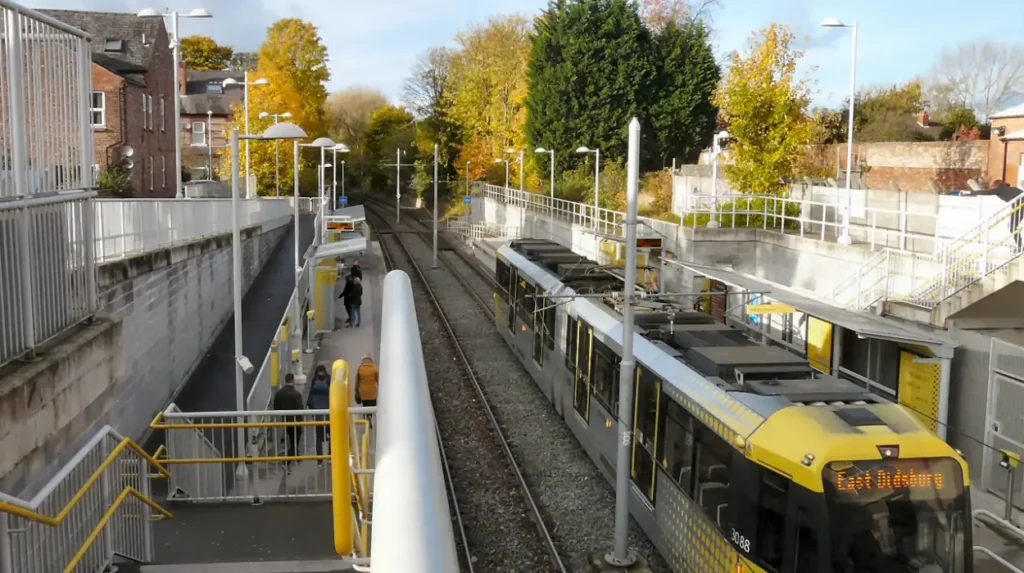
The Neighbourhood Investment Fund (NIF) provides £20,000 per ward annually for community projects, but civic records acknowledge this figure is insufficient for significant infrastructure improvement. The Metrolink network serves Didsbury with four tram stops, including Didsbury Village and Burton Road. However, pedestrian crossing infrastructure around the Parrs Wood triangle on the A34 and A5145 junction is identified in the Didsbury Plan 2021 as presenting road safety risks for shoppers and residents.
What Economic Data Explains the Scale of Didsbury Retail Village Challenges?
UK economic data from 2024 and 2025 confirms that the challenges facing Didsbury retail village reflect national structural trends. High street stores have lost 30% of their retail units nationally. Business costs have risen simultaneously across rates, wages, and energy. Over 37% of high street shop owners nationally planned to close or sell their business during 2025.
Research published by Simply Business in 2025, drawing on a survey of over 2,000 small business owners, found that 63% believe the UK high street, as it currently functions, will be obsolete within 10 years. Bars and restaurants in critical financial distress rose from 995 in Q3 2025 to 1,034 in Q4 2025, a 14.1% year-on-year increase. These figures reflect direct pressure on the hospitality-heavy retail mix that characterises both Didsbury Village and West Didsbury.
The Employment Rights Bill, progressing through Parliament in 2025, is expected to raise overall workforce costs further. The Chartered Institute of Personnel and Development found that nearly 80% of employers expect the bill to increase total labour costs. Retail parks have recovered to within 3% of pre-pandemic footfall, while traditional high streets remain down 30%, confirming that Didsbury’s retail village format faces structural disadvantage compared with out-of-town retail formats unless active intervention occurs.
What Actions Can Address Didsbury Retail Village Concerns in the Long Term?
Addressing Didsbury retail village concerns over the long term requires three coordinated actions: structural reform of business rates by central government, a funded infrastructure and active travel plan for Wilmslow Road and Burton Road delivered by Manchester City Council, and a formal retail use protection policy that prevents independent commercial units from converting to residential or hospitality-only uses.
Altrincham in Greater Manchester provides the most directly relevant UK model for retail village recovery. Following targeted council investment in the conversion of its historic market hall into a food and community hub, Altrincham reversed a pattern of closures and significantly restored footfall. The recovery required defined civic leadership, landlord cooperation, and public funding commitment. In Didsbury, the Future Didsbury Plan 2021 provides a ready framework that includes active travel improvements, cycling infrastructure on Burton Road, flood protection along the River Mersey, and improved pedestrian crossing provision.
Manchester City Council’s Climate Action Plan includes cycling rack installation on Burton Road and traffic management proposals that align with retail accessibility improvements. The DCS Neighbourhood Investment Fund applications provide a mechanism for community-led project funding, though the £20,000 per ward allocation requires a significant increase to fund the infrastructure of the scale required. National government action to extend full business rates relief beyond 2026, or to replace the rates system entirely with a structure that does not disadvantage physical retail relative to online platforms, remains the single most consequential lever for stabilising businesses across Didsbury’s retail village.
What Does the Future of Didsbury Retail Village Look Like Without Intervention?
Without coordinated intervention, Didsbury retail village faces continued independent business closures, further chain consolidation, growing vacancy rates, and the eventual loss of the distinct commercial identity that supports its property values and community function. The ghost town trajectory observed in comparable UK suburban retail centres is a documented outcome, not a speculative risk.
The Northern Quota reported in 2024 that West Didsbury was facing the possibility of becoming a ghost town, following the closure of Greens after 33 years and a series of bar and cafe closures along Burton Road. Businesses that close leave physical voids that create a downward perception spiral, discouraging shoppers and deterring new operators from investing. Didsbury’s conservation area status, its Metrolink connectivity, its high employment rate of 48%, and its proximity to Manchester Airport all represent structural advantages that preserve long-term viability.
The Didsbury Civic Society’s sustained civic engagement, its 300-plus member base, and its formal role in Manchester City Council planning consultations provide community governance infrastructure that many UK retail villages lack. These assets make recovery achievable. However, the evidence from both local records and national data confirms that passive management of Didsbury retail village concerns will not produce recovery. Recovery requires funded action, coordinated stakeholder engagement, and planning protection for the independent retail that defines this community’s identity.