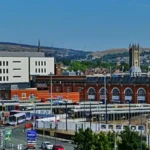
Altrincham, a historic market town in Greater Manchester’s Trafford borough, sits at the heart of a timeless tension between preserving its rich heritage and embracing growth to meet contemporary demands. This evergreen conflict shapes local planning, community debates, and economic strategies, ensuring the town’s evolution remains a topic of enduring interest.
Altrincham’s Historic Roots
Altrincham traces its origins to 1290, when Hamon de Massey V granted it a charter as a free borough, establishing a weekly market that thrives today amid timber-framed buildings in the Old Market Place conservation area. This medieval foundation, built on agriculture and trade, saw early boosts from the Bridgewater Canal’s 1765 extension and the 1849 railway arrival, which spurred industrial growth in areas like Broadheath. By the 19th century, the town absorbed surrounding villages, evolving into an affluent commuter hub with a strong middle-class presence, while landmarks like Dunham Massey Hall—now a National Trust site with Grade I listed buildings—anchored its cultural identity.
The Old Market Place, echoing wattle-and-daub origins with its cobblestone paving renewed in 1896, exemplifies this legacy, once hosting the Buttermarket for justice and fairs until 1895. Industrial expansion at Broadheath in 1885, attracting firms like Linotype, swelled the population from 4,488 in 1851 to 16,831 by 1901, blending commerce with residential appeal. Post-World War II, the town navigated decline in heavy industry during the 1970s, yet retained 10 of Trafford’s 21 conservation areas, including Goose Green, The Downs, and Stamford New Road, safeguarding architectural and historic interest.
Key Conservation Areas

Trafford Council designates conservation areas in Altrincham to preserve special architectural and historic character, with Goose Green forming a triangular zone of shops and lanes southeast of the town centre, bordered by Stamford New Road. The Old Market Place stands as the original settlement site, its part-timbered structures protected to maintain visual harmony and prevent unsympathetic alterations. Other zones like The Devisdale, Bowdon, and Ashley Heath underwent appraisals around 2014-2015, involving civic societies to enhance protection through public consultation and management plans.
These areas, numbering ten in Altrincham, emphasize open spaces, trees, and built form, as seen in Sandiway and George Street, where heritage projects digitize historic images for awareness and regeneration. Efforts by the Altrincham and Bowdon Civic Society, supported by Heritage Lottery Funding since 2010, have conserved materials and hosted displays at venues like Art with a Heart, fostering community involvement in preservation. Such initiatives ensure these precincts evolve without losing their essence, countering pressures from adjacent development.
Modern Growth Pressures
Altrincham’s proximity to Manchester fuels demand for housing and commercial space, with Trafford’s population growth straining resources amid Greater Manchester’s spatial plans. The Places for Everyone (PfE) plan, adopted in 2024 across nine boroughs, prioritizes sustainable development, including brownfield sites but proposing green belt releases—nearly 2,500 hectares regionally—to deliver homes and industry by 2039. Locally, this manifests in projects like L&Q’s 2025-approved regeneration of Albert, Chapel, and Lloyds Courts on New Street, blending high-quality homes with green spaces near conservation areas.
A £6 million public realm scheme completed in 2015 transformed vehicle-dominated streets into pedestrian-friendly zones, boosting footfall in the town centre. The Altrincham Strategy and Neighbourhood Business Plan (2017-2030), endorsed via referendum, guide land use, building sizes, and designs to revitalize the core while respecting heritage. Recent approvals, such as 88 residential units in a 2025 planning application reduced from 104 for better scale, highlight efforts to provide 40% affordable housing in sustainable locations.
Notable Development Debates
Tensions peaked in Oldfield Brow, where Trafford Council’s 2025 approval of nine luxury homes—each over £500,000—drew ire for bypassing affordable housing thresholds and replacing allotments, despite space for more units. Critics argued inefficient land use amid shortages, with Greens decrying political motives, while supporters cited housing needs assessments favoring larger family homes. Nearby, green belt fights around Carrington Moss propose sacrificing 169 hectares for 4,300 homes and warehousing, sparking rows over urban sprawl versus amenities like walking paths.
A 2025 legal challenge by Save Greater Manchester Green Belt against PfE questions net losses, advocating brownfield priority despite over 27,000 objections. Earlier, 2009 rejections like 693-697 Altrincham Road cited noise, poor design, and policy breaches on major corridors. Scaled-back apartment plans addressed overdevelopment fears impacting heritage views. These cases underscore community pushback, balancing NPPF’s sustainable development presumption with local protections.
Trafford’s Revised Unitary Development Plan

Trafford’s Revised Unitary Development Plan (2006) and PfE integrate national policies like NPPF, weighing heritage harm against benefits, often conditioning approvals. The Altrincham Town Centre masterplan promotes a “unique, attractive, vibrant Modern Market Town,” aligning regeneration with conservation via consultations. Conservation appraisals for areas like Goose Green detail historic development, archaeology, and trees, guiding enhancements.
Civic efforts, including image archives for appraisals, ensure resident input shapes management. PfE’s focus on inclusive growth mandates viability assessments for affordability, as in New Carrington’s 15% rate. These frameworks aim for “less than substantial” heritage impacts outweighed by public gains, per planning committees.
Community and Civic Roles
Groups like Altrincham and Bowdon Civic Society drive conservation through volunteer projects, digitizing records, and public displays to raise awareness. The 2016 Neighbourhood Plan referendum empowered locals in town centre visions. Objections in debates, from green belt campaigns to housing critiques, amplify voices via consultations.
Heritage weeks and archaeological contributions educate, while festivals celebrate history. This engagement fosters regeneration that honors roots, as in pedestrian improvements enhancing market vibrancy.
Finding Equilibrium
Altrincham’s path threads sensitive regeneration, like New Street’s landscape-led homes knitting modern and traditional elements. Brownfield emphasis in PfE and viability tweaks address affordability without wholesale green belt loss. Heritage-led designs in scaled schemes mitigate visual impacts.
Ongoing appraisals and plans like 2030’s business strategy adapt to needs, prioritizing quality over quantity. Success lies in collaboration: councils, developers, and residents crafting growth that elevates conservation, sustaining Altrincham’s allure.
Future Prospects
By 2039, PfE envisions balanced expansion, with Altrincham pivotal via transport links like Metrolink. Altair’s £100 million scheme promises apartments, shops, and squares tied to the 2015-refurbished interchange. Challenges persist—green belt suits in 2025, housing shortfalls—but policies evolve with evidence.
Emerging focuses: net biodiversity gains, active travel, and climate resilience in apps like 108717/FUL/22. Altrincham’s model—markets enduring since 1290 amid renewal—hints at harmony, where growth funds preservation.