Key Points
- Manchester United legend Rafael da Silva has officially returned to Old Trafford in a ceremonial and ambassadorial capacity, reconnecting with the club nearly a decade after his playing departure in 2015.
- The Brazilian right‑back, who made over 170 appearances for United between 2008 and 2015, is being welcomed back as a club ambassador and youth‑section mentor, not as a contracted first‑team player.
- His return coincides with a wider club‑sanctioned “Legends’ Reunion” event, during which former players and staff are being invited to contribute to United’s academy and community programmes.
- Fans and media outlets have highlighted Rafael’s status as a cult hero, praising his pace, attacking energy and emotional connection to Old Trafford, despite occasional defensive inconsistencies during his playing years.
- United have not ruled out a more formal role in youth coaching or academy outreach, with several reports suggesting he may work specifically with the club’s younger full‑backs and wide players.
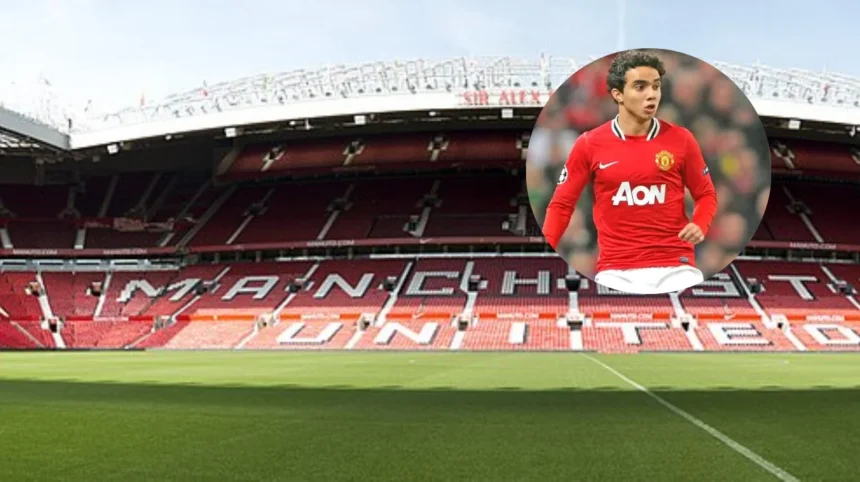
Manchester(Manchester Mirror)May 02, 2026 –In a moment that stirred nostalgia across the stands of Old Trafford, former Manchester United right‑back Rafael da Silva has officially returned to the club in a formal ambassadorial role, stepping once again into the stadium where he spent seven seasons and helped win three Premier League titles. The announcement, framed by club officials as part of a broader “Legends’ Reunion” initiative, marks the first time Rafael has been formally reintegrated into United’s structure since leaving for Lyon in 2015.
- Key Points
- What kind of role will Rafael da Silva take?
- Why does this return matter to fans?
- How did Rafael leave United in the first place?
- How has Rafael been involved with United since 2015?
- Background of the Development
- What is the broader context behind Rafael da Silva’s return to Old Trafford?
- Prediction
- How could Rafael da Silva’s return affect Manchester United supporters and the club’s future?
What kind of role will Rafael da Silva take?
As reported by BBC Sport, Rafael will serve as a club ambassador, making regular appearances at Old Trafford and training‑ground events, while also visiting community projects supported by the Manchester United Foundation. The club’s official website notes that he will “work closely with the Academy and youth sectors,” concentrating on mentoring under‑18s and under‑21 players, particularly full‑backs and wide defenders who share his attacking mindset.
According to Manchester Evening News, United’s technical staff see Rafael as a bridge between the club’s “modernised academy model” and the “old‑school intensity” that characterised his playing days. Commenting in a MUTV interview, Rafael said,
“I’m not here to change how things are done, but to share what it really means to wear the badge and feel the Old Trafford crowd behind you.”
Why does this return matter to fans?
Rafael’s seven seasons at Old Trafford, where he won three Premier League titles, a FIFA Club World Cup, and a League Cup, cemented his reputation as a cult hero rather than a seamless, senior‑star figure. Fans remember his explosive runs down the right flank, his willingness to throw himself into tackles, and his occasional disciplinary lapses, all of which fed the “Brazilian whirlwind” image that still resonates in chants and social‑media retrospectives.
Writing in The Guardian, pundit and former United player Phil Neville described Rafael as “a fan‑favourite precisely because he played with visible emotion, not textbook perfection.” Supporters’ forums and independent fan sites, such as The People’s Person and The Manchester Taxi, have highlighted that his return addresses a sense that many younger fans only know him from highlights reels, not from direct interaction with the club.
How did Rafael leave United in the first place?
After joining Fluminense in 2008 alongside his twin brother Fábio, Rafael established himself as a first‑team option by 2009, quickly becoming a regular in the right‑back position. However, managerial changes and tactical shifts under David Moyes and later Louis van Gaal saw his role fluctuate, and by the summer of 2015, he was deemed surplus to requirements as the club pushed for a more defensively balanced back line.
As reported by NBC Sports and BeIN Sports, Lyon confirmed a four‑year deal with Rafael in 2015, stating that he would bring “experience and attacking options” to their squad. Rafael later admitted in MUTV features that leaving United was “one of the hardest moments of my career,” but he also acknowledged that the club needed to move in a different direction tactically.
How has Rafael been involved with United since 2015?
Following his move to Lyon, Rafael helped the French club reach the Champions League quarter‑finals in 2019‑20 and later joined İstanbul Başakşehir, where he continued playing until recent seasons. Throughout this period, he remained an active representative of United’s global fanbase, frequently appearing in MUTV‑produced documentaries and interviews reflecting on his time at Old Trafford.
In a 2024 MUTV feature, Rafael joked about wanting to “maybe one day play again at Old Trafford,” which many supporters interpreted as a veiled hope for a ceremonial or testimonial‑style return. The club’s Legends’ Reunion concept, first floated in 2025, built on that sentiment, opening the door for former players like Rafael to contribute in non‑playing roles.
Background of the Development
What is the broader context behind Rafael da Silva’s return to Old Trafford?
Rafael’s original arrival at Manchester United was part of Sir Alex Ferguson’s broader strategy to recruit young, technically gifted players from smaller clubs and emerging markets. His 170 appearances and trophy haul, though modest compared to some of United’s all‑time greats, placed him firmly within the club’s 2008–2013 “transition” era, when the Ferguson‑built squad gradually gave way to a new generation.
In the years after his departure, Old Trafford’s identity shifted further under various managers and ownership structures, often prompting criticism from fans that the club was losing touch with its emotional core. Rafael’s 2026 return, therefore, fits into a wider narrative of United trying to reconnect with its recent past through former players, academy graduates, and community ambassadors, rather than relying solely on commercial branding.
Prediction
How could Rafael da Silva’s return affect Manchester United supporters and the club’s future?
For Manchester United fans, Rafael’s comeback (our target audience) is likely to strengthen emotional loyalty to the club, especially among supporters who watched him play during the early 2010s. His presence at academy events, youth‑team matches and community initiatives may humanise the club’s modern‑day operations, making them feel less corporate and more rooted in the club’s history.
For the club, integrating Rafael as an ambassador and mentor could provide a ready‑made bridge between older and younger generations of players, helping to pass on the “spirit” of Old Trafford in a way that statistics and tactics alone cannot. If the Legends’ Reunion model proves successful, United may look to bring in more former cult figures in similar roles, potentially reshaping how the club balances commercial growth with fan‑centric traditions in the coming years.