Key Points
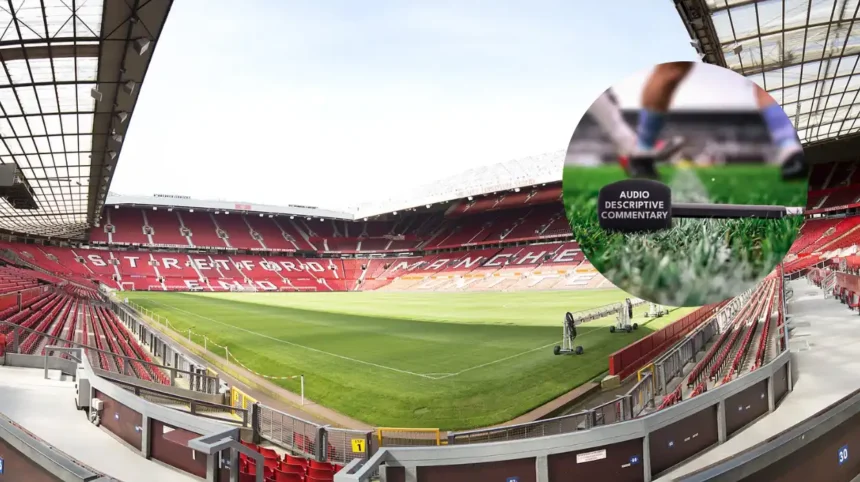
- Manchester United has upgraded its Audio Descriptive Commentary for blind and partially sighted supporters.
- It is available at Old Trafford, and it aims to offer a more descriptive match commentary than usual.
- The club believes that this service will assist in improving the match-day experience of visually-impaired supporters.
- Description will assist blind and partially sighted supporters in identifying important moments during the match, such as the movements of players, scoring attempts, fouls, and many other visual moments of a match.
- It is one of the accessibility services provided by the Manchester United team for the supporters who have disabilities.
- Other accessibility services include the availability of specific teams, access stewards, disability parking, access for assistance dogs, and the Ability Suite.
- Audio commentary can be accessed via the Manchester United app and MUTV in relevant matches and programs.
FC United of Manchester (Manchester Mirror) October 2, 2026 — Manchester United has launched an enhanced Audio Descriptive Commentary service for blind and partially sighted supporters attending matches at Old Trafford.
- Key Points
- What is Manchester United’s new audio descriptive commentary service?
- Why has the service been introduced at Old Trafford?
- How could Audio Descriptive Commentary improve the matchday experience?
- What wider accessibility support does Manchester United provide?
- How does the service relate to Manchester United’s digital commentary?
- What does the launch mean for blind and partially sighted supporters?
- Why is attribution important in reporting the announcement?
- What remains unclear about the service?
- Background: Manchester United’s accessibility development
- Prediction: How could the development affect Manchester United supporters?
The club announced the development through its official website in a report titled “Audio Descriptive Commentary launched”. Manchester United said the service had been introduced to strengthen the support available to fans with visual impairments and to make the live matchday experience more accessible.
The initiative allows supporters to receive spoken descriptions of important visual events during a match. In addition to the regular commentary, an audio descriptive service can explain details that may not be fully communicated through standard match narration, including the positioning of players, the movement of the ball, gestures, celebrations and activity away from the immediate action.
The service is aimed at supporters who may not be able to see the pitch clearly or follow the visual elements of a match independently. By providing additional information through audio, Manchester United is seeking to ensure that blind and partially sighted fans can remain connected to events at Old Trafford.
What is Manchester United’s new audio descriptive commentary service?
Manchester United’s new Audio Descriptive Commentary service is an accessibility facility that gives blind and partially sighted supporters additional spoken information during matches.
Standard football commentary normally focuses on the ball, major incidents and tactical developments. Audio description can provide a broader explanation of what is happening around the pitch. This may include details about players’ movements, the atmosphere inside the stadium, visual reactions and significant moments that supporters with sight loss may otherwise miss.
The service is designed to work alongside the live match rather than replace the atmosphere of attending a fixture. Supporters remain inside the stadium while receiving commentary intended to help them build a clearer understanding of the action.
Manchester United’s announcement describes the service as a new and enhanced provision for blind and partially sighted fans. The club’s decision reflects the importance of accessibility in football grounds, where much of the experience traditionally depends on watching events unfold visually.
Why has the service been introduced at Old Trafford?
The service has been introduced to improve inclusion for supporters with visual impairments at Manchester United’s home ground.
Old Trafford is a large stadium where supporters experience matches through a combination of sight, sound and atmosphere. Although the crowd, stadium noise and traditional commentary can communicate some aspects of a fixture, they cannot always provide a complete picture of the visual action.
Audio description helps address that gap by giving supporters more detail about what is taking place on the pitch. It can help explain an attack developing on one side of the field, a player’s position before a set piece or the reaction following a goal.
The launch also gives the club an opportunity to make accessibility a more visible part of its matchday services. For supporters with sight loss, the availability of a dedicated audio service can provide greater confidence when attending matches and reduce the need to rely only on companions for descriptions.
How could Audio Descriptive Commentary improve the matchday experience?
The service could improve the matchday experience by helping blind and partially sighted supporters follow events more independently.
Football matches contain many visual details that are not always included in ordinary commentary. A goal may involve a change in formation, movement away from the ball, reactions on the bench and celebrations involving players and supporters. Audio description can communicate some of these details in real time.
The service may also help supporters understand moments that occur quickly. A cross, deflection or change in possession can be difficult to follow through crowd noise alone. Clear spoken information can provide context and help supporters understand how a significant incident developed.
Audio description can also add detail during quieter periods of a match. Rather than limiting the service to goals or major incidents, descriptive commentary can help explain the general shape of play, the position of the teams and the activity taking place around the stadium.
For supporters attending with family members, friends or carers, the service may also make the experience more flexible. It can allow a supporter to follow the match without depending entirely on another person to describe every incident.
What wider accessibility support does Manchester United provide?
Manchester United’s accessibility provision extends beyond audio commentary.
The club’s wider support includes dedicated accessibility teams and access stewards. These staff members are available to assist supporters and help them navigate the stadium environment. The club also provides disability parking and permits assistance dogs at the ground.
Manchester United has additionally referred to the Ability Suite, located in the South East Quadrant behind the accessible viewing platform. The facility forms part of the club’s support for disabled supporters and contributes to the broader accessibility structure at Old Trafford.
A recent Manchester United impact report also referred to new audio-descriptive receivers being placed at the stadium to improve supporters’ experiences. The receivers are part of the technical provision required for fans to use the service during matches.
The combination of receivers, descriptive commentary, accessibility staff and stadium facilities indicates that the development is not limited to a single announcement. It forms part of a broader approach to improving access for supporters with different requirements.
How does the service relate to Manchester United’s digital commentary?
Manchester United also provides audio coverage through its official digital platforms.
The Manchester United app offers live audio commentary for first-team matches, together with pre-match, half-time and post-match programming through MUTV. The club’s subscription information states that supporters can access live audio commentary and additional matchday coverage, although live men’s matches cannot be shown in full because of broadcasting rights.
Digital audio commentary serves supporters who are following matches away from Old Trafford. The new stadium-based Audio Descriptive Commentary service has a different purpose: it is intended for blind and partially sighted fans who are physically attending matches at the club’s home ground.
Both services use audio to increase access to football coverage, but they operate in different settings. The app and MUTV support remote listening, while the new service supports the live stadium experience.
What does the launch mean for blind and partially sighted supporters?
For blind and partially sighted supporters, the launch could provide a more inclusive way to attend Manchester United matches.
The value of the service lies in its ability to explain visual information that may otherwise be unavailable. Supporters can listen to descriptions while experiencing the sound, atmosphere and emotion of the stadium.
The provision may also help make match attendance more predictable. Fans who know that audio description and accessibility support are available may feel more comfortable planning a visit to Old Trafford. Clear facilities can be particularly important at a stadium where crowd movement, large spaces and changing match conditions may create additional challenges.
The service does not remove every barrier faced by supporters with sight loss. Accessibility needs vary from person to person, and the quality of the experience may depend on equipment availability, commentary delivery, seating arrangements and stadium operations. However, the introduction of dedicated audio description represents an additional option for supporters who need or prefer it.
Why is attribution important in reporting the announcement?
The announcement was made by Manchester United through its official website rather than reported as an independently investigated story by a named external journalist.
Accordingly, the details in this report are attributed to Manchester United’s official announcement and related club accessibility information. No separate journalist or independent media report was identified in the available source material for the launch.
The distinction is important because the club is the primary source for details about the service, its intended audience and its availability. Information about how the service operates in practice may develop as supporters use it during matches and provide feedback.
What remains unclear about the service?
The available announcement does not provide every operational detail about the service.
The club has not publicly set out all information about the number of receivers available, the exact collection process, the seating locations linked to the service or whether supporters must request equipment before matchday. It is also not clear from the announcement whether the service is available at every fixture or under specific matchday conditions.
Supporters who require the service may therefore need to contact Manchester United’s accessibility team before attending a match. This can help confirm availability, equipment arrangements and any stadium access requirements.
Further information may also be provided through the club’s accessibility pages, matchday guidance or direct supporter communications.
Background: Manchester United’s accessibility development
Manchester United’s Audio Descriptive Commentary launch forms part of the club’s continuing accessibility work at Old Trafford.
The club already provides several forms of support for disabled supporters, including accessibility teams, access stewards, disability parking, assistance-dog access and the Ability Suite. The use of audio-descriptive receivers adds a specific service for fans who are blind or partially sighted.
Audio description has become an important accessibility tool at sporting and cultural venues because it can translate visual events into spoken information. In football, the service can cover both the match itself and selected parts of the wider stadium experience.
Manchester United also offers audio commentary through its app and MUTV, although that digital service is designed for remote listeners and is separate from the stadium-based provision. The club’s wider broadcast services include match build-up, live audio, half-time coverage and post-match analysis.
The new service therefore connects two areas of the club’s work: improving the live stadium experience and expanding audio-based access to Manchester United content.
Prediction: How could the development affect Manchester United supporters?
The development is likely to have its greatest effect on blind and partially sighted Manchester United supporters who attend matches at Old Trafford.
In the short term, the service may encourage more supporters with visual impairments to consider attending matches because it offers an additional way to follow the action. It may also help existing matchgoers feel more independent and better informed during fixtures.
In the longer term, the success of the service could be measured through usage, supporter feedback and the club’s willingness to expand or refine the provision. Positive feedback may encourage Manchester United to increase receiver availability, improve booking guidance or extend audio description to more events.
The development could also raise expectations for accessibility across football. Supporters may increasingly look for clubs to provide dedicated audio services, trained staff and clear information before matchday. For Manchester United, maintaining reliable equipment and delivering consistent commentary will be important if the service is to become a regular part of the Old Trafford experience.