Key Points
- Greater Manchester’s Bee Network is fast becoming GMP’s 11th policing district through the TPACC initiative.
- Over 60 officers have been recruited to patrol buses, trams, active travel routes and roadways.
- TPACC is the convergence of GMP, TfGM and GMCA into one policing system.
- The command is headed by Chief Superintendent Suzanne Downey, and is intended to eventually include up to 300 officers, according to Mayor Bev Craig.
- TPACC includes GMP’s Roads Policing Unit, motorcycle unit, Commercial Vehicle Unit, Serious Collision Investigation Unit and Central Ticket Office.
- The command will operate on an Operation Vulcan-like problem-solving style, and will be assisted by CCTV footage, control-centre personnel, and TravelSafe LiveChat service.
- The move will increase visible patrols, faster response time, and address dangerous driving, as Mayor Bev Craig stated.
- According to the Chief Constable Sir Stephen Watson, the goal is to make Greater Manchester roads and transport among the safest in the UK.
- The command will formally launch on Thursday, 29 October 2026; although its personnel was already in operation since Monday, 26 October.
- Superintendent Carl O’Brien indicated that the command officers will adopt “overt policing”, and facial recognition technology to identify known offenders and registered sex offenders on the network.
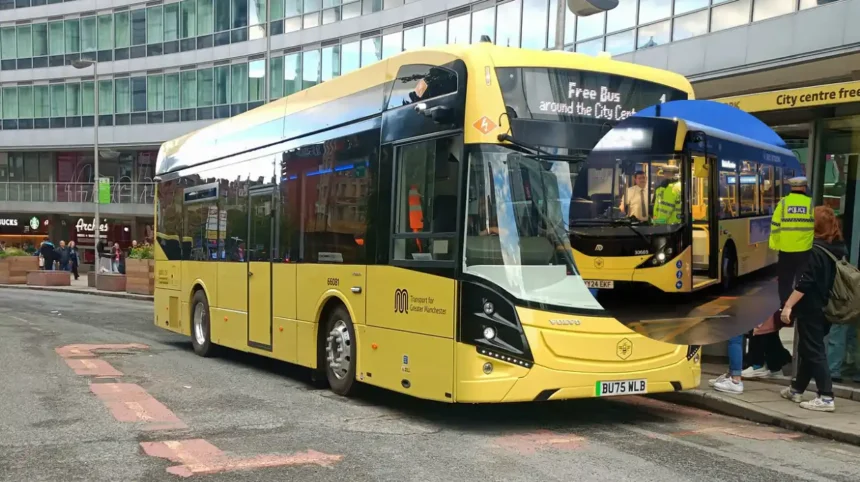
Manchester Police (Manchester Mirror) October 29, 2026 – Greater Manchester’s Bee Network is effectively set to become Greater Manchester Police’s 11th policing district, after the launch of a dedicated Transport Policing and Crime Command (TPACC) supported by more than 60 newly recruited officers.
- Key Points
- What is the new Transport Policing and Crime Command?
- Why is the Bee Network being treated as an 11th district?
- Who will patrol buses and trams?
- What powers and technology will be used?
- What did Greater Manchester leaders say?
- How will passengers report incidents?
- What happens to road safety?
- Background of the development
- Prediction: How this affects passengers and transport workers
What is the new Transport Policing and Crime Command?
As reported by Isobel Forbes of the Bury Times, TPACC will bring GMP, TfGM and the GMCA together under a dedicated policing structure covering buses, trams, active-travel routes and roads. Its stated purpose is to improve the response to incidents and provide greater reassurance to passengers.
The command is led by Chief Superintendent Suzanne Downey. It will include more than 60 new officers on the network, supported by TfGM staff, and has been formed using funding from the Mayor of Greater Manchester.
The BBC reported that the new squad will deliver a “significant increase” in visible policing and enforcement across the transport network. It said the unit will also cover the city’s active-travel routes and roads.
Why is the Bee Network being treated as an 11th district?
GMP said the command will effectively establish the Bee Network as the force’s 11th policing district. The Greater Manchester Combined Authority had previously described the plan as creating “the equivalent of an 11th GMP district dedicated to safety and crime prevention and investigation across all modes of public transport”.
The command will not replace the existing ten GMP districts. Instead, it will create a transport-focused policing structure intended to coordinate police, intelligence and transport partners across the network.
As reported by the Manchester Evening News, the initiative was initially approved by Andy Burnham during his time as mayor. The outlet reported that the project had previously been delayed while awaiting approval because of a series of elections.
Who will patrol buses and trams?
The new officers will be recruited specifically into TPACC and funded through additional investment within the mayoral budget. According to the Bury Times, GMP said existing frontline resources would be protected.
TPACC will work alongside existing TravelSafe Support and Enforcement Officers, Metrolink TravelSafe Officers, customer-service representatives and other operational staff.
Mayor Bev Craig said the command would ultimately bring together up to 300 police and safety officers, with high-profile patrols across roads and the Bee Network.
What powers and technology will be used?
The command will use an Operation Vulcan-style problem-solving approach to tackle crime and anti-social behaviour. It will also incorporate GMP’s existing Roads Policing Unit, which includes hundreds of officers working across specialist functions.
TPACC will be supported by control-centre staff at GMP and TfGM. TfGM’s specialist teams can monitor incidents using more than 2,500 cameras covering stops, stations and onboard vehicles.
Responses may include deploying police or TravelSafe officers, directing security staff to attend, or using public-address systems to reassure passengers.
As reported by the Manchester Evening News, Superintendent Carl O’Brien said the resources would also incorporate facial recognition technology to identify known troublemakers and registered sex offenders using the network. He said officers would engage with people who may not be using the network for legitimate purposes.
What did Greater Manchester leaders say?
Chief Constable Sir Stephen Watson said TPACC represented “a significant step forward” in how Greater Manchester’s transport network is policed and protected. He said bringing policing, intelligence and transport partners closer together would allow a more effective response to incidents, increase visibility and provide greater reassurance to passengers.
“We are expressly determined to tackle anti-social behaviour and to proactively deny the use of our roads, and the entire transport system, to criminals,” Sir Stephen said, according to the Bury Times.
Mayor Bev Craig said she wanted “a world-class Bee Network where everyone feels safe”. She said there was “no place for crime, antisocial behaviour or dangerous driving in Greater Manchester”.
Craig added that the command would build on TravelSafe LiveChat, which connects passengers to trained police call handlers through the Bee Network app. She said it would also crack down on dangerous driving to reduce deaths and serious injuries on the region’s roads.
How will passengers report incidents?
TravelSafe LiveChat will continue operating, allowing passengers to report incidents discreetly through QR codes on buses and trams. The service connects passengers with trained police call handlers.
More than 2,000 reports have been made through the service so far, with police responding to 800 incidents, according to the Bury Times.
Transport Commissioner Vernon Everitt said safety and security were central to planning the Bee Network. He said the new approach would provide a more joined-up way of tackling issues such as anti-social behaviour on buses, trams and roads.
What happens to road safety?
The existing Roads Policing Unit will continue targeted enforcement operations aimed at dangerous driving and improving road safety. TPACC will support Greater Manchester’s Vision Zero ambition to eliminate deaths and serious injuries on the region’s roads by 2040.
Further plans include improvements to bus and tram stops, interchanges and railway stations, including better lighting and real-time travel information.
Simon Lightwood MP, Minister for Buses and Local Transport, welcomed the partnership approach. He said the government had introduced measures including mandatory training for bus-industry staff to help them recognise and respond to anti-social incidents.
Background of the development
The Bee Network is Greater Manchester’s integrated public-transport system, covering buses, Metrolink trams and related travel services. Safety has been a recurring concern for passengers, and TfGM previously introduced the TravelSafe Support and Enforcement Officer role, with a team establishment of 116 officers.
The idea of treating the Bee Network as an 11th policing district was first set out in 2022, when TfGM announced a UK-first approach bringing GMP and TfGM closer together. At that stage, the planned district was to be led by Chief Superintendent Suzanne Downey.
The GMCA’s February 2026 report pack said the mayoral precept increase would fund the full introduction of a GMP command structure for the Bee Network. It described the creation of an 11th Greater Manchester district, known as Travelsafe Phase 2, to improve security across the network.
Prediction: How this affects passengers and transport workers
For passengers, the development is likely to mean a more visible police and safety presence at bus stops, tram stops, interchanges and on vehicles. The stated aim is to reduce violence, anti-social behaviour and criminality while increasing public confidence in using the Bee Network.
Passengers may also see faster operational responses because GMP and TfGM control-centre staff will be able to use CCTV coverage and coordinate deployments. The continued availability of TravelSafe LiveChat gives passengers an additional way to report concerns discreetly during journeys.
For transport workers, the command could provide additional support when dealing with anti-social behaviour or incidents affecting staff. TfGM’s operational teams, TravelSafe officers and customer-service staff will continue to work alongside the new police command.
For drivers and other road users, the incorporation of the Roads Policing Unit signals continued enforcement activity against dangerous driving. The command’s stated road-safety objective supports Greater Manchester’s Vision Zero target of eliminating deaths and serious injuries on roads by 2040.