Key Points
- Trafford Council planning committee unanimously approved plans to convert the former Stretford Memorial Hospital and grounds into a new housing scheme.
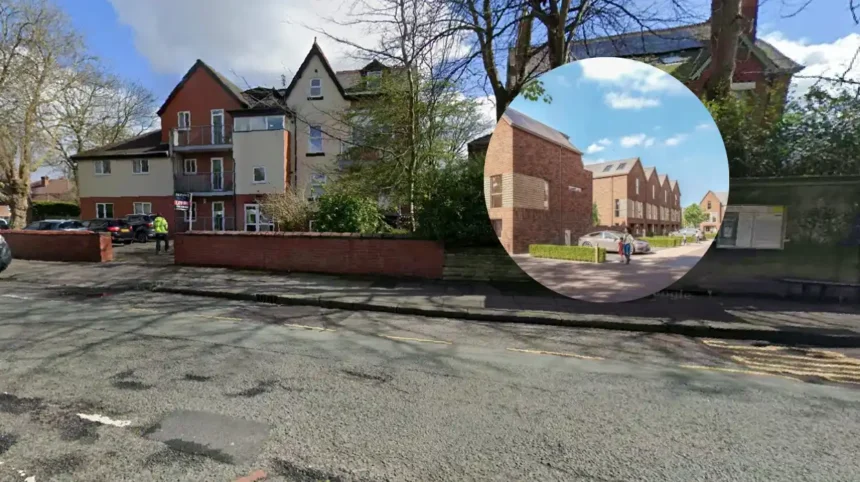
- Liverpool-based Promenade Estates will deliver 29 new houses and six apartments on the 2.5-acre site in Firswood, facing Seymour Grove.
- Work is scheduled to start in September 2026 through contractor Brack Construction.
- The project includes the refurbishment of historic Basford House, once the home of cotton baron Henry Beecroft Jackson and later the birthplace of Andy Gibb and Ian Curtis.
- Daniel Hynd, managing director of Promenade Estates, described the approval as “very welcome news” and further validation of the company’s “brownfield first” strategy.
- Edward Brack of Brack Construction said the team is now ready to mobilise trades and begin on-site work, calling Basford House a premium residence in waiting.
- The scheme, designed by Buttress Architects with a range of specialist partners, will provide 106 cycle storage spaces and 66 car parking spaces, along with significant public realm areas.
- Basford House was built in 1860, served as a staging hospital in World War I, then as a maternity and later geriatric care hospital, before closing in 2015.
- The site was acquired in October 2022 from Manchester University NHS Foundation Trust, with prior consents secured to demolish unsympathetic extensions and stabilise the structure.
- The development aims to bring a mix of terraced, semi-detached and detached houses to market, with six bespoke apartments inside Basford House.
Trafford (Manchester Mirror) July 10, 2026 – Council’s planning committee has given unanimous approval to a major housing transformation of the former Stretford Memorial Hospital and its grounds in Firswood, So she Clo. The decision cements a long‑term regeneration plan for a site that has been vacant since services closed in 2015 and services transferred to nearby Trafford General Hospital.
- Key Points
- How Will the Development Transform the Stretford Hospital Site?
- Who Are the Key Players Behind the Stretford Housing Scheme?
- What Is the History of Basford House and the Stretford Memorial Hospital?
- Why Is This Approval Significant for Local Housing and Heritage?
- Background: The Development of the Stretford Memorial Hospital Regeneration Plan
- Prediction: How This Development Could Affect Residents, Buyers and the Local Community
As reported by a council spokesperson covering the meeting, the committee “unanimously approved plans to transform the former Stretford Memorial Hospital and grounds into a new housing scheme.” The approval clears the way for Liverpool-based Promenade Estates to proceed with its proposals to create 29 new houses and six apartments on the 2.5‑acre site.
The project is set to begin in September 2026, with Brack Construction appointed as the main contractor. Work will include not only new build housing but also the refurbishment of Basford House, a historic building that once served as the home of cotton baron Henry Beecroft Jackson and later became the birthplace of two iconic music figures: Andy Gibb of the Bee Gees and Ian Curtis, frontman of Joy Division.
How Will the Development Transform the Stretford Hospital Site?
The scheme, which faces Seymour Grove in Firswood, is designed to deliver a mixed palette of terraced, semi‑detached and detached houses alongside six bespoke apartments located within Basford House itself. Promenade Estates has framed the project as part of a “brownfield first” approach, prioritising the reuse of previously developed land rather than expanding into greenfield areas.
Daniel Hynd, managing director of Promenade Estates, said: “This is very welcome news and further validation of our ‘brownfield first’ strategy. Now the hard work begins.” He added: “There’s still much to uncover with regards to the condition of Basford House, but consent allows us to get on site and peel back the layers. It’s a beautiful building and I’m pleased that we were able to stabilise it and make it the centrepiece of our proposals.”
The development will also include 106 cycle storage spaces and 66 car parking spaces, alongside significant areas of public realm. The design specifically allows an unhindered view of Basford House from Seymour Grove, ensuring the historic building remains a visual focal point within the new neighbourhood.
Who Are the Key Players Behind the Stretford Housing Scheme?
Promenade Estates, a Liverpool-based developer, acquired the site in October 2022 from Manchester University NHS Foundation Trust. Following that acquisition, the company secured earlier consents to demolish unsympathetic extensions to Basford House and to carry out conservation work to stabilise a structure that had fallen into a dangerous condition.
The scheme has been designed by Buttress Architects, with specialist support from a range of partners:
- LDA Design for landscape strategy
- Cre8 Land and Planning for planning advice
- Steven Levrant Heritage Architect for heritage guidance
- Mode Transport Planning for transport and access considerations
- Adept for structural engineering input
Edward Brack, of Brack Construction, said:
“We can now begin the task of mobilising our trades and the site itself. Basford House is one of those buildings where it’s not hard to imagine how to return it to a premium residence and it’s something we’re looking forward to getting our teeth into. It’ll get plenty of care and attention from us.”
What Is the History of Basford House and the Stretford Memorial Hospital?
Basford House was constructed in 1860 for Manchester cotton baron Henry Beecroft Jackson. Over the following century, the building and the wider site took on a series of medical roles. During World War I, the site served as a staging hospital, supporting the treatment and movement of wounded soldiers. In later decades, it operated as a maternity hospital, before its final use providing geriatric care.
The hospital closed in 2015, with services transferred to nearby Trafford General Hospital. Since closure, the site has been largely vacant, with Basford House in a deteriorating condition. The 2022 acquisition by Promenade Estates and the subsequent cycle of consents mark the start of a concerted effort to stabilise, preserve and repurpose the building rather than allow it to continue declining.
Why Is This Approval Significant for Local Housing and Heritage?
The unanimous approval by Trafford Council’s planning committee is significant on two fronts: housing supply and heritage conservation. For local housing, the project will add 35 new residential units to the Firswood area, including a range of house types that can accommodate different household sizes and preferences. The inclusion of substantial cycle storage also aligns with broader local and national aims to promote sustainable transport.
For heritage, the decision secures the future of Basford House as a centrepiece of the development rather than risking its loss. By tying the refurbishment of the building to the residential scheme, the project ensures that the historic structure will be maintained, restored and integrated into a modern neighbourhood. This approach reflects a growing trend in UK regeneration to treat historic buildings as assets rather than obstacles.
Background: The Development of the Stretford Memorial Hospital Regeneration Plan
The regeneration of the former Stretford Memorial Hospital site has been in development since the site’s closure in 2015. For several years, the hospital and Basford House remained under the ownership of Manchester University NHS Foundation Trust, with limited intervention beyond essential safety measures. Concerns about the condition of Basford House grew as the building deteriorated, prompting calls for a long-term solution that would preserve its historic value.
In October 2022, Promenade Estates acquired the 2.5‑acre site from the trust. Following the acquisition, the company secured consents to:
- Demolish unsympathetic extensions that had been added to Basford House in later decades
- Undertake conservation and stabilisation work to secure the structure, which had been deemed in a dangerous condition
These early consents were a necessary precursor to the full housing scheme, allowing the developer to begin emergency work and protect the building while a comprehensive regeneration plan was developed. The current unanimous approval by Trafford Council’s planning committee marks the culmination of that preparatory phase and signals the start of active construction.
Prediction: How This Development Could Affect Residents, Buyers and the Local Community
The approval of the Stretford Memorial Hospital housing scheme is likely to have a range of impacts on different groups in the local area. For existing residents in Firswood and neighbouring neighbourhoods, the project will introduce new housing stock, potentially altering the character of the street scene and increasing local density. The provision of public realm areas and improved cycle infrastructure may enhance walking and cycling opportunities, while the presence of new residents could support local shops and services.
For prospective homebuyers, the development will offer a mix of terraced, semi‑detached and detached houses, as well as six bespoke apartments within a heritage building. This diversity could appeal to first-time buyers, families and those seeking a distinctive property with historical significance. The transformation of a long-vacant hospital site into a residential neighbourhood may also have a positive effect on perceived area attractiveness, potentially influencing demand and, over time, property values.
At the same time, the concentration of new homes and the conversion of a large former institutional site into a residential quarter may raise concerns about traffic, parking pressure and the impact on local infrastructure. The provision of 66 car parking spaces and 106 cycle storage spaces suggests that the developers have considered these issues, but the real-world effect will depend on how residents use these facilities and how local transport networks adapt.
For the wider community, the project represents a tangible example of brownfield regeneration that balances housing delivery with heritage conservation. If successfully implemented, the scheme could set a reference point for future projects involving historic buildings and former health sites in Trafford and beyond. The extent of those longer-term benefits will depend on the quality of construction, the integration of the new neighbourhood with its surroundings, and the ongoing management of Basford House as a shared asset within the development.