Key Points
- Bruntwood and Trafford Council have committed £2.5 million in joint capital investment to expand the Foundation commercial scheme.
- The project will add 14,215 sq ft of Grade A workspace above existing retail units in the Stamford Quarter.
- The expansion comes after Foundation’s existing 50,000 sq ft office portfolio reached full occupancy soon after launch.
- A newly engineered internal entrance will link the main Foundation building with the upper retail floors, with modern glazing, elevated roof structures and open-plan layouts.
- The new space will include a mix of leased and managed commercial suites for regional scale-ups and established corporations.
- The joint venture will submit detailed planning applications to Trafford Council’s planning committee before work begins on site.
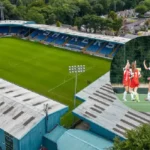
Trafford (Manchester Mirror) August 2026 – Bruntwood and uk/local/trafford/">Trafford Council workspace expansion plans have officially progressed with a joint £2.5 million capital injection designed to deliver an extra 14,215 sq ft of commercial office floorplate to the Foundation development situated within the Stamford Quarter. The strategic intervention follows sustained corporate demand across south Greater Manchester, which pushed the original 50,000 sq ft office footprint of the former Rackhams department store to full capacity within months of its completion.
Under the joint venture development scheme, the project team will construct a bespoke second-level commercial suite positioned directly above the ground-floor retail units lining George Street and Stamford New Road. Access to the new floor will integrate internally through the central Foundation reception and amenity hub, providing future occupiers seamless access to the building’s existing communal infrastructure.
As reported by Dan Whelan of Place North West, the public-private partnership decided to commit fresh capital following a consecutive series of high-profile lettings that rapidly filled the primary commercial floors. The development accommodates prominent corporate tenants, including global sports marketing agency SPORTFIVE, which secured approximately 13,600 sq ft across the entire second floor, and fast-growing creative firm TGG, which leased the 13,811 sq ft third floor for its corporate headquarters.
Trafford Council and Bruntwood confirmed that detailed planning documents will be registered in the coming months, outlining construction timelines, architectural specifications, and environmental remediation targets designed to maintain the project’s low-carbon credentials.
What does the £2.5m expansion plan include for Altrincham?
The £2.5 million investment focuses on structural reconfiguration and commercial fit-out above the retail arcade of the Stamford Quarter. Structural engineers and architects will extend the building’s operational envelope, linking the upper levels of adjoining retail units back to the main core of Foundation via dedicated walkway connectors.
Architectural specifications outline comprehensive upgrades to the external fabric of the extended suite, including high-performance acoustic and thermal glazing, complete roof remediation, and upgraded mechanical, electrical, and plumbing infrastructure. The interior design incorporates flexible dividing walls to accommodate single-tenant occupancy or multi-suite partitioning depending on occupier requirements.
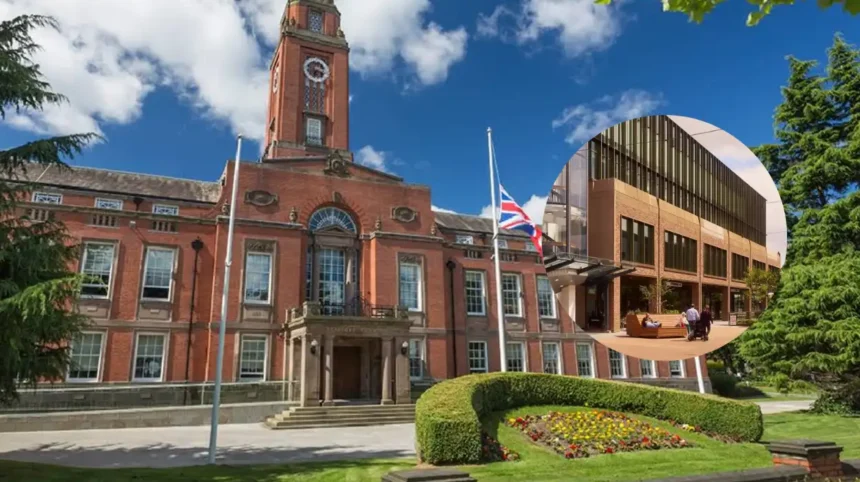
As reported by Stephen Farrell of Insider Media, Councillor Liz Patel, Executive Member for Economy and Regeneration at Trafford Council, stated: “Subject to planning permission, our aim is to create more capacity for ambitious, forward-thinking businesses – new and established – to base themselves in this vibrant working community, in the heart of Altrincham town centre.”
The workspace will be brought to market through Bruntwood’s dual leasing framework, offering both long-term leased arrangements and turnkey managed packages. Managed spaces will include integrated high-speed connectivity, custom furniture configurations, facilities management, and direct inclusion within Bruntwood’s wider business support ecosystem.
How did Foundation reach full occupancy so quickly?
The rapid letting velocity at Foundation reflects structural changes in regional office demand across the United Kingdom, particularly the shift toward decentralized suburban hubs with strong transport connections. Rather than commuting into Manchester city centre, professional services, marketing groups, and technology operators have sought high-amenity regional workspaces close to residential suburbs.
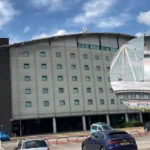
Foundation opened following a £13.7 million comprehensive overhaul of the historic House of Fraser (Rackhams) building, providing 50,000 sq ft of workspace alongside 25,000 sq ft of retail, food, and beverage amenities. The commercial offering was paired with active ground-floor hospitality, cycling facilities, wellness studios, and a 375 sq m external living bio-wall designed to enhance urban air quality.
The project’s pre-letting momentum was established when SPORTFIVE signed a 10-year lease for the second floor, followed by TGG relocating its corporate base to the third floor after generating rapid business growth. With smaller co-working suites and private office studios quickly taken up by local professional firms, available inventory was exhausted, prompting the joint venture partners to accelerate expansion phases.
Background of the Altrincham Stamford Quarter development
The transformation of the Stamford Quarter represents a central pillar of Trafford Council and Bruntwood’s £50 million town centre regeneration joint venture, originally established to reverse high retail vacancy rates and repurpose aging commercial property across the borough.
Historically, Altrincham faced significant economic hardship during the late 2000s, recording some of the highest high street shop vacancy rates in the United Kingdom. In response, the local authority enacted a comprehensive town-centre masterplan centred around public realm upgrades, market regeneration, and joint-venture commercial acquisitions.
Trafford Council and Bruntwood purchased the Stamford Quarter shopping centre in 2019 to take direct control of strategic town-centre assets. Following the closure of the Rackhams department store, the partnership appointed architecture practice BDP to redesign the monolithic retail box into an integrated mixed-use scheme under Bruntwood’s Pioneer workspace brand. Construction completed in early 2024, converting the vacant department store into a commercial anchor that now bridges Altrincham’s traditional retail core with the town’s transport interchange.
How will this workspace expansion affect local businesses and residents?
The expansion of Foundation is anticipated to generate direct and indirect economic impacts for several key local groups:
- Local Retailers and Hospitality Operators: An additional 14,215 sq ft of office space will introduce an estimated 150 to 200 daytime workers into Altrincham town centre on any given weekday. This increase in regular footfall will directly support foot-traffic-dependent businesses along George Street, Stamford New Road, and the nearby Altrincham Market, driving lunchtime spending and post-work evening patronage.
- Growing Regional Enterprises and SMEs: Regional small and medium-sized enterprises frequently face a shortage of Grade A flexible workspace outside central Manchester. The delivery of serviced, managed, and leased space allows growing companies in south Greater Manchester and north Cheshire to expand their operations locally without relocating their workforces into the regional core.
- Commercial Property Market and Investors: The commercial performance of Foundation serves as a benchmark for local authorities and private investors seeking models for repurposing obsolete retail real estate. Continued commercial success in Altrincham demonstrates the viability of high-amenity suburban workspace models across the wider North West.
- Local Commuters and Community: By situating employment density directly adjacent to the Altrincham Interchange—which links Metrolink trams, regional rail services, and local bus networks—the development supports sustainable commuting patterns, reducing private car reliance while retaining professional talent within the local borough.