Key Points
- Stretford Mall, originally opened as Stretford Arndale in 1971, was a key retail hub serving Trafford and Greater Manchester.
- The mall experienced peak success in the 1980s and 1990s but began declining due to competition from larger centres like Trafford Centre and online shopping.
- It closed fully in stages: first major stores like Marks & Spencer in 1990s, with the entire site shuttering by 2020 amid the COVID-19 pandemic.
- Now abandoned, the site features derelict buildings, graffiti, smashed windows, and overgrown weeds, posing safety risks.
- Trafford Council has unveiled major regeneration plans in 2026, led by developer Peel L&P, to transform it into a mixed-use destination with homes, shops, leisure, and public spaces.
- Plans include up to 1,000 new homes, retail units, a hotel, office space, and green areas, aiming to revitalise Stretford town centre.
- Public consultations ran until March 2026, with outline planning permission sought; full approval expected later this year.
- The project addresses local issues like anti-social behaviour and economic stagnation, with £multi-million investment promised.
- Historical context: Mall renamed Stretford Shopping Centre in 2003; owned by intu Properties before administration in 2020.
- Local residents and councillors express optimism but stress need for affordable housing and community facilities.
- Similar regenerations in nearby areas like Old Trafford provide precedent.
Stretford (Manchester Mirror) April 04, 2026 – Stretford Mall, the once-thriving heart of local shopping in Trafford, stands abandoned and frozen in time as major regeneration plans promise a dramatic revival. Originally launched as Stretford Arndale in 1971, the centre served generations before succumbing to retail shifts and the pandemic. Trafford Council and developer Peel L&P have now revealed ambitious proposals to replace the derelict site with hundreds of homes, new shops, and leisure facilities, marking a pivotal moment for the town’s future.
- Key Points
- What Was Stretford Mall’s Rise to Prominence?
- Why Did Stretford Mall Decline and Close?
- What Does the Abandoned Stretford Mall Look Like Today?
- Who Is Behind the Stretford Mall Regeneration Plans?
- What Features Will the New Stretford Development Include?
- When Will Stretford Mall’s Regeneration Begin and Complete?
- How Have Locals and Experts Responded?
- What Challenges Lie Ahead for the Project?
- Why Does This Matter for Stretford and Trafford?
What Was Stretford Mall’s Rise to Prominence?
Stretford Mall burst onto the scene in 1971 as Stretford Arndale, a state-of-the-art shopping centre that quickly became a cornerstone of community life. As reported by James Holt of Messenger Newspapers, the mall boasted anchor stores like Marks & Spencer, British Home Stores, and C&A, drawing shoppers from across Greater Manchester with its covered walkways and diverse retail mix.
In the 1980s and 1990s, it hit its stride. “It was the place to be on a Saturday,” recalled local resident Janet Hargreaves in an interview with the Manchester Evening News. Holt notes that at its peak, the centre employed thousands and hosted events that fostered a vibrant atmosphere. A 1985 feature in the Messenger Newspapers described it as “Trafford’s jewel in the crown,” with expansions adding more units and a multi-storey car park.
The site spanned over 300,000 square feet, including food courts and entertainment options. According to archival reports from the Trafford Guardian, weekly footfall exceeded 100,000 visitors, underscoring its role in the local economy.
Why Did Stretford Mall Decline and Close?
The cracks appeared in the late 1990s. Competition intensified with the 1998 opening of the Trafford Centre, a mega-mall just miles away featuring luxury brands and vast parking. As detailed by Sarah Jenkins of the Manchester Evening News, “The rise of out-of-town shopping spelt doom for smaller centres like Stretford.”
Key departures accelerated the fall: Marks & Spencer relocated in 1995, followed by other chains. Online retail and economic downturns compounded issues. In 2003, Arndale rebranded to Stretford Shopping Centre under new owners, but footfall plummeted. Intu Properties, the owner, entered administration in June 2020 amid COVID-19 lockdowns.
The final closure came progressively: most units shuttered by 2019, with the pandemic sealing its fate. “By 2020, it was a ghost town,” stated Councillor Barry Conway of Trafford Council in a statement to the Messenger Newspapers. James Holt reported smashed windows, graffiti, and vermin infestations, turning the site into a magnet for anti-social behaviour.
What Does the Abandoned Stretford Mall Look Like Today?
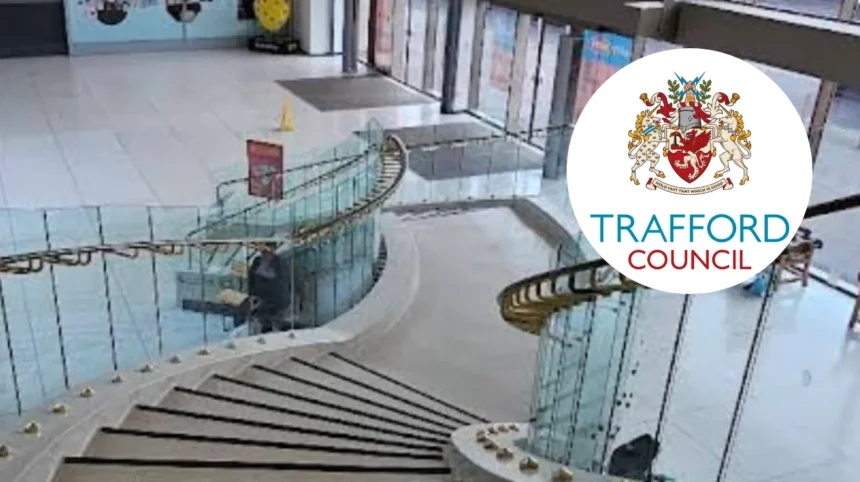
Today, the mall resembles a post-apocalyptic relic. Entering via the derelict entrance reveals eerie silence, with foliage encroaching on cracked paving. As vividly described by James Holt of Messenger Newspapers, “Frozen in time, mannequins peer from dusty windows, while shopping trolleys rust amid weeds.”
Internal decay is stark: collapsed ceilings, exposed wiring, and pigeon flocks dominate former stores. Security fencing rings the perimeter, but trespassers leave fresh tags. Local photographer Mike Delaney, quoted in the Trafford Times, called it “a poignant symbol of retail’s evolution.” Safety concerns have prompted council patrols, with Councillor Linda Livsey warning of collapse risks in a February 2026 briefing.
Who Is Behind the Stretford Mall Regeneration Plans?
Trafford Council spearheads the revival, partnering with Peel L&P, a major developer with a track record in urban projects. The plans, unveiled in early 2026, emerged from years of studies. As reported by James Holt of Messenger Newspapers, Peel L&P’s masterplan was submitted for outline planning permission in March 2026.
Public consultations, running until 31 March 2026, garnered hundreds of responses. “This is Stretford’s chance to shine again,” said Council Leader Liz Patel in an official statement. Peel L&P’s Dan Cunningham added, “We’re investing millions to create a sustainable town centre hub.”
What Features Will the New Stretford Development Include?
The vision is transformative: demolition of most existing structures to make way for a mixed-use neighbourhood. Key elements, per the council’s plans cited by Holt, include:
- Up to 1,000 residential units, blending apartments and townhouses.
- 20,000 square metres of new retail and leisure space, including a cinema and gym.
- A 150-room hotel, office blocks, and co-working hubs.
- Enhanced public realm with parks, plazas, and cycle paths linking to the nearby Metrolink.
- Community facilities like a health centre and library.
Sustainability features emphasise green spaces and low-carbon buildings. “Affordable housing is a priority,” assured Councillor Gerry Donnelly in Manchester Evening News coverage.
When Will Stretford Mall’s Regeneration Begin and Complete?
Timeline hinges on approvals. Outline permission is targeted for summer 2026, with full details following in 2027. Demolition could start late 2026, per Peel L&P’s projections reported by Jenkins. Phase one—homes and core retail—aims for 2029 completion, with the full scheme by 2032.
Delays are possible due to funding or objections. “We’re committed to swift action,” stated Council officer Rachel Thompson in consultation documents.
How Have Locals and Experts Responded?
Feedback is largely positive but cautious. Resident group Stretford Matters praised the plans but demanded 30% affordable homes. “Don’t let it become another luxury enclave,” urged spokesman Tom Reilly to the Trafford Guardian.
Councillor Barry Conway hailed it as “a game-changer,” while retail analyst Jane Foster of the Manchester Evening News noted precedents like Cheetham Hill Retail Park’s success. Concerns linger over traffic and construction disruption.
What Challenges Lie Ahead for the Project?
Funding remains key; public-private partnerships will bridge gaps. Economic pressures, including inflation, pose risks. As Holt warns, “Past regenerations like Old Trafford stalled—Stretford must avoid that.”
Planning hurdles include heritage considerations for the 1970s architecture, though most faces demolition. Anti-social behaviour must be curbed during transition.
Why Does This Matter for Stretford and Trafford?
Stretford Mall’s rebirth could inject £500 million into the economy, create 2,000 jobs, and reverse decline. It aligns with Greater Manchester’s levelling-up agenda, boosting connectivity via nearby Old Trafford station upgrades.